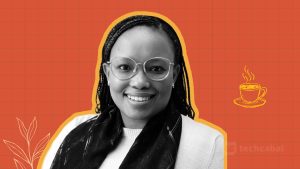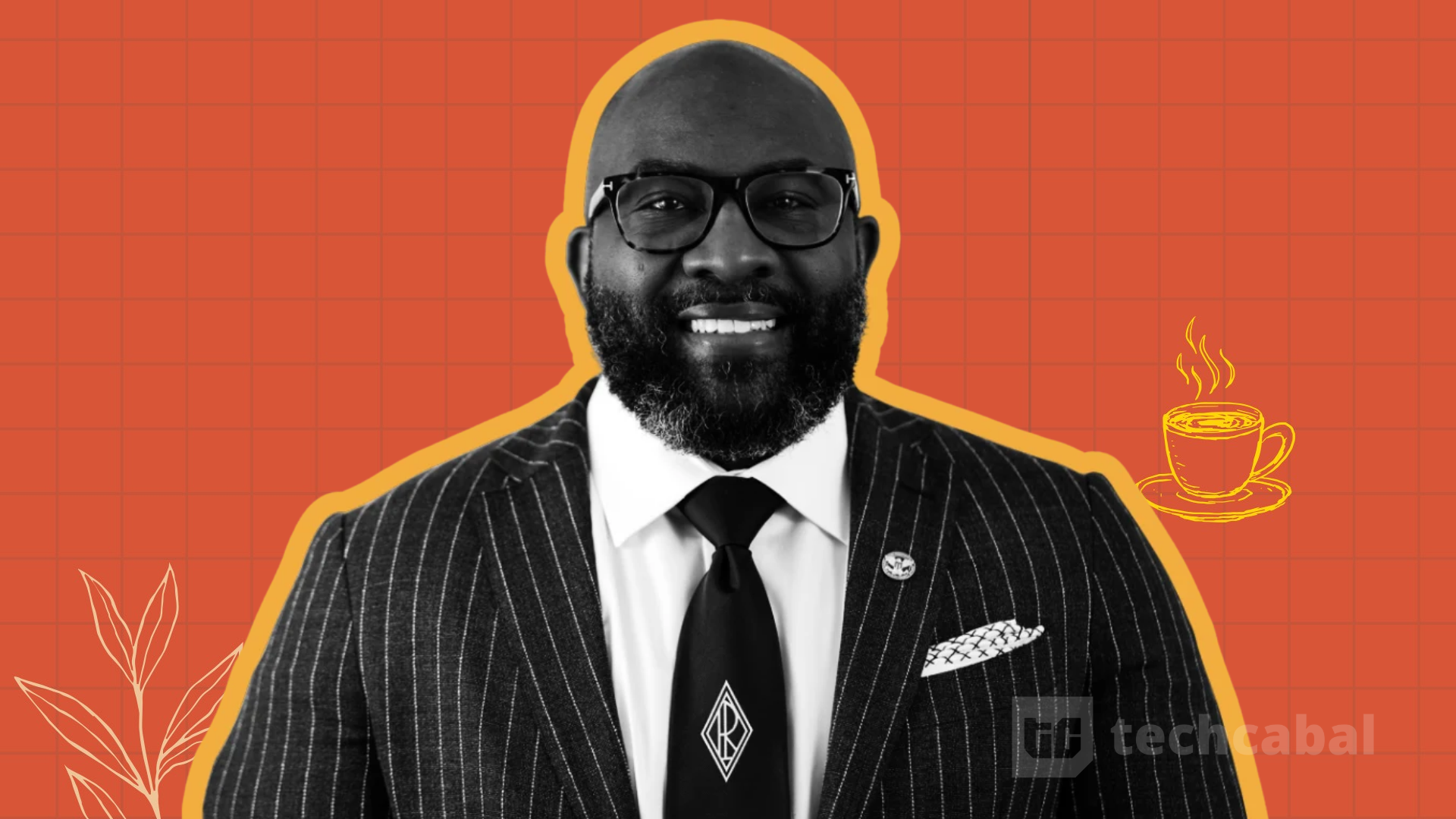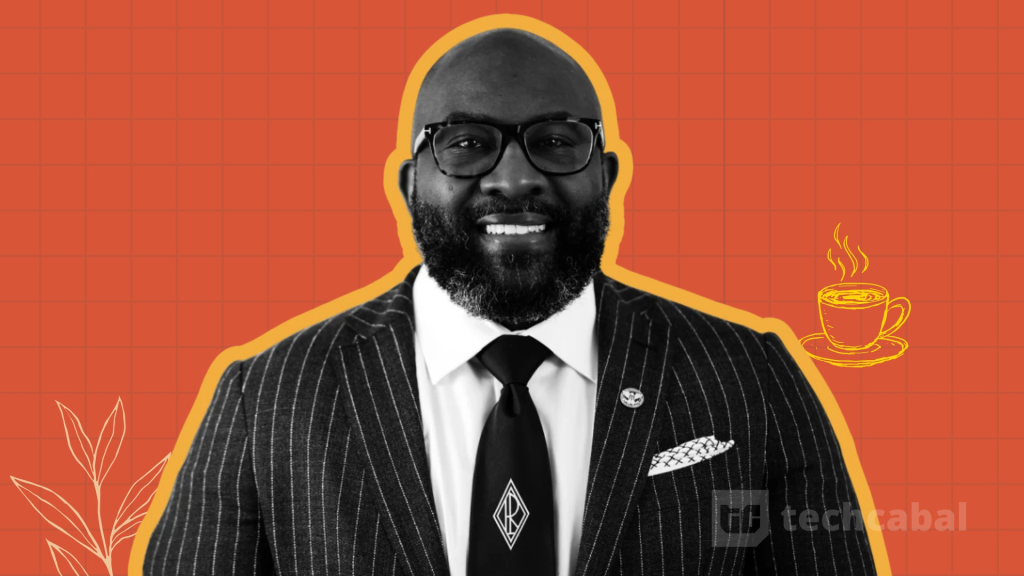


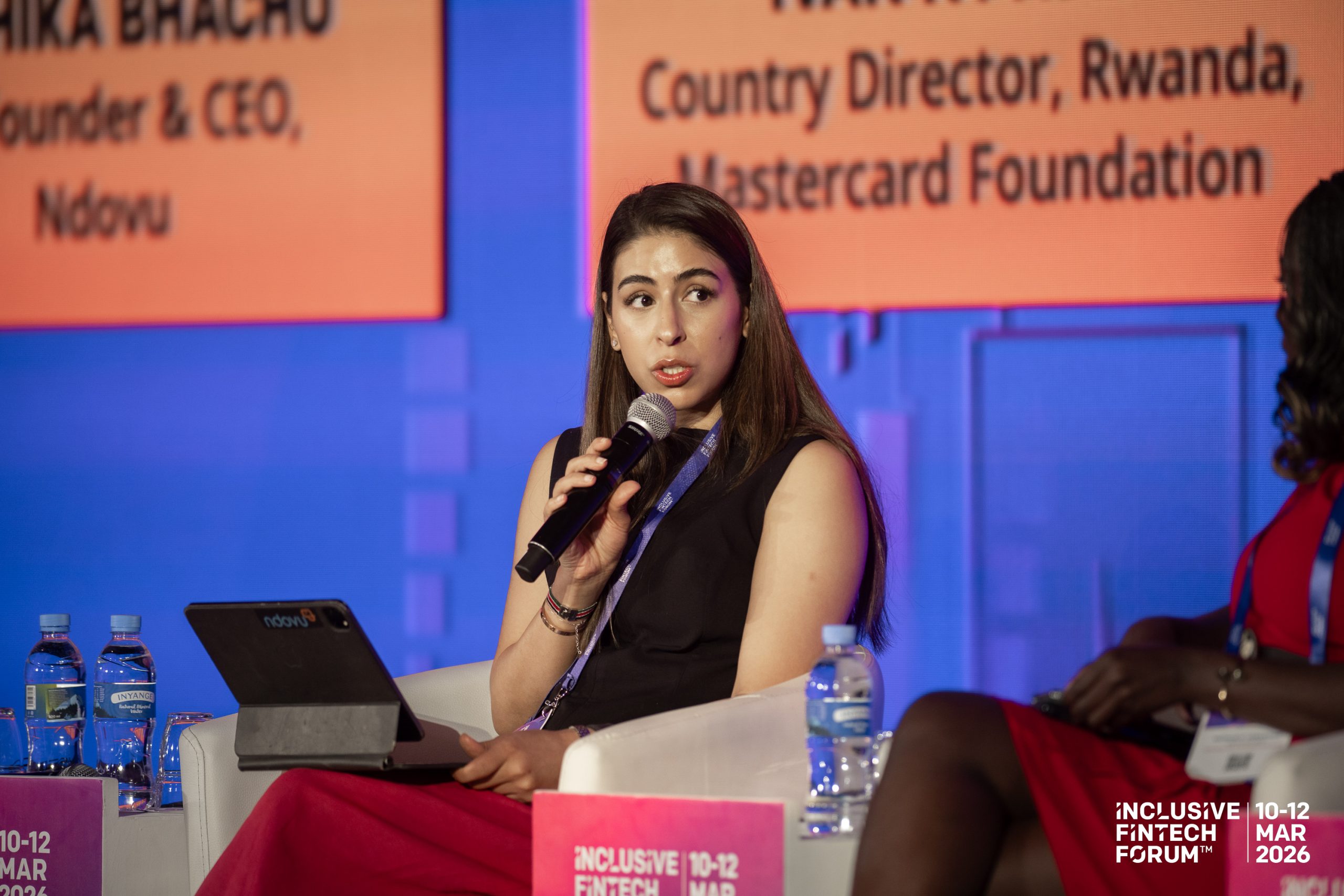
On the 10th floor of ABC Place in Nairobi’s Westlands, Radhika Bhachu doesn’t offer you tea. No small ceremony to ease you in. She’s already mid-thought when you sit down, like you’ve walked into a conversation she’s been having with herself all morning.
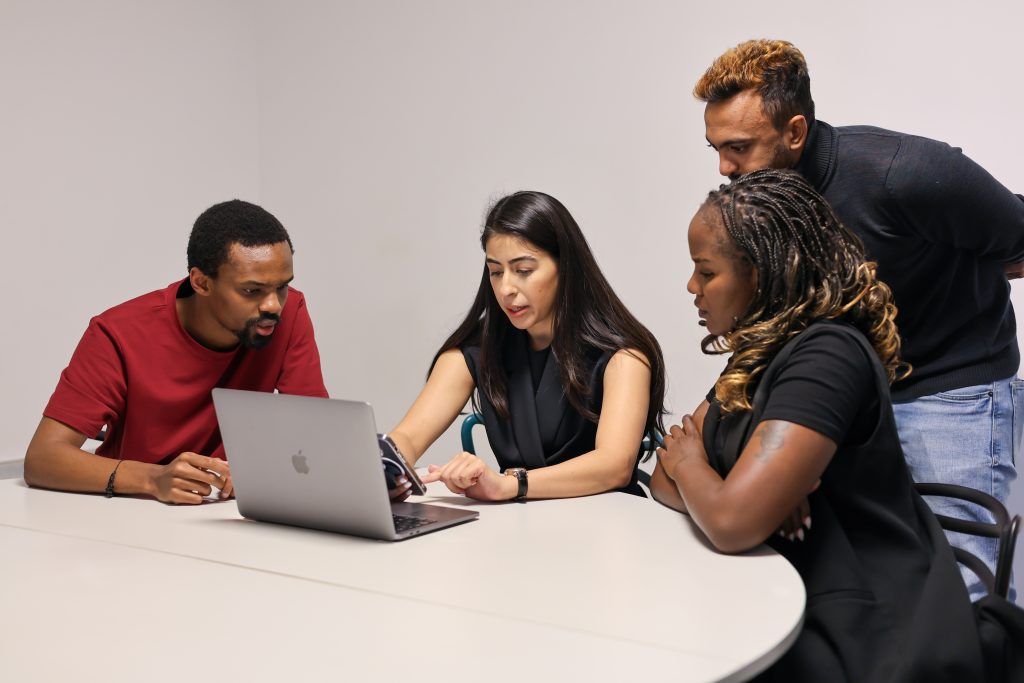
If we weren’t doing this interview, she says, she’d be on investor calls. Properly in it. Updating her pipeline, responding to questions, and nudging conversations forward. In between, she’d be with her team—sales, marketing, client service—trying to get a feel of things on the ground. Are customers complaining? What’s slowing them down? Where can AI help? Then maybe coffee, but not the relaxed kind. The kind where you’re still half-working, just without your laptop open.
She speaks quickly, but not nervously. There’s a rhythm to it. Before this, she was at BlackRock for five years as a relationship manager, helping investors build wealth quietly, predictably, over time. There are systems, structures and a lot of long-term thinking. Then she came back to Kenya in 2020 and found something else: people saving, hustling, building, but not quite investing in the way she had seen elsewhere.
Now she’s trying to build that bridge through Ndovu, a Nairobi-based wealth management startup. Lately, what’s been sitting with her is a tension she doesn’t try to dress up. Last year, the company found that most of its revenue was coming from a small group of customers. The obvious move was to lean into that, middle income and above, the ones already closest to investing.
It makes sense. It’s business. But that’s not why she started. “The vision is still everyone,” she says. “But you can’t do everything at once.” She pauses, briefly, then shrugs it off. “It’s just sequencing.”
I spoke to Radhika about the path the BlackRock alumni took from the corridors of global finance to the messy, unpredictable business of getting Africans to invest.
This interview has been edited for length and clarity.
If we weren’t doing this interview, what would a perfect afternoon look like for you?
Right now, I’m fundraising, so a perfect afternoon would involve investor calls, updating my investor pipeline, and responding to questions. I also oversee the distribution team, so I’d be working with sales, marketing, and client service to understand how business is going—are we getting customer complaints? How can we use AI to streamline tasks? So, really, thinking about distribution strategy and fundraising. It would probably end with coffee with a client or an investor.
What’s been occupying your mind lately, something you keep coming back to?
Last year, we realised that, like many businesses, 80% of our revenue comes from 20% of our clients. Our vision is that in a decade, every African will be a capital market investor. But the reality is that as an African startup, there’s not enough funding to go after the entire value chain—middle income, high net worth, and low income all require significant resources.
Last year, we had to make a difficult decision: with our current funding and team, we needed to focus on the low-hanging fruit, middle-income and above. But as a founder, I started this to help everyone participate in wealth creation. We’ve partnered with banks and telcos to embed our solutions, but it’s disappointing that as a chief executive office (CEO), the right business decision is to move toward momentum—because that helps us grow revenue faster, increase our cash, and eventually serve smaller holders. It’s just sequencing. But it weighs on me. That, and cybersecurity.
You grew up between cultures. How did that shape your earliest understanding of money, security, and ambition?
I’m a Kenyan-Indian, and that’s been amazing. Kenyan culture is very kind and community-led; people help each other. Indian culture thinks more about the future: you build wealth not just for this generation, but for your children’s children. What I think our culture could do better is talk about money at the dinner table. We didn’t, but we knew our parents had a business. They’d say, “Go have coffee with someone, see what they do, talk to that uncle at a party.” That helped you figure out what to study.
But no one teaches you what to do once you have money. We’re launching a custodial product for children—parents manage it, but kids can research and see how their investments perform. That teaches budgeting, decision-making, and opportunity cost. Unfortunately, that’s taking a lower priority right now due to capital constraints.
Was there a defining moment growing up when you realised money, or the lack of it, shapes how people move through the world?
An unfortunate lesson about the world is that if you have money, you matter to somebody; if you have no money, you matter to nobody. And that’s just a really sad reality of the world. And I think growing up, not so much, but now, living in a social media age, it’s so apparent. For me, it was when I was younger. I lost my mom, and so my dad sent me to school, and I started doing the paper round (delivering newspapers).
I was in Canada, and we used to do the paper round to make money. I’m very fortunate; everything was painful, but we started learning that to make money, you have to work really hard. And there’s a saying in our culture, actually: making money is the easy part, but keeping it, you know? Doing the paper round, then actually getting a job at 16; that’s when I was like, “wow, okay, making money is really hard.” That’s why, when you have money, there is some childhood stuff that kind of links back to saying I have to be successful because I want to be able to give my family everything they need.
And you have to make sure that you’re working hard for money. And now it’s changed into: how can you be more valuable, and how can you create money not the traditional way — you know, graduate, get a job — and now it’s like, “Okay, well, I’ve got this money, and this is going really well, what else can I do?” But we’re seeing that through Kenyan culture, which is really nice.
What did your parents teach you about wealth that you’ve had to unlearn?
The limited mindset: “We don’t have this much money.” Also, that generation was very competitive, always comparing with peers. Now there’s so much abundance that ten competitors can all do well. I’m unlearning that money is only available to the few. Historically, the rich had access to global and local capital markets, but the middle class didn’t. We’re changing that.
You had a front-row seat to global finance before Ndovu. At what point did you think Africa’s wealth problem isn’t access, it’s structure?
At BlackRock, I saw how pensions work, how retail customers grow wealth 12 to 15% annually. When I came back to Kenya, access was the first challenge. Now, five years later, you can invest through your phone. But the bigger challenges are education and government enablement. Financial literacy is low. And culturally, Kenyans put everything into real estate, but they can’t access liquidity. Or they go 100% into crypto. That all-or-nothing mindset is structural and systemic.
Also, the government hasn’t promoted capital markets. Did you know that if you invest in stocks, you pay withholding tax but no capital gains tax? Real estate pays both. But no one tells the everyday Kenyan that. Doing business here is expensive, with too many licences. We need reform so businesses can create jobs for the young workforce.
So if I could, I would do a lot, like a big incubator now, to make small SMEs really grow, because we’re going to have a problem where we’re going to have so many young people come into the workforce, but we don’t have enough jobs, and that’s when you start seeing crime rates go up, etc. It is more structural than it was. Access was the first problem, and now we as partners are working together to make it less structural—more education, easy to access—but along the way, also creating jobs.
Founding a wealth platform in a market where many are still figuring out savings can look almost impossible. What did others see that you didn’t, or vice versa?
We underestimate that Africans know how to save. This is the most entrepreneurial continent. The narrative that Africa has no money is wrong. On our platform, 73% of customers are new to investing. The collective investment schemes market in Kenya grew 1,100% last year. Capital market participants doubled from 1.7 to 3.4 million.
That said, Ndovu was a little early for Kenya. Trust takes time here; people want to see you’ve been around. West Africans are more aggressive and bullish; East Africans are softer. We launched with an innovative global product, but the market just wanted a digitally enabled money market fund. Now, 43% of people start with that and then move to global products. If you capture customers young and grow with them, you can build a good business.
What was the hardest early conversation, with investors, regulators, or yourself, about whether Ndovu would work?
As a founder, you need a critical faith that it will work. The question wasn’t whether, but how long to product-market fit. For investors, the biggest question is: Is this market deep enough? National data says Kenyans are poor, but the ground reality is different. A Land Rover here costs $150,000 after tax—and plenty are on the road. We have no credit system. In the UK, my car was leased, my house mortgaged. Here, everything is bought with cash. So we’re actually wealthier; it’s just not in capital markets.
With regulators, it’s never been difficult, just educational. They don’t know how to regulate something new, so we show them. Building in Africa requires belief. Otherwise, the rejections will break you.
Who is your actual first customer—the aspirational middle class, or the already wealthy looking for diversification?
We started with everybody. Now we’ve moved toward middle income and above — not shutting doors, but our marketing dollars go to the low-hanging fruit first. The cost of doing business in Kenya is high. A company in Egypt might raise $20 million; we’ve raised $2.3 million, but our revenue is 4x in line with theirs. Still, our vision is that in a decade, every African will be investing.
There’s a quiet tension in fintech between growth and trust. When did you first feel that inside Ndovu?
At the very beginning. You can’t grow until customers trust you. Before us, some unregistered funds went under and broke trust. A licence doesn’t automatically give you trust here, unlike the US or UK. Here, trust is the product. You build it by showing up every day, picking up the phone, and responding to complaints. Once you have trust, very little can go wrong.
We spent the first 18 months building trust. It was slow. No exponential growth. That’s why Africa is different for B2C investing; you need 18–24 months just for trust. In the US, infrastructure does that for you. VCs compare us to four-year timelines, but it’s probably eight years here.
What’s one decision you made early on that almost broke the company?
Pivoting too quickly. We wanted growth immediately, so we pivoted to B2B2C — flipping our tech into an API. We took the gas off B2C. That wasn’t entirely wrong — we’re now going live with big partners — but our B2C suffered. My advice: copy what works first. Don’t try to be innovative out of the gate. Copy, then innovate. Stay true to your core.
How do you build trust with a first-time investor who only knows SACCOs, land, or chamas?
It’s a mountain. First, awareness, people can’t buy what they don’t know. We create content and distribute it on social media. Then we follow the traditional relationship manager model: when you sign up, we call you. Nothing special, just an introduction. Investing isn’t skincare; you can’t give a sample and expect immediate return. Customers check their portfolio daily, see it down, and complain. But after years, they say, “My portfolio is up 40%, I love it.”
Trust comes from education, thought leadership, phone calls, and good client service. Then, drip marketing, educating over time about money market funds, global investing, and the S&P 500. It takes time, but we’ve doubled conversion rates.
What does wealth mean to you now, and how is that different from five years ago?
Five years ago, wealth was about buying things I wanted. Now, it’s about time to have the freedom to do whatever you want. Financial freedom is not as big a number as you think. If you have $100,000 earning 10% a year, that covers basic rent, food, and a few holidays. That’s about 30 million shillings. If you save 2 million shillings a year, even on a 100k salary with sacrifices, and grow it 10%, in five years you hit 13 million. That supplements you. Then you don’t have to go to work. You can think: how am I valuable? What’s my next business?
Once you hit that, you become different. You don’t need the tenth pair of shoes. Wealth becomes health and flexibility. At 37, it’s about routine: morning coffee, gym, time with kids, work, dinner with family. The luxury of life is time.
Are we underestimating how sophisticated African retail investors already are, or overestimating their risk appetite?
No, 100% we’re underestimating how sophisticated retail investors are in Kenya, in East Africa. And actually, that comes down to the fact that the majority of people are entrepreneurs, so they can make informed decisions about risk. There is a subset that, of course, is unknown, and wants to buy crypto. They understand the risk of it. There’s that proportion of it. But I would say the underestimation of their financial knowledge, not necessarily in capital markets, but just how to make money, is higher compared to anywhere in the world. I’ve never seen such an entrepreneurial community here, even when I was in the UK. I mean, my family members are business-oriented, but people weren’t driven to make something here. People here are driven. It’s very exciting. It really is.
If we meet in 10 years, what would need to have happened for you to feel it was all worth it?
I would like Ndovu to be a household name. And on a personal level, my definition of success is that I’m walking down the street, someone taps me and says, “Because of you, I was able to send my kid to school, or wherever.” It doesn’t have to be hard. It’s just because it’s well known. But I was able to educate them, because I think education, even in the age of AI, the application of education, exposure, your skill set, etc., is really important. That would be a personal goal. But yeah, I would like Ndovu to be the BlackRock of Africa.
Hopefully, we will get there. A lot has happened, and a lot of that has to do with regulation; when you move into other markets, regulation is very important. Right now, we have a balance. We have people investing in Africa.
We also have people investing abroad. But the next challenge for us is: how do we get people abroad to invest in Africa? Because the returns you’re getting on some projects here, you cannot get off the dollar in the US or Europe. It’s already saturated.