

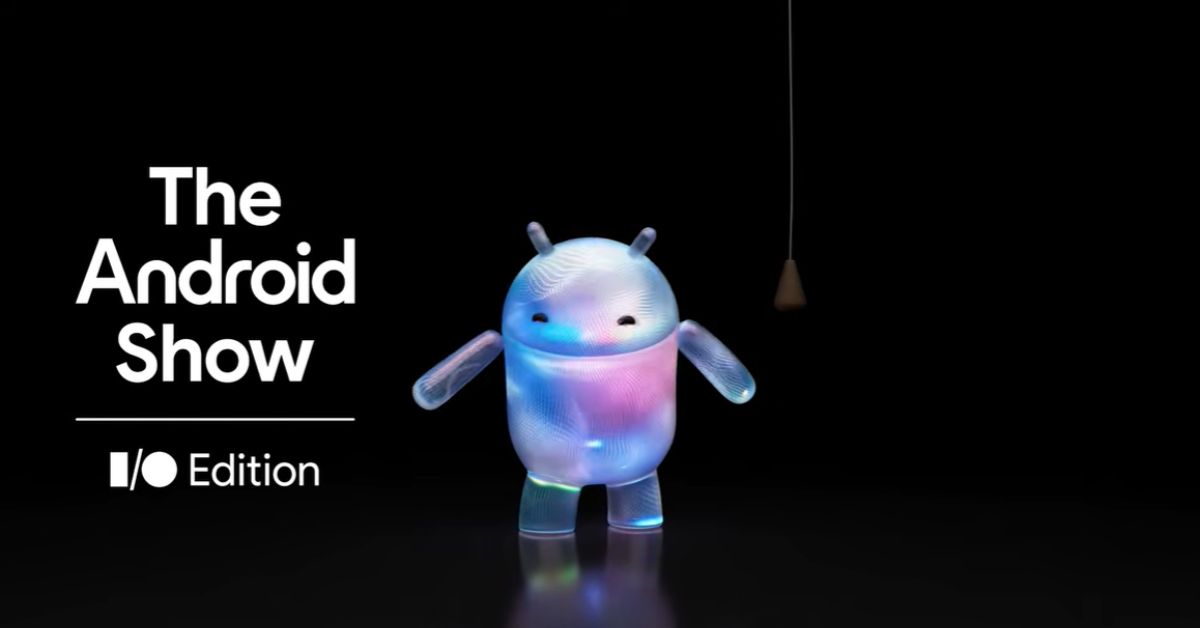
On Tuesday, Google held the Android Show: I/O Edition 2026, highlighting what the tech giant describes as an intelligence system. The event explored the integration of Gemini Intelligence across several devices, including the newly unveiled Googlebook.
In the keynote, Sameer Samat, the President of the Android Ecosystem, highlighted the massive scale of Android.
“There are now 2.5 billion Rich Communication Services (RCS) messages sent every single day. The number of group chats across platforms has increased 116%,” Samat said.
Gemini Intelligence
Mandy Brooks, Vice President, Product Management and User Experience, Android Platform, introduced Gemini Intelligence as a seamless experience spanning phones, watches, cars, and glasses.
Brooks said “Gemini intelligence brings the best of Gemini to our most advanced Android devices.” The system is designed to work proactively throughout the day to automate tedious tasks while keeping the user in control.
During the presentation, Brooks demonstrated how the system could process complex requests, such as extracting information from a class syllabus and populating a shopping cart with required books.
“We’ve been gathering feedback through a few hand selected food and rideshare apps,” Brooks said, discussing the expansion of these features to the Samsung Galaxy S26 and Pixel 10.
Intelligent operations and personalisation
Dieter Bohn, Director, Product Operations, detailed how Gemini Intelligence would solve the universal hassle of filling out complex forms. The system can populate text boxes with a single tap by securely pulling information from photos or emails, such as passport details.
Bohn also introduced Rambler, a feature within Gboard that converts natural, fragmented speech into polished text.
He showcased the Generative User Interface through a feature called ‘Create My Widget’ that allows users to build bespoke widgets using natural language prompts, such as a high-protein meal prep tracker. Bohn noted that the feature organises the specific bits of information that matter most to an individual user.
Android 17 and creator tools
Gabby Williams, Product Marketing, Android, unveiled the core updates coming to Android 17. A major highlight included a partnership with Meta to optimise Instagram for Android flagship devices.
Williams confirmed that side-by-side tests show video captured on these devices now “score the same or better than the leading competitor.”
New creative features such as Screen Reactions and Smart Enhance were introduced, alongside Sound Separation, which allows users to strip away wind noise from recorded audio.
She also announced a significant visual update to the emoji library, noting that they have “hand refined nearly 4000 emoji to be richer, more delightful and more true to how you actually express yourself.”
Digital well-being and connectivity
Addressing the issue of “autopilot” phone usage, Williams introduced Pause Point, a digital well-being tool that enforces a ten-second delay when opening distracting apps. This encourages intentional usage rather than mindless scrolling. To assist those switching from an iPhone to an Android phone, the iPhone Operating System (iOS) to Android migration helps to wirelessly move all their data to the new device.
Connectivity improvements were also featured, including the compatibility of Quick Share on WhatsApp for Android users. Williams explained that this feature is for users who want to share files with iPhone users through the app.
These updates aim to ensure that sharing high-quality media, like wedding videos, is no longer hindered by the type of phone a person owns.
Innovations in Android Auto
Guemmy Kim, Senior Director, Android for Cars, presented the next generation of Android Auto. The update includes a redesigned Google Maps experience, which was described as “one of the major updates to Google Maps in over a decade.”
It features 3D visuals and live lane guidance that utilises the car’s front-facing camera.
The system now supports widgets on the car dashboard and a premium entertainment experience, allowing for 60fps High Definition (HD) video playback when parked.
Kim highlighted that the deep integration of Gemini Intelligence within the vehicle allows for tailored answers about dashboard symbols or trunk dimensions.
The arrival of the Googlebook
The event also introduced the Googlebook, a new category of laptop. Alexander Kuscher, Senior Director, Laptops and Tablets, explained that these devices combine the best of the Android operating system and ChromeOS.
“Googlebooks are the first laptops designed for Gemini intelligence from the ground up,” he noted.
A standout feature is the Magic Pointer, which brings the cursor to life when wiggled to provide contextual suggestions. Kuscher demonstrated how Magic Pointer could visualise furniture in a photo of a room without the need for manual uploads to a chatbot. He said because users can access it by wiggling the cursor, “it’s easy to go from idea to ‘I’m done’ in an instant.”
Hardware partnerships and availability
Kuscher noted that Google is partnering with manufacturers, including HP, Dell, Lenovo, Acer, and ASUS, to produce Googlebook models in various shapes and sizes. These laptops will feature a unique glowbar lighting effect and allow users to access their phone apps directly on the screen without a wireless download. A Quick Access feature will also bridge the file systems of phones and laptops.
Closing the event, Samat reiterated that the major updates to the ecosystem would begin rolling out this summer. The new features for Android 17 and the first wave of Googlebook hardware are expected to be available later this year.