In cities like Lagos, Nigeria, and Nairobi, Kenya, delivery is not just moving food or products from one point to another. It is also navigating traffic snarl-ups that can take hours, some streets that digital maps still struggle to recognise, and consumers who demand convenience while living inside deeply informal economies.
Dima Rasnovsky, who oversees operations for global on-demand delivery platform Glovo across six African markets, told TechCabal in an interview in early May that those frictions are not obstacles, but the foundation of a distinctly African model for online commerce.
In his view, the continent’s delivery economy is unlikely to mirror the warehouse-heavy systems of Europe or America. Instead, it may be shaped by dense neighbourhood stores, mobile money infrastructure, and merchants who already sit close to where customers live.
That shift is central to Glovo’s growing focus on quick commerce—the business of delivering groceries, pharmacy products, electronics, cosmetics, and other household items within minutes.
The company believes the category could eventually become larger than restaurant delivery in several African cities, even as the economics remain difficult. Fuel prices are volatile, margins are thin, and platforms must keep delivery affordable while convincing riders and merchants to stay on the network.
Africa already has dense cities, millions of informal merchants, and rapidly growing smartphone adoption. What it lacks, Rasnovsky says, is a mature e-commerce infrastructure. He believes that the gap may allow African consumers to move directly into fast local delivery rather than traditional warehouse-heavy online retail.
“Africa skipped desktop and moved straight to mobile,” Rasnovsky said. “Quick commerce can become the same leap for e-commerce.”
Glovo’s bet comes as delivery platforms across Africa chase profitability after years of expansion driven by discounts and venture funding amid rising fuel costs and food inflation in major markets like Kenya and Nigeria.
As margins tighten and competitors like Jumia Food exit the market, platforms are expanding into groceries, pharmacy deliveries, and courier services to drive steadier order volumes.
Density is the whole business
Quick commerce sounds simple: a customer places an order through an app, a rider collects the item from a nearby merchant, and the order arrives within minutes.
However, the economics are far more complex. Platforms mainly make money from merchant commissions and customer delivery fees. But African consumers remain highly price-sensitive, limiting how much companies can charge for delivery.
Restaurants and retailers remain under pressure from high import, logistics, and fuel costs, despite recent currency stability in key Glovo markets such as Kenya and Nigeria.
“Margins are very challenging in Africa,” Rasnovsky said. That leaves one major lever: density.

Delivery platforms become more efficient when many merchants and customers are within proximity to each other.
A rider delivering within Nairobi’s central business district costs far less than one crossing the city during rush hour. The same applies in Lagos, where congestion and road closures can delay deliveries and eat into margins
“Profitability is a side effect of volume,” Rasnovsky said.
“Volume is a side effect of having the right amount of small and medium-sized businesses (SMBs) on the platform.”
That explains why Glovo continues to aggressively onboard small merchants across African cities.
He said many businesses already operate through Instagram pages, WhatsApp storefronts, and informal retail channels, but still lack logistics infrastructure, digital payments, and delivery systems.
Glovo sees itself as the logistics layer connecting nearby merchants to nearby customers.
In early May 2026, the company announced plans to invest KES 10 billion ($77.6 million) in Kenya by 2030 amid growing competition in the country’s delivery sector. The investment will fund technology, logistics infrastructure, talent expansion, and growth into more towns beyond Nairobi, which now serves as part of Glovo’s African operations hub.
In Kenya, Glovo competes with Uber Eats, Bolt Food, and in-house delivery platforms like KFC. According to a 2024 report by Kenya’s Competition Authority, Glovo currently leads the country’s online food delivery market with roughly 33% consumer preference, ahead of Uber Eats at 21% and Bolt Food at 16%.
The regulator also found that Glovo controlled about 46% of grocery delivery preferences among Kenyan consumers.
Groceries are growing, but restaurants still pay better
Restaurants still dominate Glovo’s business because food remains the highest-frequency category. But the company wants customers ordering groceries, pharmacy products, electronics, and beauty items alongside takeaway meals.
Glovo said its quick commerce business now generates more than €1 billion ($1.17 billion) in annual turnover globally, with grocery and retail categories growing by about 50% in 2024.
The strategy mirrors a wider industry push beyond restaurant delivery. In August 2025, Delivery Hero, Glovo’s parent company, noted in a statement that customers using both food delivery and quick commerce services spend more than five times as much as food-only users.
However, that ambition creates another problem: groceries remain far less profitable than restaurants. Restaurant chains usually have healthier margins, giving platforms more room to take commissions.
According to Rasnovsky, grocery retailers operate on much lower margins than restaurant chains, often between 1% and 3%, leaving limited room for delivery platforms to earn commissions.
“The least profitable category is groceries,” Rasnovsky said. “The most profitable is restaurants.”
Glovo is also working with dark kitchen partners in markets like Nigeria. Dark kitchens are delivery-only cooking hubs built for online orders rather than dine-in customers.
Rasnovsky said operating large kitchen networks directly may not always make sense for Glovo because the model is capital-intensive and falls outside the company’s core expertise.
Part of the appeal is that dark kitchens can help fill gaps in restaurant coverage across large cities where organised chains remain limited.
In South Africa, KFC operates more than 1,000 stores. Nigeria’s Chicken Republic has fewer than 400 outlets, despite Nigeria’s much larger population. The result is a fragmented food retail market that still relies heavily on independent restaurants and informal operators.
Riders, cash and the infrastructure problem
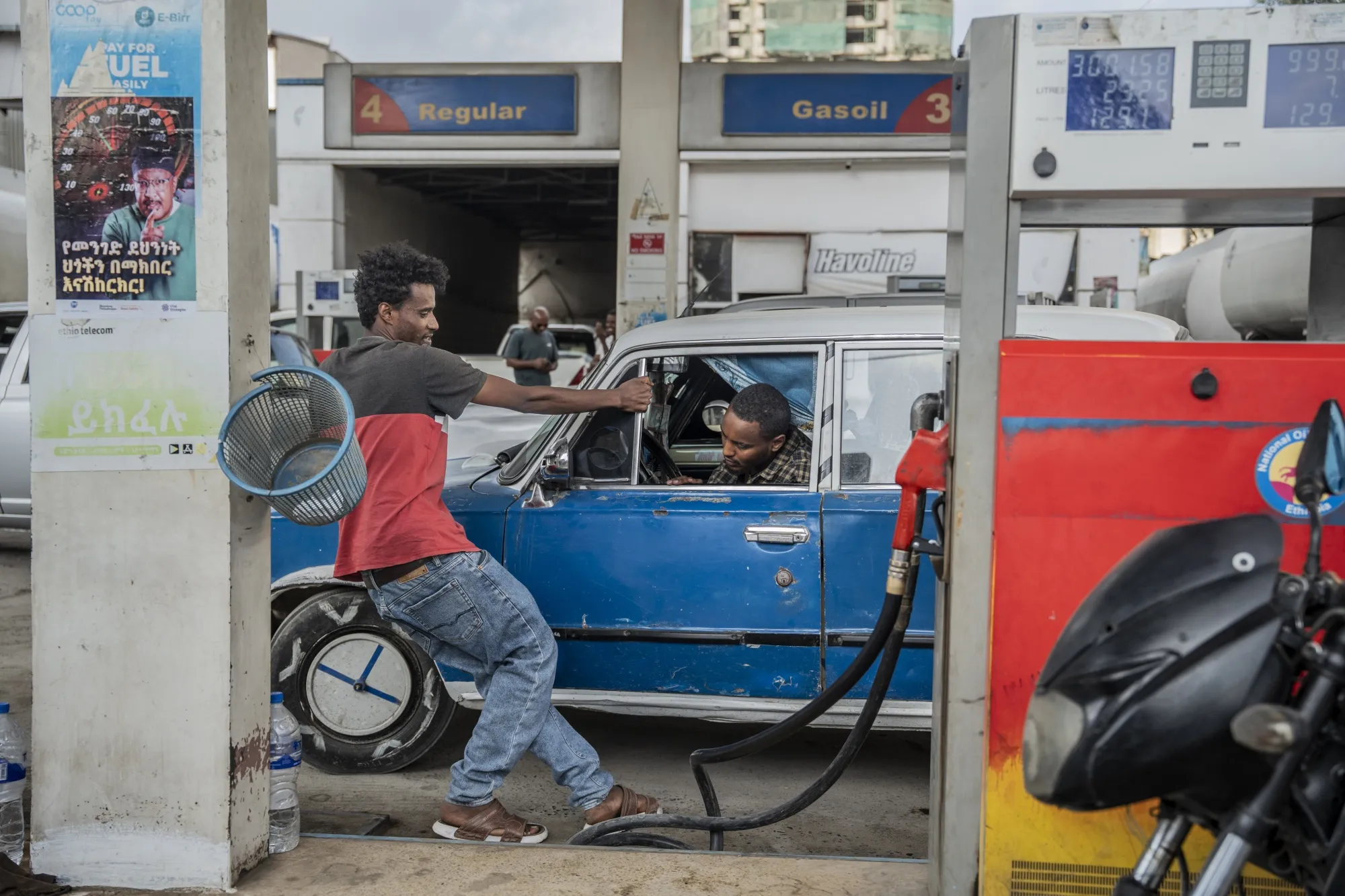
The shortage of organised restaurant chains is only one part of the challenge. Running a delivery platform across African cities also means dealing with rising fuel costs, unreliable internet, fragmented supply chains, cash payments, and difficult urban logistics.
Riders remain central to the platform’s economics, especially as fuel prices continue to rise across African markets. Unlike ride-hailing services, Glovo riders receive not only delivery fees but also a share of merchant commission revenue, because delivery fees alone would not sustain earnings, Rasnovsky said.
The company tracks rider earnings per hour and compares them with those of taxi drivers and fast-food workers. “There is no magic,” Rasnovsky said. “You cannot print money from the air.”
Cash payments remain another challenge. While M-PESA has become deeply embedded in daily commerce in Kenya, many users across African markets still prefer cash, especially for first-time orders. That creates fraud risks, failed deliveries, and operational friction around handling change and payment reconciliation.
Rasnovsky also pointed to unstable Internet networks, unreliable mapping systems, and fragmented supply chains as among the company’s biggest operational headaches. Even Google Maps, he said, often fails to reflect road closures accurately in cities like Lagos.
In many cases, restaurants still rely on fragmented supplier networks with multiple intermediaries, which push up the prices of ingredients and retail goods.
“That’s why many restaurants buy supplies directly from markets or work through too many middlemen in the supply chain, which pushes costs up,” Rasnovsky said. “Sometimes I’m surprised by supermarket prices in Nairobi. With the same basket at Carrefour, I would often pay less in Barcelona.”
Per Rasnovsky, Glovo’s largest African market today is Casablanca, Morocco, though he identified Nairobi and Lagos as among the company’s most important long-term markets because of their scale and density.
In April, it said Nigeria was its fastest-growing market in 2025, validating a strategy Glovo has been building since its 2021 launch in Nigeria.
The larger opportunity is to become the logistics infrastructure connecting merchants and consumers across African cities, not just a takeaway delivery app for Glovo users.