
Nigeria’s next generation of AI founders may not emerge from venture studios or Silicon Valley accelerators. Instead, they could come directly from university classrooms, hackathons, and late-night coding communities.
That possibility crystallised at Squad Hackathon 3.0, organised by HabariPay—the fintech subsidiary of Guaranty Trust Holding Company Plc (GTCO)—which concluded recently at the GTCentre in Lagos.
The competition gathered hundreds of student developers tasked with building technology solutions for real economic and societal problems. But Squad Hackathon 3.0 distinguished itself from typical university innovation contests by prioritising deployable systems focused on financial inclusion, artificial intelligence, and productivity infrastructure.
Bridging the informal economy
The standout project came from Team Block X of Obafemi Awolowo University, which developed “Guild,” an AI-powered platform connecting informal workers to formal financial services.
The problem it targets is stark: millions of skilled informal workers remain financially invisible, lacking transaction histories, credit records, or access to structured employment systems. Guild proposes a solution using conversational AI and embedded payments infrastructure.
How it works in practice: A bricklayer interacts with “Tola,” the platform’s Nigerian-English voice agent. The system matches him to a construction job, facilitates payment through Squad, and builds a verifiable financial record. Within 90 days, these transactions could unlock access to banking services, loans, and credit.
This represents a fundamental shift in how Nigeria’s developers approach fintech. For years, the sector focused on consumer-facing products—payments, transfers, and lending apps. Now, with AI becoming more accessible, builders are creating systems embedded deeper in economic workflows.
That distinction matters significantly. Africa’s informal economy accounts for substantial employment, yet millions remain excluded from formal financial systems. AI-powered identity layers and alternative credit systems could eventually reshape banking penetration across the continent.
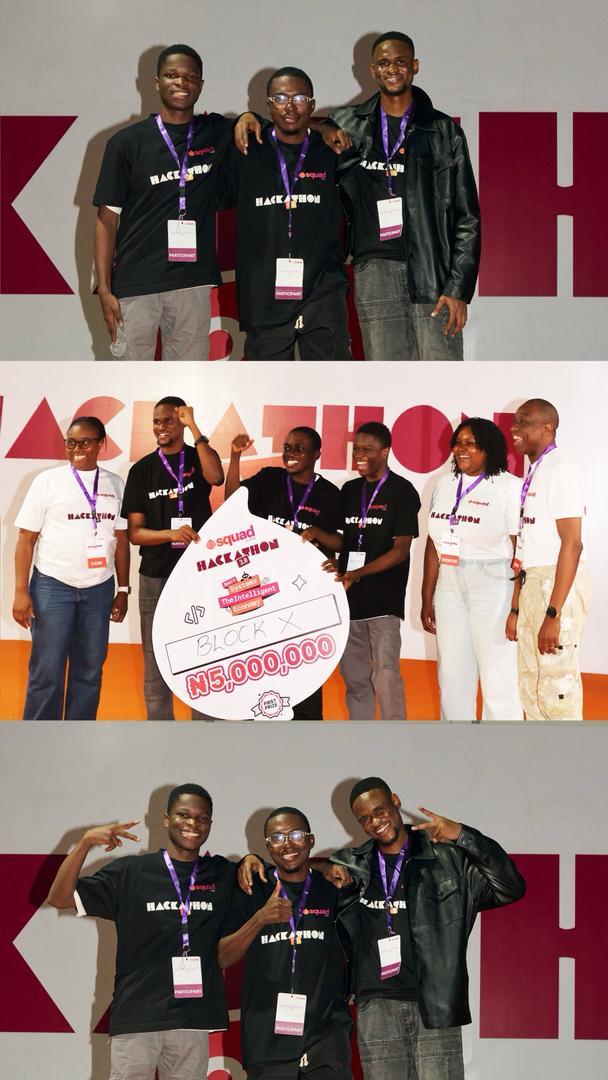
Scale and corporate strategy
The competition’s scale underscores this momentum. The organisers received over 1,600 applications from students across Nigerian universities; more than 600 were shortlisted following technical and GitHub portfolio reviews.
“The world is not ruled by extroverts; it is ruled by thinkers,” GTCO Group CEO Segun Agbaje told participants, emphasising resilience, collaboration, and ethical execution as critical to sustainable innovation.
Globally, this approach mirrors a broader trend. Corporate-backed hackathons have evolved beyond marketing events into talent acquisition and ecosystem-building tools. Stripe, Google, and Microsoft have long used developer competitions to identify early builders and encourage platform adoption.
HabariPay appears to be pursuing a similar strategy. By positioning itself as a platform layer for AI and payments infrastructure, the company is gradually establishing itself as more than a fintech provider—it’s becoming essential infrastructure for Africa’s digital future.
Beyond the hackathon: long-term incubation
What distinguishes Squad, however, is its commitment to sustainability. Managing Director HabariPay Eduofon Japhet outlined plans for long-term talent incubation:
- Mentorship and technical training
- Tuition support
- Employment pathways for selected participants
That continuity could prove transformative. Nigeria hosts numerous hackathons, but few offer the post-event infrastructure required to convert student projects into sustainable businesses. If HabariPay successfully builds a durable innovation pipeline, Squad could become one of the country’s most significant launchpads for AI-native founders.
In an ecosystem increasingly seeking lasting innovation over short-term hype, that may well be the hackathon’s most enduring achievement.