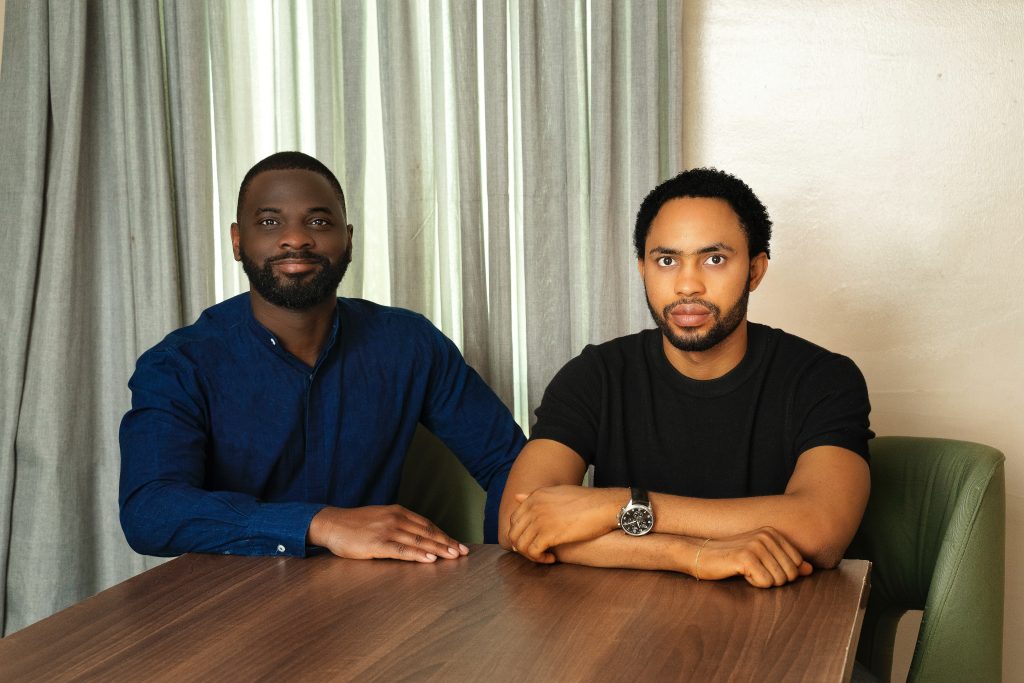
Bolaji Anifowose is a product marketing manager and go-to-market (GTM) engineer with over 7 years of experience helping startups across Africa and beyond sharpen their positioning, launch products, and build compounding growth engines. He has led growth, GTM, and marketing efforts for high-impact companies such as Simpu, Distrobird, Chatbase, and Tecno, delivering successful product launches, demand generation campaigns, and market expansion strategies that produce significant results.
Before tech, Bolaji studied Metallurgical and Materials Engineering at the University of Lagos, Nigeria, a background that shaped how he approaches marketing today: systems-first and evidence-led. He is a graduate of the pioneer cohort of the GTM Engineer School and spends a lot of his time these days at the intersection of marketing and AI, building automations and workflows that let small teams punch far above their weight.
- Explain your job to a five-year-old.
You know when you make something really cool, like a drawing or a sandcastle, but nobody comes to look at it? My job is to make sure people come and look. I help companies that have built something good figure out how to tell the right people about it, in a way that makes them go “I want that.” I find the people who would love it, work out what to say to them, and build little machines that help do it again and again.
- Did your 16-year-old self ever imagine he’d end up in marketing?
Not even close. At 16, I was deep in science, headed for engineering, convinced my future involved metals and lab coats. Marketing wasn’t on the map. If you’d told that kid he’d spend his days writing, building automations, and obsessing over why people buy things, he’d have laughed. But here’s the funny part: the engineer never left. I still approach marketing the way I’d approach a materials problem. Test, measure, find the system underneath the noise. I didn’t abandon engineering. I just changed what I was building.
- Who’s a GTM engineer, and what’s the path to becoming one?
GTM engineering is a term Clay coined in 2023. The simplest way to think about it is this: a GTM engineer builds systems that generate revenue. You’re combining artificial intelligence (AI), automation, and creative problem-solving to do work that would normally require a much larger team. That’s the core of it: giving a small team the firepower of a big one.
Think about traditional growth work. You’re manually searching LinkedIn for leads, writing outreach emails one by one, juggling inboxes, and tracking replies. Now flip that. Clay finds and enriches leads. A signal tool identifies who’s actually in-market. Claude and OpenAI personalise outreach. A sequencer sends it, and an n8n agent handles responses. Same goal, far less manual work. That’s what a GTM engineer builds.
There isn’t just one type of GTM engineer. I usually break it into three. First, the software engineer who could work on a product or data team but chose revenue instead. Second, the systems specialist, often from revenue operations (RevOps) or marketing operations, who excels at orchestrating tools. Third, the marketer or salesperson who picked up technical skills and sits at the intersection of strategy and execution. That’s me, and for most people, it’s the most realistic path in.
The skills transfer more than you’d think: systems thinking, customer understanding, copywriting, learning new tools quickly, and being comfortable working alongside code. You don’t need a computer science degree.
To get started, learn the fundamentals first: ideal customer profile (ICP), positioning, channels, and messaging. Then look at your week and identify a repetitive task, whether that’s lead research, follow-ups, or reporting. That’s your first automation opportunity.
Build with tools companies are hiring for today, like Clay, n8n, and Claude Code. Turn a real task into a working system, then run it on actual campaigns. After that, document what you built, make it part of your portfolio, and join the communities where jobs and collaborations happen.
Every system you ship becomes proof that you can do the work. In this field, proof beats a fancy résumé every time.
- What’s your hot take on why most product launches fail?
Here’s my hot take—and the numbers back me up on this: most product launches don’t fail because of the product. They fail because teams mistake shipping for creating demand.
The numbers back it up. Depending on the study, 80–95% of new products fail. Harvard’s Clayton Christensen put the figure at 95%. In B2B, only about one in four launches hits its revenue target. That’s not bad luck. That’s a pattern.
The mistake is usually the same. Teams build the product, pick a launch date, post about it, then wonder why the market shrugs. But a launch was never an announcement. It’s the moment you prove you understand your buyer well enough to make them care.
The data shows where things break. Simon-Kucher’s global pricing study found that 72% of new products miss their sales targets, and a quarter of companies said none of their recent launches met expectations. That’s rarely a product problem. It’s usually a failure to understand what buyers value and what they’ll pay for. Many teams build on assumptions and don’t test them with real customers until it’s too late.
Messaging is another common culprit. Most launches focus on the company and its features: look what we built. Buyers care about something else: what’s changing for them, and why now. If that isn’t clear, no amount of launch-day promotion will save you.
That’s why I think launches don’t fail on launch day. Launch day simply exposes months of skipped homework. If you can’t clearly explain who the product is for, what changes for them, and why it matters now, you don’t have a launch. You have an announcement nobody asked for.
The teams that win do the unglamorous work first. They talk to customers, sharpen their positioning, and align around a clear story. By the time they hit publish, demand already exists. The launch just opens the door.
- What’s your favourite and least favourite part of the work you do?
My favourite part is the moment a system clicks. I’ll build a workflow, go to sleep, and wake up to find it has spent the night finding leads, enriching data, and sending personalised outreach without me lifting a finger. There’s something magical about that. You build it once, and it keeps paying you back. That feeling of compounding, where yesterday’s work keeps working for you, never gets old.
It’s the same with marketing. When positioning I’ve shaped makes a prospect say, “This is exactly what we needed,” that’s just as rewarding. For me, the real payoff is building something that creates results without me having to be in the room.
My least favourite part is keeping up with the tools. In AI, the pace is relentless. Every day there’s a new product, a new feature, or a new model. You finally master a tool and build it into your workflow, then three new alternatives show up claiming to be faster, cheaper, or smarter.
You can’t ignore them because some genuinely are better, and clients expect you to stay current. But you also can’t chase every shiny object, or you’ll never get anything done. So you’re constantly balancing learning with execution. I love that this field forces me to keep growing, but even for someone who enjoys learning, the pace can be exhausting.
- What’s the one mistake you wish you could save every early-career marketer from making?
Don’t chase titles in the beginning. Just do the work.
I see a lot of people early in their careers obsessing over the label. They want “Manager” in their title, they want to be “Head of” something, they want the senior tag before they’ve built the skills those titles are supposed to represent. And I get it. It feels like progress. But a title is just a word on LinkedIn. It doesn’t make you good. The work makes you good.
When you’re starting out, your job is to get your hands dirty. Build the campaigns. Write the copy that flops and figure out why. Run the experiments. Learn the tools. Get close to customers and understand why they buy. That’s where real growth happens: in the doing, not in the title.
Because here’s what nobody tells you: when you become genuinely good at the work, the titles come looking for you. You don’t have to chase them.
The people who skip work and chase titles early often get exposed. They land the senior role, but the title isn’t backed by real ability. So my advice is simple: forget what they call you for now. Get obsessed with becoming great at the craft. Be the person who can actually do the thing.
The recognition, the titles, and the money follow. They always do.