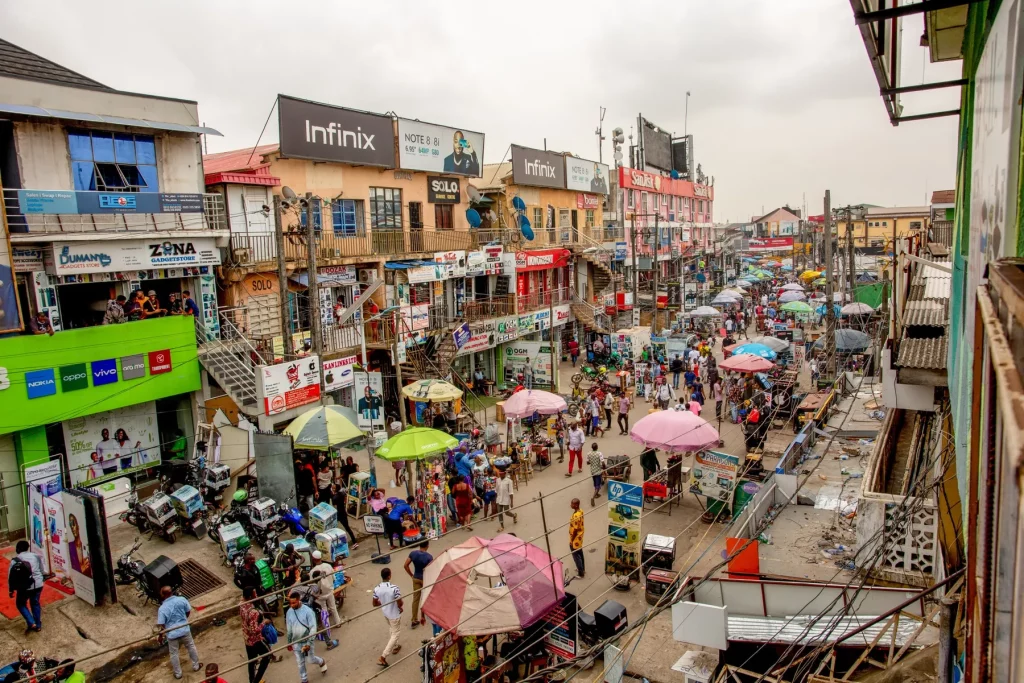
$56 billion. That was the amount that flowed into Sub-Saharan Africa as remittances in 2024, according to World Bank estimates. Yet, moving money across Africa still often means routing payments through correspondent banks, delays, foreign exchange (FX) costs, and fees that can reach double digits.
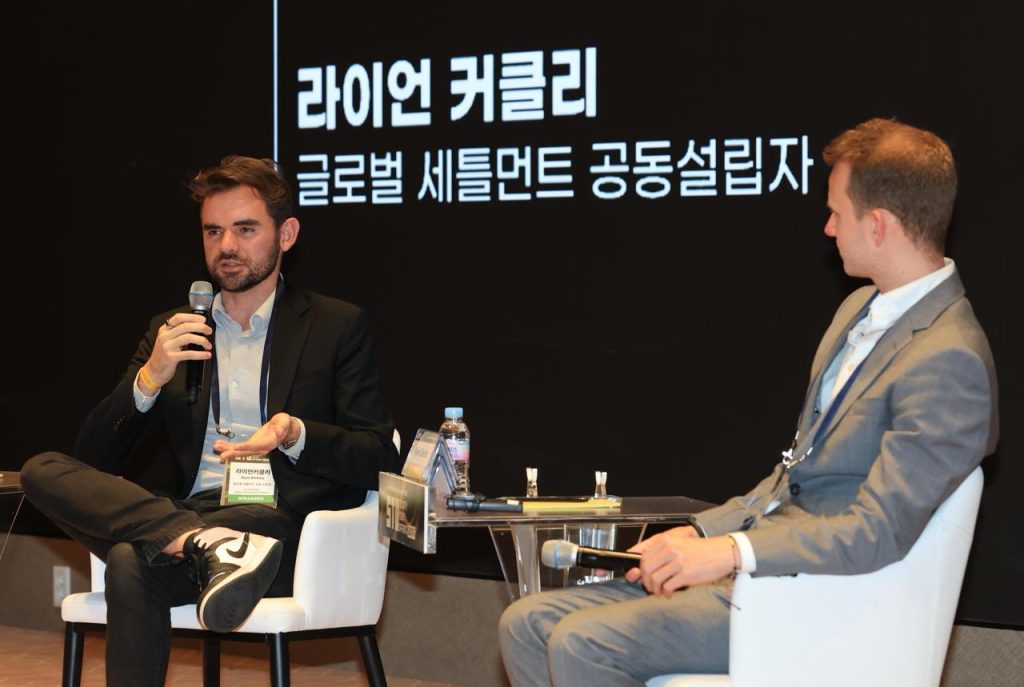
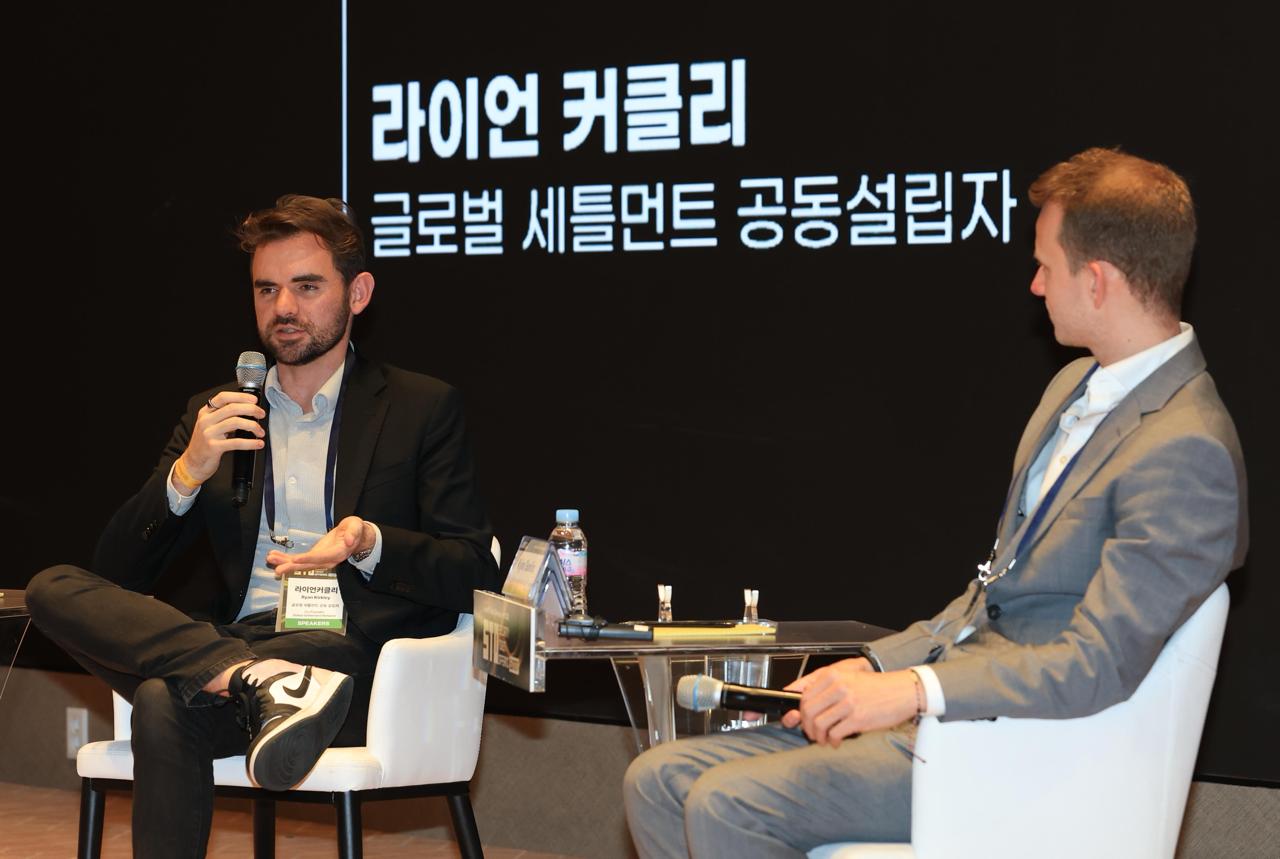
Ryan Kirkley, co-founder and chief executive officer of Global Settlement Network (GSX), a US-based blockchain infrastructure company, believes those inefficiencies are creating an opening for a new generation of financial infrastructure built on blockchain.
“Some African economies already run on stablecoin rails,” Kirkley told TechCabal in an interview in May. “The question now is whether countries build infrastructure to control that flow themselves.”
African governments, fintechs, and central banks are increasingly seeking alternatives to fragmented payment rails and reliance on dollar-backed stablecoins. Uganda has emerged as one of the continent’s boldest experiments.
Founded in Miami, the United States, GSX entered Africa in 2023, betting that governments building new payment infrastructure would adopt blockchain-based settlement rails faster than more mature markets. Uganda has since become its flagship project.
In October 2025, GSX partnered with Diacente Group, a Uganda-based green industrial zones developer, on a proposed $5.5 billion project to build digital infrastructure linking the country’s farms, mines, power projects, and factories, including a pilot for a digital shilling. In April 2026, it acquired a majority stake in local capital markets firm AKIBA International to strengthen its infrastructure for real-world asset (RWA) tokenisation, cross-border settlement, and digital currencies.
The US-based blockchain infrastructure company said it is developing technology for real-world asset (RWA) tokenisation, cross-border settlement, and, eventually, central bank digital currencies (CBDCs) across Africa.
Africa has become a testbed for tokenisation due to its perceived illiquidity across capital markets, shallow secondary trading, and restrictive foreign exchange (FX) controls in many countries that make it difficult to move money in and out.
In 2022, impact investment firm Mercy Corps Ventures (MCV), backed by funding from Ripple, the US‑based blockchain payments company, launched a tokenised savings product in Cameroon with local fintech Ejara that fractionalised government bonds into digital units retail investors could buy in small amounts through an app.
The project gave thousands of low‑income savers access to high‑yield, low‑risk government bonds for the first time, with more than 11,000 users collectively saving over $245,000, according to reported figures.
Building on that, in April 2025, Ripple funded a Ripple Impact pilot with MCV, alongside Kenyan lender Fortune Credit, and DIVA Donate, a blockchain donation platform, to test blockchain‑powered parametric drought insurance for farmers in Laikipia, Kenya. The partners used satellite data to track vegetation and rainfall and set predefined thresholds that would automatically trigger payouts, so farmers could receive compensation in RLUSD, Ripple’s dollar‑backed stablecoin, instead of waiting weeks for traditional insurance settlements.
But unlike those tokenisation pilots, GSX wants to build sovereign financial infrastructure, starting with Uganda. Kirkley said the company is not positioning itself at the consumer layer of financial services, but lower down the stack, where settlement rails, issuance, and transfer infrastructure are defined. He argued that Africa’s next financial infrastructure race will not be fought over consumer apps or mobile wallets, but over who controls settlement itself.
Investors are betting the opportunity is big. In May, GSX closed an $11 million pre-seed funding round, which the company said will support the expansion of its blockchain-based settlement network.
The interview has been edited for length and clarity.
You’ve argued that Africa’s next financial infrastructure race will be fought over settlement. What led you to that conclusion?
As I went deeper into the space through venture capital investing, I noticed two things.
First, US dollar-backed stablecoins were becoming widely used globally, but many countries wanted alternatives that preserved more local control.
Second, every institution was building on a different blockchain, settlement network, or financial ecosystem, with very little interoperability between them.
In the United States, you had networks like Canton. In Africa, Binance Blockchain (BNB) and TRON were gaining traction alongside US dollar-backed stablecoins like Tether. Every ecosystem was solving problems locally, but very few were focused on interoperability between them.
Connecting those fragmented systems became the core idea behind Global Settlement.
What exactly is the solution you provide to financial institutions and governments?
Our primary focus is central bank digital currencies (CBDCs) and government-backed stablecoins.
Around that, we have built a compliance infrastructure that includes identity verification, sanctions screening, know-your-customer (KYC), anti-money laundering (AML) controls, and Travel Rule compliance—everything regulators and central banks require to operate securely.
Africa and the broader Global South present a major opportunity because many financial systems are still developing. With political support, countries can modernise large parts of their financial infrastructure relatively quickly.
In Uganda alone, we believe digital financial infrastructure could eventually help bring formal financial access to roughly [8.7 million Ugandans—about 19% of the unbanked population].
Lower remittance costs, cheaper mobile money transfers, and access to more stable stores of value can have a meaningful economic impact. What differentiates us is that institutions do not need to adopt our blockchain specifically to work with us. We can integrate with almost any existing system.
When did you first find real resonance with the market you were trying to build for?
Finding product-market fit was probably the hardest part of building this company. In many ways, we started almost two years too early.
At the time, most people in crypto believed one blockchain ecosystem would eventually dominate everything. Our view was the opposite: every bank, institution, and government would eventually run its own blockchain infrastructure.
Starting early turned out to be a blessing because it gave us time to build the technology and do the research before the market caught up. Momentum really accelerated after [US President] Donald Trump’s election [in 2024], when the regulatory conversation around crypto became much more serious. Large financial institutions eventually realised digital asset infrastructure was no longer optional.
For my co-founder, Kyle Sonlin, and me, starting early ultimately became an advantage because it gave us time to build the technology before the market fully understood the problem we were trying to solve.
Let’s segue to Uganda. How did the conversations with the Ugandan government begin? Why Uganda?
We had been speaking with several African governments since 2023. In Uganda, the conversations started after meeting the Diacente Group at the Qatar Bloomberg Economic Forum.
The guys at Diacente were developing infrastructure projects in areas that traditionally struggle to attract capital, including solar plants, mining operations, refineries, and AI data centres.
Uganda’s special economic zone (SEZ) strategy—driven by the Uganda Free Zones and Export Promotions Authority (UFZEPA)—created an opportunity to rethink how infrastructure financing and payments could work: how to attract more investment, improve efficiency, and reduce the risk of corruption.
From there, we began meeting with senior government officials and regulators. Many details are still being worked through, but we received a fairly clear framework for how the partnership could evolve. Discussions have now been ongoing for roughly 18 months.
Working with regulators, hosting educational sessions, and participating in policy discussions made it clear that demand for this type of infrastructure is especially strong across Africa and within the African Union (AU).
What does tokenising assets in Uganda actually do for the average person who does not care about the technology used?
For the average person, tokenisation probably does not matter at all, and I think many people in crypto avoid admitting that.
What matters is the outcome. Tokenisation allows assets to become more liquid and investable. In many African markets, if you invest in a project, you often hold that position indefinitely because secondary markets and acquisition opportunities are limited.
Creating tokenised assets introduces the possibility of secondary trading and easier capital movement, which ultimately helps build a more mature financial ecosystem.
Walk me through your revenue model.
Our revenue model varies significantly by market.
In more developed financial systems with stronger connections to infrastructure like the Society for Worldwide Interbank Financial Telecommunication (SWIFT) and the Bank for International Settlements (BIS), governments often use us primarily as a software provider.
In markets with weaker currencies, higher inflation, or tighter public budgets, the model becomes more flexible.
Revenue can come from fractional fees on mobile money payments, tokenisation services, broker-dealer infrastructure, foreign exchange (FX) settlement, or, in some cases, small ownership stakes tied to projects.
We also make money on the transactions, but at lower costs than traditional systems.
What is your North Star for performance, both as a business and specifically in Uganda?
The North Star for the company is giving more control to local economies.
For decades, much of Africa’s financial infrastructure has depended on foreign settlement systems, whether through European banks, US correspondent banking networks, or limited access to systems like SWIFT.
We want countries to have more control over their currencies, financial rails, and economic futures while still participating in the global economy.
In Uganda specifically, success is measured by investment volume and infrastructure development. None of this works unless the country itself benefits.
If Uganda succeeds in attracting an additional $7 billion in investment through these projects, that would represent a massive economic impact.
This Uganda initiative is projected to create over a million jobs and as much as $10 billion in annual export potential, according to reported estimates. How?
The larger investment figures are tied to the broader partnership with the special economic zones (SEZs) and Diacente Group.
Much of the Karamoja region remains underdeveloped in terms of infrastructure, industrial processing, and agricultural productivity.
Simple improvements can create enormous economic value: introducing higher-value crops, building local processing facilities, or refining raw materials domestically instead of exporting them unprocessed.
Uganda, for example, has several artisanal gold mines but very limited refining capacity, which means much of the value leaves the country before export.
Our role is to build transparent financial rails that give foreign investors confidence in where capital is going. Investors can track projects in real time, monitor spending, and reduce corruption risks.
For instance, on a $2 billion solar project, digital infrastructure allows stakeholders to monitor budgets, payments, and project execution much more closely. Greater transparency creates more confidence, which ultimately attracts more investment into the economy.
What is the one thing that could go wrong and undo all of this?
Any government could still decide it does not want blockchain infrastructure or crypto-related systems, and if that happens, we follow the rules and leave. We are not interested in operating in jurisdictions that do not want us there.
At the same time, the business has diversified significantly. We are now active across multiple countries and use cases, including infrastructure settlement, energy tokenisation, gold-backed systems, and cross-border finance.
Uganda is one of our most advanced projects, and I believe it will succeed, but the company is no longer dependent on one market or one outcome.
Three years in, the technology exists, the infrastructure is operational, and the broader direction of the business is established, even if specific projects evolve differently than planned.
I also think much of the infrastructure that many African central banks operate needs significant upgrades. Because we are venture-backed, we can absorb some of those upfront infrastructure costs while helping modernise payments, FX settlement, and tokenisation systems.
What would you change about the African tech ecosystem if you could wave a magic wand?
One thing I would change immediately is stronger African Union cooperation and regional connectivity. Progress is happening, but fragmentation between countries remains one of the continent’s biggest obstacles.
Africa’s long-term growth depends on building roads between capitals, improving direct flight connections, and creating freight corridors that better connect landlocked economies to ports and trade hubs.
That level of fragmentation affects trade, investment, and how foreign investors understand the continent.
Most American investors still focus on a handful of markets like Egypt, Nigeria, Kenya, and South Africa because the broader regional ecosystem is difficult to navigate.
Better integration would unlock far more investment across the continent.
Where do you place Global Settlement Network in five years?
The broader goal, particularly across Africa, is to help countries create digital versions of their currencies, whether through CBDCs or other regulated digital settlement systems.
Digital currency infrastructure would allow African economies to settle transactions directly with one another instead of routing payments through Europe or the United States.
It could also increase remittance inflows and create direct trading pairs between African currencies, which remain one of the continent’s biggest trade and FX challenges.
After speaking with governments, commodity exporters, miners, and energy companies across multiple markets, it became very clear to us that this infrastructure is needed.
True scale demands moving beyond surface-level integrations to robust execution. We’ve filtered the noise out of Moonshot 2026, optimising the conference strictly for high-calibre connections between startup founders, global financial operators, enterprise leaders and individuals rewiring Africa’s technical frameworks.
Get 20% off Early Bird tickets for a limited time.