

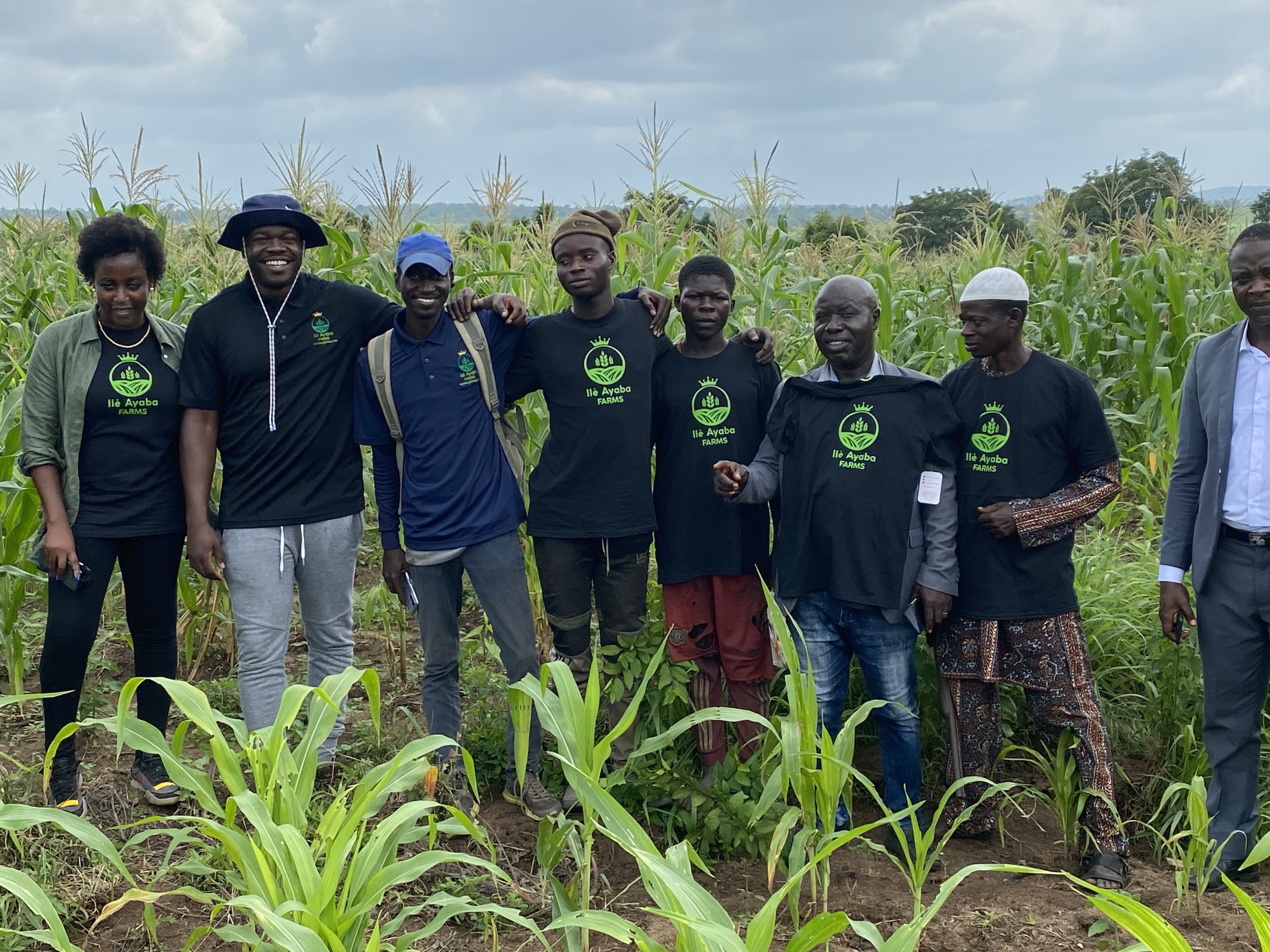
When Alexander Zanders stood on a patch of land in Oyo State in 2015, he planned to build a simple processing plant. But as the naira plunged, importing machinery became impossible. Forced to pivot, Zanders bought 100 acres, started farming himself, and ran a small experiment supplying 15 local maize growers with inputs on credit. The result? Crop yields tripled, farmer revenues doubled, and Zanders extracted the financial signals hidden in the soil. In this feature, OPEYEMI KARREM tells the story of how UfarmX has facilitated over $6.8 million in trade across 10,000+ farmers in Nigeria, Senegal, and Liberia—not by farming or direct lending, but by turning rural farm data into credit ratings for commercial banks and retailers.
In 2015, Alexander Zanders stood on 2,000 acres of land in Oyo State, southwestern Nigeria, recently gifted to him by his grandmother. The land coincided with Zanders’ burgeoning interest in agriculture, and as he began considering how to commercialise it, he noticed streaks of white powder lining the roadsides surrounding the property. It was cassava. Local farmers were harvesting the crop, processing it, and sun-drying it before turning it into garri—a dietary staple across Nigeria. An entrepreneur at heart, Zanders immediately spotted a supply chain he could plug into.
“My initial goal was simply to build a cassava processing plant because I figured that the local population would feed the plant, and I’d be able to make money from there,” Zanders told TechCabal in an interview in August.
Zanders had not originally come to Nigeria to farm. He founded his first company in 2011 while still an undergraduate, capitalising on supply-chain disruptions following the Japanese tsunami. He bootstrapped an export business that generated over $15 million in sales across Nigeria, Dubai, and the Caribbean. A subsequent venture into real estate, however, failed miserably.
Agriculture became a serious pursuit after the birth of his daughter in 2015. While living in the United States, a friend whose family worked in agribusiness invited him to the Sunbelt Ag Expo in Moultrie, Georgia. The event offered Zanders his first real sense of the scale of industrial food production, convincing him of the commercial potential within the sector.
The Georgia trip, combined with his grandmother’s gift of land, converted that interest into an actionable strategy, while the cassava drying along the roads provided a concrete business model. Yet the processing plant was never built.
As Zanders finalised his business plan and paperwork, Nigeria’s macroeconomic environment worsened. The Central Bank of Nigeria had pegged the official exchange rate at roughly ₦197 ($0.15) to the dollar, but by June 2016, the naira had plummeted to ₦283 ($0.21) per dollar, closing the year at approximately ₦305 ($0.23). The sudden devaluation drastically altered the economics of importing heavy machinery for the processing facility.
“I was looking to secure some funding from a bank to be able to get the equipment for the cassava processing plant,” Zanders said. “But since the Naira was in a downward spiral, I ended up taking what I thought was just going to be one year to travel across the continent, attend different conferences, and learn more about agriculture and our needs for value addition on the continent of Africa.”
That single year stretched into three. In 2019, he incorporated UfarmX as a credit infrastructure business designed to evaluate farmer creditworthiness using proprietary data, allowing agro-retailers to extend inputs on credit. However, before UfarmX became a fintech infrastructure platform, it operated as a working farm.
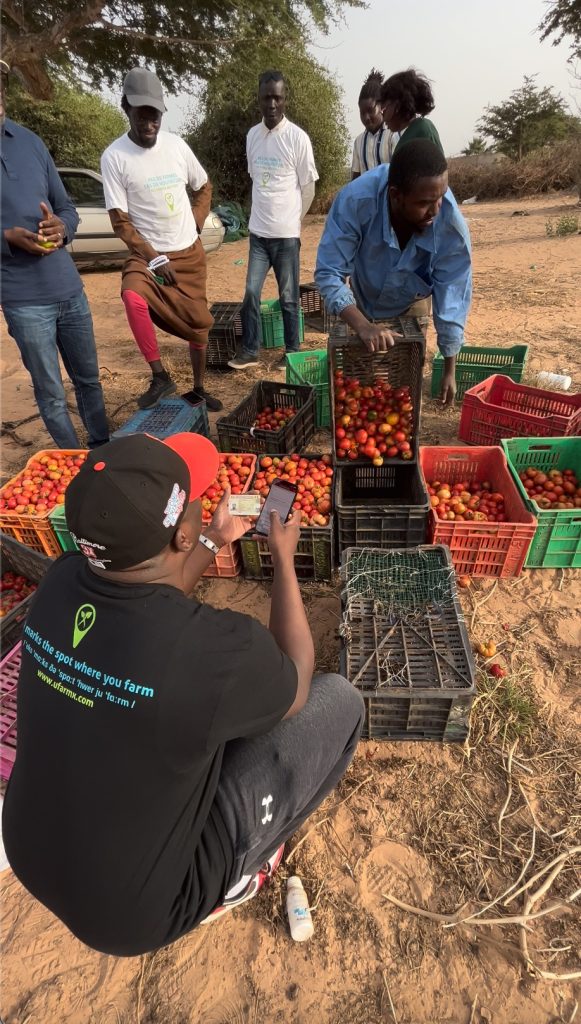
The farm as a laboratory
When the COVID-19 lockdown halted global travel in 2020, Zanders revisited his agricultural plans. The initial concept for UfarmX centred on connecting the African diaspora with local farmland. With international travel ground to a halt, he pivoted toward a more direct hands-on project.
However, a family dispute over the 2,000 acres gifted by his grandmother forced a strategic detour. Zanders instead acquired 100 acres independently, spending the next year securing title documentation before planting cassava, maize, and soybeans in 2021.
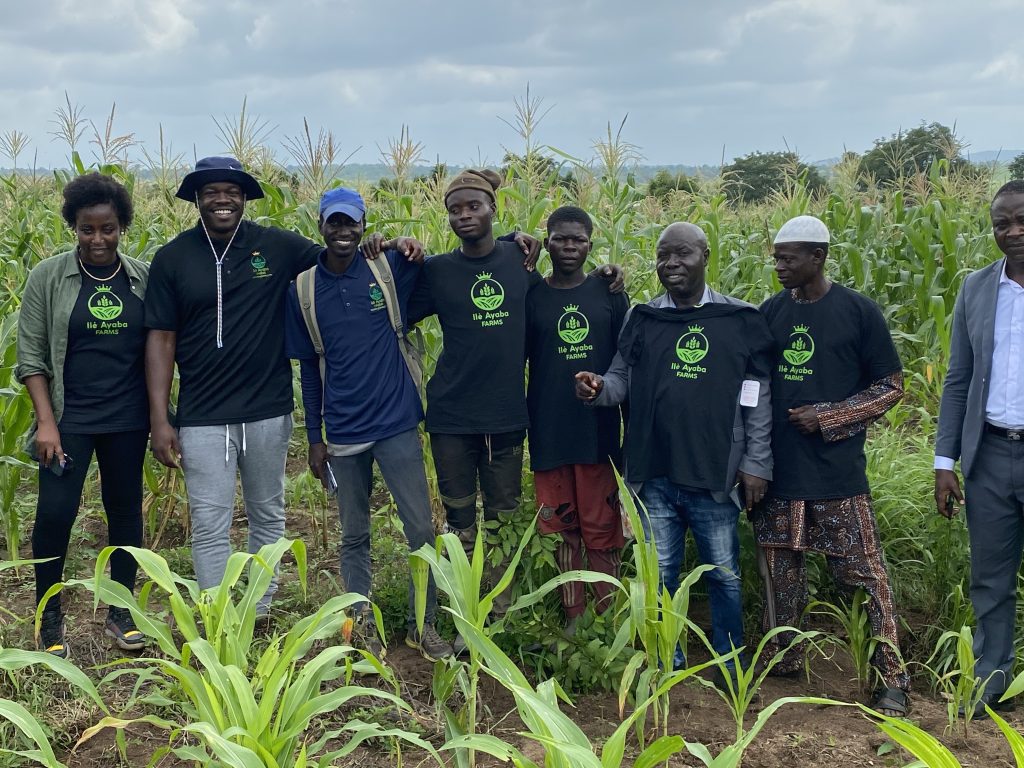
“Our production level was significantly higher than the other farmers in the local area,” Zanders said. “I’m not a farmer by profession. So, at a surface level, it just looked like we were all farming on the same land. I didn’t really understand why.”
Instead of chalking it up to better farming practices, Zanders began speaking with farmers around him and noticed that the difference was in what the farmers could afford to put into their land.
“These farmers just simply didn’t have the same access to quality, drought-resistant seeds and fertilisers that we did on our farm,” he said.
Rather than attributing the gap to superior technique, Zanders interviewed local growers and realised the true differentiator lay in capital: local farmers simply could not afford quality inputs.
“At the end of that first pilot, what we saw in terms of results was that farmers’ yields not only tripled, but their revenues also more than doubled,” Zanders said. “And we were still able to make a significant profit ourselves off of the margins on the inputs to the credit facilities.”
UfarmX also secured off-take agreements and purchase orders prior to harvest, guaranteeing farmers a direct market. The pilot established a viable business model: earning revenue by facilitating agricultural trade while derisking farm operations.
“As we continued supporting these farmers, we started noticing constant themes in the datasets themselves that differentiated the farmers that were able to successfully repay us versus not,” Zanders said. “We felt that we had essentially identified the data within the data itself.” That data became the foundation of UfarmX’s credit underwriting model.
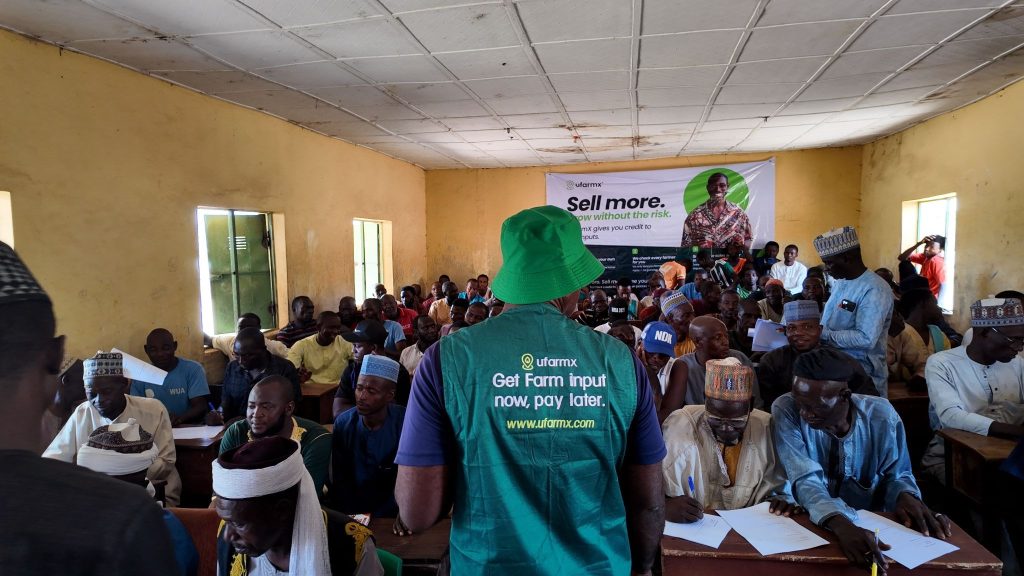
How the UfarmX credit engine works
Farmers onboard onto UfarmX through three channels: agro-retail partners, community agents, or contracted farmer cooperatives. At the retail level, store owners act as distribution partners, introducing smallholders to input financing at the point of sale.
Regardless of the onboarding channel, underwriting takes place exclusively on UfarmX’s infrastructure. The system ingests farmer data, processes it through proprietary algorithms, and generates an automated credit decision. While Zanders declined to reveal the full scoring algorithm, he confirmed that the model evaluates full Know-Your-Customer (KYC) records alongside geospatial and socioeconomic metrics, including plot proximity to major roads and markets, crop type, projected yield, farming tenure, and household size.
A farmer who is approved for the credit facility pays a transaction fee upfront, receives agricultural inputs on credit, and repays according to their creditworthiness. Farmers in the highest credit tier can repay after harvest, while those in lower tiers make monthly payments, according to Zanders.
UfarmX said it guarantees every farmer it approves to its retail partners, meaning that it pays the retailer if an approved farmer fails to repay. An insurance partner covers 80% of that risk, Zanders said. UfarmX generates revenue from transaction fees, interest spreads, and software-as-a-service (SaaS) fees paid by businesses using its technology.
The model is operating in a market where several companies are trying to solve the same financing problem, including Kenya’s Apollo Agriculture, Nigeria’s ThriveAgric, and Babban Gona.
“We don’t look to compete with banks and retailers; we’re not even really competing with other ag tech companies,” Zanders said. “We feel that our success bolsters the entire ecosystem and enables all the players within the ecosystem to successfully extend credit with minimal risk.”
The company said its cumulative default rate across its direct-lending and retail networks is 9.03%. On the retail model, however, the net default rate falls to 1.17% after insurance. UfarmX says it has facilitated more than $6.8 million in agricultural commerce, working with more than 10,000 farmers and over 70 vetted retail partners across Nigeria, Senegal, and Liberia.
Zanders noted that the company plans to launch a credit-scoring Application Programming Interface (API) that will allow banks, financial institutions, development finance institutions, and other lenders to plug directly into its underwriting infrastructure.
UfarmX also plans to expand into Kenya, its first East African market, by the end of 2026. The company said the expansion will be part of its effort to test the underwriting model in another agricultural and financial market.
Having started on a 100-acre farm in Oyo State, UfarmX is now building the financial infrastructure for an entire continent. “UfarmX is no longer in the business of direct lending,” Zanders concluded. “We are an enabler. We are building critical rails for African agriculture.”
True scale demands moving beyond surface-level integrations to robust execution. We’ve filtered the noise out of Moonshot 2026, optimising the conference strictly for high-calibre connections between startup founders, global financial operators, enterprise leaders and individuals rewiring Africa’s technical frameworks. Get 20% off Early Bird tickets for a limited time.