Nigeria is sitting on one of the greatest demographic dividends in the world. With over 60% of its population under 25, the demand for higher education is surging at an unprecedented rate. To meet this demand, universities across the country are expanding curricula, launching new tech hubs, and pushing for global accreditation.
But behind the ambitious academic goals lies a quiet operational crisis: the administrative bottleneck.
While Nigerian students are digital natives who manage their finances, socialise, and work on their smartphones, their university experiences remain legacy-heavy and disconnected. Long registration queues, misplaced transcripts, weeks-long waits for admission letters, and portal crashes during fee-payment windows are still the norm across many campuses.
The question is no longer whether Nigerian universities need a digital transformation. The question is: are they infrastructurally ready to transition from fragmented software to unified ecosystems?
The friction of “Frankenstein” IT systems
For years, the standard approach to university digitisation in emerging markets was piecemeal. A university might buy one software for finance, another for admissions, and rely on manual spreadsheets for everything else. This creates messy ‘Frankenstein’ systems where campus departments and data simply cannot talk to each other.
The operational toll is staggering.
Global education technology benchmarks reveal that university administrative teams lose an average of 17 hours each week simply reconciling conflicting data across disconnected legacy platforms.
Furthermore, many Enterprise Resource Planning (ERP) systems historically sold to African universities were originally designed for corporate accounting rather than for students. They are heavy, expensive to maintain, and notoriously difficult to navigate on mobile devices — a critical flaw in a mobile-first economy like Nigeria.
A unified “Campus Operating System”
However, a major shift is underway.
Much as Africa leapfrogged landline telephones straight to mobile networks, Nigerian universities now have the opportunity to bypass clunky, legacy IT systems and jump straight to unified, cloud-native architectures centred on a single-database campus operating system.
To build a future-ready university, we cannot rely on corporate software retrofitted for education. I believe deeply in ‘in-residence’ software design—building technology specifically tailored to the unique, complex workflows of a campus. Instead of spending millions on customising outdated, rigid corporate ERPs, Nigerian universities can adopt a unified, AI-driven architecture from day one.
My goal has always been simple: to put the student experience at the absolute centre of the digital ecosystem.
Replacing friction with functional AI
Nowhere is the disconnect between institutional technology and the student reality more evident than in the recent arrival of Artificial Intelligence on campus.
To date, AI’s primary footprint in Nigerian higher education has been largely adversarial. Driven by urgent concerns about academic integrity, institutions rushed to deploy detection tools, such as Turnitin, to identify AI-generated text in essays, dissertations, and assignments.
For students, this reactive deployment has transformed AI into a source of friction and anxiety rather than empowerment. Scholars frequently find themselves navigating an environment of digital surveillance, where the fear of false positives and automated plagiarism flags looms over legitimate drafting and research. Worse still, it creates an ironic double standard: students face punitive scrutiny for exploring cutting-edge digital tools, while their institutions remain mired in manual, paper-intensive bureaucratic workflows.
The critical task for academic leaders is not to abandon academic integrity, but to expand their vision of what AI on campus should accomplish. Higher education must shift from using AI purely as an academic police force to deploying functional, operational AI that genuinely enriches the student experience.
This is where purpose-engineered higher education platforms are shifting the paradigm. Rather than treating AI solely as a punitive filter, platforms such as Academia by Serosoft embed functional AI natively across the academic lifecycle, demonstrating how intelligent automation can directly alleviate administrative drag:
- Intelligent Conversational Assistance: Instead of waiting in exhausting queues outside departmental offices or the bursary, students can engage 24/7 with conversational AI assistants—such as Academia’s SERA (AI Student Assistant)—via mobile portals and chat to instantly check course requirements, track fee clearances, verify degree audits, and access exam timetables.
- Predictive Academic Advising & Early Intervention: Academia’s AI capabilities continuously analyse engagement, attendance trends, and continuous assessment metrics to flag early signs of academic distress, enabling faculties and advisors to intervene proactively before a student falls behind.
- Automated Lifecycle Verification: Repetitive back-office tasks—from AI-driven secondary certificate and transcript validation during admissions to automated graduation clearance workflows—can be executed with speed and precision, reducing weeks of clerical friction to mere minutes. Data from Academia’s recent global implementations show that automating the admissions process can reduce processing times by more than 30%.
When AI is channelled toward removing administrative barriers rather than merely monitoring coursework submissions, it transforms campus technology from an instrument of suspicion into a catalyst for institutional trust and student success.
A new era of higher education infrastructure
Proof that Nigeria is ready for this leap is already visible.
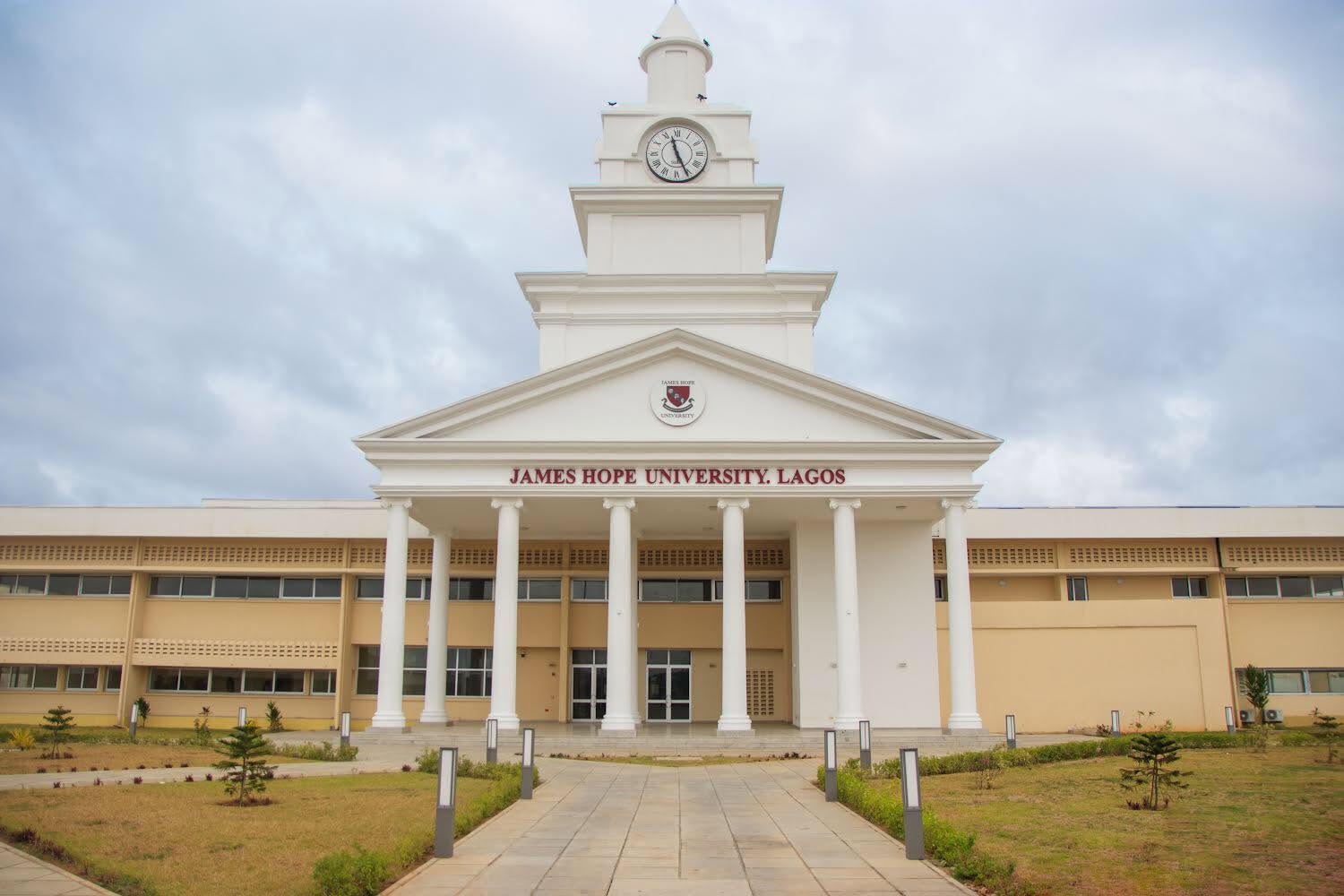
Recently, James Hope University, an exclusive, visionary postgraduate business institution in Lekki, Lagos, founded by legendary banker and philanthropist Jim Ovia (CFR), opted to bypass traditional, fragmented IT entirely. The university deployed a modern, unified, and AI-driven campus operating system to ensure its internal operations match the elite, forward-thinking nature of its curriculum.
This is the blueprint for the future of Nigerian higher education. Top-tier institutions are realising that to cultivate world-class talent, they must run on world-class, frictionless infrastructure.
The verdict
Is Nigeria’s higher education sector ready for a digital leap? Absolutely.
The demand from the student population is undeniable, and the technology required to build borderless, intelligent campuses is already available and proven on the continent.
The universities that will dominate the next decade of African education will not be the ones with the oldest buildings. They will be the ones that tear down their data silos, abandon legacy tech, and partner with modern, student-centric innovators to put the student experience at the absolute centre of their digital ecosystem.
Arpit Badjatya is the Founder and CEO of Academia by Serosoft, a global education technology pioneer and thought leader. He is a frequent keynote speaker on international education stages, including the World Education Summit, the Swiss Higher-Ed Executive Roundtable in Zurich, and the African TVET Conference in Johannesburg. His work focuses on reshaping campus operations through unified data systems and functional artificial intelligence.