



Quick Links


Categories

Newsletter

Events
-
How To Become Sub-Saharan Africa’s First Google Developer Expert in Machine Learning: A Robert Thas Story
By
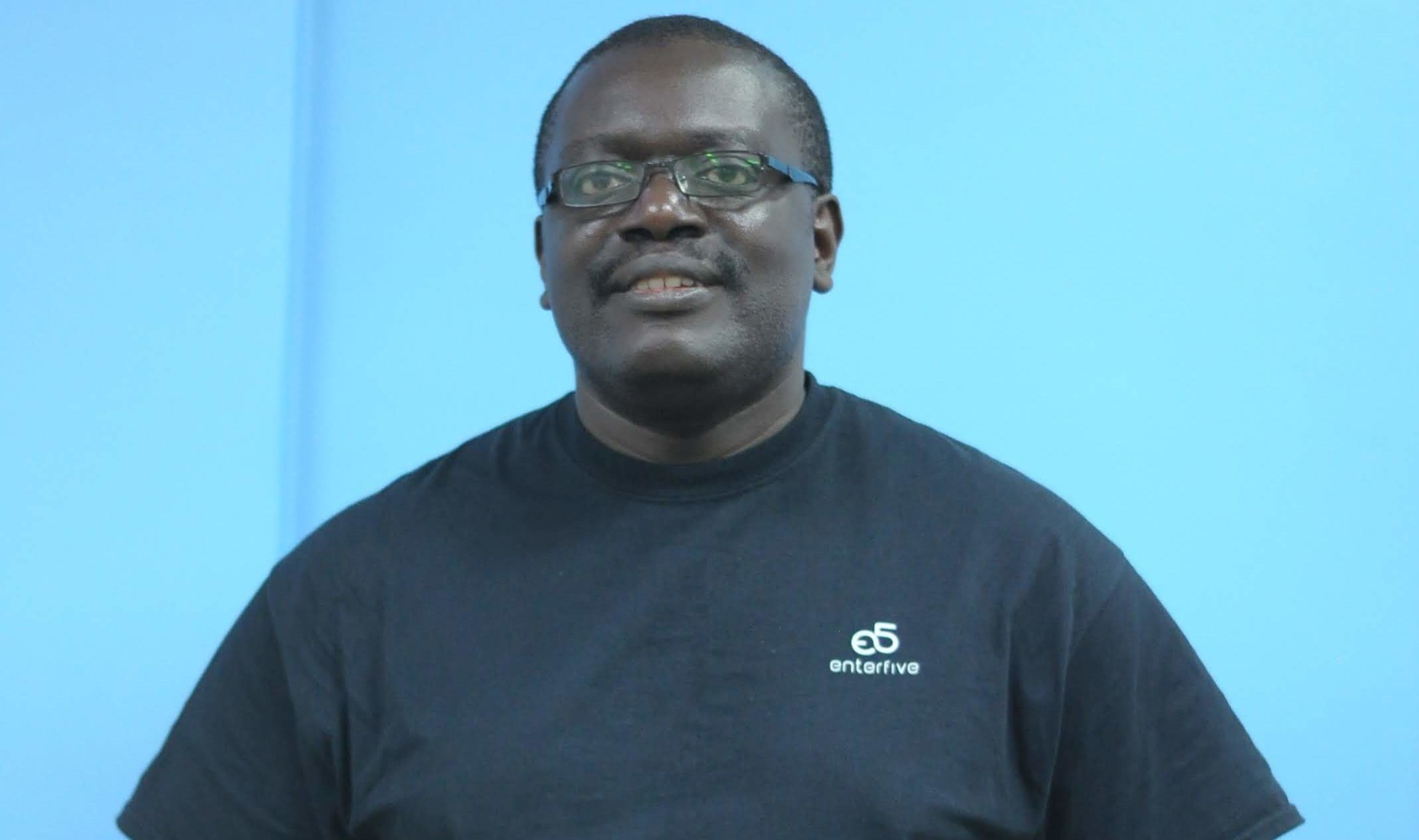
Robert John Thas is the First Google Developer Expert in Machine Learning in Sub-Saharan Africa. Share
Robert Thas got into computers really early. During his early school years in Kaduna State, Northwestern Nigeria, in the late ‘80s and early ‘90s, he attended one of the many missionary schools scattered across the state. At the time, insurgency and unrest weren’t common place in Kaduna. Thas told me it was a quieter, more peaceful time without the eery tension that today holds the air and permeates day to day life. He had a British proprietress at his secondary school. More importantly, the school had a computer science lab. Around the start of his senior year, Thas started spending most of his time in the lab. In addition to his favorite subjects: Math, Chemistry and Physics, his secondary school also had a “Library Studies” course which was a must pass. In a way, this compelled him to spend a lot of time in the library as well. These two factors greatly influenced Thas’ interest in computers and the science of them. “My first choice career-wise wasn’t even computer-related. I wanted to be a Chemical Scientist but there were no universities offering the course in Nigeria at the time. Now I’d always loved math and when I found out that a Math and Computer Science combined honors course was available, I figured that’s the next best thing. I probably wouldn’t be here if Chemical Engineering had been available at the time,” said Thas. He attended the Federal University of Technology Minna, Niger State, Central Nigeria and over the course of his time there, Thas would make older friends and spend a lot of time in the school’s Computer lab, just like he did in secondary school. “My older friends at the time had already been dabbling with programming and it had piqued my interest. I was in Abuja during one of the holidays and I went into Abiola Bookshops and bought a ‘Diving into C’ book. I’ve not looked back since,” said Thas. From C Programming he learnt another language and another and another. During the holidays he built equation-solving solutions for people using what were known at the time as “Command Line Applications” (or as they are known in today’s parlance: console applications). By the early 2000s as Nigeria started to get its first taste of Internet access, Thas was building desktop and web apps and websites. With a career spanning over two decades, Thas has worked across several time periods of the Nigerian tech era. Today, he is Sub-Saharan Africa’s first Google Developer Expert in Machine Learning. Definition: Machine learning is the ability of a computer system to use algorithms to parse data, learn from that data, and make informed decisions (or develop logic) based on what it has learned. It is considered a critical foundation of Artificial Intelligence (AI). According to a Tencent report, there are only 300,000 “AI researchers and practitioners” worldwide despite demand for this role is in the millions every year. Data scientists, Machine Learning, Deep Learning and AI experts are in incredibly high demand as the world rushes to prepare for an inevitably AI-reliant future. Here in Africa, the space is still very much in its infancy: the educational backbone doesn’t exist yet, AI/ML-based businesses are few and experts/practitioners are scarce. Thas is one of those experts. If he was a rapper, hip hop heads would call him an “OG”. The term is often used to refer to rappers with many years in the game who have managed to remain relatively successful. I spoke to him about his journey to this point, the influences that shaped his near-fanaticism with learning and his thoughts on Africa’s software development talent gap, among other things: Doing the work In 2004, after getting his degree, Thas started going back and forth between Lagos and Abuja doing consulting work for a couple of medium-sized businesses. At this time, Internet penetration in Nigeria still stood at 1.5%.Then a friend linked him up with a gig at the now defunct Intercontinental Bank and after completing that particular project, the bank asked him back to work on implementing a payment processor integration across its channels. “This was when Mastercard integrations were first starting,” said Thas. “That project got me into fintech and I started to build solutions to connect to the Mastercard systems over the next few years.” Sometimes around 2009, Thas moved on from consulting in the fintech space to offering his services within the telecoms and manufacturing segments, building process documentation systems for businesses among other things. From that he moved onto consulting for CHAMS Plc, one of Nigeria’s oldest ICT companies, for about two years. He helped build systems for CHAMS’ two main ICT centers in Lagos and Abuja. According to Thas, each of these centers had about one thousand computers each and were used for things like large-scale recruitment tests and Computer Based Test (CBT) centers for the Joint Admissions and Matriculations Board (JAMB). Thas also helped build the contact center system which Nigeria’s Independent Electoral Commission (INEC) used for the 2011 elections. But the roller coaster ride of Thas’ journey through the first decade of Nigeria’s ICT revolution wasn’t done. In 2011, he went back to Abuja – this time to try his hands at entrepreneurship. “I wanted to build tractors and other agric equipment,” Thas said. “But I realised that I wouldn’t be able to do build out a factory and setup that kind of operation in Abuja so I moved to Kaduna in 2014. Then the economy took a nosedive leading into the recession and I had to let that go.” Becoming Africa’s first Google Developer Expert in Machine Learning The recession had been biting for a couple of months when CoLab opened in Kaduna, Northern Nigeria’s first ever incubation hub. As it turned out, the hub was only a few streets away from Thas’ and a week after it opened, he decided to check out the place. He began to spend a lot of time at CoLab and was part of a CoLab team that participated in a Startup Arewa hackathon where they pitched an agritech solution to help small-holder farmers locate buyers, storage and logistics. They won and Thas eventually became CTO at CoLab. “We decided to build out that product and hopefully scale it and this led us to questions about the best way to go about doing so. We looked at SMS and Voice in our search to differentiate the product but those didn’t cut it,” said Thas. “At some point in our search for a unique value proposition and differentiator, we started to look at Natural Language Processing, AI and Machine learning. The potential of these technologies intrigued and that was essentially the start of my journey to becoming a machine learning expert.” Thas started sourcing learning materials from universities in the US and taking any online course he could find. He researched, watched hours of video tutorials on end and tried to consume everything he could find on NLP and machine learning. He found it so fascinating and soon he began to host data science meetups to introduce people to the concept of machine learning. “I realised that a lot of the time, I was the only one in the room who understood any of this machine learning stuff and I wanted more people to see just how fascinating it was,” said Thas. Before Google, Thas tested his machine learning teaching skills via Facebook’s Developer Circles program after the CoLab chapter was inaugurated in March 2017. “Sometime in August 2017, Facebook reached out to us at CoLab to educate people on AI and we organised about 5 events between November and December 2017. As we continued to engage with the communities, we realised that a lot of people didn’t even have the foundational ideas needed to grasp AI and machine learning,” said Thas. Thas’ Google Developer Expert certification started from a recommendation made by Aniedi Udo-Obong, Google’s Programme Manager, Developer Ecosystem for Sub-Saharan Africa, to the Google Developers team in Nairobi, Kenya. Udo-Obong had never met Thas at the time he made this recommendation. According to Google, to become a Developer Expert means “undergoing a stringent evaluation process, as well as being nominated by a Google employee or partner, authorised by the Google Developers team, and all based on the special contribution they make to their field.” “He [Udo-Obong] had visited CoLab but I was not around so we didn’t get to meet. But he took note of my work and made the recommendation,” Thas told me. Towards the end of July he received the email about his GDE nomination and a series of checks and interviews followed. Before he could become a machine learning GDE, there had to have been evidence of Thas’ track record of voluntary, meaningful and consistent contribution — like technical expertise, mentorship, training — to the community, all of which Thas has in spades. “After stringent checks and interviews, they mostly wanted to know about my work in deepening the proliferation of machine learning in the continent, community building and ecosystem education,” Thas told Techpoint in August. He’d been certified just two weeks before. But what makes Robert Thas tick? “Sometimes, a movie finds its way into my free time,” he told me, with a laugh. “I’m a lifelong learner so my free time usually goes to online courses or some kind of studying.” He’s also deeply faithful in the Nigerian spirit and cites this as one of the reason why he hasn’t joined the many devs who have left Nigeria for greener pastures. “I knew about the UK’s skilled immigrant program as early as 2005 but I’ve seen the ecosystem grow and the state of things within the dev community improve. This has deepened my faith in what we have and what we can achieve,” he said. Thas also said he’s passionate about imparting his knowledge and growing the community. He spends most of his time developing programs, mentoring developers and hosting events and meetups. Many a developer in Northern Nigeria have either been taught by Thas directly or have participated in one of his programs/meetups. “Africa has its own unique problems and technology use cases. Silicon Valley is not going to assign engineers to solve those problems or apply the technology for us,” Thas said. “The startups that exist today will not be able to do without machine learning once they start to scale because there is a limit to what you can manually do repetitively. That’s one of the reasons why I am passionate about getting more people interested in machine learning – so that we can plug that inevitable gap that will arise if we don’t step up to the plate.” On Nigeria’s Developer Exodus and Software Development Talent Gap Thas recognises the huge deficit and shortage of talent in the software development space and he thinks the best way to deal with it (and the developer exodus that has plagued the space) is to create an enabling system that ensures a surplus of talent. “We need to fix our learning culture. Most people have a general misunderstanding of what it takes to make a software engineer,” said Thas. “We need to focus on building quality – starting with updating our curriculum. There should be robust internship programs that take advantage of the university students industrial attachment periods.” While he believes the government and public sector have a role to play in getting to this dev utopia, Thas said he believes the private sector should take the lead. According to him, the very nature of the private sector makes it an excellent force to drive this change. Thas also says Nigerian graduate developers need to stop being entitled and do the work. “They need to unlearn what they’ve learn in the universities under duress. A lot of them are strangely entitled and believe that they know all they need to just because they have a degree,” he said. “Obviously, I get why they feel this way – Nigerian universities can be unnecessarily gruelling. But the world doesn’t care about that and the companies that need you to deliver need you to do just that: deliver. If you aren’t open to learning new things and understanding that nobody owes you anything, you won’t be able to deliver.” An almost reclusive life long-learner, Robert John Thas says he’ll continue to do his work of mentoring and teaching and spreading the gospel of machine learning, AI and data science. He’ll continue to have faith that the Nigerian condition will change for the better, sooner or later. And he’s not going anywhere – no matter how daunting this mission is. “We can’t all leave for the so-called greener pastures. This place is not going to suddenly change – it has to be changed – and you can’t do that from anywhere else but here,” he said. “I’ll keep investing in the ecosystem and hopefully, that’ll help cultivate the next generation of African machine learning, AI and data science experts.”More from this Author
-
Read Next

Lisk wanted to introduce the world to the "power of blockchain." Ten years later, it appears to be pivoting away from that mission. Image Source: The Block
-




Read more
-
African talent is facing a tougher path to the US as visa issuances fall across major categories. Image Source: Wunmi Eunice for TechCabal -
Lisk wanted to introduce the world to the "power of blockchain." Ten years later, it appears to be pivoting away from that mission. Image Source: The Block -
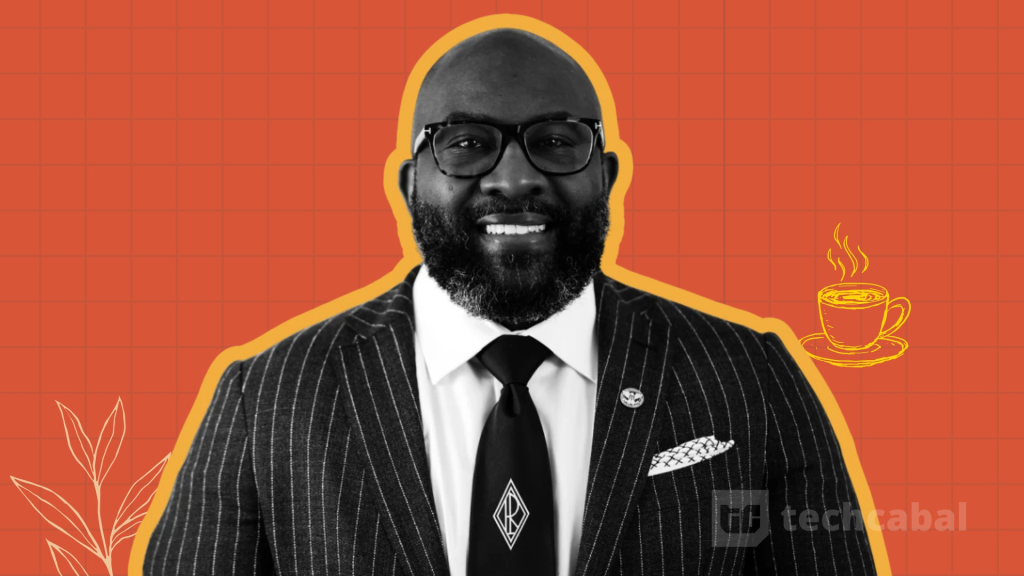
Larry Yon II’s first trip to Africa started a journey that has taken him from South African business projects to cybersecurity, AI and a mission to bring more African-Americans to the continent. Image source: CyberAlliance -

Point-of-sale (POS) terminals continue to power merchant payments and digital transactions across Nigeria. Image source: Moniepoint -
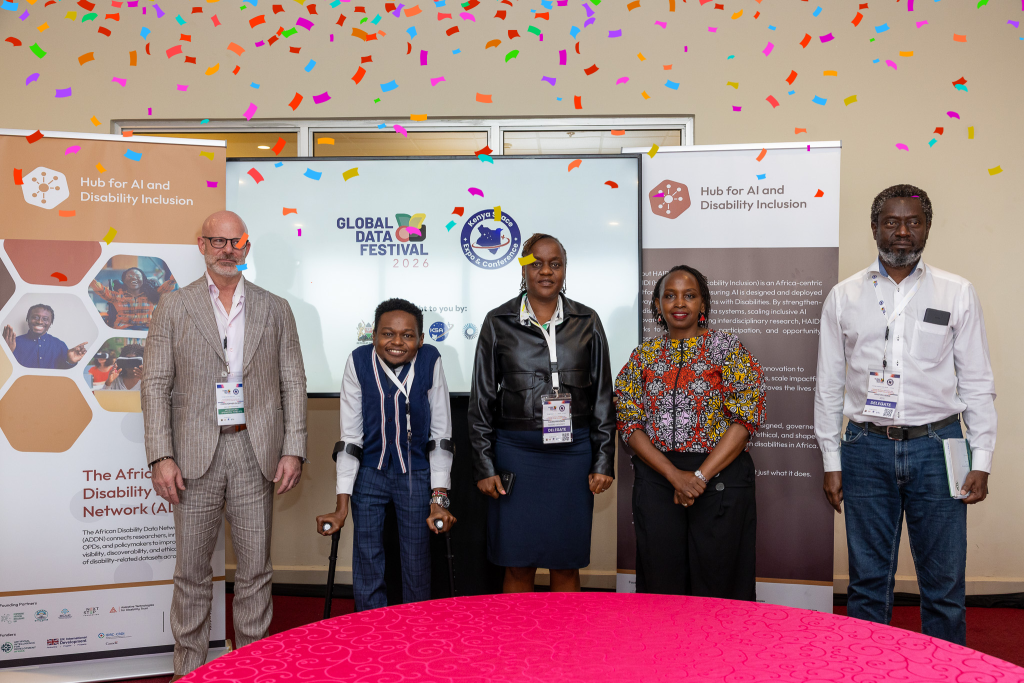
HAIDI consortium partners launch the HAIDI-ADDN initiative during the Global Data Festival in Nairobi, Kenya. Image Source: Faiza Kimathi -
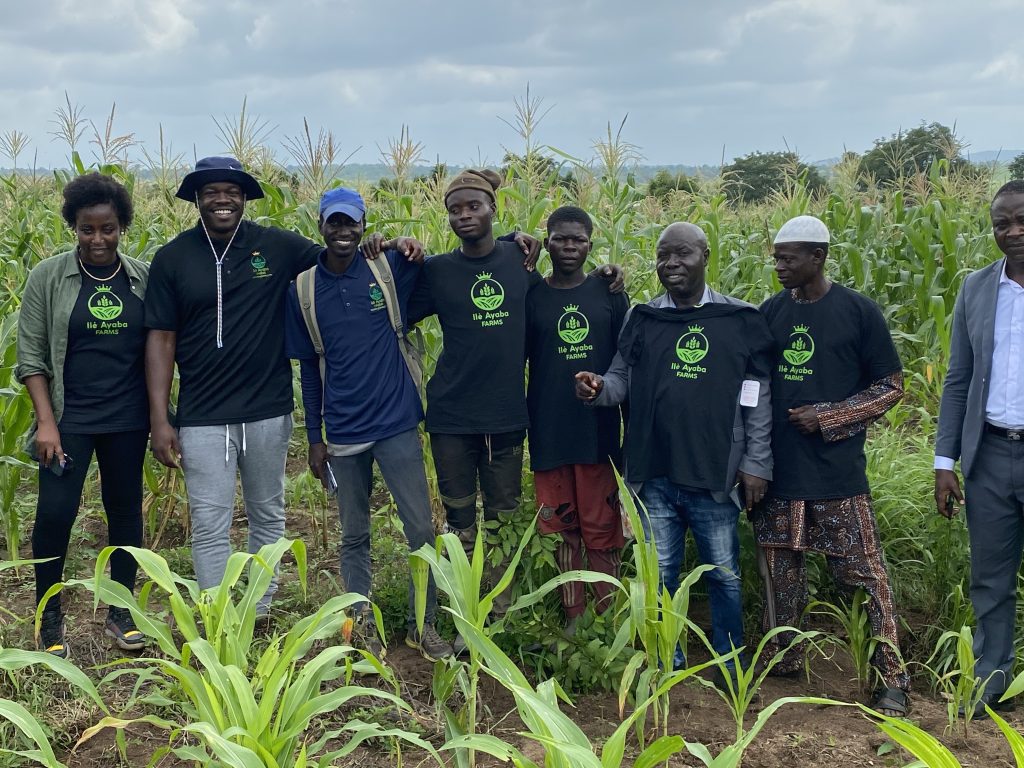
Alexander Xanders and the uFarmx team inspect a maize farm as part of efforts to improve access to inputs and support agricultural production. Image source: UfarmX
