“Oh God of creation, direct our noble cause
Guide our leaders right
Help our youth the truth to know
In love and honesty to grow
And living just and true
Great lofty heights attain
To build a nation where peace and justice shall reign.”
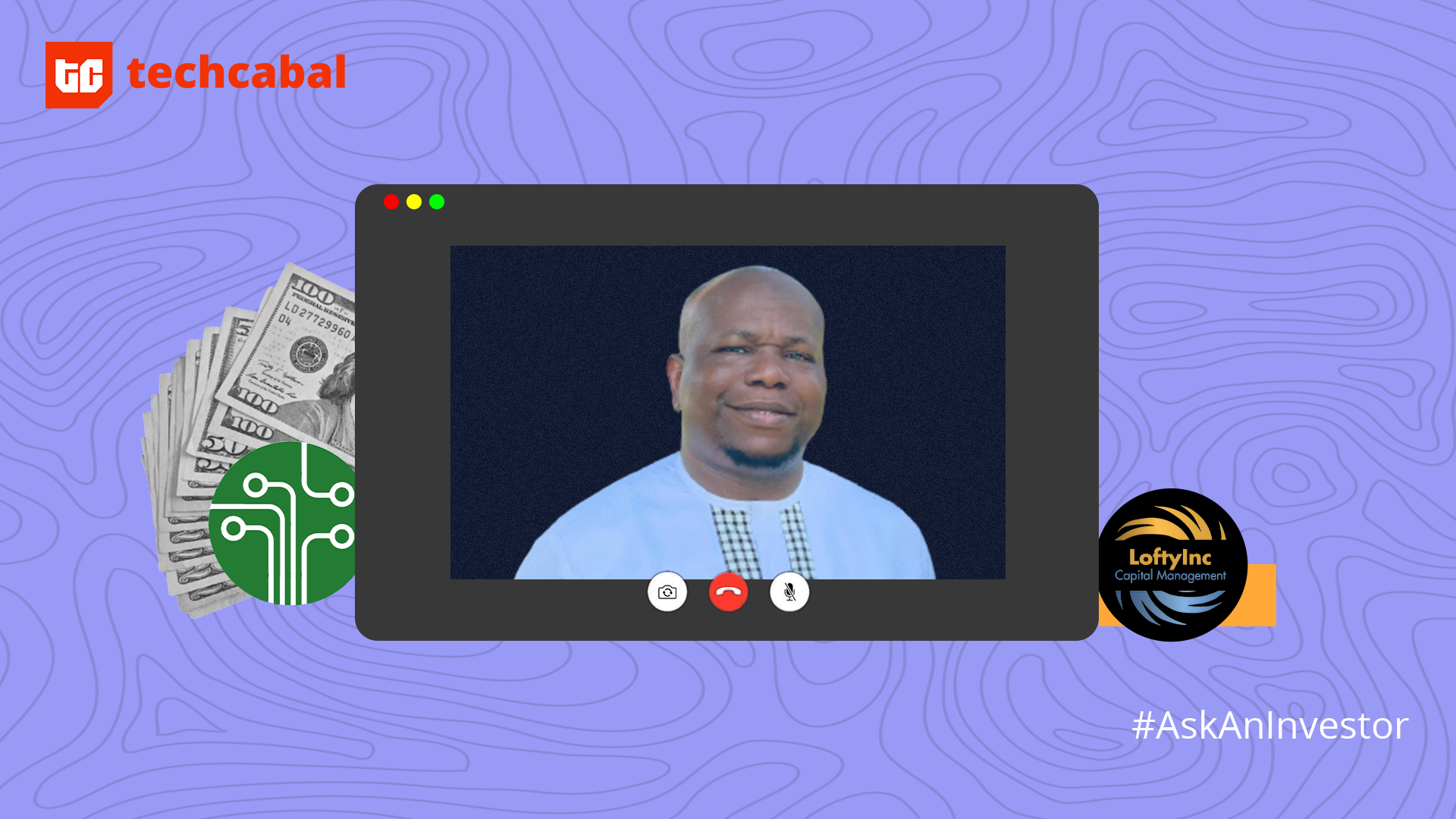
Forty-three years ago, this version of the Nigerian national anthem (second stanza) was created. Like many other Nigerians, Idris Bello and Michael Oluwagbemi grew up singing it, not knowing that a line from the anthem would later inspire the name for their future pan-African venture capital firm, LoftyInc Capital Management.
The journey of LoftyInc started about 10 years ago with a simple desire to help young Africans turn lofty ideas into global corporations that would create high-impact jobs and transcend development challenges.
In 2010, Bello and Oluwagbemi were engineers working in the US and met after an interview on entrepreneurship Bello had granted during a visit to Nigeria. Upon realizing they had the same idea and could do more together, they decided to partner.
“When we decided to start supporting businesses, we didn’t know how to go about it,” Bello said. “We didn’t have any template or roadmap. We just knew we wanted to create more jobs and prosperity for people, and we set out to do something.”
Back then, the popular way to support businesses was through innovation hubs. The duo looked to iHub in Kenya, YCombinator in the US and a few hubs in Houston for inspiration.
The solution they arrived at was what birthed the Wennovation Hub, a place where people could gather to collectively solve the common problems they faced. The approach then was to bring people together to talk about the problems they faced in their different sectors, with the hope that they’d figure out the right questions and solutions.
Along the way, they noticed that after talking about the problems and stumbling on solutions, the ideas needed funding to take off. This led the duo on a long and experimental expedition to build what is now known as LoftyInc Capital Management.
Today, LoftyInc operates three funds that have deployed over $12 million into over 75 African startups like Flutterwave, Andela and Trella. It recently launched its third $10 million fund.

Daniel Adeyemi: How did LoftyInc Capital Management start?
Idris Bello: Michael and I met because we shared a similar interest in solving problems in Africa. We aligned on a clear belief that entrepreneurship is the answer.
The turning point for us was in 2011 when the Massachusetts Institute of Technology (MIT) had a programme called Accelerating Information Technology Initiative (AITI). This programme involved sending coders (they weren’t called developers back then) to teach people at the University of Ibadan programming. We heard about this and said we’d partner with MIT on the business side of things by working with the persons trained in programming to bring some of their ideas to life. The first set of startups we invested in came from this programme.
It was while working on the business aspect that we realized these businesses also need money to run.
So we decided to look back home. We decided to pool funds from different people (angel investors). I remember sending the first email to Tomi Davies and other industry leaders to form what has now become the Lagos Angel Network. Kudos to Tomi Davies and others who have done an amazing job building that up to form the African Business Angel Network (ABAN).
After a while, we noticed that it took too long to invest in the startups. Back then LAN used to invest in companies twice a year. By the time we were done with due diligence six months down the line after committing to invest, the companies were probably dead.
So I said, “This isn’t sustainable. We need to start investing on a more frequent basis.” Michael and I took out money from our 401k (retirement savings) to invest. It was a risky move because we weren’t supposed to touch the money until we were 59 years old.
We also got other people to start the Afropreneurs Angel Group, a group of angel investors, who invested on a more frequent basis. Notably, the first investment we made from here was in Hutbay, a startup that recently shut down. We went on to invest in more startups that mostly died, but fortunately, a few that survived, like Andela and Flutterwave, have compensated for the ones that died.
While we were investing via the Afropreneurs Angel Group, our long time advisor Masha Wulff (a veteran US investor), suggested that we set up a proper VC fund. We were at first reluctant because we didn’t set out to become venture capitalists. In fact, if you were to ask me 4-5 years ago about the normal things that a VC or investment banker should know, I didn’t know them.
But Wulff was persistent and we gave in. This incentivized her to decide to come out of retirement to be a general partner for Fund 2, committing $500,000 of her own money to the fund. We ended up raising a little over $1 million and further invested in six companies — Printivo, RelianceHMO, Epump, YouVerify, Shyft Power Solutions and Flutterwave (at pre-Series A).

DA: What’s your approach to investing in startups?
IB: In early-stage investing, founders are crucial, so we believe in backing good founders. We believe that good founders will always find a way. It’s not necessarily about the business model, because startups often pivot.
I remember telling Iyin Aboyeji early on when I was investing in his first venture that even if he doesn’t return my money, he should take it as payment for his MBA. Fortunately, he’s given us great returns on the many investments we made. I say this to point out that the way I see it is we’re investing in the ecosystem. So even if a company fails, the founders and employees can go on to work at other startups and go on to build the African tech ecosystem.
We use our experience at the launch and early growth phases to closely support and assist new and early founders. We often help to source and secure their initial clients from within our large portfolio (over 75 African startups) or further afield within our large African-based Angel and Limited Partner (LP) network. We provide meaningful introductions to regulators, partners, mentors, top hires and experienced board directors.
While we’re sector-agnostic, we have 6 thematic areas of focus: Commerce, Financial logistics, Food security, Health/Wellbeing, and Education. We believe businesses in these areas help spur the general prosperity of a nation and people at large.

DA: Tell me about notable deals missed or mistakes made?
IB: Oh sure! Those are the aspects of investing that people don’t say much about. I remember when we wanted to start our Fund 2, we decided to register in Mauritius because we were told it was better. It turned out to be a bad decision because of the tedious registration and documentation process. The KYC (identity verification) was unnecessarily complicated as they wanted to know ‘everything’ about everyone who was investing, and it got expensive and complicated very fast. In hindsight, it was a bad decision. We ended up cutting our losses and registering in Delaware, US.
Most of the mistakes we made were a result of wrong judgment calls. Here’s another that probably cost me a few million. In 2013, I remember committing to invest $20,000 in Fora, which later became Andela. Unfortunately, on that same day, someone else came to me with another idea. So I told Iyin to bring back the $20,000 check. I split it into two and gave both start-ups $10,000 each. Today it is clear I shouldn’t have gone back on my initial investment.
When I look back at these mistakes, it was easier to get through because we used our personal money in the early days and we weren’t crazy about exits. We did what we did because we believed supporting businesses was the way to solve Africa’s problems. And today, when we see startups like Andela employing thousands of people in emerging markets, and impacting lives globally, we feel very fulfilled. People returns, then money returns. That is the goal!

DA: I remember earlier this year you spoke online about a bad experience with a founder. How often do those happen, and can you share any experiences?
IB: That’s right, there are bad experiences and it’s important to share them. These days all that’s shared are the success stories, which is only half of the picture.
Without mentioning any names, we’ve had a situation where some founders disappeared after getting $5,000 investment only to show up after 3 years begging for forgiveness. Small money, but I guess they had more pressing needs.
There’s one startup that recently shut down primarily because the CEO relocated permanently to Canada without carrying us along, yet refused to let go of leadership. They’d blame it on COVID but it wasn’t COVID.
Once again, I’d like to say that in this space, we have no issues with startups not working out, but then what’s more important is that the founder communicates well and operates with integrity.
DA: What are your thoughts on exits?
IB: When it comes to early-stage investing, my belief is that a bird in hand is the only bird. The tides can change for any company, so the only thing that’s certain is money received based on exit, not expected return based on valuation. Earlier this year, our Fund 2 exited Flutterwave and returned 3x of total funds raised to our limited partners (LPs). Some people felt it was too soon and we should have waited. But the way I look at it, it’s necessary to return funds to the backers of early-stage funds to boost their confidence. For a 5-year fund, in just three years, we returned 3x. The result of this was that these LPs were so impressed that they pressured us for a new fund and made commitments of over $4m to get it started.
It’s also important to note here that we don’t play by the “rules”. Every now and then, we ask ourselves, “Who created the rules that you have to wait 5 years or that you have to return 10x the investment?” For me, as long as my LPs are happy and the startups are doing fine, I’m okay. It is still Day 1 in the African early-stage investment space and we are all learning as we go. VC Investing in Africa is still nascent and we’re all still figuring it out. There are no experts.

DA: What trends are you seeing?
IB: For me, there are three things I’m bullish about going forward. The first is bringing Egyptian and Nigerian companies together. These are two of Africa’s largest markets. I believe there should be more collaboration, considering that Egypt has a matured stock market and Nigeria has many notable startups. I believe this type of collaboration will bring about more mergers and acquisitions. It’ll help create a secondary market for investors to exit.
Another thing I’m excited about is investing outside of the Big Four — Nigeria, Kenya, South Africa and Egypt. We’ve recently invested in a Zambian startup and are doubling down on investing in Francophone African countries. We like to stay ahead of the curve. Egypt is hot right now, but I remember a few years ago when I started investing in Egypt, I was telling people to do the same and it looked like I was insane.

Finally, as many people “japa” (exit) the continent in search of greener pastures in the West, it’s expected that some of them will go on to start businesses. We’re keeping our eyes on the diaspora market.
One of my biggest joys over the past few years has been the large number of senior African executives and experienced operators we’ve turned into investors, either as angel investors or LPs. These African investors then spend lots of their time helping us with due diligence and supporting our portfolio companies. Again, this is all part of building the African tech ecosystem: activating Africans to fund Africans solving African problems.