
June 19, 2022
The Next Wave provides a futuristic analysis of BizTech and innovation in Africa. Subscribe here to get it directly in your inbox on Sundays at 3 PM (WAT).
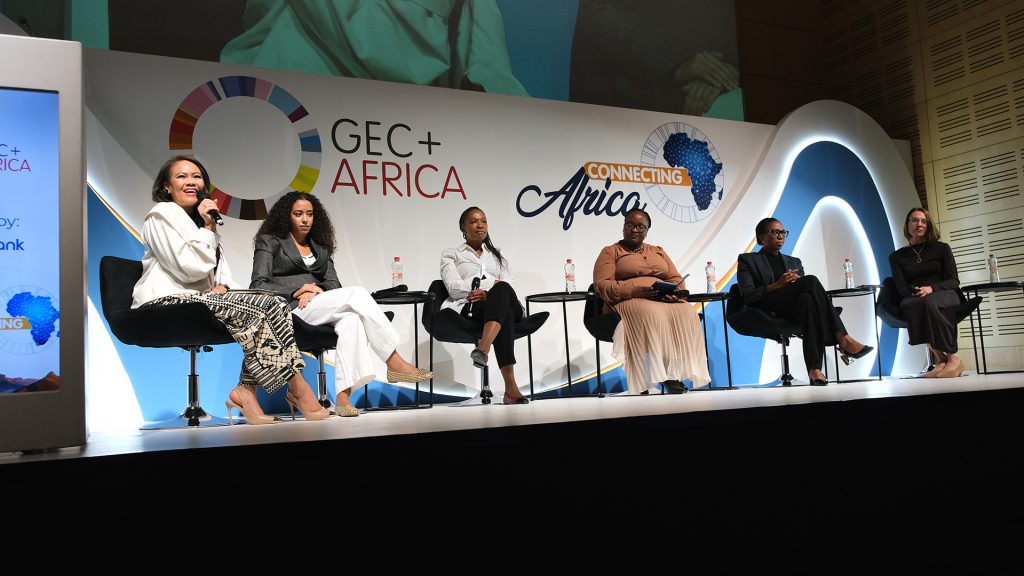
Over the past 2 weeks, I’ve attended 2 major conferences: VivaTech in Paris and the European Development Days (EDD) in Brussels. During my time at these conferences, I realised that funding and support for African startups and the tech ecosystem don’t just come from investment firms, angel investors, corporates, and tech hubs. There are other players.
It’s popular to define progress in the African tech ecosystem by the amount of venture funding raised, but the conversations I had made me wonder whether it was also worth measuring this progress in relation to the activities of development agencies and governmental organisations.
Partner Message

You are invited to an upcoming virtual pitch & conference organized by the Japan International Cooperation Agency (JICA) Nigeria Office in partnership with Nikkei Inc. Kindly register your interests here.
Development agencies—international and local non-governmental organisations—are tasked with fostering the socio-economic development of different countries, but now more than ever they are realising that leveraging technology is a no-brainer.
The International Finance Corporation (IFC), the largest global development institution focused exclusively on the development of the private sector, might be more popular for financing roads, ports and other infrastructure across Africa but over the past 60 years has been it has invested about $10 billion in the private sector, working with small and medium enterprises (SMEs) to create jobs and improve livelihoods. In 2020, it led the World Bank Group #GlobalTechChallenge initiative to match early-stage health tech innovators with healthcare providers in East Africa. Some of these health tech companies were also provided with funding.

To reduce the financing gap women entrepreneurs still face, in January the IFC launched the ScaleX program that incentivises accelerators to help women-led companies in emerging markets raise equity financing by awarding deserving accelerators up to $25,000. Three years after leading a $8.6 million Series A Investment in Africa’s Talking, the IFC recently backed ride-hailing startup Gozem with $10 million to finance 6,000 vehicles in Togo and Benin.
Closely related to this is the work the International Trade Centre does toward making global prosperity a reality by connecting small businesses in developing countries to international markets. This entails that it has projects in Benin, Côte d’Ivoire, Mali, Uganda, Zambia, and other African countries that focus on the creation of sustainable jobs in the digital technologies sector, and the modernisation of agribusiness through digital technologies.
Advisory services can play an important role in shaping the allocation of vast amounts of resources. In this vein, the AU-EU D4D Hub primarily aids African governments with strategy formulation and frameworks for digital transformation.
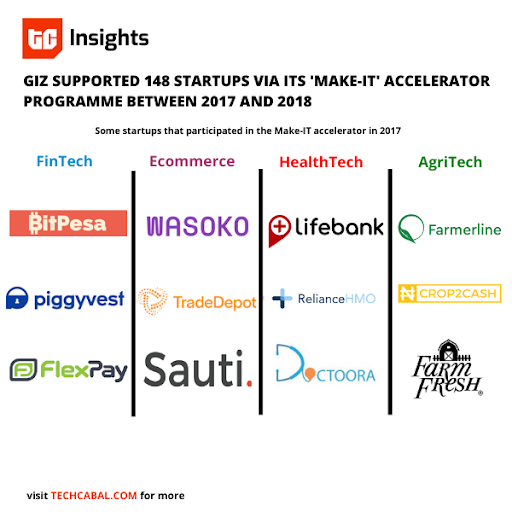
In the 2 years since it launched, the AU-EU D4D Hub has conducted feasibility studies in Uganda and Rwanda, as well as learning sessions with the Tanzanian government. Germany’s Gesellschaft für Internationale Zusammenarbeit (GIZ) make-IT project develops and implements accelerator and funding programmes across 18 countries on the continent, according to a 2017-2019 impact report
With an estimated number of over 300 million French speakers across 5 continents, the International Organisation of La Francophonie (OIF), which was created in 1970, is increasing its efforts to give francophone African startups more visibility and attract funding.
Senegal’s Délégation Générale à l’Entreprenariat Rapide des Femmes et des Jeunes (DER) since 2018 has been investing in the country’s tech environment, granting about 60 billion FCFA (~$96,424,000) out and helping transform the Senegalese tech ecosystem.
Many other African country governments like Mauritius, Congo, Tunisia, Ghana, and Rwanda have initiatives to spur the tech ecosystem in their country.
It can be challenging to quantify the impact of some of these projects and programmes—training sessions or sponsorship of startups to conferences, for example—but they sure lead to business leads and investment opportunities.
The attention that African startups are receiving from developmental and international agencies is a testament to the capability of these startups to spread innovation and produce tailor-made solutions for some of Africa’s biggest problems.
Partner Message

Applications are now open for the Decentralized Umoja Algorand Bounty Hack III, by Algorand and Reach. The Africa-focused hackathon is an excellent opportunity for developers to learn & build blockchain projects—prizes of up to $6,000 to be won, including a $1,000 participation prize. Applications are open here until 15th July 2022.
What’s next?
Better awareness of the different players and activities in the African tech ecosystem creates room for collaboration. For instance, during the European Development Days, I witnessed an intro conversation between representatives of the ITC and African European Digital Innovation Bridge (AEDIB) Initiative concerning their projects. The ITC is working on mapping the tech hubs in Africa, while the AEDIB is building digital innovation hubs—a virtual cluster of innovation centres such as tech hubs, research institutes, universities and others in a community. Since they were working on solving a similar problem, at different levels, it created a perfect opportunity for a partnership.
One way to scale the impact of the investment activities of development agencies in the Africa tech ecosystem is to increase similar partnerships between them and other players such as tech hubs, universities, and research institutes.
From the Cabal

Have a great week.
Thank you for reading The Next Wave. Please share today’s edition with your network on WhatsApp, Telegram and other platforms, and reply to this email to let us know what we can be better at.
Subscribe to our TC Daily Newsletter to receive all the technology and business stories you need each weekday at 7 AM (WAT).
Follow TechCabal on Twitter, Instagram, Facebook, and LinkedIn to stay engaged in our real-time conversations on tech and innovation in Africa.
Daniel Adeyemi, Senior Writer, TechCabal.