




Good morning. ☀️
Meta giveth, Meta taketh away. Just months after finally handing iPad users a a long-awaited WhatsApp app, Meta is pulling the plug on the Windows WhatsApp. The software giant is swapping it for a stripped-down web wrapper instead, leaving Windows users with a heavier, less integrated experience. Love it? Hate it? Just getting used to the native app? Either way, how do you feel about Meta’s latest platform shuffle?
PS: If you’re curious about the tech ecosystem in Francophone Africa, sign up for TechCabal’s latest newsletter, TNW: Francophone Africa. We’ll bring the biggest insider insights and analysis of the region’s technology landscape bi-monthly.
Sign up here and be the first to know.
Let’s get into it!

Startups
Copia’s Tracey Turner and her co-founders are back with another startup, Stahili

When a founder returns for a second act, the obvious question is what changes the second time around. What lessons carry over, and which habits get left behind? There’s usually keen interest in what they decide to build next—not just for the product, but how they view the market.
This week, that attention went to founders of Copia, the Kenyan agent-based commerce startup that shut down in 2024. Tracey Turner, who co-founded Copia Global in 2013, has launched Stahili Commerce with former Copia CEO Tim Steel and CTO Michael King. Turner is also building Olverra, an e-commerce platform.
Stahili runs a reward system. It invites users to fill surveys about Kenyan brands and get rewarded with airtime and data. It has a built-in viral loop system; the more users invite their friends to the platform, the more insights the startup gathers.
Stahili is sitting on a potential data goldmine. If it later builds out into a full e-commerce business, it could draw insights into how Kenyans buy, restock, and store everyday goods. That information could help push high-demand products or be sold to consumer goods (FMCG) brands for profit—a kind of business process outsourcing play.
For now, Stahili feels like a stripped-down version of something bigger. Its reward-based system is a classic high-growth tactic. But in African markets, users often game these systems through fake referrals that distorts the user base and corrupts the data. The risk is that Stahili could end up receiving insights that do not reflect real demand for certain products.
As with Copia, the focus remains on working-class Kenyans, many of whom would be drawn by the promise of rewards. But Copia, after 12 years and no profit, may have failed to truly understand what moved this market. Stahili feels like a second attempt to get closer to what people actually want—and how they really shop.
Is this Turner’s winning ticket? Investors were already making enquiries about Turner’s new venture as early as July 2024. No surprises if Stahili raises soon.


Paying 2% or more on every transaction adds up fast.

For businesses in e-commerce, logistics, travel, fintech, and more, every naira counts. Fincra helps you save more with 1% NGN fees capped at ₦300. Ideal for high-value or high-volume transactions. Get started for free with just your email address!
Companies
MTN South Africa will invest $17m in infrastructure upgrades in Gauteng
MTN South Africa is pumping R300 million ($17 million) into network infrastructure in Gauteng, the country’s most populous province. The investment is focused on acquiring new base stations, 5G rollouts, and technical enhancements across over 70 network sites.
Why does this matter? This move comes as Vodacom, another major telecom operator, is increasingly applying pressure with its “beyond mobile” expansion strategy to grow its fibre network and ISP reach, as well as its planned $2 billion acquisition deal with Maziv. Improving infrastructure is important to stay competitive in the fast evolving telecom sector.
MTN’s strategy is all part of a larger R4.5 billion ($251 million) national rollout which will be completed in 2025. MTN expects this investment to bring improved coverage and enhanced network capacity for more businesses and communities in the region, including both rural and urban areas.
Despite this push, MTN’s service revenue growth in South Africa remains stuck in the single digits. The stagnant growth is attributed to stiff competition from players like Vodacom and Telkom, particularly in the pre-paid market. This suggests that the telecom giant is under some pressure at home. The investments could be a defensive play as MTN fights slower growth in its core domestic market.
Last month, MTN South Africa also announced R480 million ($27.1 million) on expanding and modernising its infrastructure upgrades meant to drive economic growth and improve access in another province, KwaZulu-Natal (KZN).
Big Picture: Despite the weakened growth outlook, South Africa remains a top-four earning market for MTN alongside Nigeria, Ghana, and Uganda. These investments in infrastructure are needed to stay competitive in the game and avoid future misses like last year when it had to exit three countries: Liberia, Guinea-Bissau and Guinea-Conakry citing financial constraints caused by inflation and currency devaluation.
Paga Engine powers the boldest ideas in Africa

“Across various use cases and industries, Paga Engine provides reliable rails for your business needs to run smoothly and grow sustainably.” – Tayo Oviosu. Read the full article.
Startups
Kenya’s M-KOPA sued over alleged racial bias

Editor’s Note: In this morning’s newsletter, we referenced a news article detailing an ongoing legal case between M-KOPA and a former employee which contained some inaccuracies. This web edition of the newsletter has been updated on July 22, 2025, to include M-KOPA’s comments regarding the case as well as what we’ve learned in our own investigation.
A former M-KOPA Kenya manager, Elizabeth Njoki, has sued the company, alleging its 2019 equity restructuring sidelined African employees while protecting white expatriates and foreign investors.
The suit claims Kenyan staff were assigned to a weaker share class (“Minor Holders”) while a powerful new class (“Growth Shares”)—with better rights and exit terms—was mostly reserved for expatriates. Out of 48 recipients, only seven were African; none were Kenyan in a later round.
In a detailed statement to TechCabal, M-KOPA called the claims “baseless” and said Growth Shares were introduced after the original ESOP was exhausted in 2018. Both plans, the company says, were board-approved and designed by external consultants to reward and retain talent. Share allocations, it insists, were based on role and seniority, not race, and were overseen by a board HR committee chaired by an independent Kenyan director.
State of play: The case comes at a tense moment: as African startups face funding crunches, tough questions about who benefits during down rounds, recapitalisations, and secondary sales are gaining urgency.
The lawsuit is especially sensitive given the profile of investors, including Generation Investment Management (GIM), and British International Investment (BII)—a UK government-owned DFI—who publicly promote inclusive development. M-KOPA maintains that allocations were based on seniority, not race. The petition claims the investors were shielded from dilution while local employees lost out.
The big picture: M-KOPA maintains the restructuring followed standard startup governance. The company is pushing for dismissal, arguing the matter belongs in UK courts. If the case proceeds in Kenya, it could set a precedent for how local courts view the responsibilities of global investors and holding companies operating in the Kenyan market.
Psss 👀 Here’s Paystack’s developer contributor of the month!
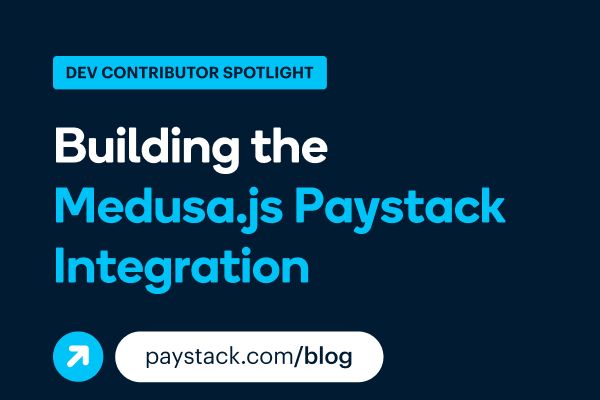
Software Engineer Andrew Glago built a Paystack plugin for Medusa.js, making it easier for African businesses to accept payments on custom online stores. Read the full story →
Government
Nigeria’s CAC promised seamless AI-powered registration, users say it’s chaos

Nigeria’s Corporate Affairs Commission (CAC) says it’s making history, but Nigerians say they aren’t seeing it.
The ease that was promised: When the CAC rolled out its new Intelligent Company Registration Portal (iCRP) on July 1, it promised real-time name reservations, one-hour registrations, and automated TIN generation, all wrapped up in a sleek interface.
The commission now claims that its new AI-powered registration system registered over 11,000 companies in a single day—it used to take a week for each company. Sounds impressive, right? You should hear what the users are saying.
UX: Some users who have tried to register their business say that they’ve been unable to successfully complete the process because payments aren’t reflecting. Some users say they are unable to verify certificates even after payment has been made. Tax identification numbers (TINs) don’t show up. The public registry doesn’t update, and emails, calls, and support tickets go unanswered. One wonders how 11,000 successful registrations were conducted under these conditions.
One of many. A number of Nigeria’s public digital systems often launch with great ambition and mixed results. From National passport registration portals to National identity systems, many start slow, but some eventually find their stride. An example is the Nigerian Immigration Service passport application portal, which has now almost become a seamless service for passport application, even though it also has its moments of disruption. Unlike the other digital systems that come with a contingency plan and clear timeline, this CAC’s new rollout left users in the dark.
One wonders: Will there ever be a day where a Nigerian digital system works as promised, no drama, bugs or detours? For now, it’s the same old dance of users figuring it out on their own.
Be the smartest person in the room; subscribe to The Big Daily.

You might not be the smartest person in the room but Zikoko Citizen’s newsletter, The Big Daily can make you sound like one. We make the biggest news around the world less boring and easier to understand. Subscribe here and never miss out on major updates.
CRYPTO TRACKER
The World Wide Web3
Source:

|
Coin Name |
Current Value |
Day |
Month |
|---|---|---|---|
 Bitcoin Bitcoin |
$117,152 |
– 0.93% |
+ 13.93% |
| Ether |
$3,683 |
– 2.22% |
+ 61.68% |
| Spark |
$0.06151 |
+ 45.18% |
+ 50.18% |
| Solana |
$198 |
+ 6.70% |
+ 45.48% |
* Data as of 06.30 AM WAT, July 22, 2025.
Unlock the secrets to financial freedom at the Naira Life Conference by Zikoko

The Naira Life Conference will bring together finance experts, industry leaders, creators, and entrepreneurs who will share their own journeys and offer actionable strategies to make your financial dreams a reality. Think: bold conversations, immersive workshops, and content tracks that hand you a playbook for building real wealth. It’s happening on August 8 at the Jewel Aeida, Lekki. Get tickets here to secure a spot.
Opportunities
- MEST Africa has opened applications for its 2026 AI Startup Programme. The 12-month training and incubation programme will equip West African software developers aged 21–30 with the skills to build scalable AI startups. Selected participants will undergo seven months of hands-on training in Ghana starting January 2026, followed by a four-month incubation for the most promising teams. Applications close August 22, 2025. Apply here.
- Applications are still open for the 2025 FATE Institute Fellowship, a two-year, part-time and virtual programme for experienced Nigerian professionals passionate about entrepreneurship and policy reform. The fellowship is open to candidates with at least 10 years of relevant experience and a completed or ongoing Master’s or PhD in fields like Economics, Law, or Political Science. Fellows will work remotely, contribute to research on Nigeria’s entrepreneurship ecosystem, engage with policymakers, and take part in virtual policy discussions, without needing to leave their current roles. Apply by July 25.
- We’re launching TechCabal Insights Market Researcher™, a tool that helps you find and analyse African tech and business data in seconds. Whether you’re looking for startup funding numbers, market trends, or investor activity, it does the digging for you—fast and accurately. Be the first to try it. Join the waitlist.
- Nithio is offering $50,000–$500,000 in flexible financing to clean energy startups in Kenya and Nigeria. Eligible companies include solar home system providers, clean cooking ventures, and businesses selling appliances like solar fridges or mills. Applications open on July 21; learn more.

Written by: Opeyemi Kareem, Ifeoluwa Aigbiniode, and Emmanuel Nwosu
Edited by: Faith Omoniyi
Want more of TechCabal?
Sign up for our insightful newsletters on the business and economy of tech in Africa.
- The Next Wave: futuristic analysis of the business of tech in Africa.
- TC Scoops: breaking news from TechCabal
- TNW: Francophone Africa: insider insights and analysis of Francophone’s tech ecosystem
P:S If you’re often missing TC Daily in your inbox, check your Promotions folder and move any edition of TC Daily from “Promotions” to your “Main” or “Primary” folder and TC Daily will always come to you.