Quick Fire with Adeniyi Olowoporoku

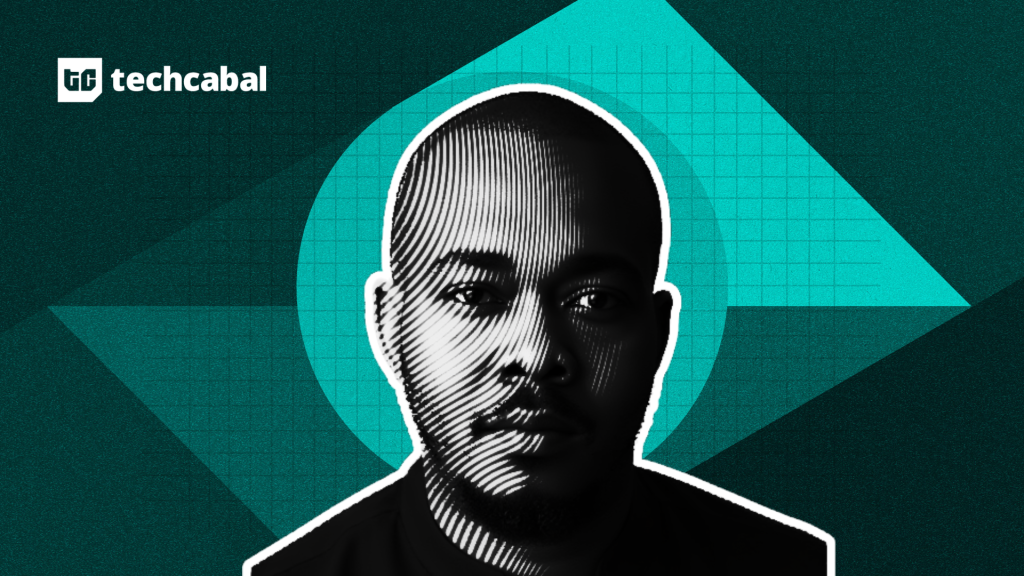
Adeniyi Olowoporoku is the founder of Ezyswap.ai, an AI-powered crypto trading and remittance platform that has processed over $20 million in transactions across Nigeria, Ghana, and Kenya. Since launching in September 2022, he has built a platform serving 50,000 active users while achieving 92% accuracy in market predictions and reducing fraudulent transactions by 40%.
Explain what you do to a five-year-old.
You know how your parents sometimes use money to buy things, and sometimes they need to send money to relatives in other countries? I built a smart computer friend that helps people trade special digital money called cryptocurrency and send money to family across borders.
Think of it like having a really smart robot that watches the market all day and tells you, “Hey, this might be a good time to buy or sell,” just like how your teacher tells you when it’s time for lunch. My robot is right about 92 times out of 100! And when people want to send money to Ghana or Kenya, we make it super fast and safe, like sending a text message instead of mailing a letter.
Was entrepreneurship something you planned, or did you stumble into it?
I’d say it was a deliberate leap based on frustration. I was active in the crypto space and constantly frustrated by two things: the complexity of trading tools and the ridiculous fees for sending money across African borders.
I kept thinking, “Why are we using prediction tools built for Western markets when African crypto markets behave completely differently?” And why should someone in Lagos pay $25 to send $100 to Accra when we have blockchain technology that can do it for pennies?
The tipping point came in 2022 when I watched a friend lose significant money because he couldn’t interpret market signals properly, and another friend waited three days for a cross-border transfer to clear. I realized AI could solve the first problem and blockchain could solve the second. That’s when Ezyswap was born.
Why combine AI with crypto trading specifically for African markets?
Because African crypto markets have unique patterns that Western AI models completely miss. Our markets are heavily influenced by currency devaluation cycles, regulatory announcements from central banks, informal peer-to-peer networks, and even political events that don’t register on global radar.
I built Ezyswap’s AI to analyze sentiment from African crypto communities, track whale movements specifically within African exchanges, and factor in local economic indicators like parallel market exchange rates. That’s why we achieve 92% prediction accuracy—we’re not trying to apply a one-size-fits-all model.
Traditional trading platforms treat Africa as an afterthought. We put Africa at the center.
Processing $20 million in three years is impressive. What’s the story behind that milestone?
It started slowly, honestly. The first six months, we processed maybe $200,000 total. People were skeptical about trusting AI for trading decisions, especially in markets as volatile as crypto.
The breakthrough came when our AI correctly predicted a major dip in Bitcoin that affected African markets differently than global markets. Users who followed our signals avoided significant losses while others in the market got burned. Word spread fast.
For remittances, the $8 million we’ve processed came from solving real pain. A user in Nigeria sent money to her mother in Kenya for medical treatment, and it arrived in 15 minutes instead of three days. She told ten people. Those ten people told others. That’s how you get to 20,000 remittance users.
The numbers aren’t just vanity metrics. Behind that $20 million are real people paying school fees, starting businesses, and supporting families across borders.
You mentioned reducing fraud by 40%. How did you approach security in a space known for scams?
Crypto in Africa has a trust problem, and rightfully so. Scams are rampant. I knew from day one that if we didn’t solve security, nothing else mattered.
We implemented biometric KYC that goes beyond just uploading an ID card. Users verify their identity through facial recognition and liveness detection. It’s harder to fake, and it works even in areas with poor internet connectivity.
The AI fraud detection system learns from transaction patterns. If someone suddenly tries to move amounts inconsistent with their history, or if we detect patterns similar to known fraud schemes, the system flags it immediately. We’ve caught everything from account takeovers to sophisticated wash trading schemes.
That 40% reduction isn’t just good for us—it’s setting a standard. When users know a platform actively protects them, it raises expectations across the entire ecosystem.
Tell us about your gamified trading challenges. Why add gaming elements to something as serious as crypto trading?
Because education through fear doesn’t work. Everyone tells new traders, “Be careful, you’ll lose everything!” but nobody teaches them how to actually trade well.
Our gamified challenges let users practice trading strategies with virtual currency first, compete on leaderboards, earn rewards for learning, and build confidence before risking real money. We’ve had users spend two months in challenges before making their first real trade—and when they do, they’re informed and strategic.
The 25% increase in engagement isn’t just about fun. Users who complete our challenges make 60% fewer impulsive trades and have better long-term returns. When people learn through play, they retain knowledge better.
Plus, crypto should be accessible. If we make it feel like a secret club for tech bros, we’ve failed. Gamification democratizes learning.
Operating across Nigeria, Ghana, and Kenya—what regulatory challenges have you faced?
Regulatory navigation in African crypto is like playing chess on three boards simultaneously, and the rules keep changing mid-game.
Nigeria’s SEC has fintech regulations that are reasonably clear, but crypto-specific guidelines are still evolving. Ghana’s regulatory approach is more cautious. Kenya is relatively progressive but requires extensive documentation.
The key is proactive engagement. We didn’t wait for regulations to come find us. We approached regulators in each country, explained our compliance framework, demonstrated our KYC processes, and showed how we’re actually reducing risk in the crypto ecosystem.
I budget 20% of operational costs for compliance—legal teams, regulatory consultants, and ongoing audits. Some founders see this as overhead. I see it as insurance and legitimacy.
The worst thing you can do is operate in gray areas and hope nobody notices. That’s how you get shut down overnight.
What achievement with Ezyswap are you most proud of?
There’s a woman in Lagos who used our remittance service to send money for her father’s emergency surgery in Nairobi. Traditional banks quoted her three days. Western Union wanted $45 in fees. She sent $500 through Ezyswap, it arrived in 12 minutes, and she paid $3 in fees.
She sent me a voice note crying, thanking us for being there when it mattered most. That’s when I realized we’re not just building a trading platform—we’re building critical financial infrastructure for Africa.
The $20 million number is impressive for investors. But that voice note? That’s why I wake up every morning and keep building.
Your AI achieves 92% prediction accuracy. What goes into that?
Three things: African-specific data sources, sentiment analysis from local communities, and whale tracking within regional exchanges.
We scrape data from Nigerian, Ghanaian, and Kenyan crypto Telegram groups, Twitter communities, and WhatsApp trading groups. We analyze sentiment around regulatory announcements from CBN, Bank of Ghana, and Kenya’s Capital Markets Authority. We track large wallet movements on exchanges popular in Africa.
Western AI models trained on Coinbase and Binance Global data miss these signals entirely. Our model knows that when Nigeria’s parallel market dollar rate spikes, there’s typically increased crypto buying within 48 hours. It knows that certain whale wallets in Lagos influence market movements disproportionately.
The remaining 8% inaccuracy keeps us humble. Markets are never fully predictable, and we’re transparent with users about that. We provide probabilities, not guarantees.
What’s your biggest mistake so far, and how did you recover?
Initially, we tried to launch in five countries simultaneously. Terrible decision. We spread ourselves too thin, couldn’t properly localize for each market, and customer support was a nightmare.
We pulled back, focused intensely on Nigeria for six months, got everything right—product-market fit, compliance, user experience—then expanded methodically to Ghana, then Kenya.
The lesson: depth before breadth. Master one market completely before scaling regionally. Now we have expansion requests from South Africa and Uganda, but we won’t move until our current three markets are operating flawlessly.
What advice do you have for entrepreneurs looking to build AI-powered fintech solutions in Africa?
First, understand that AI isn’t magic. It’s only as good as your data. If you’re training models on Western datasets and expecting them to work in Lagos or Nairobi, you’ll fail. Build African-first AI with African data.
Second, solve real problems, not Silicon Valley problems. We don’t need another app that helps people invest spare change from coffee purchases. We need solutions for cross-border trade, remittances, and access to investment opportunities despite currency volatility.
Third, compliance is not optional. The “move fast and break things” mentality breaks lives when you’re dealing with people’s money. Build with integrity from day one.
Fourth, don’t underestimate the power of community. Our most valuable users aren’t the whales trading millions—they’re the community members who educate others, report bugs, and spread word-of-mouth. Invest in community building.
What trends in African crypto and fintech will drive growth in 2025 and beyond?
AI-powered personalization will become standard. Users will expect platforms to understand their risk tolerance, suggest strategies, and automate repetitive tasks. The platforms still using one-size-fits-all approaches will lose users rapidly.
Stablecoin adoption for remittances and commerce will explode, especially as African currencies face continued volatility. People will hold USDT and USDC the way they currently hold dollars in domiciliary accounts.
Regulatory clarity will finally arrive in major markets. Countries are realizing they can’t ignore crypto, so they’re building frameworks. Companies that have been compliant all along will have massive first-mover advantages.
Cross-border crypto payments within Africa will become seamless as platforms integrate with local payment rails. AfCFTA creates the policy environment; crypto provides the technical infrastructure.
The winners will be platforms that combine cutting-edge technology with deep local knowledge and unwavering commitment to user protection.
What is one thing you wish you knew earlier?
The importance of mental health as a founder. Building in the crypto space is emotionally intense—market volatility, regulatory uncertainty, competition, user expectations. I burned out twice in the first 18 months.
Now I protect my mental space aggressively: regular breaks, therapy, exercise, disconnecting from charts and Telegram groups. You cannot build sustainable companies from a place of exhaustion and anxiety.
If you weren’t building Ezyswap, what would you be doing?
I’d probably be teaching. I love breaking down complex concepts—blockchain, AI, trading strategies—and making them accessible. Maybe lecturing at a university or running educational content online. But honestly, I’m an entrepreneur at heart. I’d find another problem to solve, just maybe with less volatility than crypto!