In September, Altvest Capital Limited, a South African investment firm listed on the Johannesburg Stock Exchange (JSE), announced plans to raise $210 million to buy Bitcoin. The goal is to build what it calls a Bitcoin treasury fund—an institutional gateway that would allow African investors, from pension funds to private equity firms, to gain exposure to Bitcoin without the complexity of managing it directly.
Altvest is expected to finalise its rebrand to Africa Bitcoin Corporation (ABC) by November 17, following board approval of the name change. The shift reflects a pivot from being a platform for small and medium-sized businesses to raise capital to becoming Africa’s first listed company, anchored entirely on Bitcoin.
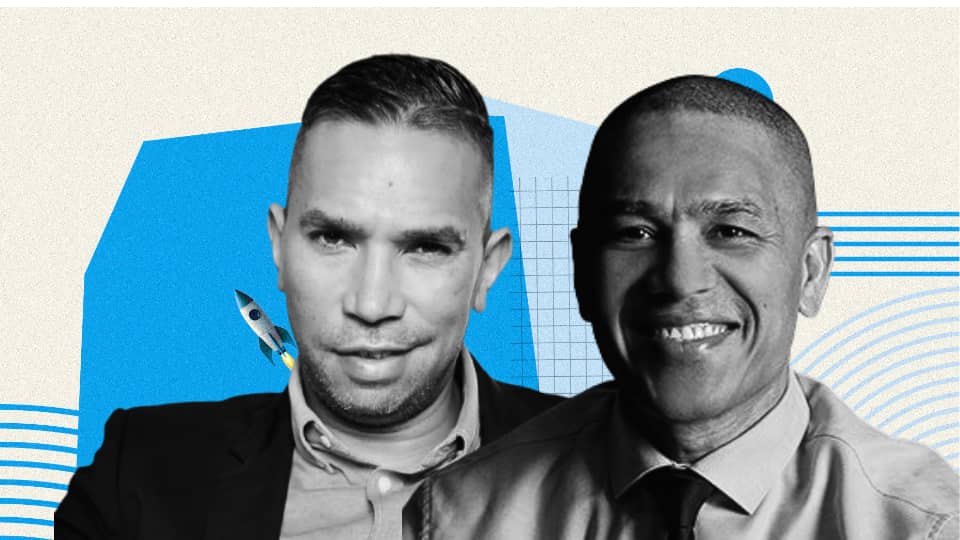
TechCabal spoke with Warren Wheatley, the company’s CEO, and Stafford Masie, its executive chairman, on October 8. A few days earlier, Wheatley was in Namibia to finalise a listing on the country’s stock exchange, giving ABC its third public listing after South Africa’s JSE and the newer A2X Markets, and only its second country. The company plans to list across more African bourses, including Botswana and Kenya.
“Bitcoin is the hardest, most pristine form of money ever created,” Wheatley said during our interview. “It’s the last iteration of money as we understand it—and the perfect foundation for a strong African balance sheet.”
Bitcoin treasury firms are not new. Strategy (formerly MicroStrategy), originally a US data mining software company founded by Michael Saylor in 1989, popularised the model in 2020 after morphing into a Bitcoin treasury firm. The company converted billions of dollars from its corporate cash reserves into Bitcoin, inspiring similar moves from companies in the US, Europe, and Japan. In recent years, crypto-native treasuries holding Bitcoin, Solana, Ethereum, and even Sui, have gained traction, as institutions seek exposure to blockchain assets without direct custody risks.
ABC’s timing and ambition are deliberate. The company’s founders believe Africa’s broken financial systems, rising inflation, and weak currencies have made it fertile ground for a new kind of treasury model, one that uses Bitcoin as its backbone.
This interview has been edited for length and clarity.
What exactly is Altvest, or Africa Bitcoin Corporation, now, and what does it do?
Wheatley: Altvest started as a financial services group helping small and medium enterprises (SMEs) raise capital. We were listed on the JSE’s AltX [Alternative Exchange] board to create a regulated, listed structure through which ordinary investors could participate in private equity opportunities. We allowed businesses to raise money from retail investors using regulated instruments.
We made money by arranging those deals, charging fees, and lending to SMEs. But we began to see a bigger opportunity. We wanted to build a balance sheet that could support cross-border financing across Africa. That required a uniform asset, something that every market recognised and trusted.
Traditionally, that asset would be US Treasury bills. The problem is that those bills yield about 3–4%, while inflation across Africa averages around 15%. If you hold that [US Treasury bills] for a few years, you’re losing value. Bitcoin, on the other hand, has delivered average annual returns of about 30% over the past decade. It’s globally recognised, it’s borderless, and Africans already understand it. So we decided to make it our treasury asset. That’s why we changed our name to Africa Bitcoin Corporation (ABC).
Why raise $210 million for this?
Wheatley: We’re building Africa’s first Bitcoin treasury company. The way it works is that we issue equity, and every South African Rand we raise goes directly into buying Bitcoin. Our key metric is what we call “Bitcoin per share” (BPS). As we issue new shares, we use those proceeds to buy Bitcoin, and the amount of Bitcoin that each share represents continues to grow. That’s what we mean when we talk about accretive dilution.
Investors who buy our stock get indirect exposure to Bitcoin through a regulated, listed company. They don’t have to worry about wallets, private keys, or cold storage. A pension fund, for instance, can’t hold Bitcoin directly, but it can buy ABC shares. That gives them exposure to the same asset within their regulatory framework.
We want to make Bitcoin accessible to everyone, from a teacher with a retirement plan to a mining company treasury, without them needing to understand how to self-custody or manage the technology.
You’ve said this strategy mirrors the model used by Bitcoin treasury companies in other countries. Which other examples do you look up to?
Wheatley: We’re following the playbook of companies like MicroStrategy in the US, which started in 2020 when Michael Saylor decided to move his corporate reserves into Bitcoin. Then there’s Metaplanet in Japan and the Smarter Web Company in the UK. They’ve shown that if you manage it responsibly, a Bitcoin treasury company can outperform most traditional assets.
We’ll use the same best practices, measured equity issuance, disciplined accumulation, and absolute transparency. But our model is designed for Africa, where access to Bitcoin is limited and inflation is high.
Stafford, you’ve said ABC will be “Africa’s first publicly traded Bitcoin treasury company.” Does holding Bitcoin solve any real problem for African investors, or is this an arbitrary solution you’re providing?
Masie: Africa’s money is broken. Inflation destroys purchasing power. Currencies devalue overnight. In some countries, people can’t move money freely across borders. Governments debase their currencies to fund deficits. Bitcoin is the opposite of that. It’s scarce, predictable, and not controlled by any government.
If you’re an SME in Africa, your challenge isn’t just raising money, it’s storing it safely. You make a profit in a weak currency, and by next quarter, that money has lost value. We see Bitcoin as a way to fix that. It gives African entrepreneurs, pension funds, and even governments a chance to store value in something that isn’t eroding.
Volatility is the big concern. How do you manage that?
Masie: Volatility is part of Bitcoin’s nature, but it’s not risky. Risk is what you get from centralised crypto projects, tokens with CEOs and marketing departments. Bitcoin is different. It’s open, decentralised, and ungoverned. It’s digital gold.
We educate our investors that volatility can be useful. It attracts trading activity, liquidity, and analyst coverage. For a small-cap company, that’s healthy. We’re not trying to protect investors from volatility; we’re protecting them from bad decisions, like trying to time the market.
Volatility creates life in a listed company. Our share price moves, people engage, and analysts start writing about it. Over time, as we grow, the volatility will reduce. Bitcoin’s own volatility has been dropping; it’s now less volatile than some big tech stocks.
You were in Namibia recently. Why was that important for this plan?
Wheatley: We listed on the Namibian Stock Exchange (NSX), and that was a major step for us. Namibia’s regulators are forward-thinking, and the market has high-net-worth investors who understand finance. The country also has a clean, stable macro environment.
But the real reason was access. I think retail investors have adopted Bitcoin en masse throughout Africa. The big challenge that they have is gaining access to the asset. Namibians currently have no regulated way to buy Bitcoin—unless they buy from the dark web, and they face tax fraud when they try to sell it. There’s no local exchange. By listing there, we’ve given them a legitimate way to get exposure through our shares.
Masie: We’re planning similar listings in other African countries. Many of them have restrictions on crypto trading, but they allow citizens to buy listed equities. So we’ll bring equity to them. Over time, we hope to list in London, Frankfurt, and the US, creating almost a 24-hour global trading window.
We’ve also built a system where investors can exchange Bitcoin or even other cryptocurrencies for our shares. We immediately convert whatever they send into Bitcoin and store it securely. That’s a world-first.
Let’s talk about regulation. South Africa has had a complex relationship with crypto. How are you working within those rules?
Masie: It’s taken years of engagement. I’ve served as a Bitcoin and crypto advisor to the South African Reserve Bank (SARB), the JSE, and the Intergovernmental Fintech Working Group (IFWG), which includes the revenue service and other agencies.
Until recently, the JSE explicitly prohibited any company from issuing an equity instrument that had direct exposure to crypto. We spent a long time helping regulators understand that Bitcoin isn’t crypto. It’s a digital commodity, like gold, but digital.
That understanding led to an update of the regulations. The JSE now allows companies to hold Bitcoin as a treasury asset if they follow strict custody, auditing, and reporting standards. We’re complying fully with those rules.
Our Bitcoin will be held mostly in cold storage. We’ll use multiple custodians, both onshore and offshore, to diversify risk. We’ll also maintain a real-time dashboard showing proof of reserves so that anyone can see what we hold, how much we’ve bought, and where it’s stored.
Our auditor, Forvis Mazars, has deep crypto experience and will audit our Bitcoin holdings continuously. That transparency builds trust.
You mentioned cold storage. Can you explain how that works in your case?
Masie: We’re finalising a multi-signature custody setup. That means no single person can move Bitcoin out of storage without multiple authorisations. Some of our partners include major global custodians like Anchorage and Coinbase Prime, and we’re also exploring local options such as VALR and Luno for enterprise-level cold storage.
The JSE has said that 90% of all Bitcoin held by listed companies must be in cold storage. We’re aligning with that. The assets will be distributed geographically and across custodians to reduce risk from hacks or even natural disasters.
We’ll also publish our wallet addresses so that investors can independently verify our holdings on the blockchain.
How will the $210 million raise happen in practice?
Masie: We’re taking a measured approach. We’ve already issued an initial tranche of 1 million shares, primarily to African investors, and will begin Bitcoin purchases at the end of October.
We’ll continue issuing equity tranches based on market demand. We use a metric called Market Net Asset Value (MNAV) to determine when to issue new shares. When the market cap trades at a premium to our MNAV, that’s when we raise capital. This ensures each dilution increases Bitcoin per share, making it accretive for existing shareholders.
We’re not taking on debt to fund this. If we raise all $210 million tomorrow, we won’t deploy it all at once. We’ll buy Bitcoin gradually, weekly or biweekly, depending on market conditions. Sometimes it might be a few Satoshis, sometimes one or two Bitcoins, but always methodically.
Our strategy is about consistency, not spectacle. We’re not trying to win a race to own the most Bitcoin. We’re trying to build shareholder value responsibly.
How do taxes work in all of this?
Masie: In South Africa, Bitcoin is treated as an asset, not a currency. So if you sell it, there’s a capital gains tax event, similar to selling property. We don’t plan to sell our Bitcoin. We plan to hold it indefinitely, using it as collateral when needed.
We’ll stay fully compliant with the South African Revenue Service (SARS) and the Financial Sector Conduct Authority (FSCA). Because this is a listed company, every move we make is transparent and reported to regulators.
Over time, as regulations mature, we expect to see more clarity around unrealised gains and how they’re treated. In the US, for example, unrealised gains on Bitcoin treasuries are not taxed, and we hope to see similar progress here.
How much Bitcoin does ABC currently hold?
Masie: One Bitcoin. We bought it earlier this year as a systems test. It wasn’t about the amount; it was about making sure every part of our process worked, from board approvals to custody, reporting, and auditing. That one Bitcoin has already appreciated about 30% since purchase, which is a nice validation of what we’re doing.
Once the first funding round closes, we’ll begin consistent accumulation [of Bitcoin] by the end of October.
What kind of investors are you targeting for the $210 million fundraise?
Masie: A mix of African and international investors. There’s a lot of capital sitting idle in Africa. The South African Reserve Bank (SARB) recently reported about R1.8 trillion ($104 billion) lying dormant in corporate accounts. Many businesses are simply waiting for stability before deploying it. We think we can give that capital a productive home.
Internationally, we’re seeing strong interest from pension funds and family offices that want African exposure. They understand the potential here.
What does success look like for Africa Bitcoin Corporation?
Masie: If we can prove that Bitcoin can be the foundation for a listed African company, we’ll have changed how treasuries are managed on this continent. Our vision is for pension funds, SMEs, and even governments to start hybridising their treasuries with Bitcoin.
We don’t think there will be many Bitcoin treasury companies in Africa, maybe just one or two. It’s hard to do this at scale. You need a strong board, regulator trust, and a public listing. But what we do expect to see is more companies starting to hold part of their reserves in Bitcoin.
Our role is to lead by example, to show that this can be done transparently, responsibly, and profitably.
Bitcoin’s market cap [$3.7 trillion at the time of this report] has already surpassed Amazon’s [$2.32 trillion]. In a few years, it will challenge gold. We want Africa to be part of that story.
If we can help Africans protect their wealth from inflation, while giving global investors exposure to African growth, that’s success.