Picture this: You just received an offer letter to resume a role at a startup in Nairobi, Kenya. You are already dreaming of the grass plains at the National Nairobi theme park when it hits you. How are you sure the offer is good enough to uproot your entire life to another city or country? For the Kenyan ecosystem, is the pay fair? You know no one from the company, and now you might be moving to a different city. Beyond the company’s polished public image, how can you be sure its workplace culture is truly healthy?
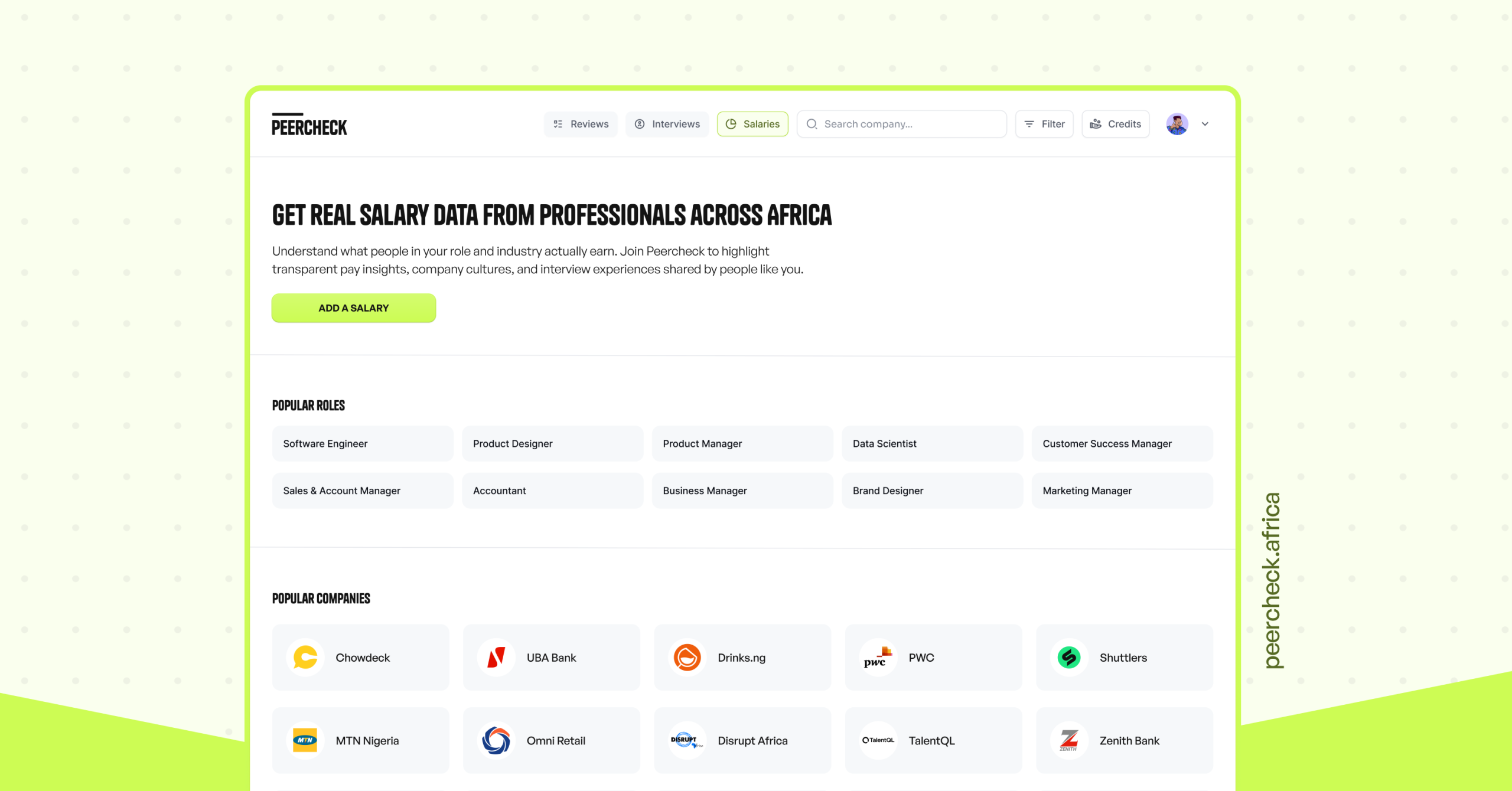
You find one or two posts on X talking about the company, but that’s it. Ordinarily, you might be thrilled about such an opportunity, but instead, you feel powerless and uncertain with the lack of information. It is this gap that Alex Oyebade is trying to fix with Peercheck, a platform built to help African professionals see beyond glossy “great place to work” claims.
Designed to promote transparency around labour and workplaces, Peercheck was founded in 2025 to close the data deficiency prevalent in the African labour market. This implies, jobseekers and professionals who often feel uncertain and powerless during salary negotiations and when making career moves can now make decisions with clarity.
The true cost of pay secrecy
Africans rarely discuss how much they earn, and some Nigerians say it is because open salary talk can strain relationships. Peercheck changes that by allowing users to share and compare pay data anonymously.
South Africa recently introduced a Fair Pay Bill, which mandates that all job advertisements, transfer, or promotion listings will have to specify the salary. Employees also have the right to discuss a job offer or the remuneration (or remuneration range) for a job role with another employee. While this is a government-led push for openness and accountability concerning pay equity, there is still a data gap across the continent. The United Nations Gender Pay Gap Report from 2023 revealed that women earn 21% less than men in the East and Southern Africa region, with substantial variations across countries. While many factors, such as cultural norms and stereotypes, contribute to this disparity in pay, access to information also plays a strong role in empowering employees, especially women, early-stage professionals, and students.
The broader movement toward workplace transparency and how it’s shaping Africa’s professional ecosystem
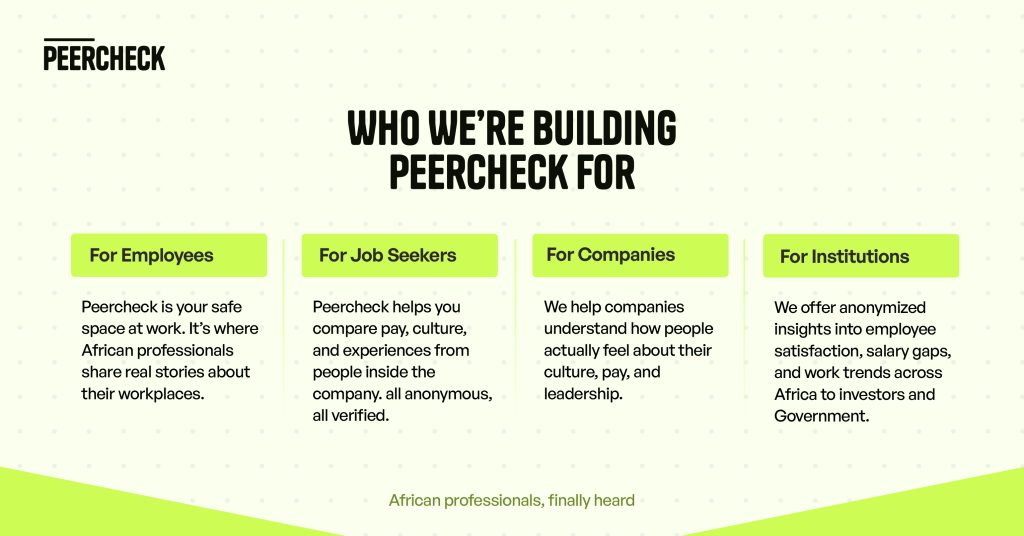
Peercheck’s infrastructure is powered by a three-layered business model: B2C (for professionals), B2B (for businesses), and DaaS (Data as a Service). For the first layer, professionals feed the system with insights about their workplace culture, salary details, and interview experiences in exchange for receiving access to the collective, transparent data from other professionals. Businesses using Peercheck can manage their profiles, respond to comments, and post job listings.
As a DaaS, Peercheck functions as a data tool or human resource tech for African companies, providing processed insights from the raw B2C data to companies, experts, government officials, and job seekers. Ultimately, building Peercheck requires community-driven efforts.
While other companies have made efforts to provide information on salaries and workplace cultures, Peercheck is the only mainstream platform focused on comprehensive data transparency and accountability in Africa. To be a part of the move, head over to peercheck.africa