

For Africa’s tech ecosystem, 2025 was marked by a cautious yet tangible recovery, with funding reaching $3 billion and a record-breaking wave of consolidation. It was the year LemFi and Stitch snapped up smaller players to fortify their infrastructure, while Chowdeck aggressively redrew the logistics map. We watched as the narrative shifted from “who raised what” to “who is actually building,” a sentiment cemented by the return of heavyweights like Strive Masiyiwa entering the AI infrastructure race, the strategic exits orchestrated by VC firms like Silverback Holdings, and two fintech startups, Optasia and Cash Plus, going public.
But maturity came at a steep price, forcing a reckoning with governance that dominated our headlines. The definitive stories of 2025 were a mixed bag: from the industry-shaking governance crisis at Stripe-owned Paystack and a ₦250 million ($190,000) Central Bank of Nigeria-imposed fine, to French media giant Canal+ facing regulatory scrutiny after its historic Multichoice takeover, while startups in Kenya faced their own siege as the Kenya Revenue Authority (KRA) aggressively targeted crypto to close tax gaps.
Here are TechCabal’s most definitive stories of 2025, according to our editors.
In Benue, fragile telecoms infrastructure makes an unsafe state even deadlier by Frank Eleanya
Persistent attacks in Benue State are exacerbated by a “digital disconnect” caused by vandalised fibre lines and unmanned telecom towers. A report by TechCabal examined how a communication blackout during the brutal June 2025 attacks on Yelwata prevented residents from calling for help or coordinating emergency response.
The many inventions of Motunrayo Sanyaolu, UNILAG’s first Engineering Spirit by Ngozi Chukwu
Motunrayo Sanyaolu, a 21-year-old electrical engineering student at the University of Lagos, has become a campus celebrity for her prolific drive to build hardware solutions for real-world problems. TechCabal detailed her journey from a childhood inspired by robotics to patenting a low-cost, off-grid heating blanket designed to save preterm babies from hypothermia in underfunded clinics.
AltSchool Africa set out to fix education. Now it’s learning its own lessons by Adonijah Ndege
When AltSchool Africa, the Nigerian edtech startup that trains Africans with in-demand tech skills, launched in 2021, it promised to prepare the next generation for tech jobs. This article examined the company’s recent troubles and how it exposed the cracks in Africa’s edtech sector.
The Port Harcourt school churning out Nigeria’s math gurus by Fancy Goodman
Graceland International School in Port Harcourt has established itself as an “obsessive” pipeline for STEM excellence, recently producing a student with a perfect 1600 SAT score. In this feature, TechCabal explored how the institution’s rigorous, decade-old curriculum—which introduces university-level concepts as early as JSS2—is designed to push students to global competitive heights.
One-click debt-trap: How product design fuels predatory lending in Nigerian fintech by Muktar Oladunmade and Kosisochukwu Ugwuede
When digital lenders became popular in Nigeria, they promised to bridge the credit gap for millions by offering instant, collateral-free loans. A collaborative investigation between the Center for Collaborative Investigative Journalism and TechCabal revealed how these apps now weaponise deceptive product designs—known as “dark patterns”—to trap unwitting users in cycles of predatory debt they never explicitly approved.
M-KOPA lawsuit alleges racial disparity in employee equity, firm says claim is baseless by Adonijah Ndege
M-KOPA, one of Africa’s most prominent fintechs, is facing a high-stakes lawsuit from a former manager alleging that its shareholding structure was designed to favor expatriate staff over African employees. A report by TechCabal detailed the claims of a “two-tier” equity system that reportedly protected foreign investors from dilution while eroding the ownership rights of local staff.
Mapping my AI brain by Fu’ad Lawal
Since the launch of ChatGPT, generative AI has evolved from a novelty into an “extended mind” for many professionals navigating the digital economy. In this personal essay, Fu’ad Lawal maps his use of LLMs as a sparring partner for creativity, pattern recognition, and perspective-shifting.
“I just want my $22,000 back”: Thousands of Nigerians grapple with losses after CBEX heist by Emmanuel Nwosu
The collapse of the so-called AI-powered trading platform, CBEX, left thousands of Nigerian investors reeling from losses estimated in the millions of dollars. An investigation by TechCabal traced how the scheme used sophisticated “smurfing” techniques to move funds through multiple blockchains and intermediate wallets, evading blacklists while operating under the guise of a legitimate money services business.
UBA promised blind customers braille account opening forms; many are yet to feel them by John Adoyi
When United Bank for Africa (UBA) launched Nigeria’s first braille account opening form in 2023, it was hailed as a landmark for financial inclusion. A report by TechCabal revealed how, two years later, the initiative remains largely an “unseen product,” with many blind customers across the country unaware of its existence and still facing systemic discrimination at branches.
Paystack suspends co-founder, Ezra Olubi, over sexual misconduct allegation circulating online by Ganiu Oloruntade
When Paystack emerged as a titan of the African fintech landscape, it built a brand synonymous with transparency, kindness, and modern workplace excellence. TechCabal exclusively reported how the Stripe-owned payment giant suspended its co-founder and CTO, Ezra Olubi, following allegations of sexual misconduct involving a subordinate and the resurfacing of decade-old, inappropriate tweets.
Inside the server glitch behind JAMB’s 380,000 scrambled UTME score by Frank Eleanya
A skipped software patch and a “failure in system discipline” led to the scrambling of 380,000 UTME scores, sparking one of the worst crises in the history of the Joint Admissions and Matriculation Board (JAMB). A TechCabal technical audit revealed that, while a new scoring algorithm was deployed in northern clusters, it never reached the Lagos servers serving the South-East, resulting in a massive mismatch between questions and answers.
Why Flour Mills, Nigeria’s 64-year-old food giant, joined OmniRetail’s $20 million round by Ngozi Chukwu
In May 2025, Flour Mills of Nigeria made a strategic move into tech by participating in a $20 million funding round for OmniRetail, a B2B e-commerce platform digitising the informal retail chain. A TechCabal report explains how this partnership enables a traditional manufacturing titan to gain real-time visibility into “last-mile” consumption data and streamline distribution to thousands of small retailers.
Meta to unmask operators behind teen revenge porn channels in South Africa by Sakhile Dube and Tulani Ngwenya
Following a July 2025 landmark court order in the Gauteng High Court, Meta, parent company of Facebook, Instagram, WhatsApp, and Messenger, agreed to release the identities of individuals running WhatsApp and Instagram channels dedicated to “shaderooms” and revenge porn. A report by TechCabal explored how these anonymous digital spaces were used to exploit South African teenagers, causing severe emotional trauma and fuelling cyberbullying.
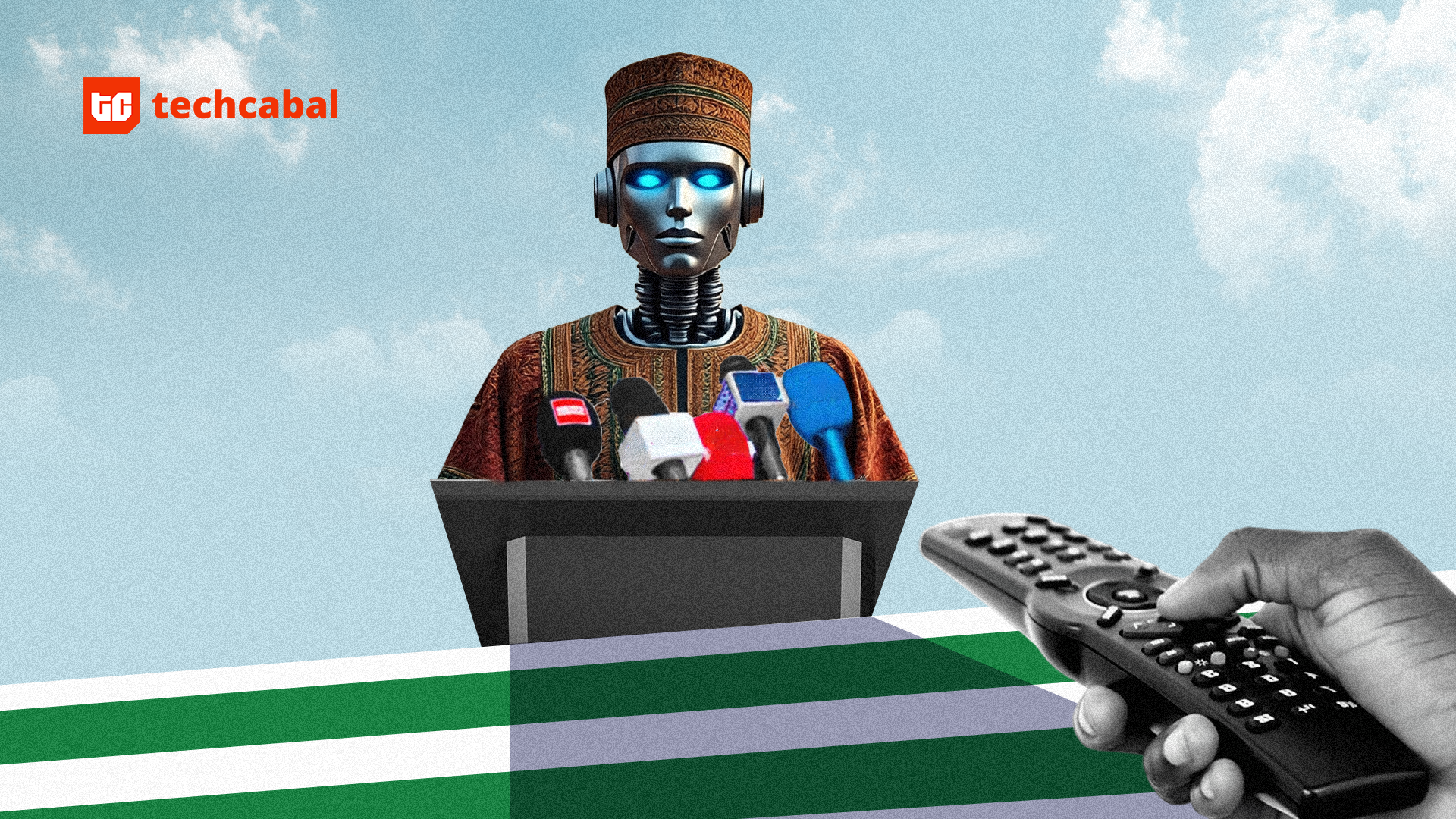
Road to 2027: Preparing for Nigerian elections in a world of AI deepfakes by Ifeoluwa Aigbiniode and Fancy Goodman
As Nigeria approaches the 2027 general elections, the rise of “hyper-realistic” AI deepfakes poses a profound threat to an already fragile democratic process.
The Life and Times of Teejay, according to people whose lives his code touched by Ngozi Chukwu
When Adetunji “Teejay” Opayele co-founded Bumpa, he set out to build a digital lifeline for Africa’s informal retailers, simplifying complex e-commerce into a single mobile app. A tribute by TechCabal explores how the 32-year-old CTO’s life—defined by a selfless commitment to solving problems and a “voracious appetite” for adventure—was tragically cut short by a negligent driver and systemic failures in Nigeria’s healthcare system.