Artificial intelligence is transforming industries around the world, but one major gap remains: most AI systems still cannot understand African languages.
Despite Africa being home to more than 2,000 languages, the vast majority of machine learning models powering today’s AI systems are trained primarily on English, Mandarin, and a handful of other globally dominant languages. For millions of people across the continent, that means the next generation of digital tools may remain inaccessible.
Nigeria is now taking a major step to change that.
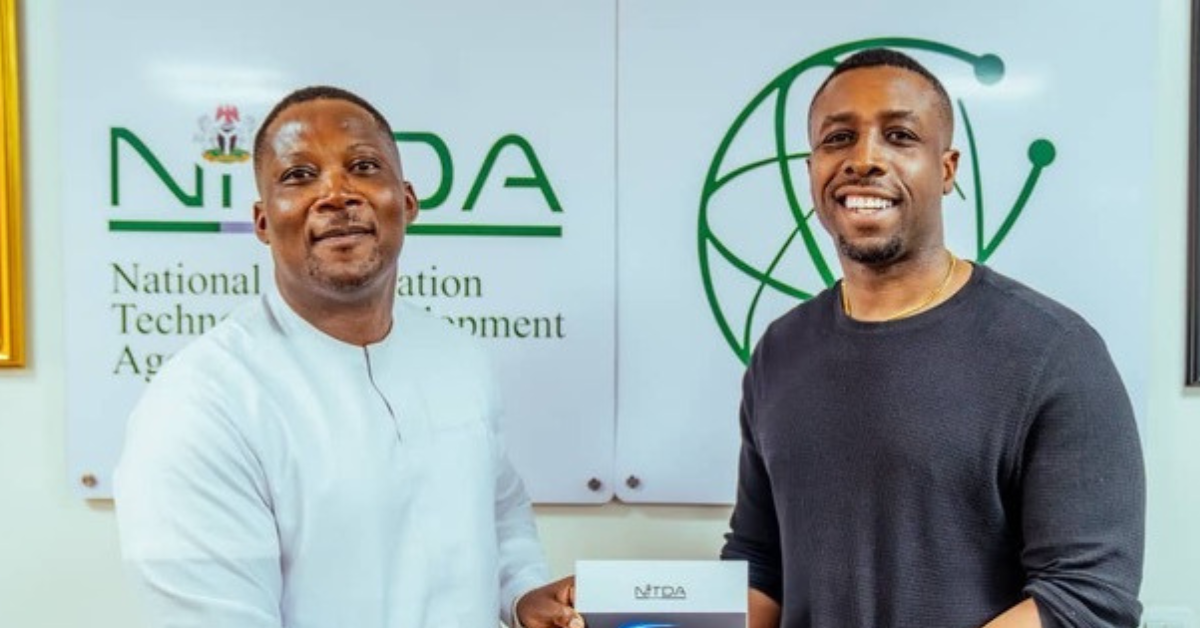
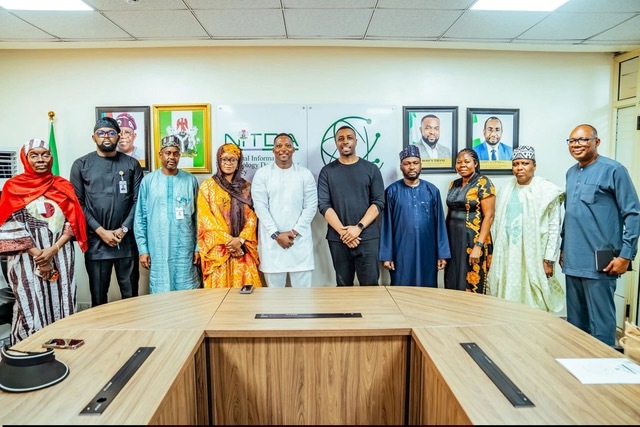
The National Information Technology Development Agency (NITDA) has partnered with NKENNEAi, an African language artificial intelligence platform, to accelerate the development of infrastructure designed specifically for African languages.
The collaboration aims to build scalable translation and language technologies capable of supporting government services, healthcare systems, financial platforms, and digital applications across Nigeria’s multilingual population.
With more than 500 languages spoken across Nigeria, language remains one of the biggest barriers to digital inclusion and access to technology. The NKENNEAi–NITDA partnership seeks to close this gap by developing AI systems trained specifically on African languages and their tonal structures.
From language learning to African AI infrastructure
NKENNEAi grew out of NKENNE, one of the fastest-growing African language learning platforms.
Founded to preserve and teach African languages, NKENNE has grown into a global platform with over 400,000 users learning languages including Igbo, Yoruba, Swahili, Hausa, Twi, Somali, and Nigerian Pidgin.
As the platform expanded, its growing corpus of African language text and speech data created the foundation for something much larger: the development of artificial intelligence systems capable of understanding African languages at scale.
That research led to the creation of NKENNEAi, a multilingual AI platform focused on building the infrastructure layer for African language artificial intelligence.
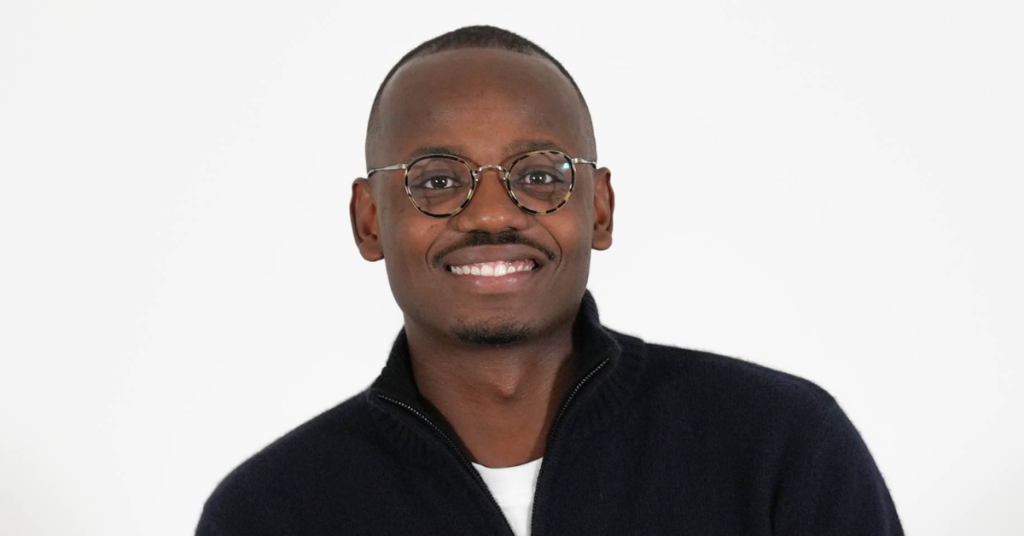
Michael Odokara-Okigbo, CEO of NKENNEAi, said the growth of NKENNE revealed a much larger opportunity to build the technological foundations for African language AI. “NKENNE started as a cultural mission to help preserve and teach African languages,” Odokara-Okigbo said. “As our community grew to hundreds of thousands of learners, we realized the data and linguistic insights we were building could power something far bigger. NKENNEAi is about building the infrastructure that allows African languages to exist, scale, and thrive inside artificial intelligence systems.”
A different approach to training AI for African languages
Most global AI models struggle with African languages because they lack the training data and linguistic frameworks needed to understand tone, dialect variation, and contextual meaning.
NKENNEAi is developing a different approach.
The company is building specialized data collection pipelines, linguistic annotation systems, and speech datasets designed specifically for African languages, enabling the creation of machine learning models that accurately capture tonal meaning and dialectal nuance.
This methodology includes large-scale bilingual sentence datasets for machine translation, annotated speech datasets for speech-to-text systems, tone-aware linguistic tagging that preserves meaning across dialects, and community-driven language validation with native speakers.
By combining linguistic expertise with machine learning infrastructure, NKENNEAi is developing tonally sensitive AI models capable of understanding African languages with far greater accuracy than traditional translation systems.
The platform supports technologies including text-to-text AI translation, speech-to-text transcription, text-to-speech voice synthesis, and multilingual AI APIs for developers and enterprises.
These tools allow startups, governments, and enterprises to integrate African language support directly into their digital platforms.
The system currently focuses on languages such as Yoruba, Igbo, Hausa, Swahili, and Nigerian Pidgin, with plans to expand coverage across additional African languages.
Backed by global research support
The development of NKENNEAi has also been supported by international research funding, including multiple awards from the U.S. National Science Foundation (NSF).
Through the NSF’s Small Business Innovation Research program, funding was awarded to ESM Global Productions, the company behind NKENNEAi, to advance the development of a multilingual African language AI translation platform.
In 2024, the company received a $1 million NSF Phase II award to expand its African language translation API and continue developing speech and language models designed specifically for tonal languages.
This work supports the development of multilingual African language translation models, speech-to-text systems trained on African speech datasets, text-to-speech voice models, and scalable APIs enabling African language integration across digital platforms.
Together, these efforts are helping build one of the largest structured datasets and AI training pipelines focused specifically on African languages.
Aligning with Nigeria’s national AI ambitions
The partnership with NITDA aligns with Nigeria’s broader digital strategy led by the Federal Ministry of Communications, Innovation and Digital Economy, headed by Dr. Bosun Tijani, Nigeria’s Minister of Communications, Innovation and Digital Economy.
Before joining government, Tijani co-founded Co-Creation Hub (CcHUB), one of Africa’s most influential technology innovation centers. His ministry has been driving initiatives aimed at positioning Nigeria as a global hub for artificial intelligence and digital innovation.
Programs such as the 3 Million Technical Talent initiative are focused on training millions of Nigerians in digital and AI-related skills while strengthening the country’s technology ecosystem.
Through the collaboration with NKENNEAi, NITDA is exploring how locally developed AI infrastructure can help serve Nigeria’s multilingual population while strengthening the country’s domestic AI capabilities.
Building the workforce behind African language AI
Beyond building models, the partnership also focuses on developing the workforce required to sustain African language AI systems.
Planned initiatives include training AI data annotators, natural language processing engineers, and public-sector technical teams who will support language dataset development and system deployment.
These programs aim to ensure that African language AI is not only built for the continent, but built by the people who understand its languages and cultures best.
Why this matters
Africa’s digital economy is expanding rapidly, but language remains one of the largest barriers to digital access.
Millions of Africans interact more comfortably in indigenous languages than in English, yet most digital platforms remain designed primarily for English-speaking users.
Without language accessibility, services such as healthcare communication, financial tools, and government platforms remain difficult to access for large segments of the population.
AI-powered language infrastructure could transform this by enabling platforms to communicate with users in the languages they speak every day.
Competing in the global race for language AI
Global technology companies are beginning to recognize the importance of African languages.
Companies such as Google have recently expanded AI and search support for languages including Yoruba and Hausa, signaling growing interest in African language technology.
However, while global companies are beginning to incorporate African languages into their systems, NKENNEAi is focused entirely on building AI infrastructure designed specifically for Africa’s linguistic complexity.
“African languages are deeply tonal, contextual, and culturally rich,” Odokara-Okigbo said. “Building AI that truly understands them requires infrastructure designed specifically for those languages. Our mission is to ensure Africa is not just consuming artificial intelligence, but building the foundational systems that power it.”
Building Africa’s language future
The partnership between NKENNEAi and NITDA represents an important step toward ensuring that African languages are fully represented in the global AI ecosystem.
The initiative will roll out through a staged deployment approach that includes pilot integrations with government agencies, expansion into additional languages, workforce training programs, and the eventual development of a broader national language AI infrastructure layer.
By combining government support with private-sector innovation, the effort aims to position Nigeria as a global leader in African language artificial intelligence infrastructure.
For NKENNEAi, the mission goes even further: building the technological foundations that ensure African languages remain vibrant, accessible, and usable in the age of artificial intelligence.