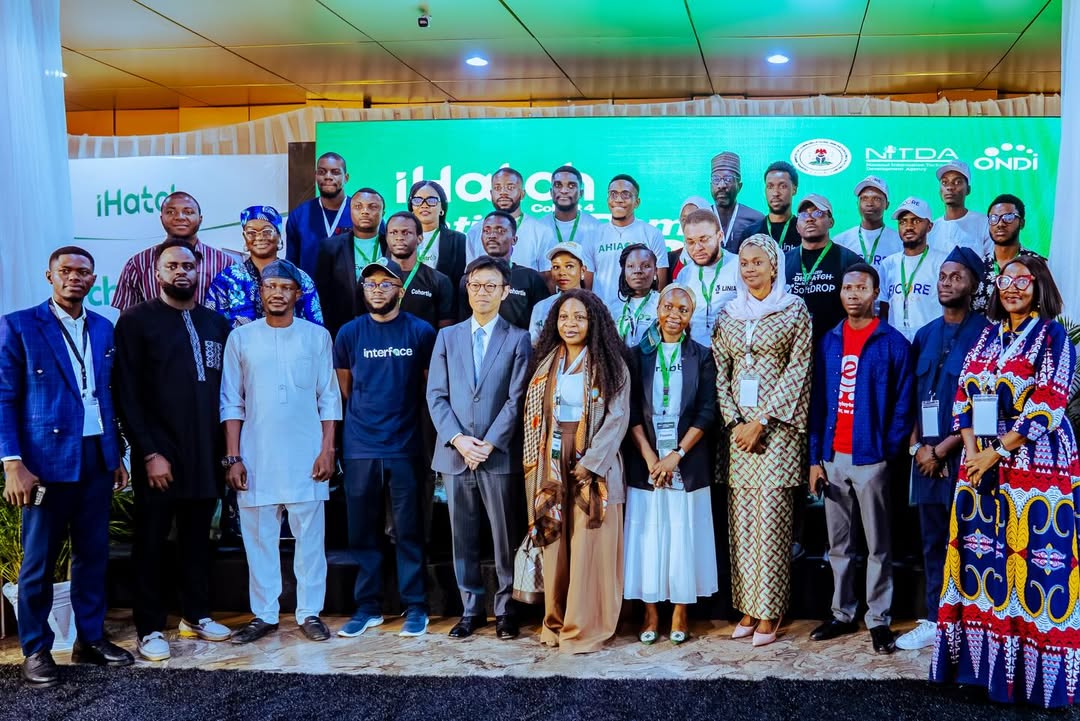
The National Information Technology Development Agency (NITDA), the country’s tech regulator, through its subsidiary, the Office for Nigerian Digital Innovation (ONDI), has partnered with the Japan International Cooperation Agency to open applications for the fifth cohort of the iHatch Startup Incubation Programme.
The iHatch programme is seeking 37 innovation hubs, one from each of Nigeria’s 36 states and the Federal Capital Territory (FCT), to serve as state-level hub managers to implement incubation programmes across the country.
“Nigeria’s startup ecosystem has grown rapidly over the past decade, but access to structured support remains uneven outside major tech clusters,” said Victoria Fabunmi, National Coordinator, ONDI. “Rather than focusing only on startup recruitment, iHatch adopts a systems-level approach: build stronger hubs, standardise incubation quality, and improve investment readiness outcomes across all 36 states and the FCT.”
The move comes at a time when Africa’s startup ecosystem is experiencing growth, raising $3.42 billion in 2025. In Nigeria, however, much of this innovation is concentrated in large cities like Lagos and Abuja, leaving founders outside those cities without structured incubation or mentorship programmes. This is the gap that the iHatch programme intends to fix.
Selected hubs will serve as implementation partners responsible for delivering the incubation programme within their states for at least one year. During that time, each hub will recruit and manage about five startups, guiding them through a structured incubation process that will improve their readiness for growth and funding.
While a specific monetary grant has not been disclosed, selected hubs will receive operational support and resources to enable them to effectively support participating startups. High-performing hubs may also receive rewards based on their performance during the programme, according to NITDA.
“The programme’s primary focus, however, is building strong ecosystem leaders who are committed to developing their local startup ecosystems, rather than positioning the programme primarily as a financial incentive,” Fabunmi said.
Eligible innovation hubs must have been in operation for at least a year and must show active engagement within their local ecosystems. They must also possess infrastructure capable of hosting incubation activities. Applications for iHatch Cohort 5 close on March 16.
The iHatch incubation programme’s focus on innovation hubs rather than startups places it in a position to address structural gaps, related to geographic location, in Nigeria’s startup ecosystem. NITDA intends to strengthen support for founders at the local level and expand opportunities for founders to scale.
“By equipping hubs with structured tools, curriculum frameworks, and coordinated oversight, iHatch aims to create more consistent founder outcomes across regions,” Fabunmi said.