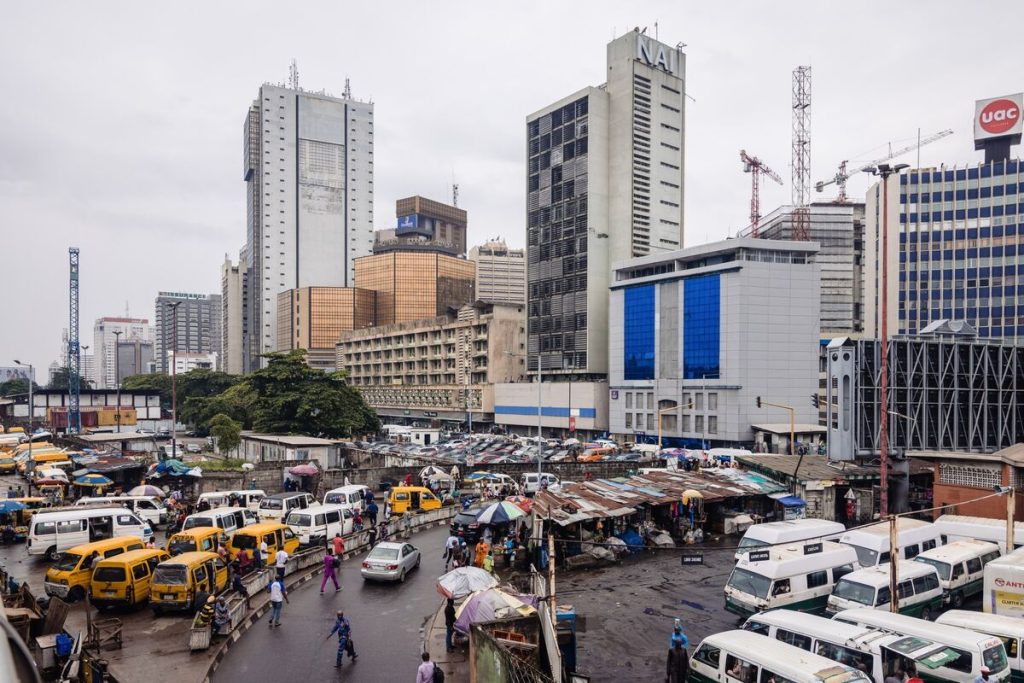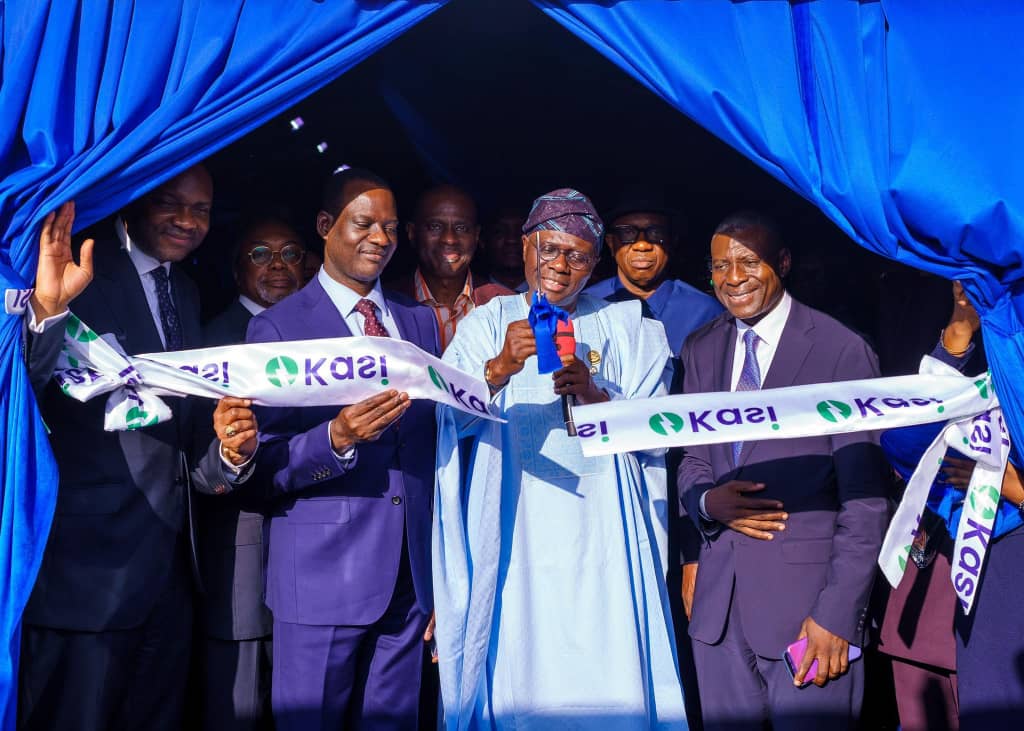
The Lagos State government plans to increase the city’s data centre capacity to more than 250 megawatts (MW) by 2030, said Olatubosun Alake, commissioner for innovation, science, and technology.
Alake said Lagos already hosts nearly three-quarters of Nigeria’s commercial data centre capacity, but the state intends to significantly expand its infrastructure footprint over the next five years.
“There are about 146 additional megawatt data centres planned in the pipeline,” he said at the launch of the Kasi Cloud LOS1 data centre facility in Lekki. “We envisage that by 2030, we would have over 250 megawatts of data centre capacity in Lagos, three times the current capacity growth.”
The expansion comes as demand for cloud services, AI computing power, and local data storage continues to grow across Nigeria’s digital economy. Lagos is home to one of Africa’s largest startup ecosystems, valued at more than $15 billion.
That growth is expected to drive a major increase in data centre investments. According to research firm Arizton Advisory & Intelligence, Nigeria is projected to become Africa’s fastest-growing data centre investment market, with annual investments expected to hit nearly $770 million by 2031.
Alake said the Kasi Cloud facility represents Lagos’ entry into “large-scale hyperscale AI infrastructure,” signalling the state’s ambition to evolve beyond being known primarily as a startup hub into a major centre for digital infrastructure and AI computing.
“Lagos is no longer simply a startup city,” he said. “It is an infrastructure city.”
The Kasi LOS1 facility is designed as a 40MW hyperscale data centre campus, beginning operations with an initial 7.2MW IT load. According to Alake, the facility includes advanced GPU computing infrastructure powered by Nvidia H100 and H200 chips, alongside liquid cooling systems and cloud infrastructure services designed to support AI workloads.
The Lagos government believes such infrastructure will become critical as AI adoption accelerates globally. Alake said the state is investing in fibre optic networks, smart city technologies, university innovation programmes, and digital government systems to prepare for the transition.
“The AI economy is going to require hundreds [of megawatts],” he said. “The market has already made its decision about where digital infrastructure belongs.”
Johnson Agbogun, co-founder and chief executive officer of Kasi Cloud, said the project was built to reduce Nigeria’s dependence on foreign cloud infrastructure and give African businesses more control over how their data and AI systems are developed.
“Nigerian enterprises are currently spending $850 million every year on foreign cloud infrastructure,” he said. “Every naira spent abroad on cloud and AI infrastructure helps build capabilities somewhere else.”
He added that the facility runs GPU-powered AI workloads from local enterprises and described the Lekki campus as “the beginning of Nigeria’s AI factory.”
Nigeria Sovereign Investment Authority (NSIA), the manager of Nigeria’s Sovereign Wealth Fund, invested in Kasi Cloud through a US$8 million convertible loan note.
“As artificial intelligence reshapes economies globally, the nations that control their own compute infrastructure and data will be the ones positioned to lead,” Kolawole Owodunni, NSIA’s Executive Director and Chief Information Officer, said.
But data centre operators still face major challenges, including energy costs that have surged by 64.1% since January 2026, unstable national electricity generation hovering between 3,000MW and 4,000MW, foreign exchange volatility, and cooling systems that consume nearly 40% of total energy costs. Building hyperscale facilities also requires significant long-term capital investments and stable connectivity infrastructure.
Despite the hurdles, Lagos officials insist the city is already positioning itself as Africa’s next major digital infrastructure hub.
“Lagos is not coming,” Alake said. “It is already here.”