For a long time, success in Nigeria’s food and hospitality industry has been driven largely by instinct. Restaurant owners rely on experience, gut feeling, and daily observations, such as what sells quickly, what sits too long, and what customers seem to ask for most.
That approach has worked, especially in a fast-moving market like ours. However, as operating costs rise and competition intensifies, instinct alone is no longer enough.
Today, the restaurants that grow sustainably are the ones that understand their numbers. Not just sales figures, but patterns, how customers order, when they show up, what slows the kitchen down, and where money quietly leaks. This is the gap Dropp was built to fill.
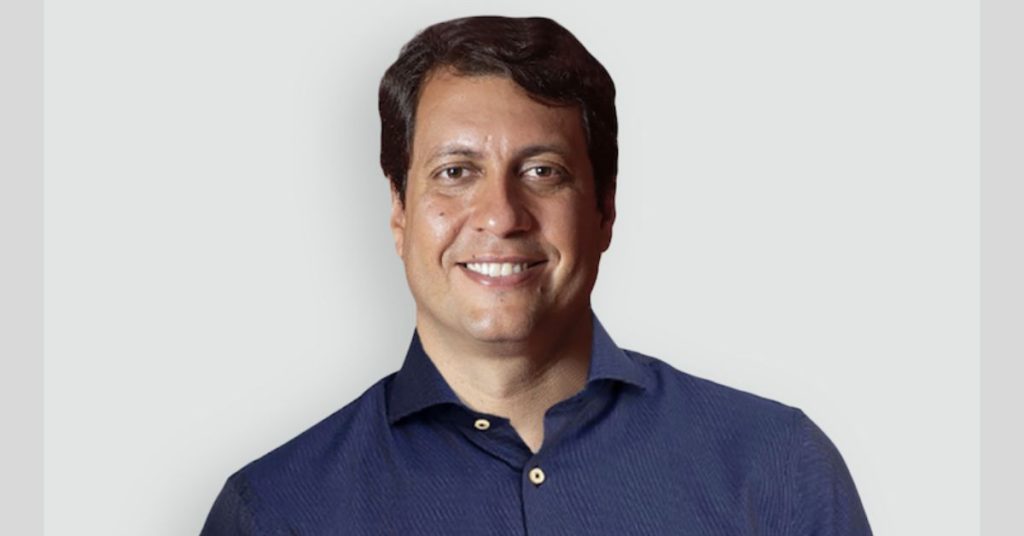
Where the problem became personal for Tunde Ogunkunle (Chief Executive Officer)
Dropp’s story did not begin with software. It began with a restaurant.
In 2021, Tunde Ogunkunle founded a native food restaurant. Like many first-time restaurant owners, he relied on passion, hard work, and what felt like a good understanding of his customers. On the surface, the business seemed fine. Money was coming in. Customers were showing up.
Yet within the first 18 months, the restaurant failed.
Not because it wasn’t making sales, but because there were deeper, structural problems, inefficiencies, blind spots, and operational gaps that were impossible to see clearly at the time. Problems tied to how restaurants are run in certain parts of the world, where systems are fragmented, records are manual, and decisions are often based on memory rather than evidence.
That experience left a lasting impression. It revealed a truth many food business owners eventually discover the hard way: revenue alone does not mean sustainability. Without visibility into operations, growth can quietly become a burden instead of progress.
Rather than walking away from the industry, Tunde Ogunkunle decided to tackle the problem at its root. The question became simple but ambitious: What if restaurants had an operating system built specifically for their reality?
That question became Dropp, and what followed was the formation of a founding team: Bolu Ogunbiyi (Head of Product), leading product vision and development, and Voke Okpeka (CTO), building and scaling the technology behind the platform.
From everyday transactions to real insight
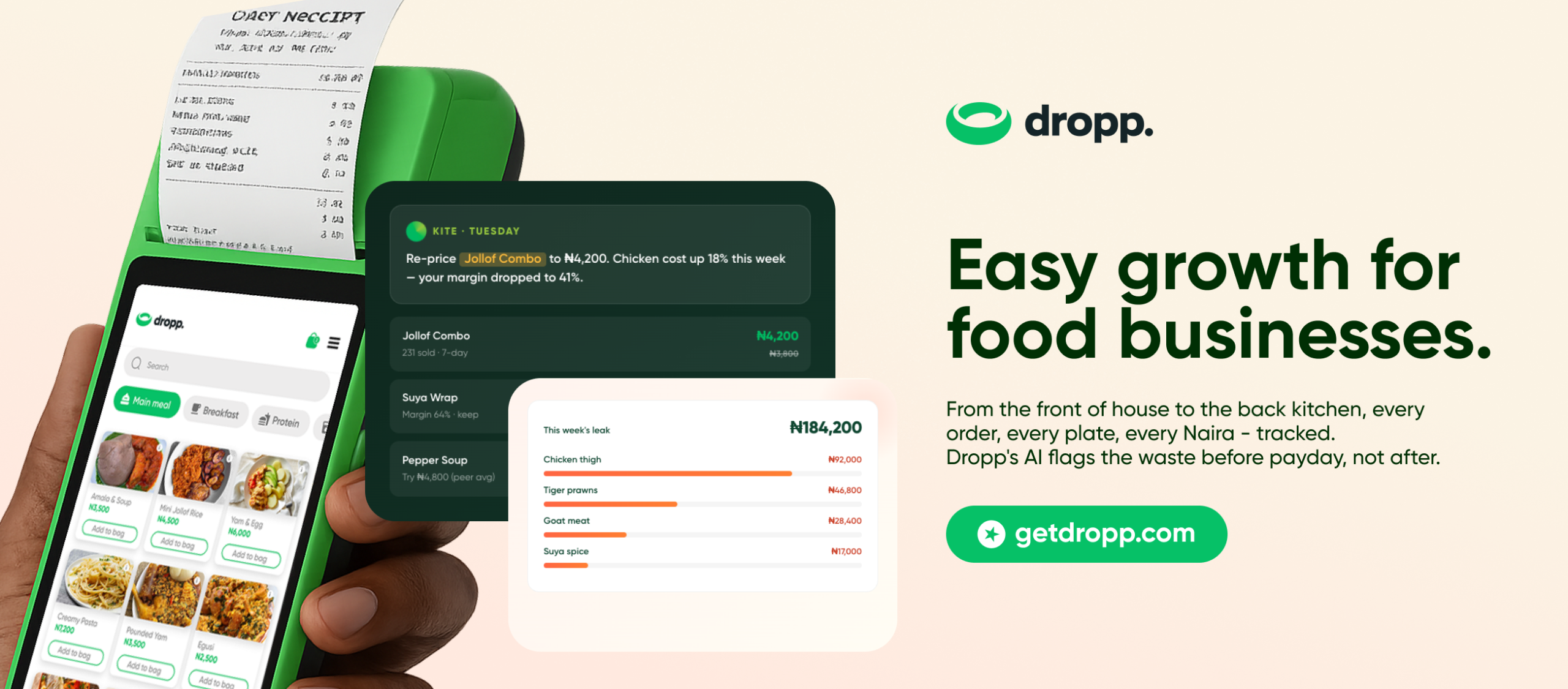
Dropp started with a clear goal: to make growth easy for food businesses. While the product has evolved and adapted, its underlying purpose has remained consistent. Today, that commitment shows in how Dropp empowers restaurants to see, understand, and improve their operations through real-time data.
On the surface, Dropp appears to be a set of practical tools (QR menus, ordering systems, and point-of-sale solutions). But beneath that surface, something more powerful is happening. Every time a customer scans a menu, places an order, or pays a bill, Dropp captures data that would otherwise go unnoticed or be lost entirely.
Over time, this data begins to tell a clear story. Restaurants can see which menu items drive profit and which quietly drain it. They can identify peak ordering periods, understand customer traffic patterns, track how inventory moves through the business, and even assess staff performance by spotting delays and service bottlenecks.
At this point, the question shifts from “What do I think is working?” to “What is clearly working?”
For many food business owners, however, data on its own is not enough. Numbers without context can feel overwhelming and difficult to act on. This is why Dropp goes beyond data to deliver insight. Through KITE (Dropp’s AI Co-pilot), restaurants receive clear, actionable recommendations on what to improve, what to optimize, and how to do it, so data becomes a practical tool for everyday growth, not just a dashboard of figures.
Built for how restaurants actually work
One of Dropp’s core strengths is that its products are designed around real restaurant workflows, not abstract software ideas.
- Dropp Dine-In supports full-service restaurants with tools that fit naturally into daily operations: QR menus, POS systems, inventory tracking, waiter management, kitchen display systems, and built-in analytics.
- Dropp QSR is built for fast-moving environments where speed and accuracy matter most. It removes unnecessary complexity while keeping operations efficient and insights accessible.
- Dropp Store extends this same thinking beyond food service, allowing businesses and individuals to set up online storefronts for retail and merchandise while still maintaining visibility into performance and customer behaviour.
- Across all these products, data is not treated as an advanced add-on. It is woven directly into the system. Owners don’t need to be analysts to benefit from it. The insight comes naturally, as part of running the business.
Turning visibility into growth
The real value of data is revealed when it leads to better decisions.
With Dropp, restaurants can identify menu items that sell well but hurt margins, spot staffing issues during rush hours, and notice patterns, like meals that perform better on weekdays than weekends. Armed with this clarity, business owners can adjust pricing, promotions, staffing, and inventory before small issues become costly problems.
For growing businesses, this visibility is often the difference between controlled expansion and constant exhaustion. Growth becomes intentional, not reactive.
Raising the standard for food businesses in Nigeria
Nigeria’s food industry is vibrant, creative, and deeply competitive. Yet many businesses still rely on paper records, manual stock counts, and instinct-driven decisions.
Dropp’s mission is to quietly change that. Not by overwhelming restaurants with complicated dashboards, but by powering everyday operations with data that is accurate, accessible, and genuinely useful.
Today, over 180 food businesses across Nigeria run their operations on Dropp, a clear signal that the industry is ready for smarter and more reliable ways of working.
As more food businesses adopt digital-first systems, the advantage will no longer come from location or guesswork alone. It will come from how well a business understands itself.
Dropp sits at the intersection of food, operations, and data, built from lived experience, shaped by real failure, and focused on helping restaurants grow with clarity, not chance.