As more African startups and operators expand across borders, they are running into the same problem: the continent’s legal and regulatory systems are not moving at the same speed. A Nairobi event convening in June wants to change that.
For many founders, the hard part is no longer building the product. It is expanding it across borders.
A contract that works in one market can become harder to enforce in the next. Payment rails do not always travel cleanly across countries. Tax assumptions can change mid-expansion. Regulatory approvals that should take weeks can drag on for months.
The result is a familiar bottleneck for African businesses trying to scale: ambition is moving faster than the frameworks meant to support it.
Where the friction shows up
Africa’s business story is often told in extremes: either boundless optimism or deep skepticism. For founders trying to make expansion decisions, neither is especially useful.
Cross-border expansion remains one of the most complex legal and operational tests an African founder can take on. Even with the African Continental Free Trade Area in force, regulatory harmonisation across member states is still uneven. A startup expanding from Kenya into Rwanda, Nigeria, and Ghana is effectively navigating four legal systems, four tax regimes, four approaches to data protection, and four different versions of what compliance looks like.
The infrastructure around cross-border investment has not kept up. Due diligence takes longer. Structuring costs rise. Risk premiums widen. Capital that could move stays put. Tax uncertainty adds another layer of friction: when the assumptions behind a five-year model can shift inside a single budget cycle, investment decisions become harder to make.
“The biggest barrier to investment in Africa is not capital. It is predictability.”
That idea has become a useful shorthand for a broader problem: when regulation is unpredictable, businesses slow down and capital waits.
That is the backdrop to the MN Legal (MNL) Africa Leadership Circle, a two-day convening scheduled for 18 and 19 June 2026 in Nairobi. Rather than stay at the level of broad policy discussion, the event is positioning itself as a room for decision-makers with the ability to shape what happens next.
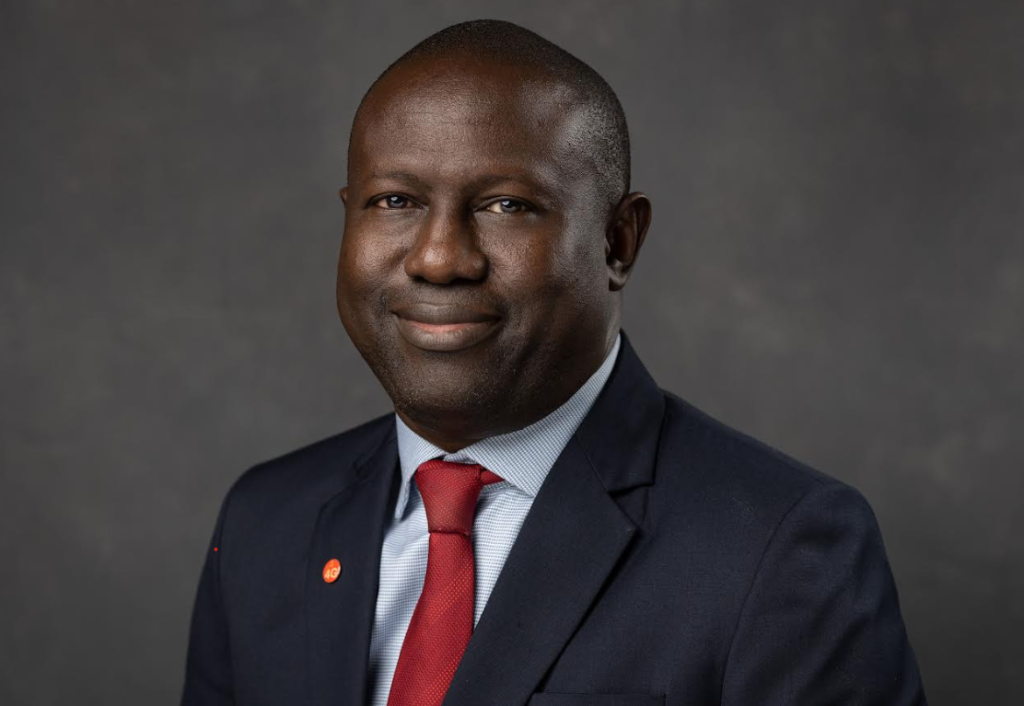
Convened by Evelyne Mbula Nzuki, founder and managing partner of MN Legal, the event is expected to bring together about 200 senior business leaders, investors, policymakers, and legal practitioners from five continents. Mbula says the idea grew out of years of private conversations about the same structural barriers facing African businesses trying to expand.
“I am convinced that the right conversations shape destinies, awaken sleeping lions, and inspire action. The right people, in the right place, at the right time, taking inspired action — that is what we need.”
Who will be there
The guest list offers a sense of the event’s ambition.
Among the confirmed participants are Abubakar Hassan Abubakar, Kenya’s Principal Secretary for Investment Promotion; Ambassador Philip Thigo, Kenya’s Special Envoy for Technology; Daniel Mainda, CEO of the Nairobi International Financial Centre Authority; and Benjamin Tayari, Chairperson of the Kenya Ports Authority. Together, they bring perspectives from investment policy, technology governance, and capital market development.
The wider lineup includes Garang Malek of Capital Pay International; Pavel Novak and Stepan Hyks of Addvery, Czech Republic; Jindrich Savel, CEO of Novicom s.r.o., Czechia; Opuiyo Oforiokuma, Senior Partner at Africa50; as well as representatives from Oracle Kenya, IX Africa Data Centre, Tech Hive Advisory Africa, and other players in infrastructure, energy, AI governance, and cross-continental investment.
Organisers say the goal is not just another networking event. The convening is expected to feed into a white paper with recommendations on how to make cross-border business in Africa more predictable, investable, and scalable.
Why now
None of this is new. African founders have been navigating regulatory complexity and cross-border friction for as long as there have been African founders building at scale. So why does this moment feel different?
Part of the answer is timing. AfCFTA is now operational, even if implementation remains uneven. For the first time, there is at least a continental framework on the table for thinking about trade and harmonisation at scale.
At the same time, AI governance rules are being written in real time, and African markets still have an opportunity to help shape them. For technology businesses on the continent, the decisions being made now will have long-term consequences.
There is also a new generation of African operators building for multiple markets from the outset. They need legal, tax, and regulatory systems that match that ambition. In many cases, those systems are still catching up.
The window to get this right is open. But windows close.
What could change
For African businesses, the stakes here are practical.
If cross-border rules become clearer, businesses can expand faster and at lower cost. If tax regimes become more predictable, investors can price risk more confidently. And if regulation becomes easier to navigate across markets, building for the continent from day one becomes more realistic.
One event will not solve those problems. But a room that brings together policymakers, investors, lawyers, innovators, and operators could help push the conversation closer to action.
African founders are already building with continental ambition. The question is whether the systems around them can evolve quickly enough to keep pace.
That is the challenge the MNL Africa Leadership Circle wants to put on the table in Nairobi this June.
About the MNL Africa Leadership Circle
The MNL Africa Leadership Circle is a distinguished high-level convening taking place on 18 and 19 June 2026 in Nairobi, Kenya, hosted by Mbula Nzuki through MN Legal (MNL Advocates LLP). Registration and further details: mnlafrica.com