Omni marked its seventh anniversary on Friday by launching a landmark report on Nigeria’s fast-moving consumer goods (FMCG) sector, unveiling fresh data that highlights a $25 billion market opportunity while exposing the financing challenges threatening the survival of retailers.
The report, inaugurated in Lagos by Jumoke Oduwole, the minister of Industry, Trade and Investment, positions technology and embedded finance as critical tools for unlocking growth across one of Africa’s largest consumer markets.
Released on the same day Omni celebrated seven years of operations, the FMCG Industry Report 2026 also reflects the company’s transformation from a technology startup into one of Africa’s leading commerce and embedded finance platforms, connecting manufacturers, distributors, retailers and financial institutions through a digital ecosystem.
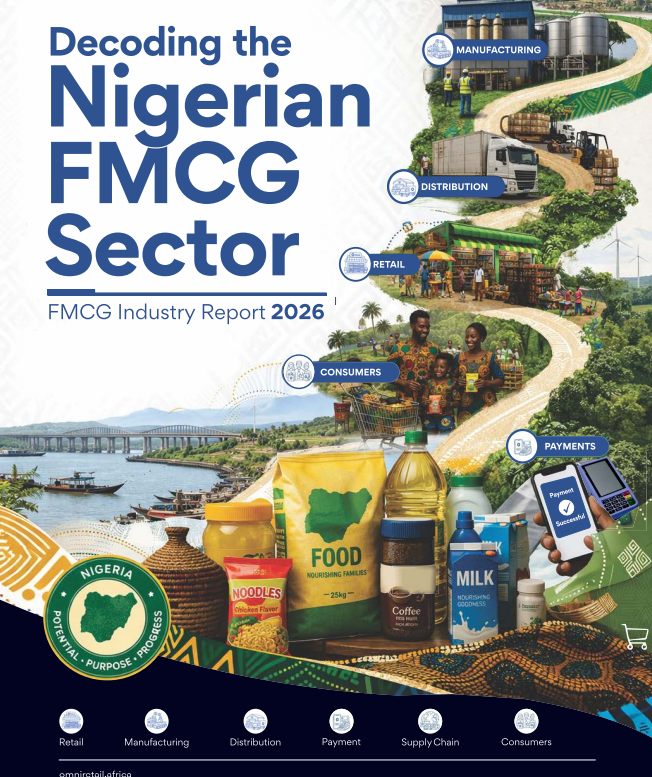
The publication, titled ‘Decoding the Nigerian FMCG Sector: FMCG Industry Report 2026’, offers one of the most detailed assessments of Nigeria’s consumer goods industry, a sector valued at an estimated $25 billion and serving a population of about 238 million people. While the report highlights strong long-term growth prospects driven by urbanisation, a youthful population and increasing digital adoption, it also reveals a deep financing challenge at the heart of Nigeria’s retail economy.
According to the findings, 74 per cent of retailers surveyed said access to finance is critical to keeping their businesses running, while only 18 per cent have successfully obtained formal loans. More than half reported experiencing working-capital shortages, underscoring the persistent funding gap that continues to limit expansion across the sector.
The report suggests that digital commerce and embedded finance may offer a solution. With more than three-quarters of retailers now using digital payment channels and 78 per cent operating POS systems, transaction data is increasingly creating alternative pathways for credit assessment and lending.
That shift is accelerating a broader transformation in trade, where technology platforms are becoming the infrastructure through which goods, payments, financing and market intelligence move across supply chains.
“The FMCG industry is more than a commercial category; it is a critical driver of jobs, manufacturing growth, trade and consumer welfare. Strengthening visibility across the value chain and fostering collaboration among stakeholders will be essential to unlocking the sector’s full potential,” the minister said at the launch.
For Omni, the report launch represents more than an anniversary milestone. It signals the company’s ambition to shape policy and investment conversations around the future of commerce in Nigeria and across Africa.
“As we celebrate seven years of building technology infrastructure for commerce, we are proud to contribute something bigger than ourselves to the industry.
“The FMCG Industry Report 2026 provides a data-driven perspective on the realities, opportunities and future of one of Africa’s most important sectors. We hope it becomes a valuable resource for business leaders, investors and policymakers,” said Deepankar Rustagi, founder and chief executive officer of Omni.
The findings arrive as investors increasingly look beyond consumer brands themselves and toward the technology, logistics and financial infrastructure supporting trade. The report argues that future growth in Nigeria’s FMCG sector will depend not only on consumer demand but also on how effectively businesses can solve distribution inefficiencies, improve market visibility and expand access to working capital.
As Nigeria pursues broader economic diversification, Omni’s anniversary report points to a sector that remains resilient despite economic pressures, with technology emerging as the key force reshaping how commerce is conducted across Africa’s largest consumer market.