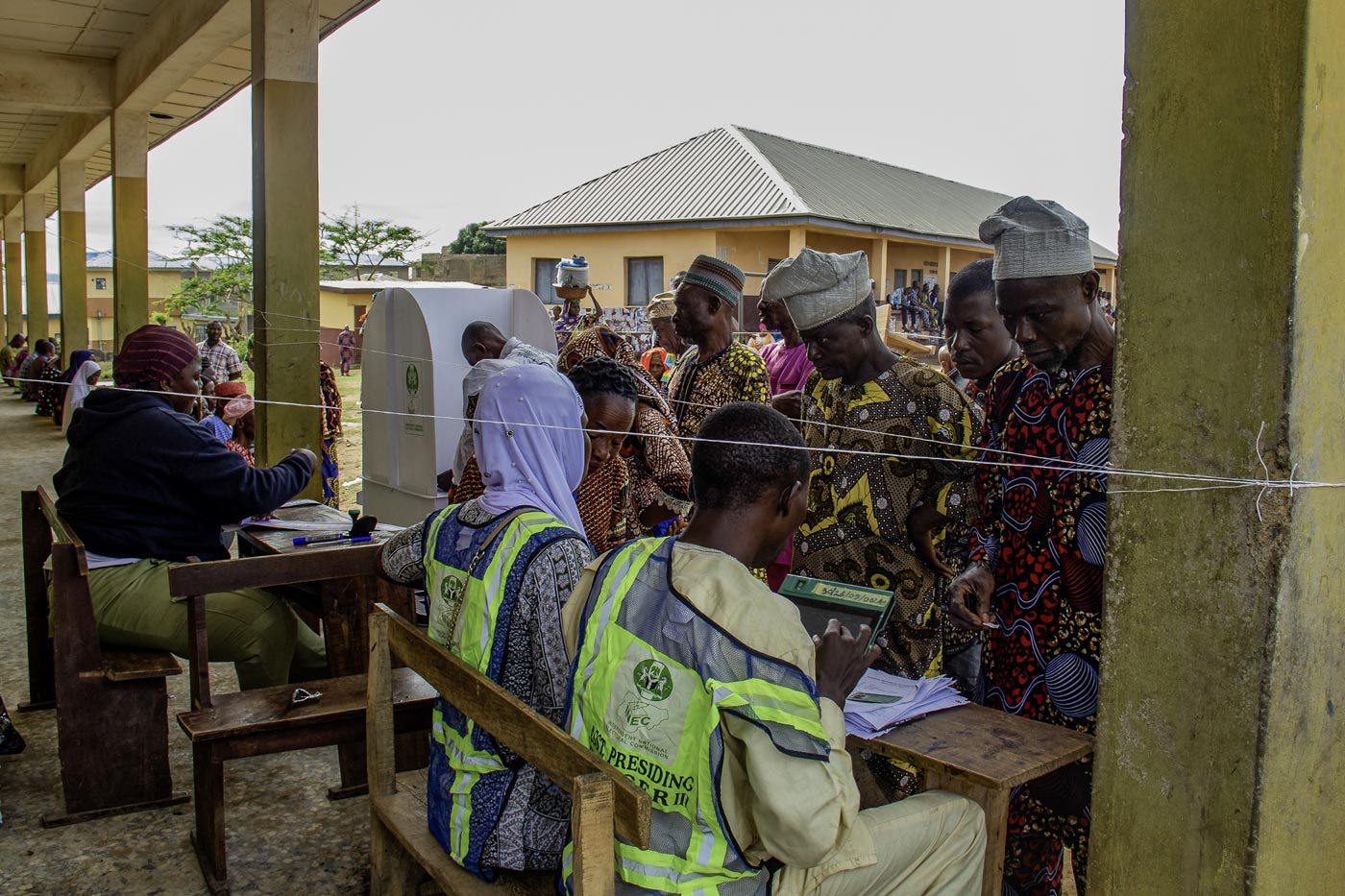
Most Nigerians fear artificial intelligence will fuel political misinformation ahead of the 2027 general elections, yet they continue to rely on social media platforms as their primary source of political news, according to a new report by SB Morgen Intelligence, a market and security intelligence-gathering firm.
The report titled ‘The Algorithm and the Ballot Box’ surveyed 829 respondents across eight states, spanning all six geopolitical zones, and was conducted between April and May 2026, alongside desk research into Nigeria’s information ecosystem, legal and regulatory framework, and platform policies.
The findings come as election authorities across Africa grapple with the growing use of artificial intelligence in political campaigns, including the use of deepfake audio and edited images. While researchers have found little evidence that AI-generated content alone changes how people vote, it can undermine trust and make authentic evidence easier to dismiss as fabricated, according to the report.
Despite the widespread concern, the report found that Nigeria’s political conversation plays out on social media, with 52.1% of respondents naming platforms such as WhatsApp, Facebook, X and TikTok as their primary source of political news. Most of that traffic runs through WhatsApp, which is used by an estimated 95.1% of Nigerian internet users.
Unlike other platforms, where misleading posts can be labelled or removed, WhatsApp’s end-to-end encryption means AI-generated content shared in private chats and groups cannot be detected or moderated, allowing false information to spread unchecked before fact-checkers become aware of it.
The report also suggested that concern for AI-generated political content does not always translate to caution, as about 12% of respondents admitted they do not verify political information before accepting or sharing it. Although 53.3% of respondents said they cross-check political claims against other news sources, and 20.9% search online for confirmation, the 12% could represent millions of voters who could become conduits for AI-generated misinformation during an election cycle.
The survey revealed a contradiction at the regional level, dubbed the ‘Southeast Paradox’ by SBM. The Southeastern region recorded a 42.7% non-verification rate. Yet among all regions, the Southeast was the least concerned about AI-generated political misinformation, with only 38.9% expressing their concern.
“It means that more than four in ten Southeast voters who receive political information on WhatsApp, X, or TikTok will share or act on it without checking whether it is real,” the report stated. “In a zone where 82.5% already rely on social media as their primary source, this creates an essentially uninterrupted pipeline from AI-generated content to mass belief.”
Beyond voter behaviour, the report argued that Nigeria’s institutions are not yet equipped for an AI-driven election cycle. In May 2025, the Independent National Electoral Commission of Nigeria (INEC), Nigeria’s electoral body, set up an internal unit to examine how AI could improve the electoral process. With polls six months away, the unit has yet to launch any major programmes.
The report argued that this leaves a narrowing window for regulators and technology companies to agree on how synthetic political content should be identified or addressed before campaigns intensify.
As generative AI becomes more inclusive of local languages, the report pointed to the risk that misinformation in the next election cycle may no longer be primarily in English.
“AI generation tools capable of producing convincing content in Hausa, Igbo, Yoruba, Pidgin English, and the dozens of minority languages in which Nigerian political conflict is actually conducted are now widely available and increasingly accessible to non-expert users,” the report stated. “Fact-checkers operate predominantly in English. INEC’s monitoring capacity is almost entirely English-language-based, making this more of a vacuum than a gap.”
Although fact-checking civic groups such as Dubawa and the Nigeria Fact-Checkers’ Coalition already exist to combat misinformation, the report argued that these efforts need to be scaled across regions with AI detection capabilities integrated into their workflow before the 2027 elections.
True scale demands moving beyond surface-level integrations to robust execution. We’ve filtered the noise out of Moonshot 2026, optimising the conference strictly for high-calibre connections between startup founders, global financial operators, enterprise leaders and individuals rewiring Africa’s technical frameworks. Get 20% off Early Bird tickets for a limited time.