This is Follow the Money, our weekly series that unpacks the earnings, business, and scaling strategies of African fintechs, financial institutions, companies, and governments. A new edition drops every Monday.
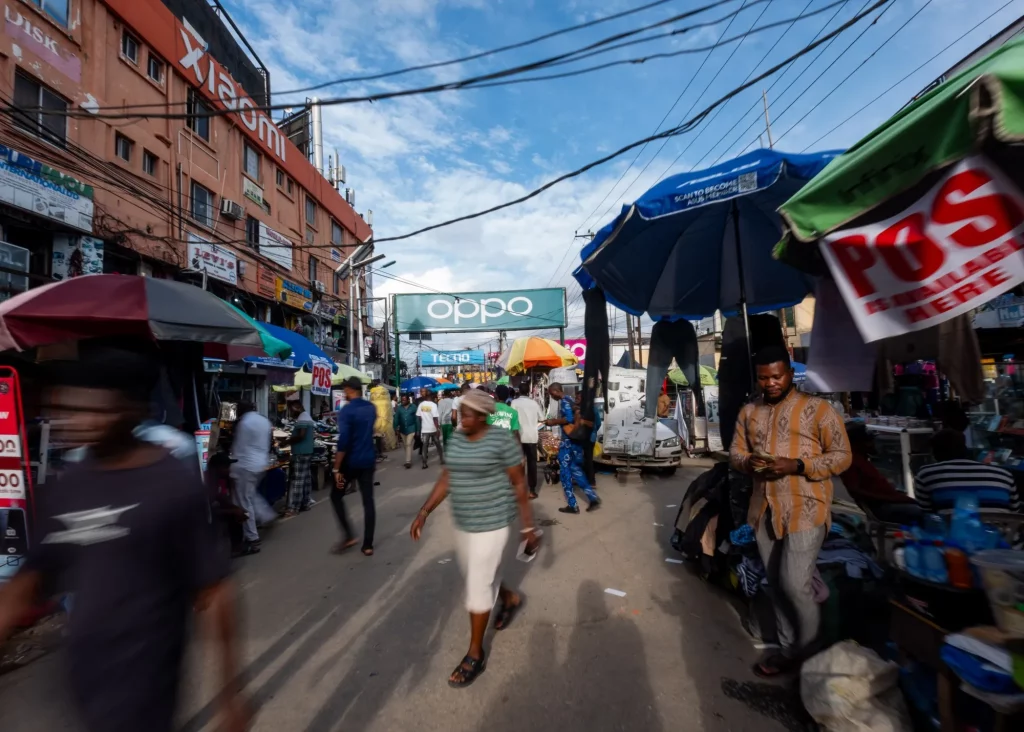
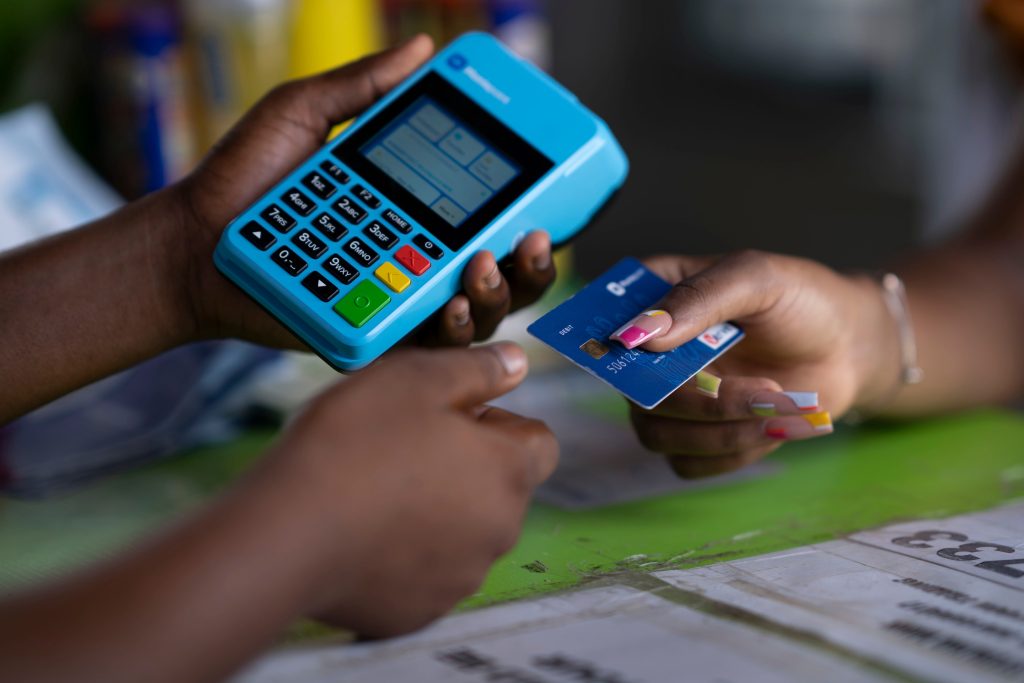
For a small business in Nigeria, securing a bank loan has long felt like trying to step through a moving doorway.
Commercial banks mobilise deposits, and the Central Bank of Nigeria (CBN) urges them to extend credit, yet formal lending to small businesses remains low.
According to World Bank data, micro, small, and medium-sized enterprises (MSMEs) form the backbone of the economy, accounting for the vast majority of businesses, nearly half of national GDP, and most employment. Yet fewer than one in 20 MSMEs can access formal bank credit due to entrenched structural barriers.
The credit that is available is predominantly short-term and expensive, while prohibitive collateral requirements disqualify otherwise viable enterprises.
For commercial banks, credit extension is a risk-return decision. While a bank earns interest on disbursed capital, the lending rates it charges are governed by several variables—chief among them the CBN’s Monetary Policy Rate (MPR), which sets the baseline cost of capital across the economy.
When the CBN raises the MPR, commercial banks adjust their prime lending rates upward, making credit more costly. Conversely, rate cuts are intended to lower borrowing costs and stimulate economic activity.
The apex bank adjusts benchmark rates primarily to regulate inflation and systemic liquidity. When price pressures surge, the CBN tightens monetary policy through rate hikes; when inflation moderates, it eases policy to encourage growth.
This macroeconomic lever directly affects small businesses. Elevated rates raise the cost of capital and deter expansion, whereas rate cuts are theoretically designed to democratise access to credit.
On Tuesday, the CBN delivered its biggest single interest-rate cut on record, slashing the benchmark MPR by 3.5 percentage points to 23%.
However, historical data call into question whether benchmark rate cuts actually translate into increased bank lending for small businesses.
TechCabal analysed a decade of CBN data to examine how lending to small businesses responded as the benchmark interest rate changed.
What happens when the CBN changes its rate?
A rate cut can lower the cost of money. But getting that cheaper money into an SME’s hands depends on what happens between the CBN and the borrower.
Same MPR. Different borrower.
Tap a factor to see how it shifts the credit decision
More info available
Less info available
So, does a lower MPR mean more SME lending?
Not necessarily.
That’s what TechCabal’s 10-year look at CBN data tests next.
Explore the decade of MPR vs SME lending →A decade of MPR movements and SME credit allocation
Between 2015 and 2025, commercial bank lending to SMEs expanded 1,270.19%, reaching ₦177.44 billion ($133.46 million). Despite this expansion, SME loans as a proportion of total commercial bank credit remained marginal, rising only slightly from 0.10% in 2015 to 0.38% in 2025. The total bank volume allocated to SMEs pales in comparison to the ₦47.09 trillion ($35.42 billion) extended to the broader private sector in 2025, where commercial credit remained concentrated in oil and gas, financial services, and general commerce.
Over the decade, the CBN monetary policy stance underwent distinct operational shifts. Initial years of monetary easing were followed by pandemic-era interventions in 2020, during which the central bank slashed rates and rolled out targeted liquidity facilities. Then inflation changed the equation. As prices accelerated, the CBN began aggressively tightening monetary policy, pushing the MPR to 27.50% in 2024.
On the surface, this should have made borrowing more expensive and potentially reduced demand for loans. But the decade-long data tells a more nuanced story.
In 2015, when the MPR was 11%, banks’ loans to SMEs stood at ₦12.95 billion ($9.74 million). When the MPR rose to 14% in 2016, SME lending fell to ₦10.75 billion ($8.09 million) and remained there in 2017.
When rates moved, SME lending didn’t always follow.
Explore 10 years of CBN data to see how the Monetary Policy Rate moved against commercial-bank lending to small businesses.
The baseline year. MPR stood at 11.0%, and commercial-bank SME lending was ₦12.95 billion.
The numbers show that the MPR and SME lending moved together in some periods and in opposite directions in others.
This suggests that MPR alone does not explain how much Nigerian banks lend to small businesses. Banks make lending decisions based on more than the CBN’s benchmark rate. They consider the cost of deposits, inflation, credit risk, collateral, liquidity, regulatory requirements, and the likelihood that a borrower will repay.
They also favour more predictable businesses. Many small businesses have weak financial records, compared to those in the private sector.
Loans to the private sector only fell in 2018, before falling again in 2025. Unlike for small businesses, the MPR did not deter banks from lending to the private sector.
The 1% Reality: SME Loans vs. Total Private-Sector Credit
The money in Nigeria’s banking system has grown dramatically, but SME lending remains a microscopic slice. Scrub across the chart to see the relationship between total private-sector credit and SME loans.
Overall, SME lending rose, but Nigeria has experienced substantial inflation and a sharp depreciation of the naira over the decade. So the increase in nominal SME lending does not mean that small businesses gained 1,270% more purchasing power or access to 1,270% more real credit.
In other words, while the amount of naira being lent increased dramatically, the real increase is in the amount of goods, equipment, workers, and business capacity that money could finance.
The intervention programmes
With commercial bank lending alone not closing the gap, governments and development institutions have spent years trying to fill it.
Stears, a financial data, market intelligence, and AI-research platform, estimates that Nigeria’s small businesses face a $236 billion funding gap.
The CBN established the Micro, Small and Medium Enterprises Development Fund (MSMEDF) in 2013 to address the financing gap facing small businesses. In 2017, Nigeria also established the Development Bank of Nigeria (DBN), with the Ministry of Finance seeking World Bank support through the Nigeria Development Finance Project.
The World Bank provided a $500 million International Bank for Reconstruction and Development loan to support the establishment of DBN and mobilised support from four other development partners. Together, the commitments exceeded $1.3 billion.
As of the second quarter of 2023, DBN had provided financing to 321,867 MSMEs. About 66% were women-owned businesses and 12% were first-time borrowers. It had disbursed ₦647 billion ($486.65 million).
In 2025, the World Bank approved the Fostering Inclusive Finance for MSMEs in Nigeria (FINCLUDE) project, a $500 million financing package. The programme is expected to mobilise approximately $1.89 billion in private capital and expand debt financing to 250,000 MSMEs.
Microfinance banks are another part of the solution. The CBN mandates MFBs to focus their lending on households and small businesses, but their loans are generally much smaller than the facilities available from commercial banks.
For many small businesses, a ₦500,000 ($376.08) or ₦1 million ($752.16) loan can provide working capital. But it is unlikely to finance the machinery, additional staff, technology, or expansion required to move a business from survival to scale.
And many businesses are not even looking for formal credit.
Moniepoint’s 2025 Informal Economy Report further highlights that 38% of informal merchants generate under ₦10,000 ($7.52) in daily profit. While these micro-enterprises require capital to boost productivity and hiring, high borrowing costs lock them in perpetual survival mode.
Small businesses are the lifeblood of the economy, but many remain stuck in survival mode. Moniepoint’s data shows that 38% of informal businesses make less than ₦10,000 ($7.52) in daily profit. These businesses need credit to invest in scale, staff, and productivity.
While the expectation is that a lower MPR will make lending more attractive, data from the last 10 years suggests otherwise.
Editor’s Note: exchange rate used: ₦1,329.51/$
True scale demands moving beyond surface-level integrations to robust execution. We’ve filtered the noise out of Moonshot 2026, optimising the conference strictly for high-calibre connections between startup founders, global financial operators, enterprise leaders and individuals rewiring Africa’s technical frameworks. Get 20% off Early Bird tickets for a limited time.