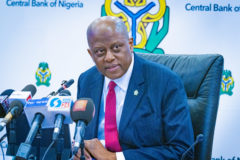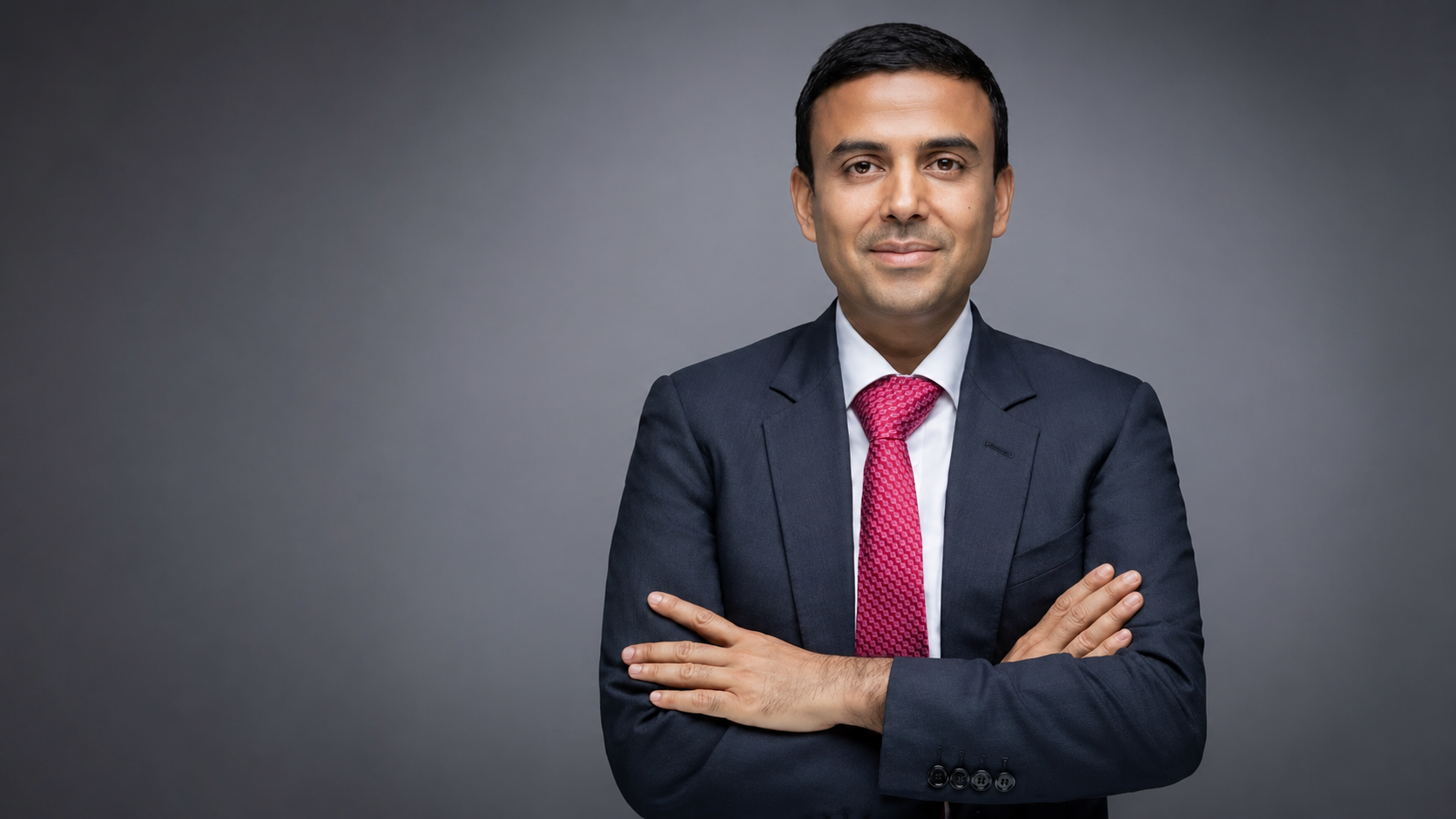
Bosun Tijani rates himself highly in his first year as minister of communication, innovation, and digital economy. Is his vision for Nigeria’s digital future resonating?
After being declared the winner of a contentious presidential election, Bola Tinubu was tasked with winning over a demographic that appeared to have powered the Peter Obi candidacy. As permutations emerged around Tinubu’s cabinet, early feelers suggested he would appoint a “tech insider” to the Ministry of Communications, Innovation, and Digital Economy. It was the only sliver of excitement around a cabinet stacked with party loyalists.
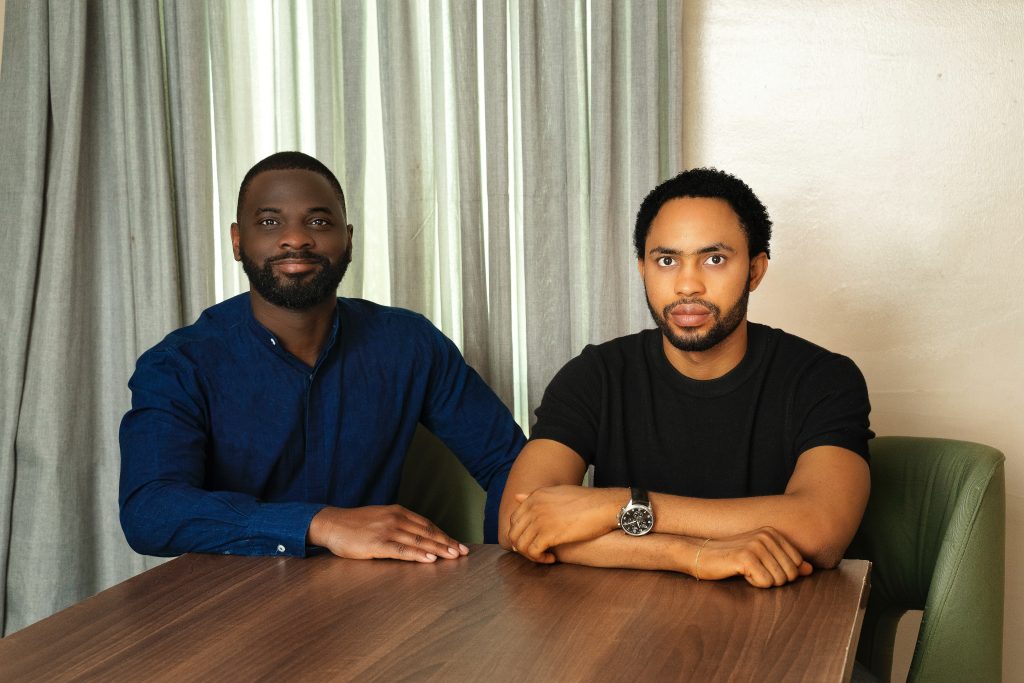
Nigeria’s technology ecosystem, on a growth tear for the last two decades, has the magic touch. Paystack, a payments company started by two twenty-something-year-old founders, sold to Stripe for $200 million in 2020, and by 2021, foreign venture funding was flowing into the country at a record pace.
Appointing an ecosystem insider would force technology leaders, some of whom have large public followings and are celebrities, to root for Tinubu, albeit grudgingly.
In August 2023, Bosun Tijani, founder of CCHub, an influential tech accelerator to which many early Nigerian startups trace their roots, was named minister. Even to those outside the tech ecosystem, he was a familiar name.
At CCHub, he hosted Meta’s Mark Zuckerberg in 2016 and Twitter’s Jack Dorsey in 2019. He also maintained an active Twitter account with opinions that earned him unusual scrutiny during his ministerial screening. Controversy over his tweets almost derailed his nomination as party leaders believed an avowed Tinubu critic did not deserve to reap where he did not sow.
Nevertheless, Tijani’s strong track record helped him navigate the ruckus. It may also have encouraged some ecosystem leaders, who were vocal during a polarising election, to support him.
That support was not unanimous. Some believed joining a controversial politician like Tinubu was wrong and thought that instead of changing the system, the system would change Tijani.

Such an ideological divide meant Tijani needed to hit the ground running. Weeks after his appointment, he shared the broad contours of what his ministry hoped to achieve.
“It is our shared vision, ambition, and commitment that will drive us towards a Nigeria that not only embraces the digital age but leads it,” writes Tijani in that document. “Let us rise together and seize this moment in our history to shape a future that we can all be proud of.”
The plan identified pivotal areas: increasing internet access nationwide by laying 95,000km of fibre-optic cable, setting up OneGov, a one-stop shop for all government services, and investing in innovation hubs nationwide.
At the Big Cabal Media’s Moonshot by TechCabal conference in October 2023, Tijani shared a plan to train and place 3 million technical talents (3MTT) over the next four years. It is the vehicle through which the Tinubu administration aims to create 1 million tech jobs.
There’s a personal element to that ambition: CCHub, the accelerator Tijani founded, is credited with being ground zero for the country’s tech ecosystem. Andela, BudgIT, and a roll-call of prestigious startups can trace their roots to CCHub.
It seeded the belief that lowering the barrier to entry to technology and giving millions of people tech skills can be a big game-changer. Ultimately, Tijani believes 3MTT will be his legacy.
One year passes quickly
In August 2024, Bosun Tijani marked his first year in office, and it can be challenging to assess arguably Nigeria’s most prominent minister fairly.
Opinions about the minister are intense, even when they may not always be accurate, and it is sometimes unclear if his critics care about his plans. While the minister believes he should be praised for their communication—his office shares a weekly summary of his activities and position papers on their policies—it is doubtful if his messages resonate.

As Nigeria faces its worst cost-of-living crisis in decades, many people consider long-term plans that don’t immediately lower food prices frivolous.
His plan to produce an artificial intelligence strategy was mocked on social media. The consensus was that Nigeria, which still struggles with electricity supply, should not waste its time on AI.
The decision to open a startup house in San Francisco also met similar derision from X, a platform on which he would have hoped to find some joy because it’s youthful and tech-savvy—a constituency that has historically been his.
The minister—who says he no longer uses X—is hyper-aware of the criticism and doesn’t hide his disappointment. He believes his critics have not taken the time to understand his plans and policies.
Yet, if social media feedback—which may sometimes amplify the negative—can be dismissed as ignorant, Bosun Tijani has also struggled to keep tech ecosystem leaders in his corner.
The tech insiders with government links who championed his emergence as minister appeared to break ranks with him briefly.
While many are happy to share neutral quotes on the record, privately, they’re critical and accuse the minister of being inaccessible. A private meeting with some of those leaders in July was a way to begin fixing that wobbly bridge.
Months after that meeting, Tijani’s frustration remains raw. A few critics say the frustration is mutual and believe Abuja has transformed Tijani from master executor to run-of-the-mill politician.
In this way, Tijani’s disappointment is that the public may not agree with his positive self-appraisal. Hearing him tell it, he has communicated, outlined plans, shared milestones, delivered all he promised in year one, and is firmly on the way to joining a tiny circle of private-sector figures who have excelled in public office.
So, in conversation, he invites you to see the big picture, not just the reflexive pushback he sometimes receives from a vocal minority. It’s too early to speak about legacy, but he’s sure he’ll be remembered fondly when he leaves office.
That’s his verdict.
How do you objectively unpack and critique the first year of a minister widely acknowledged as the perfect fit for his portfolio?
We’ll scrutinise his policies and analyse the kind of Abuja he inherited, diving into what quick wins we could expect given those policies and giving you a framework to discuss his impact (or lack thereof).
All the articles in this series are informative and easy to read. They will include the perspectives of the minister’s most prominent supporters and fiercest critics. This is the most exhaustive examination of a communications and digital economy minister since the ministry was created in 2019.
Throughout this series of articles, we hope to give you all the information and perspectives to understand and judge Bosun Tijani’s performance in his first year as minister.
“In this country, it is unusual to have someone from among you on this side of the divide,” Bosun Tijani told attendees at a 2023 conference. Now it’s time for you at the other side of the divide to judge.
*Editor’s note: An earlier version of this story stated the Ministry of Communication, innovation and Digital Economy did not list reimagining NIPOST in its list of pivotal areas. This error has been corrected.