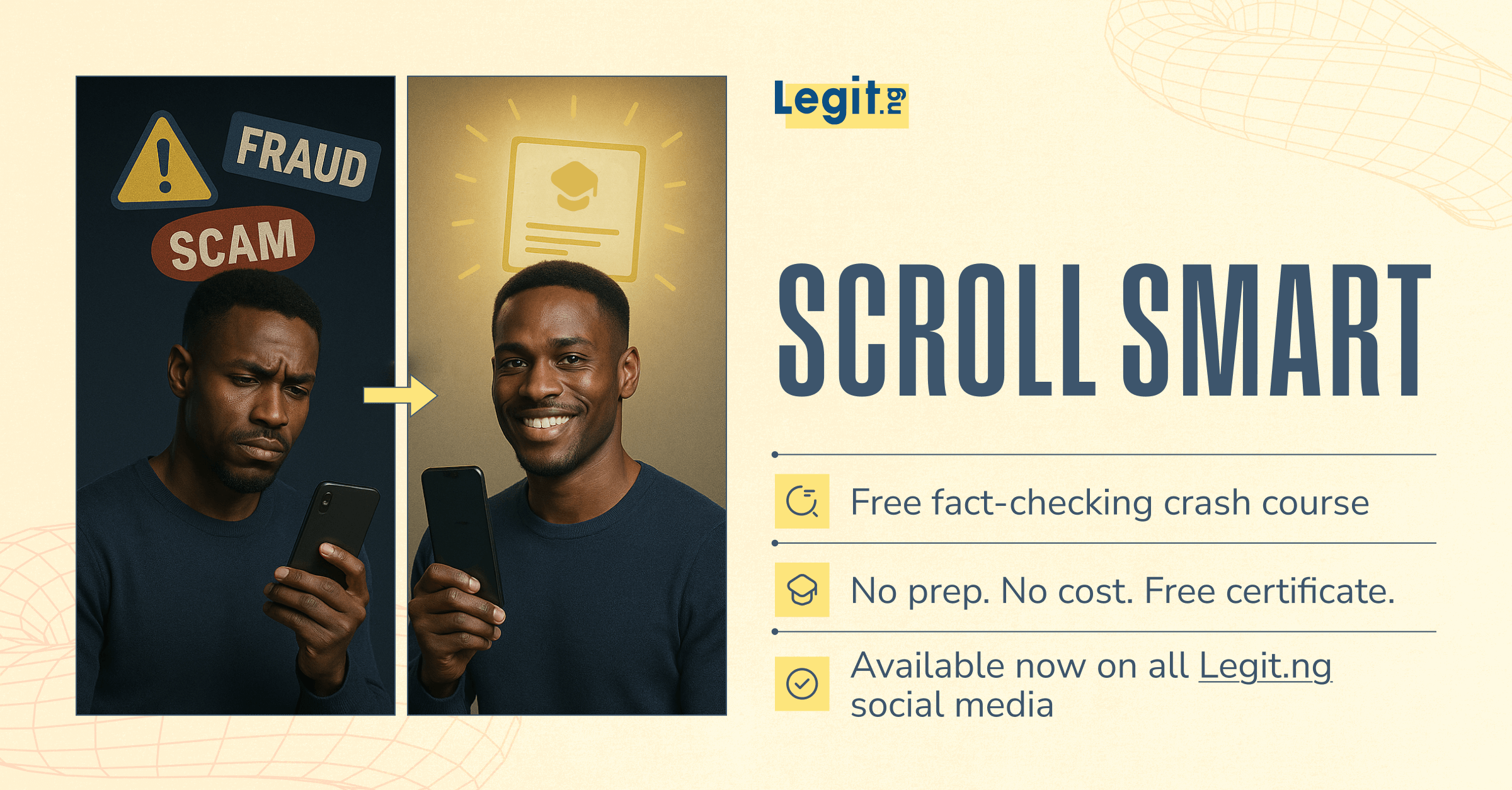
Following the success of its first media literacy campaign, Legit.ng, a leading Nigerian digital media outlet, is spotlighting the power of young people to shape the future of online spaces through the launch of a free, edutainment-style fact-checking course. This initiative empowers social media users (especially from the Gen Z generation) to detect and reduce fakes on platforms where misinformation spreads the fastest.
Based on Legit.ng’s recent study on Gen Z content consumption habits, the team launched an edutainment social media campaign designed to remind users of the importance of filtering information on the Internet. Still, the style is intentionally light, engaging, and easy to follow.
The course rolled out on TikTok, Instagram, Facebook, and other key platforms. These are the very spaces where young Nigerians and Africans express themselves, engage with news, and, too often, encounter misleading content. The course is a direct response to this challenge — positioning youth as consumers of content and agents of truth and digital change.
To enhance the learning experience, Legit.ng’s team created a quiz based on the videos. Users who accomplish it, receive a certificate confirming their knowledge of fact-checking fundamentals.
A coalition of youth-focused voices supports the campaign:
- Influencers and creators across Nigeria (Olawale Daniel, Faith Okochua, Luwizer Sunday, Akwaman), Kenya (Trivah Njoki) are joining the movement, sharing bite-sized, engaging content with fact-checking tips tailored for their followers.
- Legit.ng has also partnered with leading African fact-checking organizations — Africa Check, an independent, non-partisan organization which assesses claims made in the public arena using journalistic skills and evidence, and DUBAWA, an independent transnational verification and fact-checking initiative of the Centre for Journalism Innovation and Development (CJID) working across West Africa to tackle information disorder and strengthen media literacy — to co-create expert-backed content that enhances media literacy with credible, easy-to-understand insights.
“We’re not just telling people what misinformation is, we’re showing them how to spot it, verify it, and stop it from spreading,” said Rahaman Abiola, the Editor-in-Chief at Legit.ng.
“For over a dozen years, we have worked at reducing the spread of misinformation through various means such as fact-checking, media training, and digital literacy campaigns,” David Ajikobi, Africa Check’s Nigeria Editor, said. “In the past few years, we have ramped up efforts towards building the capability of the public, especially young people, in spotting false information and verifying media content amid increasing use of AI in disinformation schemes,” he added.
While studying content preferences and how Africans perceive online fakes, the Legit.ng team recognised the need to speak the same language as young people and to use approaches that fit their lifestyle and worldview. We found that the following tips are most effective in engaging and winning the minds of young users:
- Edutainment Works Best
Academic fact-checking often feels like homework. On the contrary, using relatable examples (from AI scams to familiar conspiracies) reaches out to the audience much better. - Practical Tips Get Noticed
With short attention spans people have nowadays, constant reminders to practice simple habits works best. Don’t rush to repost, pause and check your emotions, question stories that seem “too perfect.” These pieces of advice require little effort but pay back immensely protecting people from false information online. - Trust Comes From Connection
Media literacy works when people feel respected, not lectured. By keeping fact-checking content simple and relevant, one builds openness and trust.
The course is designed for everyone. It is entirely free to access on Legit.ng’s platforms and social media channels. Each lesson combines expert-backed content with relatable language, interactive elements, and real-life examples.