

A federal employment programme aimed at connecting young graduates with work experience is casting a wider net as it enters its second phase of implementation.
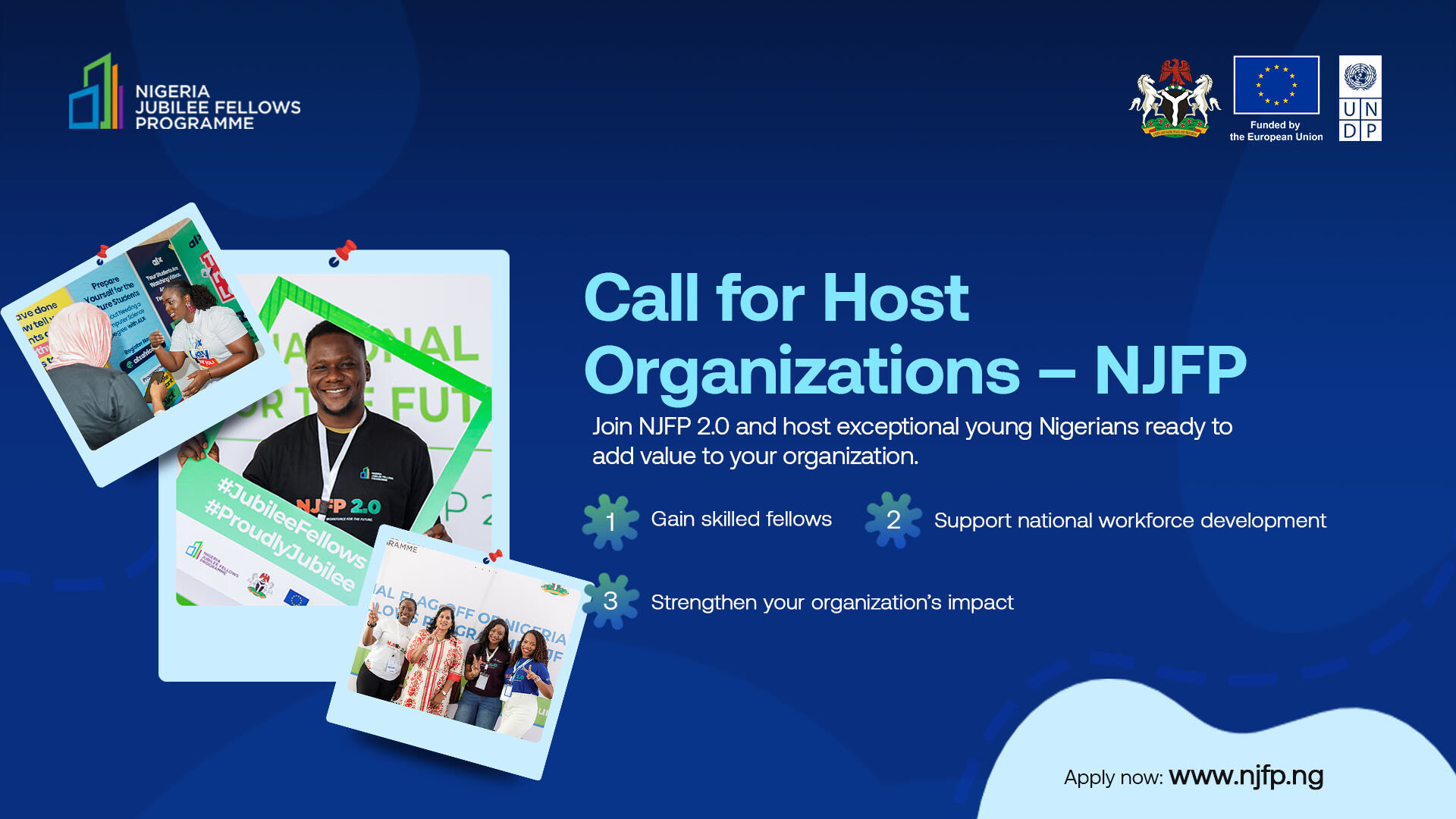
The Nigeria Jubilee Fellows Programme is calling on organisations across the country—including private businesses, government offices, and development agencies; to register as placement hosts for its upcoming cycle. The initiative, run in collaboration with UNDP and funded partly by the European Union, facilitates 12-month work placements for recent graduates.
The premise is familiar to anyone watching Nigeria’s labor market: graduates struggle to find first jobs without experience, while organisations complain about the readiness of entry-level candidates. NJFP attempts to address both sides by pre-screening fellows and providing a framework that reduces the administrative burden on participating organisations.

Participating hosts have varied widely—from small enterprises in secondary cities to larger institutions in commercial centers. The programme’s structure allows organisations to specify what skills or roles they need, then matches them with appropriate candidates from its pool of applicants.
According to programme administrators, the second phase will emphasise quality of placements over quantity, with better matching mechanisms and more support for both fellows and hosts during the placement period.
Organisations interested in hosting must meet basic requirements: registered legal status, functional operations with capacity for supervision, and ability to maintain a professional work environment. The application process involves submitting standard business documentation—CAC papers, tax identification, and organisational profile—through the programme website.

There’s no participation fee for host organisations, though they’re expected to provide the actual work experience, mentorship, and integration into their operations. The programme handles fellow recruitment, screening, and ongoing administrative support.
For businesses or agencies considering participation, the calculation is straightforward: the investment is primarily time and management attention, while the return includes additional workforce capacity and, potentially, future permanent hires who’ve already been tested in the organisation.Registration details and requirements are available at www.njfp.ng

The programme represents one strand of federal efforts to address youth unemployment, which remains stubbornly high despite various interventions over the years. Whether this iteration will scale effectively enough to make a measurable dent in the numbers remains an open question, but the model itself has shown enough traction to warrant expansion.