
There is a moment every ajo member knows.
Someone goes quiet in the group chat. Contributions stop arriving on time. The organiser starts sending voice notes. And slowly, a system that worked perfectly for years begins to disappoint.
Canadian fintech startup WeSpare believes the problem was never ajo itself. Ahead of its planned launch in Nigeria, the company is introducing a digital savings circle designed to remove one of the system’s oldest risks: delayed contributions that push payout dates further and further away. Nigerians interested in trying the platform ahead of the launch can register for early access here
Ajo, Esusu, Adashe. The names change depending on where you grew up, but the logic is the same. A group of people pool regular contributions and each member collects the full amount when their turn arrives. No interest. No bank approval. No collateral. Just coordination and trust.
It is one of the oldest and most effective savings tools Nigerians have ever built. And for decades, the formal financial system has watched it thrive without being able to replicate what makes it work, which is the social contract between people who share a market, a church, an office block or a family name.
Most groups today run through a WhatsApp chat with one person holding everything together: the schedule, the records and the social pressure of chasing late contributors. When the organiser is reliable and the members are close, ajo works almost perfectly. When either of those conditions slips, so does everyone’s payout date.
“The concept was never the problem,” says Riquiel Keudem, co-founder of WeSpare. “People already had a system that worked. What often broke was the coordination required to keep everyone contributing on time.”
That specific failure point is what WeSpare is built around. The Canadian-Nigerian fintech startup offers digital savings circles where payout dates are fixed and do not move once the circle begins. Members choose an available payout date, contribute automatically on a weekly or monthly schedule, and receive their full payout on that date so the payout date does not shift if another member delays.
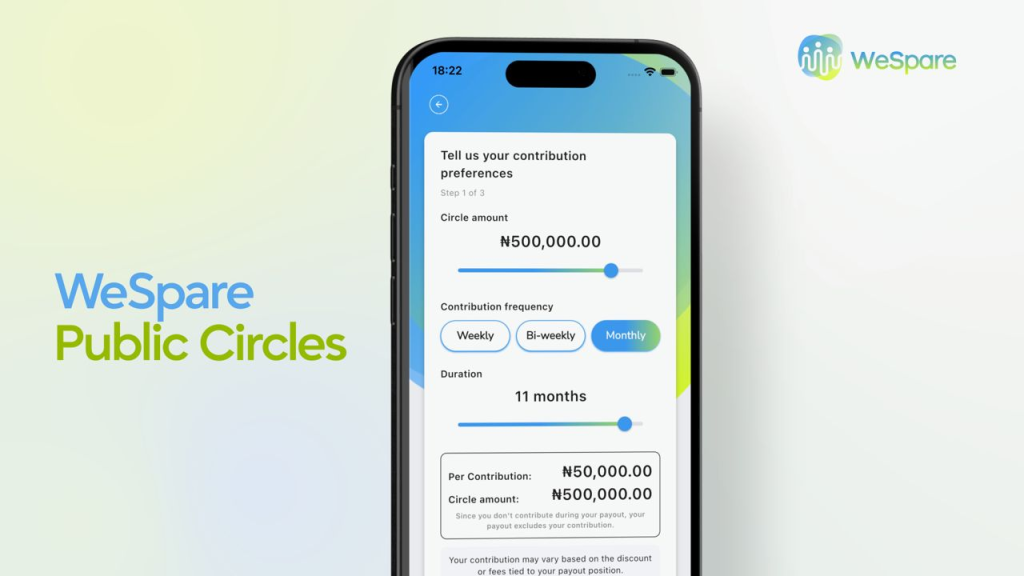
The guarantee is the product. If someone misses a contribution, WeSpare covers the gap. No individual holds the group’s money. Collections and payouts run through Anchor, a CBN-licensed microfinance bank insured by the NDIC. There is no organiser absorbing pressure in a group chat, because there is no organiser. The structure does the work. Early users interested in participating when the service launches can sign up for access here.
Because no interest is charged within the circle, the model also aligns with Shariah finance principles familiar to many users, preserving one of the features that has always made ajo distinct from conventional credit.
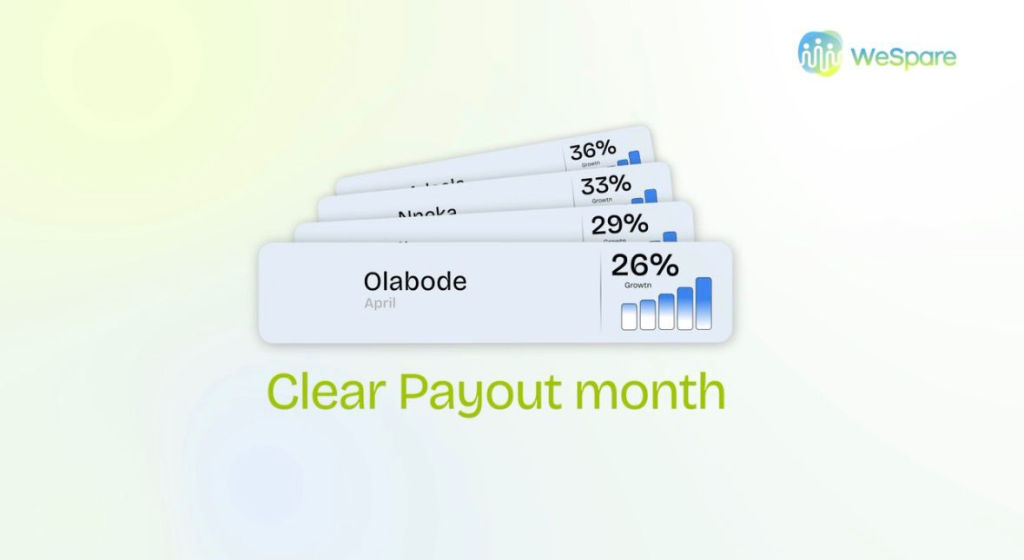
What makes WeSpare’s entry interesting is not the technology. Digital savings circles have been attempted before. What is different is the specific promise being made: not that the platform will improve ajo, but that it will absorb the one failure mode that has always undermined it. A fixed date is not a feature. For someone planning around a known expense whether rent, school fees, shop inventory or travel; it is the entire point.
Whether Nigerians extend that trust to a platform rather than a person is the real test. Financial habits built inside communities tend to be durable precisely because they are social. Shifting the enforcer from a known individual to an invisible system is not a small ask. But the friction WeSpare is trying to remove is real and familiar to anyone who has ever waited longer than expected for their turn.
Ajo always worked. The infrastructure around it never quite did. WeSpare is making a specific, measurable bet that it finally can. Nigerians who want to be among the first to use the platform when it launches can register for early access here