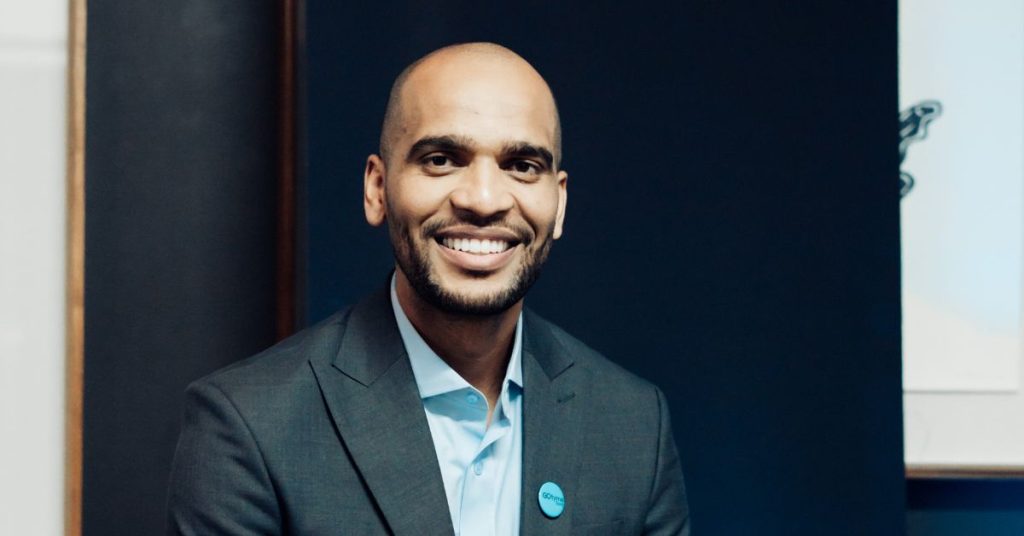



By Chinedu Kingsley Agiriga
Across global startup ecosystems, the board of directors is presented as the ultimate layer of oversight. It signals maturity. It reassures investors. It implies discipline.
But in reality, many startup boards are decorative.
They exist for optics. They appear impressive in pitch decks. They offer brand association and perceived credibility. Yet when it comes to governance, strategic correction, and executive accountability, they are often passive.
And that passivity is expensive.
The performance of governance
In early and growth-stage companies, boards are frequently assembled under pressure. Investors request seats. Founders invite recognisable names. Industry veterans join for equity upside. The structure looks strong on paper.
But strength on paper does not equal operational oversight.
Board meetings become ceremonial updates rather than rigorous interrogations of strategy and execution. Financial reporting is presented but not scrutinised in depth. Risk conversations are softened to preserve relationships. Founders are rarely challenged in ways that create discomfort.
Governance becomes performance.
The result is predictable. Companies drift into avoidable errors. Burn rates expand without structured accountability. Expansion plans outpace operational capacity. Culture problems surface late. Strategic misalignment persists longer than it should.
A board that avoids friction is not supportive. It is negligent.
The fear of friction
Why does this happen?
Because friction is uncomfortable. Challenging a founder can strain relationships. Questioning assumptions may feel confrontational. Investors may hesitate to disrupt perceived momentum.
In high-growth environments, optimism often overrides discipline.
But strong boards are not designed to preserve comfort. They are designed to protect long-term value.
The best governance structures create tension between vision and verification. They ask uncomfortable questions. They demand clarity on execution. They require evidence behind projections.
They do not simply listen. They interrogate.
Founder-centric governance Is a structural risk
In many startups, especially in emerging markets, founders dominate board dynamics. This is understandable in the early days. Founders carry vision, urgency, and contextual knowledge.
But when boards become extensions of founder influence rather than independent oversight bodies, institutional fragility increases.
Key decisions go unchallenged. Strategic blind spots widen. Personal loyalty substitutes for structured governance.
Investors often speak about key-person risk. Decorative boards amplify it.
If the board cannot hold the founder accountable, it cannot protect shareholders, employees, or long-term value.
What real boards do differently
Real boards do not exist to validate founders. They exist to pressure-test them.
They ensure that:
- Financial controls are robust and transparent
- Capital allocation aligns with strategy
- Risk exposure is regularly assessed
- Succession planning is considered early
- Performance metrics are clearly defined and tracked
They do not wait for a crisis to engage deeply. They operate with structured cadence and measurable oversight.
Importantly, they bring operational intelligence, not just reputational capital. Execution experience matters. Strategic advice without implementation depth creates blind spots.
The cost of decorative governance
In a tighter global capital environment, governance maturity is no longer optional. Investors are conducting deeper due diligence. Institutional capital demands clarity. Cross-border expansion requires compliance sophistication.
Companies with weak boards struggle to meet these expectations. Valuations suffer. Funding rounds stall. Reputation erodes quietly.
The cost of decorative governance is not immediate. It accumulates.
By the time structural weaknesses become visible, they are harder to correct.
Redefining board value
Startup ecosystems must move beyond symbolic boards.
Founders should seek directors who will challenge them, not celebrate them. Investors should prioritise governance depth over social alignment. Independent directors must recognise that silence is not neutrality. It is participation in risk.
Strong boards do not weaken founder authority. They strengthen institutional resilience.
If startups aspire to become enduring institutions rather than short-term success stories, governance must evolve from performance to practice.
The uncomfortable truth is this: a decorative board is worse than no board at all. It creates the illusion of discipline while enabling drift.
For startups aiming at global relevance, that illusion is no longer affordable.