In African innovation, the “fintech playbook” has long set the standard, asset-light software, fast user growth, and quick venture capital rounds. But as a new wave of deeptech founders emerges, tackling challenges in climate, health, and manufacturing, that model is starting to break down.
Deeptech innovation rooted in complex science and engineering demands a different fuel. Unlike software, a bio-material breakthrough or a carbon-capture tool cannot be “A/B tested” in a vacuum. It requires physical infrastructure, regulatory navigation, and industrial-scale validation. In this landscape, the primary engine for scaling is shifting from venture capital alone toward the corporate partnership.

The scaling reality: Why corporates matter?
For a deeptech startup, a corporate partner is far more than a “big customer.” They represent the “rails” upon which the innovation must run. In Africa’s fragmented markets, where infrastructure hurdles and policy silos are the norm, corporates provide four critical pillars:
- Revenue generation: Paid pilots and commercial agreements provide early, non-dilutive income streams, reducing reliance on grants or delayed venture funding.
- Infrastructure and supply chains: Access to existing warehouses, logistics, and power grids that would take a startup decade to build.
- Regulated access: Corporates already hold the licenses and relationships with government bodies necessary to deploy technology in sensitive sectors.
- Validation: A third-party audit or a successful industrial pilot serves as a “de-risking” signal that carries more weight with future investors than any pitch deck.
- Deployment channels: The ability to move from a laboratory prototype to a continent-wide rollout through established distribution networks.
This shift is not just driven by startup necessity, it’s fueled by corporate urgency. In an era of tightening ESG regulations and net-zero commitments, global giants are realising they cannot innovate internally fast enough to meet these mandates. By partnering with African deeptech startups, corporates gain access to cost-effective, localised R&D and innovative solutions that help them hit carbon targets and streamline supply chains without the overhead of internal labs.
The expectation gap: What corporates are looking for?
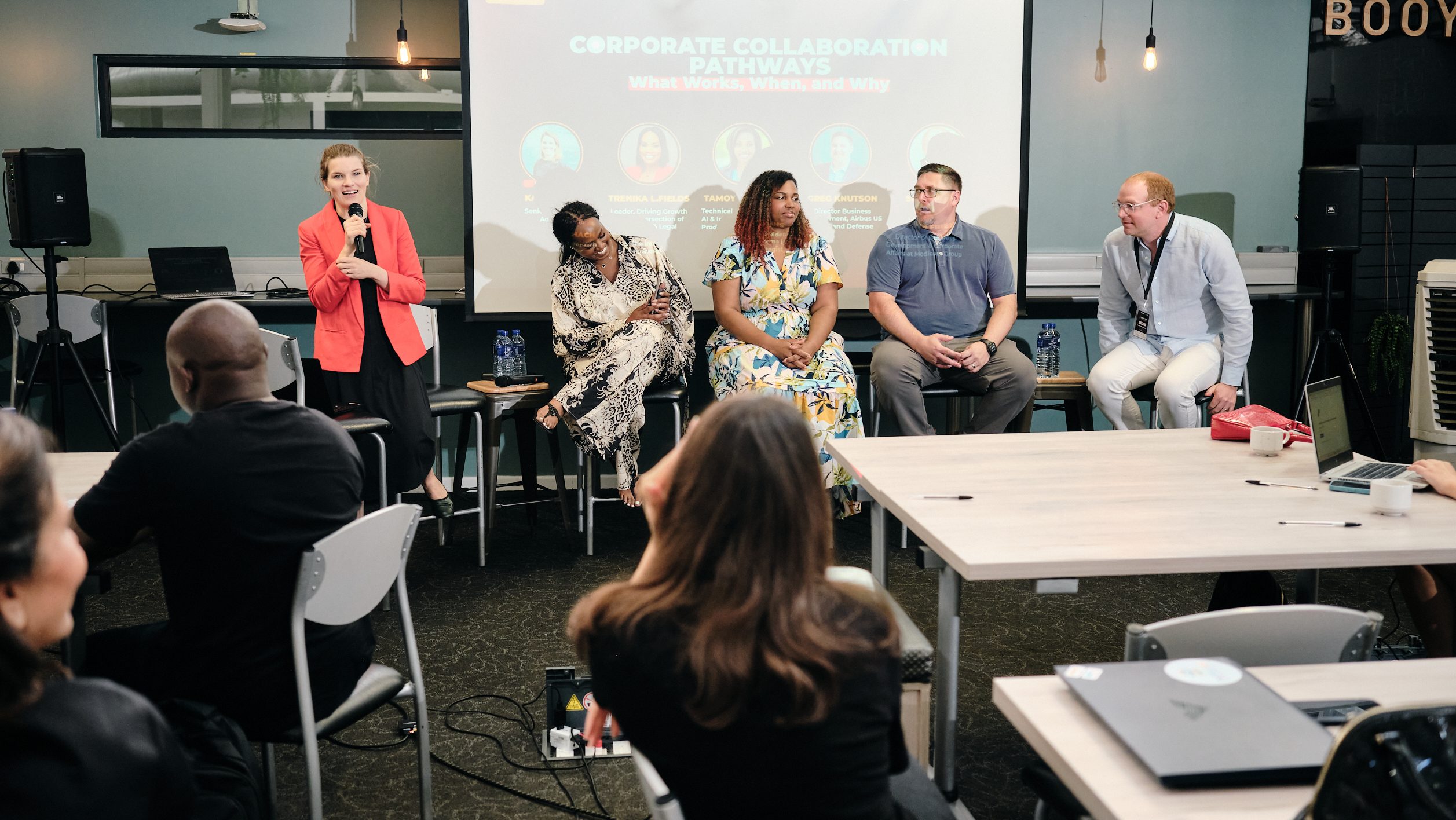
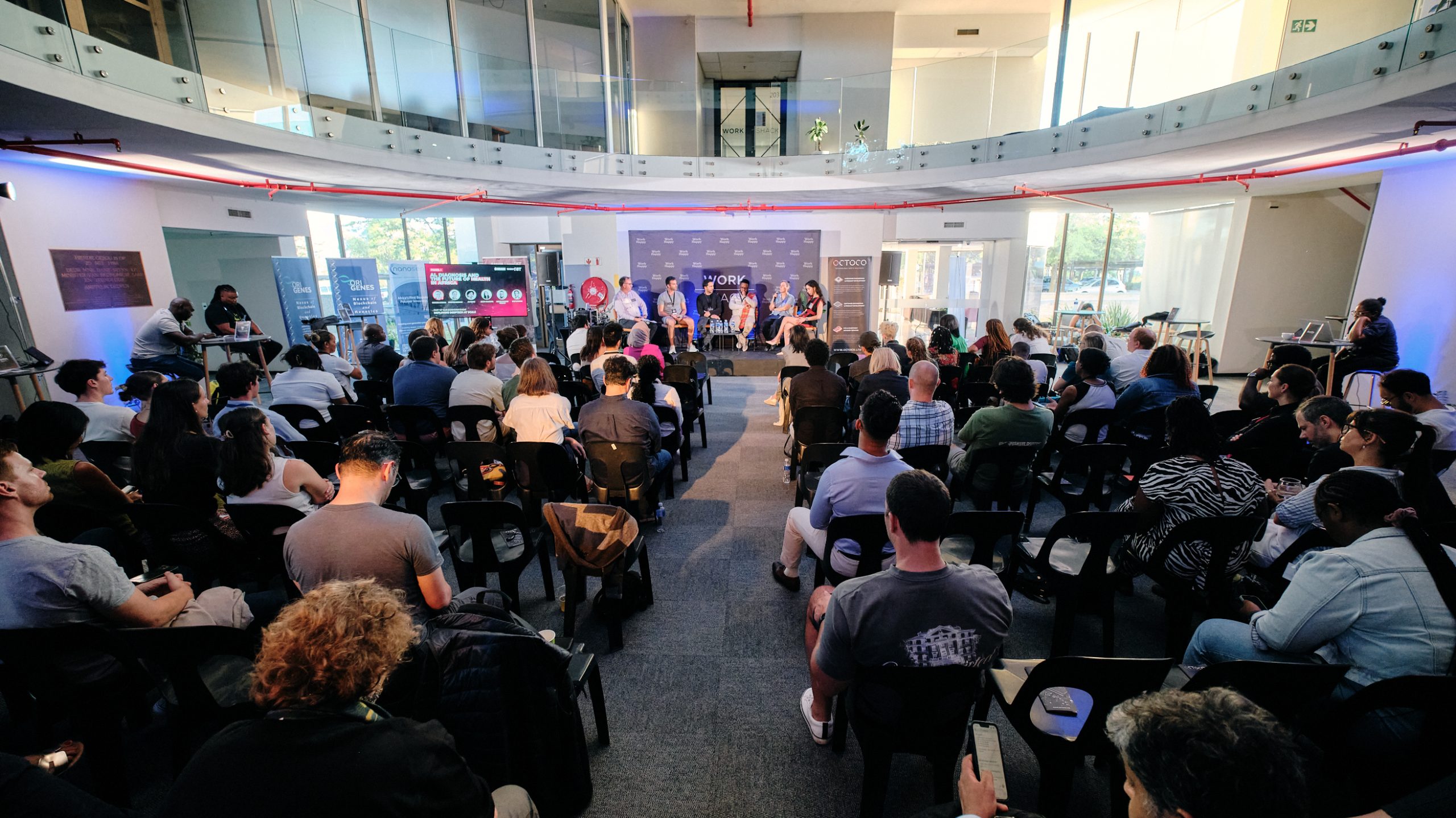
The challenge, however, is that “corporate-ready” is a high bar to clear. During the recent regional bootcamp of BRAIN gathering deepetch startups and key players in Stellenbosch, global industry leaders emphasised that they aren’t looking for “cool tech” – they are looking for execution.
Gregg Meyer, Chief Sustainability Officer at fashion giant Steve Madden, noted that corporate giants prioritise reliability over “demo dazzle.” They seek solutions that deliver measurable environmental impact without risking supply chain disruptions.
“We look for deeptech solutions that prove reliability through third-party verified supply chain metrics, stringent compliance with SBTi (Science Based Targets initiative) carbon targets, and scalable cost models – elevating pilots into enduring partnerships,” Meyer explained.
The lesson for founders is one of industrial humility. As Meyer points out, even the most brilliant founder must eventually fill their knowledge gaps with established partners. “The faster you accept what you don’t know, you enable yourself to fill in the gaps with people that can support you.”
Why the partnership often Fails
Despite the mutual benefits, the road to a signed contract is littered with failed pilots. Startups often misunderstand corporate risk appetites in three specific ways:
- Chasing the “wrong champion”: founders often spend months in exploratory talks with people who lack procurement power or budget authority.
- The procurement gauntlet: Startups frequently misjudge the rigor of corporate timelines and compliance. True commitment is not a handshake; it is a signed contract and a paid invoice.
- Communication breakdown: There is often a failure to articulate risks clearly. As Madeleine Danzberger, sustainability specialist at Steve Madden, said: “Startups must foresee risks and mitigate them to build credibility.”
Kate Hach, a senior advisor in the deeptech space, underscored this reality: “Corporates seek reliable execution in pilots, not just tech demos.” To bridge this, startups must overdeliver on proof-of-concept, treating a one-week trial as the foundation for a ten-year alliance.
The startup perspective: Lessons from Green Giraffe
The power of this corporate-led approach is best seen through Green Giraffe, a climate-tech startup focused on traceability. As second-time founders with deep field expertise, Mwiche Mukoma and Joseph Simukoko have navigated the “vigorous procurement processes” that ESG mandates require. They believe the key to overcoming geographic barriers to funding is a multinational-to-localised strategy that delivers context-driven solutions.
As Mukoma explains, the shift from “tech demo” to “corporate reality” is a gruelling but necessary evolution.
“BRAIN’s program drilled home what corporate evaluations truly demand beyond flashy demos – it is a clinic of relentless networking and learning. You must deliver impeccably on your service or product to earn credibility and referrals. Corporates crave detailed datapoints – no greenwashing, covering GMOs, labour, and S-factor considerations, all captured from localised communities. We articulate this powerfully because Green Giraffe is not just tech-focused, we are masters of change management inside companies and communities alike, building essential skills and culture.”
This “try, test, report” approach helped Green Giraffe secure key partnerships and expand pilots with partners like Dali Lakhoua from Africinvest Group, where one of their startups is now using the company’s services.
Their strategy is a masterclass in persistence: attend, adapt, refine, and return to showcase the lessons, implementations and wins.
Building the bridge: The role of BRAIN
BRAIN (Building Resilience in African Innovation) is reshaping the approach to serve the startups embedding corporate readiness into the startup’s DNA from day one.
“We simulate procurement processes and deliver hands-on risk training, preparing innovators to thrive in real-world partnerships, like our thriving collaborations with Sanofi and Steve Madden foundation” said Houda Ghozzi, the CEO of Open Startup.
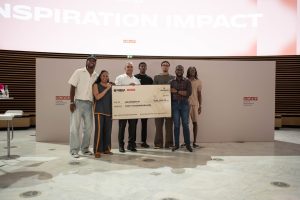
The impact of this shift is measurable. By weaving together universities, corporates, and innovators, BRAIN has already supported 40 startups, accelerated 25 out of them 17 fundraised post programs over $7 million in funding and over $4M in total revenues, laying the groundwork for thousands of job creation across the continent.
The era of deeptech in Africa is moving away from the solitary “garage inventor” and toward a model of industrial integration. For founders in health, climate, and manufacturing, the message is clear: the laboratory is where the idea is born, but the corporate partnership is where it lives or dies. By aligning with ESG mandates, finding internal champions, and prioritising execution over hype, Africa’s “scienpreneurs” are finally finding the real highway to scale.