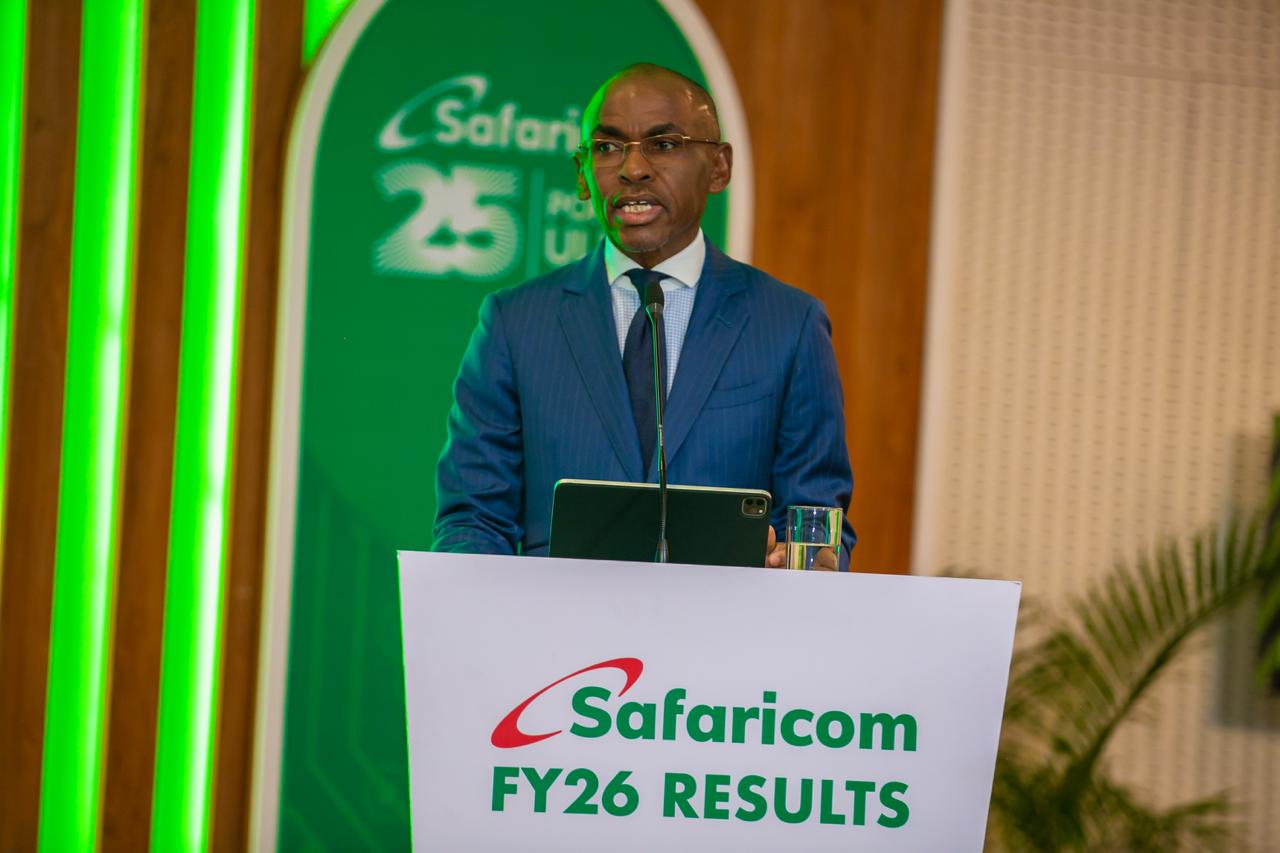
Safaricom’s mobile data business overtook voice calls for the first time, a milestone for Kenya’s biggest telecom operator as consumers shift spending from airtime and SMS toward streaming, social media, and mobile internet services.
Mobile data accounted for 42.1% of the telco’s connectivity revenue in the year ended March 2026, edging past voice at 41.3%, according to Safaricom’s financial results released on Thursday.
Data revenue rose 14.4% to KES 83.4 billion ($646 million), compared with a 1.3% increase in voice revenue to KES 81.8 billion ($634 million).
The change reflects changing consumer habits in Kenya, as spending on streaming, mobile banking, social media, and online commerce grows faster than traditional calling. The results also show Safaricom is compensating for lower data prices with heavier internet usage, helping sustain growth as voice revenues flatten.
Messaging revenue fell 11.8% to KES 11 billion ($85 million) during the year as users continued migrating to WhatsApp, Telegram, and other internet-based platforms. Customers consuming more than 1 GB of mobile data monthly rose 22.4% to 14.5 million, while average monthly usage per subscriber climbed 16.6% to 4.92 GB.
“Messaging revenue declined by 11.8% YoY, driven by structural changes in customer behaviour as usage continues to migrate toward IP-based and over-the-top messaging platforms, in line with global industry trends,” Safaricom said in its financial statement.
The company is counting on wider 4G and 5G coverage, alongside cheaper smartphones, to accelerate internet adoption further. Smartphones connected to Safaricom’s network rose 21.2% to 33.2 million during the year, while active 5G devices jumped 55.5% to 1.64 million.
Safaricom also leaned on lower pricing to drive higher consumption. Average rates per megabyte declined 12.1% during the year as the company expanded promotions and targeted data offers. Increased usage more than compensated for lower pricing, helping mobile data emerge as one of Safaricom’s fastest-growing business lines alongside M-PESA.
The figures underline pressure facing telecom operators across Africa to replace slowing voice revenues with higher-growth internet and digital services as younger consumers spend more time online. The transition is also intensifying competition between telecom operators and broadband providers chasing demand for mobile internet, home fibre, and digital financial services.
Connectivity revenue remained Safaricom Kenya’s largest business at KES 197.9 billion ($1.53 billion), narrowly ahead of M-PESA’s KES 182.7 billion ($1.41 billion). Net income rose 24.7% to KES 119.1 billion ($922 million)