The skills needed to work with artificial intelligence are changing faster than South Africa’s education system can adapt, leaving employers scrambling for talent as AI adoption accelerates across the economy.
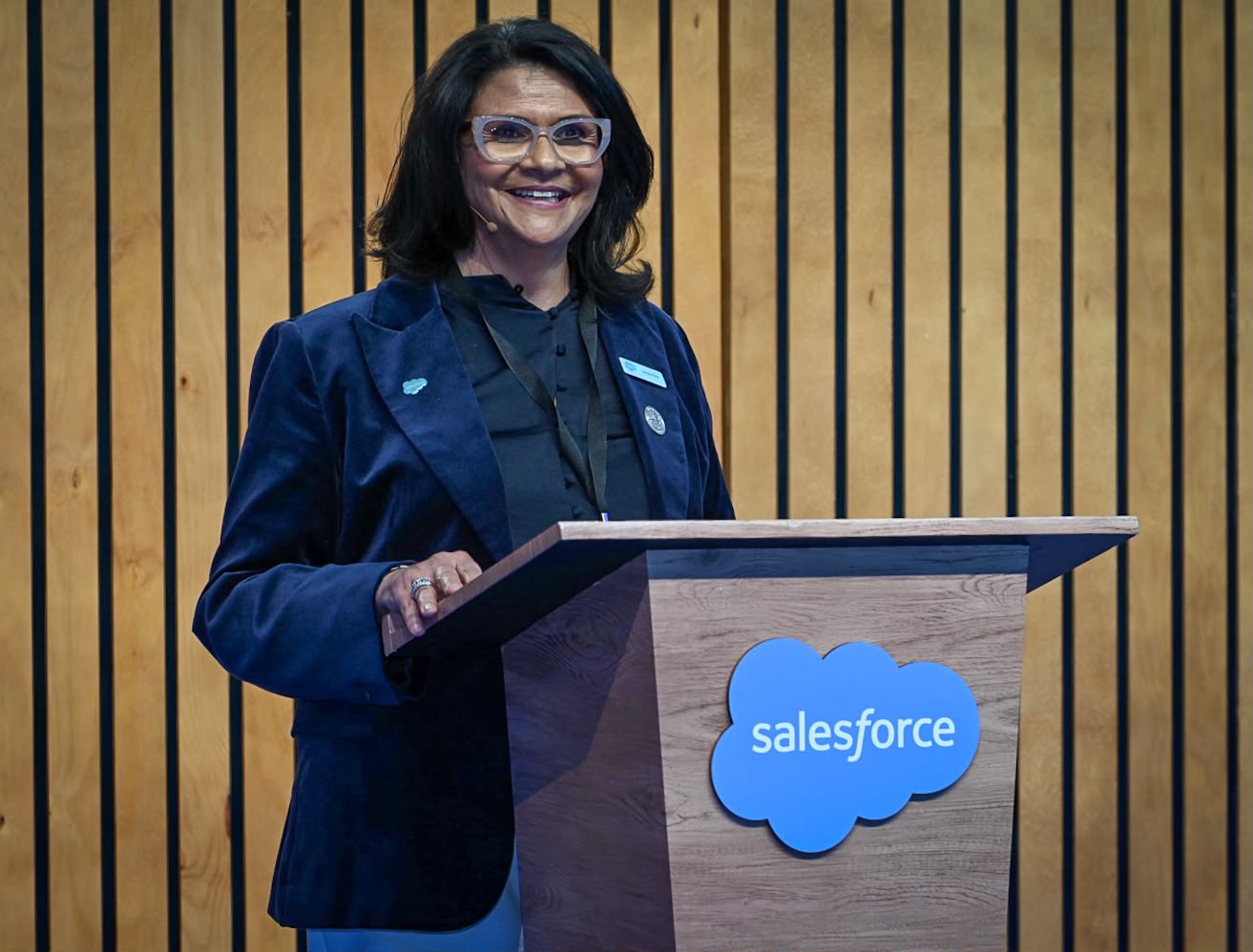
Ana Alonso, Salesforce Senior Vice President and General Manager for Eastern Mediterranean, Israel and Africa, a global cloud-based software company with offices in Johannesburg and Morocco, warned about the gap between what businesses need and what universities are teaching.
“The gap is widening as AI technologies continue to evolve faster than traditional education systems can respond,” Alonso told TechCabal on the sidelines of the Agentforce World Tour Johannesburg event on Tuesday.
South African businesses are embracing AI faster than ever, but the country’s education system remains constrained by slow curriculum cycles and outdated qualification frameworks. As demand grows for AI specialists, cloud developers and automation experts, the skills gap will require closer collaboration between universities, government and the private sector.
Alonso noted that organisations are increasingly facing a mismatch between rapidly changing AI job requirements and qualification systems that can take years to update.
“South Africa is a big growth engine for us in Africa,” she stated. “The companies here are adopting cloud technologies very fast, and when we look at our customer base, most of them are already trying to use AI. They are using AI mainly to improve the way they relate with their customers.”
The challenge is becoming one of the most important questions facing Africa’s future workforce. While businesses across banking, telecommunications, retail and technology are rushing to deploy AI tools, they are competing for talent with skills that often did not exist when many employees completed their degrees.
As AI capabilities evolve every few months, employers are placing greater value on practical skills, micro-credentials and continuous learning. It raises concerns that universities and training institutions may struggle to keep graduates relevant in an AI-driven economy.
While much of the global AI conversation has focused on productivity gains, Alonso believes that the real value lies in helping businesses deliver better customer experiences.
“There has been a lot of conversation about how AI is going to help companies be more efficient, and that is true. But really the value is about how companies are going to be able to serve customers in a better way,” she said.
Dr Rowen Govender, Head of the School of AI at Regenesys Business School, said the talent shortfall between AI adoption and workforce readiness presents both a challenge and an opportunity for South Africa.
“Without investment in AI education and skills development, South Africa risks falling behind in the global digital economy. However, with the right interventions, AI has the potential to drive economic growth, improve productivity and create new career opportunities across sectors,” said.
Salesforce Senior Talent Program Manager Ursula Fear centred the challenge on South Africa’s qualification frameworks that typically operate on five-year cycles, while AI technologies and associated skills are changing in a matter of months.
“Learning in the flow of work has become critical. People need to dedicate time every week to continuously build new skills,” she said.
Fear said organisations are increasingly looking beyond formal qualifications and focusing on demonstrable capabilities. Salesforce’s Trailhead learning platform, which provides access to AI and cloud-related training, is the company’s effort to bridge that gap.
She also highlighted shortages in specialist areas such as marketing automation, AI implementation, cloud development and AI-enabled customer experience design.
The urgency is particularly acute in a country where youth unemployment remains among the highest in the world. South Africa’s official unemployment rate stands above 32%, while unemployment among people aged 15 to 24 exceeds 60%.
Alonso believes AI could become an opportunity rather than a threat if governments, universities and businesses work together.