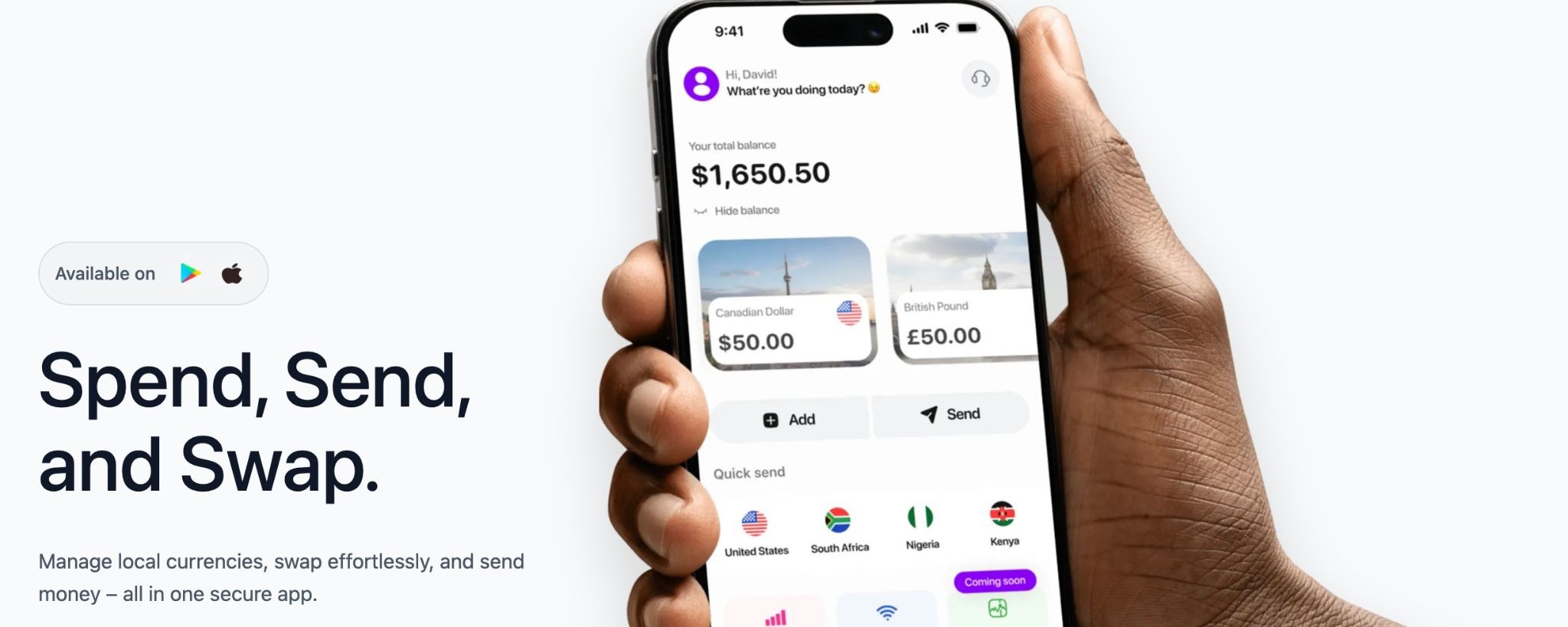
Spendin, the cross-border payments and financial infrastructure product, mostly debated as the “Revolut of Africa” expanded its payment network into four Francophone African markets and introduced artificial intelligence-powered product experiences as it seeks to strengthen its position in one of the continent’s fastest-growing fintech segments. The product said it has launched new XAF and XOF payout rails, enabling businesses and individuals to send stablecoin and fiat-denominated payouts directly into local bank accounts and mobile money wallets across Cameroon, Senegal, Benin, and Côte d’Ivoire.
The expansion extends Spendin’s payment coverage deeper into Francophone Africa, a region that has historically remained underserved by global payment providers despite growing digital commerce activity and increasing demand for cross-border financial services. The move comes as African businesses continue searching for faster and more reliable alternatives to traditional banking channels, which often involve lengthy settlement times, foreign exchange restrictions, and fragmented payment infrastructure.
As part of its latest product update, Spendin also released version 1.7.7 of its mobile application, introducing AI-powered user experiences designed to improve navigation, mobile money transaction workflows, and overall customer interactions. The update includes enhancements to payout infrastructure, user interfaces, and backend performance systems. Operational efficiency and platform uptime improved to 98.2% during the quarter, up from 96% previously, reflecting continued investment in infrastructure resilience and service reliability.
Spendin reported a fourfold increase in user acquisition during the build cycle, a signal of growing demand for cross-border payment solutions among merchants, businesses, freelancers, and digital-first consumers operating across African markets. The product’s latest expansion highlights a broader shift occurring across Africa’s financial services landscape, where businesses are increasingly adopting digital payment rails and stablecoin-enabled infrastructure to reduce settlement costs and access global markets more efficiently. Cross-border payments remain one of Africa’s largest untapped financial opportunities. According to multiple industry estimates, businesses across the continent continue to face some of the world’s highest transaction costs when moving money internationally, creating significant demand for infrastructure providers capable of simplifying regional and global commerce. Spendin believes Francophone Africa represents a critical growth corridor within that opportunity.
“Businesses today require payment infrastructure that is not only faster and more reliable but also globally connected,” Neona Synergy’s Co-Founder and COO, Heritage Falodun said in the company’s quarterly build update. “Our focus remains on expanding access, improving reliability, and building long-term trust across every market we serve.” Beyond product and infrastructure investments, Spendin also announced the launch of its Merchant Community in Cape Town, South Africa. The initiative is designed to bring together merchants, founders, operators, and businesses leveraging the company’s payment network while creating opportunities for collaboration and ecosystem growth.

The community launch reflects a growing trend among fintech companies that are increasingly investing in customer ecosystems alongside technology infrastructure to drive adoption and strengthen network effects. As digital commerce, stablecoin settlements, and cross-border transactions continue gaining momentum across Africa, payment infrastructure providers are racing to establish regional networks capable of supporting businesses operating beyond national borders. For Spendin, the latest build cycle represents another step toward that objective as it continues expanding its footprint across the continent while investing in AI, reliability, and payment connectivity. The company said it plans to continue its “build-in-public” strategy, providing regular updates on product development, infrastructure expansion, and operational performance as it scales across local and global markets.