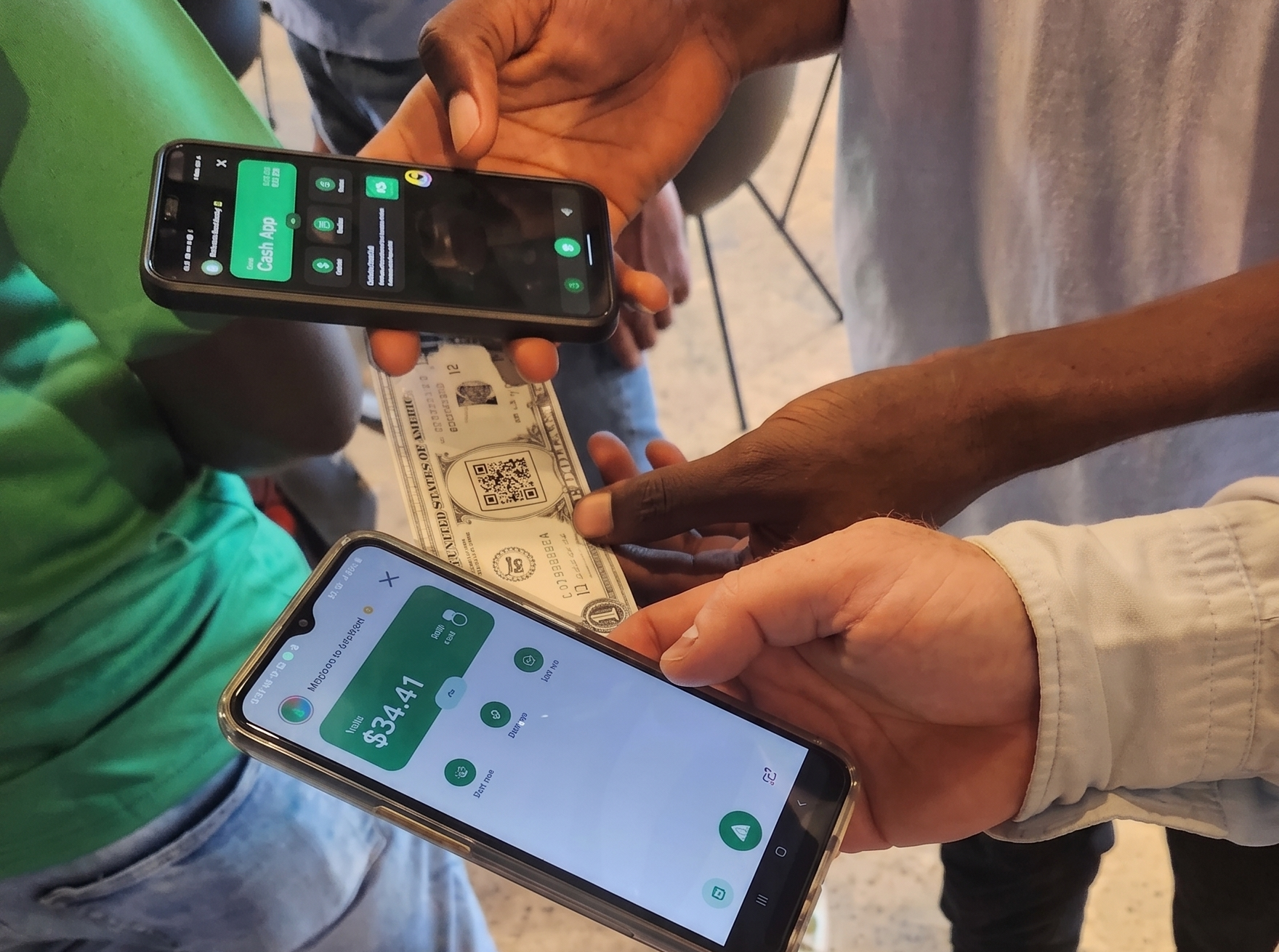
When MiniPay launched in 2023, it had a simple pitch: help users access and move stablecoins cheaply.
Three years later, the Opera-backed stablecoin app has a new priority: making those stablecoin balances more useful.
On Tuesday, the company launched a Visa debit card in partnership with payments giant Visa and Gnosis Pay, the stablecoin payments platform developed by blockchain company Gnosis, allowing users in emerging markets and Africa—where it operates in major markets such as Nigeria and Kenya—to spend stablecoin balances anywhere Visa is accepted.
The move signals how the stablecoin market is evolving. After years spent helping users acquire, hold, and transfer digital currencies, companies are now focusing on making those balances spendable in everyday commerce. For MiniPay, the card is an attempt to move beyond being a wallet and become part of how users pay.
“The clearest signal is user demand. A card has been one of the most consistent requests from MiniPay users because it solves a problem that local payment options alone cannot fully solve,” a MiniPay spokesperson told TechCabal.
Several startups, including Bitnob, Juicyway—which plans to launch a stablecoin-linked card—and Onboard Global, have launched card products that connect multi-currency balances, including dollar stablecoins, to traditional payment networks. Others, such as Rach Finance, are building infrastructure to enable consumers and businesses to spend and accept stablecoins easily.
MiniPay was among the earliest stablecoin products to gain traction in Africa. After launching as a mini-app in the Opera browser, it later expanded into a standalone product, integrating with local payment rails such as M-PESA in Kenya and OPay in Nigeria. Yet, the company said local payment rails solve only part of the problem.
“Local rails are important, but they are fragmented by country and provider,” the Opera spokesperson said. “Cards are different. They travel better. They work online, across borders, and in many real-world spending contexts where local payment methods may not.”
With MiniPay stablecoin-linked cards, users can directly spend their stablecoins at local retail stores or online e-commerce checkouts, without needing to convert those funds to fiat currencies using M-PESA or OPay.
MiniPay has now surpassed 16 million activated wallets, according to Opera, up from 15 million reported in Q1 2026. In May, Murray Spark, Opera’s senior director of business development, told TechCabal that the majority of MiniPay’s users are concentrated in African markets.
Across Africa, stablecoins are being integrated into mainstream financial use cases, including remittances, freelance payments, savings, and cross-border transfers. A report by YouGov, a UK-based research firm, and BVNK, a UK-headquartered stablecoin payments company, that surveyed 4,658 crypto users across 15 countries, found that Africa had the world’s highest stablecoin ownership rate. Among crypto users surveyed in Nigeria and South Africa, 79% held stablecoins, while 71% said they were interested in using a stablecoin-linked debit card.
This backs Opera’s thesis. The company said its MiniPay users already spend stablecoins through Mini Apps to buy airtime, data bundles, rewards, and gifts. The company noted that MiniPay has processed over 500 million transactions since it launched.
“MiniPay was built to make stablecoins useful in everyday life, not just to hold or send, but to spend,” Jørgen Arnesen, Opera’s executive vice president for mobile, said. “What makes this launch especially meaningful is that it helps connect users in high-growth markets to global commerce through a simple, reliable dollar-based card.”
The partnership also gives Visa a foothold in one of the fastest-growing segments of Africa’s payments market. As stablecoins gain traction for retail use, global payment networks are racing to connect those digital‑dollar balances to existing merchant infrastructure.
Globally, the broader crypto card market, driven by stablecoin-denominated spending, has scaled rapidly, with monthly transaction volumes rising from about $100 million in 2023 to $1.5 billion by 2025, according to US-based analytics firm Artemis. That is an annualised run-rate of about $18 billion.
Visa controls an estimated 90% of that crypto card market, Artemis noted, beating competitors such as Mastercard. The global payments giant has deployed a partnership-led strategy, where it plugs into leading stablecoin exchanges and wallets, co-brands cards, and routes spending through its existing merchant and issuer network.
“Visa is focused on expanding the utility of digital currencies through familiar and secure payment networks,” Cuy Sheffield, Visa’s head of crypto, said. “By connecting MiniPay’s stablecoin ecosystem with Visa’s global merchant footprint, we are helping give users in high-growth markets a practical way to participate in global commerce.”
Africa, compared to Western markets where crypto- and stablecoin-linked cards have achieved deeper mainstream penetration, is still in an early build-out phase. That gives Visa an early-stage advantage.
By partnering with high-volume stablecoin venues, it can push more of these cards to last-mile users, driving distribution and everyday adoption.
For African partners, the upside depends on whether the unit economics work. Interchange, foreign exchange (FX), and on- and off-ramp costs must leave enough margin for issuers and platforms, not just global networks.
With the launch, MiniPay is signalling that the next phase of competition will not be dominated by platforms that enable users to buy, convert, or transfer stablecoins, but by those that make these digital assets useful at retail stores.
True scale demands moving beyond surface-level integrations to robust execution. We’ve filtered the noise out of Moonshot 2026, optimising the conference strictly for high-calibre connections between startup founders, global financial operators, enterprise leaders and individuals rewiring Africa’s technical frameworks.
Get 20% off Early Bird tickets for a limited time.