If you are Nigerian and on social media, your timeline this week is probably flooded with videos of car rooftops barely visible above floodwater stretching for blocks, or of someone’s living room overtaken by flowing brown water. Keep scrolling, and you will probably find someone warning others to avoid a route because of traffic congestion.
Whether it’s flooding in Lagos, election violence, a car accident, a building collapse, or a fuel tanker explosion, social media has become the country’s unofficial public alert system.
Three young Nigerian founders believe that this behaviour deserves its own platform.
Oriekaose Agholor, Adetunji Adewoye, and Kosi Kabiri launched the Wahala App in April 2026, a public incident-reporting mobile and web platform where users can report and receive real-time incident alerts about crime, flooding, election irregularities, and infrastructure failures.
“What we wanted to put in the hands of people is simply an ability to report anything in real time,” Agholor, the startup’s chief executive officer, told TechCabal in a June interview. “Not just crime. It could be infrastructure or issues about elections… basically report data in real time so that everybody has access.”
Wahala App joins a crop of civic technology platforms that use software to solve public-facing problems, including Citizens’ Gavel, which improves access to justice; BudgIT, which makes public budgets easier to understand; and Tracka, which allows communities to monitor public projects.
It is betting that the same instinct that sends Nigerians to X during emergencies can power a platform built specifically for public incident reporting.
How the Wahala App works
Wahala App offers a live incident map that has robberies, fire incidents, road accidents, and other reported incidents appearing as scattered pins.
According to the founders, users can narrow the incidents they see by distance or timeframe, filtering reports from within a kilometre of their location or expanding their view to incidents across the country.
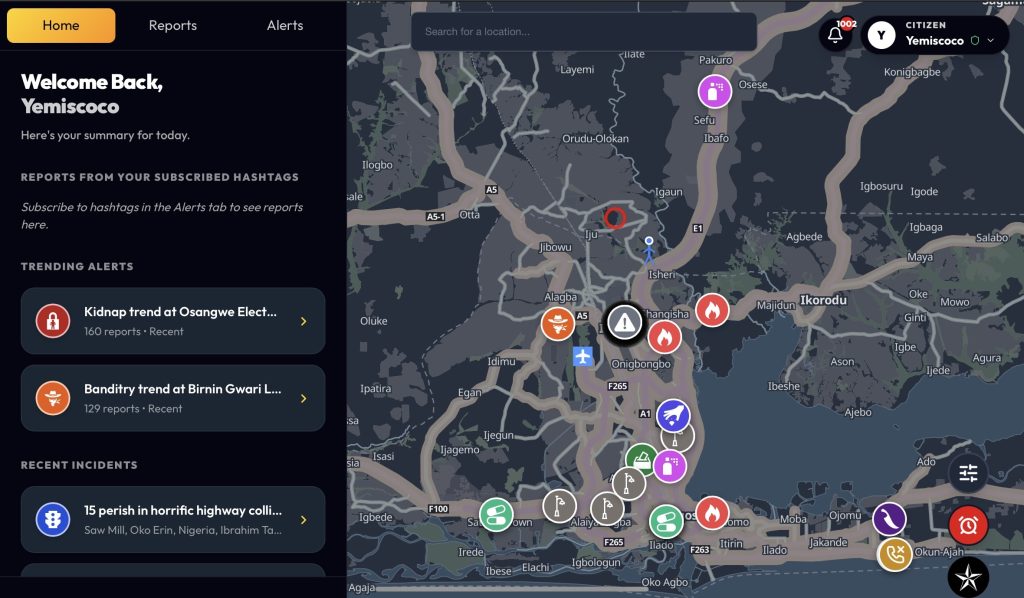
“Within the app, when you (users) create a report, people within that vicinity, a 1km or 5km radius, they all get real-time alerts,” said Agholor. “If everybody knows there’s a big pothole, or there’s flooding taking place in Lagos, people know they can avoid that route.”
Reports on the platform are generated from two sources. According to the founders, users can make reports by uploading photos, videos, and a description of the incident. The report could also originate from Wahala AI, the platform’s in-house tool that scrapes reputable news sources for incidents and publishes them on the map. Such reports are tagged as AI-generated posts and include links to their sources.
Wahala App also allows users to update a report submitted by other users with additional evidence to confirm details of the report or dispute what happened, and change how severe they believe the incident is. The founders described this as a consensus algorithm designed to improve the accuracy of reports over time.
“We want everybody to have a say in what is going on,” Adewoye said. “But because anybody can say anything, we want to be sure everybody is getting the most accurate piece of data.”
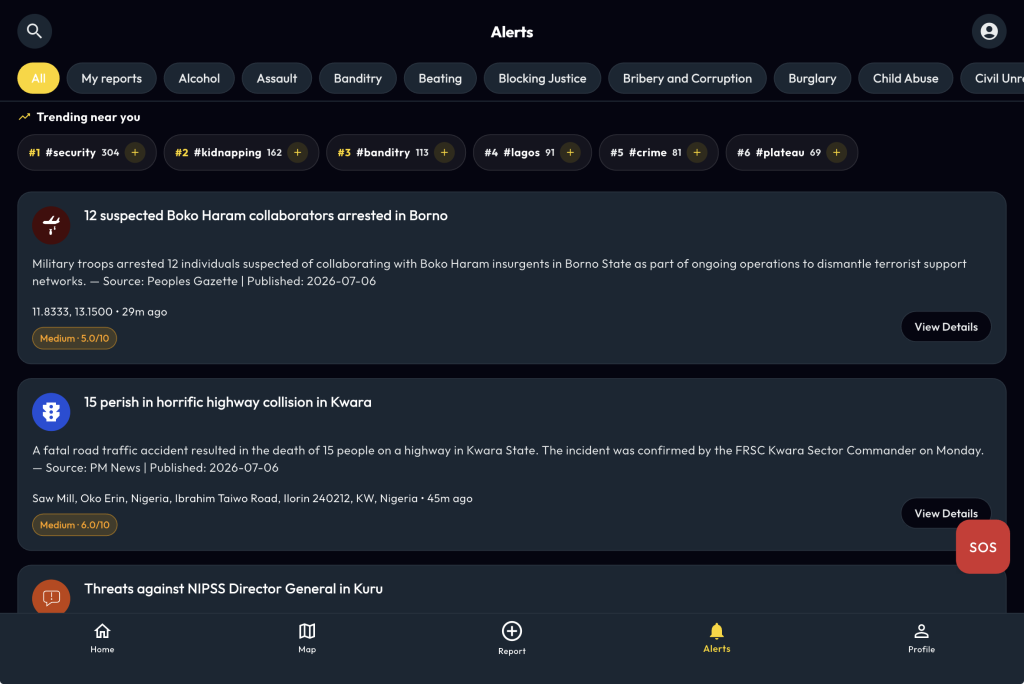
Behind the scenes, the consensus system is supported by an algorithm that works alongside the app’s update and dispute features, Kabiri noted. He explained that the algorithm averages how different users rate an incident’s severity before adjusting the final score displayed on the platform.
Wahala App also allows individuals to subscribe to hashtags tied to specific issues, such as terrorism or elections, according to the founders. Subscribers receive alerts whenever a new report carries that tag, regardless of where it happened in the country.
“There are situations where you want to pay attention to a particular issue,” Kabiri said. “Maybe terrorism. It doesn’t matter whether it happens close to you or far away. Once you subscribe to that hashtag, you keep getting that information.”
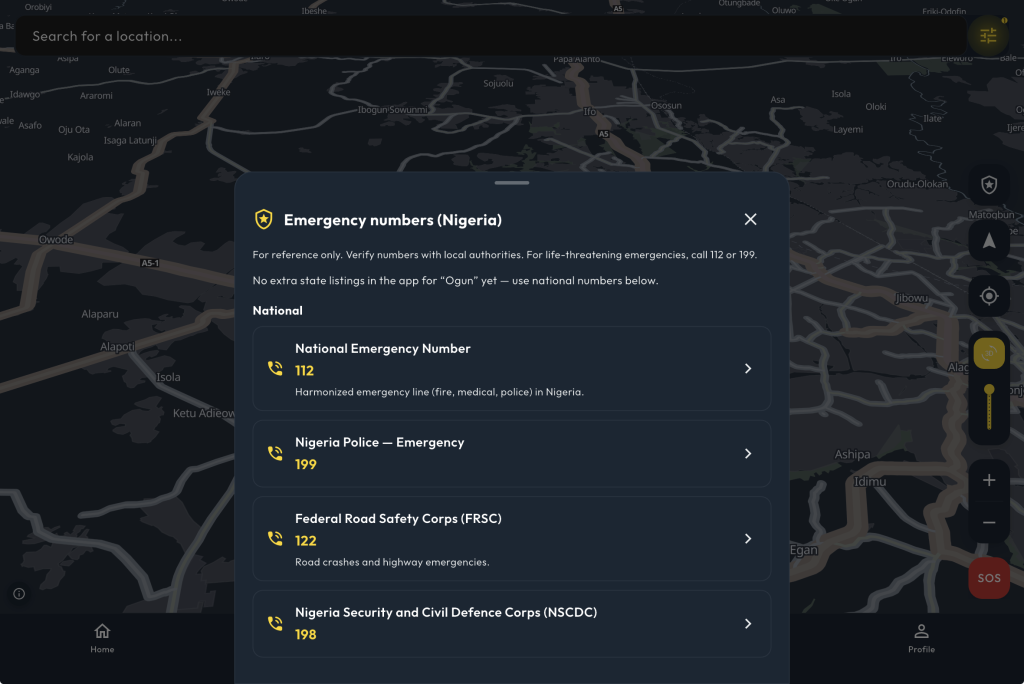
The platform also includes an SOS feature that allows users to notify pre-selected emergency contacts and dial emergency services. For now, emergency contacts must be registered on the Wahala App to receive those alerts; however, the founders noted that they intend to expand the feature to integrate SMS and phone call notifications.
Under the hood
Wahala App is free for individual users, and its founders intend to keep it that way. Instead, they plan to monetise the platform through partnerships with organisations that embed it into their operations.
The initial target is community development associations and estates, which they believe could use the Wahala App to coordinate incident reporting and respond to emergencies more efficiently. They also intend to partner with vigilante groups, security bodies, emergency responders, and eventually government agencies.
Since its launch in April, the platform has crossed the 100-user mark, the founders said. They envision the Wahala App being used to document real-time voter intimidation and electoral malpractices during the upcoming elections in the country.
Wahala App is bound to face the challenge of convincing people to change their habit of sharing real-time information about incidents on social media platforms. The founders acknowledged that challenge, but argued they are not trying to replace social media.
They see Wahala App as a platform built to organise information scattered across timelines and social media platforms into a database of public incidents.
For now, Wahala App’s vision is being financed by the founding trio, who continue to work their full-time jobs while pooling their salaries to fund development and keep the platform running.
“We’re running at a loss, but we don’t care. We believe in the vision; we believe that this is something that needs to be done,” said Agholor.
True scale demands moving beyond surface-level integrations to robust execution. We’ve filtered the noise out of Moonshot 2026, optimising the conference strictly for high-calibre connections between startup founders, global financial operators, enterprise leaders and individuals rewiring Africa’s technical frameworks. Get 20% off Early Bird tickets for a limited time.