Dark/Light

Search

  • , ,

    Eden wants to make your life easier but at what cost?

    By

    Eden wants to make your life easier but at what cost?
    Image credit: Pulse.ng

    Share

    Share

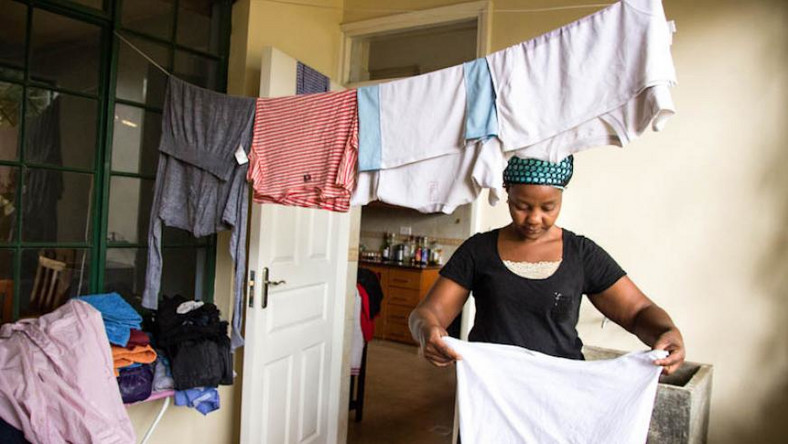
    House-helps. Many Nigerian homes rely on helps who perform a number of tasks from cleaning, laundry, and preparing meals. The work is often gruelling while the pay is terrible.

    And often, this labour is sourced from young relatives. The practice is crude but the need for assistance at home cannot be overlooked. With many industries already disrupted by technology, it’s only inevitable that a startup will seek to provide professional help, especially with a rising population of milennials in Nigeria’s middle class.

    Enter Eden Life.

    Launched in April 2019, Eden Life says it is a home management service that is automating how people run their homes. Eden was founded by three former Andela staffers: Nadayar Enegesi (who co-founded Andela), Prosper Otemuyiwa and Sim Momoh.

    Nadayar told TechCabal that Eden was founded to help improve people’s lives even as they struggle with the realities in Lagos.

    “Since I’ve lived here [Lagos], I’ve always just been personally frustrated with how everything works,” said Nadayar, who relocated to Nigeria in 2014 to co-found Andela.

    You Don’t Need House Helps, Try Eden
    Three ex-Andelans wanted to find a way to make life better for people. They launched Eden Life in April 2019.

    “It doesn’t make sense that you leave your house in the morning by 5am to deal with all the traffic madness that Lagos has to offer and you come back home, your home is a mess.”

    Meanwhile, the people you are “depending on to take care of your home are just not professional enough,” he added. He shared that even if “the amount you are paying is cheap or affordable, you’re not getting what you want.”

    “How do we eliminate that?” he asked.

    Eden wants to address this worry by connecting people with professional home managers. Using its app, the startup allows people to outsource tasks like laundry, house cleaning and meal delivery to professionals, called “gardeners”. It also has plans to introduce more services in the future.
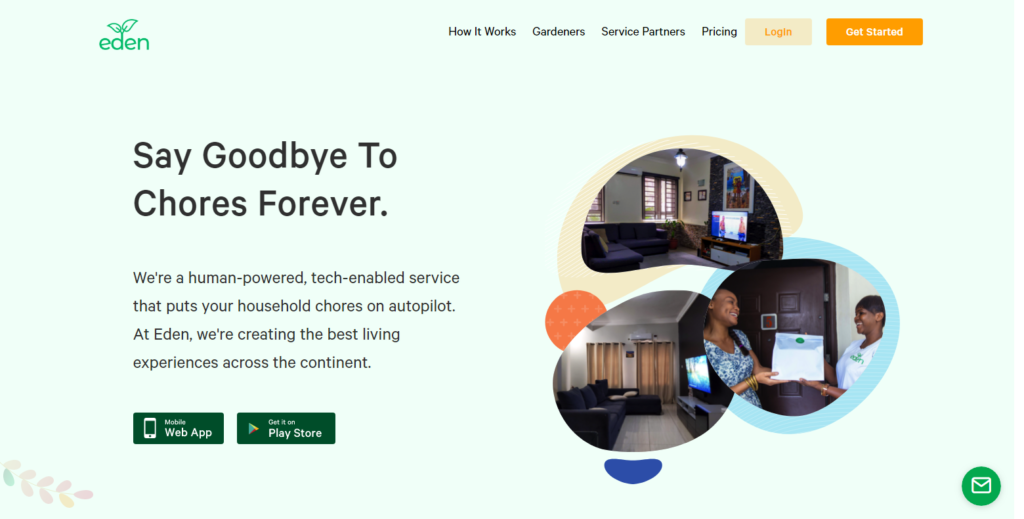
    Unlike the traditional house help system, Eden sources it gardeners from service partners who recruit and train individuals on home management. The startup conducts background checks on potential gardeners before onboarding them to attend to customers.

    For a regular subscription fee ranging from N23,000 ($63.6) to N76,000 ($210), Eden covers the home chores of busy professionals for a month. The app also allows users to customize their subscription with the specific needs that they have. Customized subscription could be as low as N12,000 ($33). Once a user subscribes, the app attaches them to a gardener who they can give instructions to from within the app. The startup now has around 60 paying customers who spend on average N45,000 ($124.5) monthly.

    But at N23,000 ($63.6) per month, Eden’s cheapest regular subscription plan is almost as high as Nigeria’s recently approved minimum wage. This raises the question of affordability and market target. Why would anybody want to pay such amount to do chores when there are cheaper alternatives?
    You Don’t Need House Helps, Try Eden

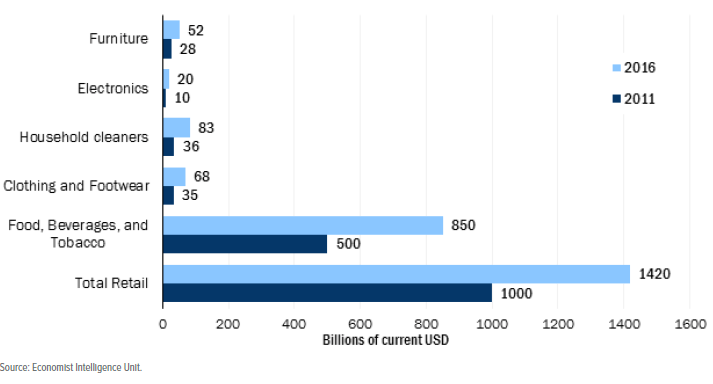
    But according to Nadayar, the adoption of home cleaning services in Africa is on the rise. Using statistics from the Economist Intelligence Unit, he explained that Africans (particularly the middle class) spent $83 billion on just home cleaning services in 2016, a 219% increase from the amount spent in 2011. “So it’s a huge market we’re going after,” he said.

    You Don’t Need House Helps, Try Eden Life

    However, with a dearth of information about the size of Nigeria middle class, Eden is relying on information from the Nigerian pension fund to give a clue about who potential paying customers are. He said the pension fund captures the size of people who can pay for its services. “But this information is limited,” Nadayar disclosed, “it only captures those in the formal sector.”

    Meanwhile, the startup has other competitors who offer relatively cheaper plans. For instance, Fichaya, another home management company offers its services for as low as N15,000 ($41.49) and its most expensive plan costs N38,587 ($106.74) per month.

    Eden also has to compete with classifieds websites like Jiji which allows people to recruit people as house helps. But as we’ve seen in the past, classifieds are “transactional” Nadayar explained. Security checks and other guarantees are absent and users bear all the risks. In the past, there has been at least one case where a house help hired from a classifieds website ended up kidnapping their boss’ children.

    Yet, the biggest challenge for Eden remains the traditional house help system. It is cheaper and relatively secure since the helpers are family members. But Nadayar is counting on a cultural change originating by the younger people to end this system. According to him, people who use traditional house helps should ask themselves: “Are you being fair?”

    “Your house help is your employee… and if you are being fair then it means that there are a bunch of things that you are doing,” he said. 

    “These include their feeding, housing, health insurance and paying for the school fees of the underage house helps – which is child labour by the way.

    “Young folks like us we don’t want another person living in our house that we are responsible for. Because having people in our homes means we have to treat them fairly and that’s very expensive.”

    Regardless, Eden still has a long way to go if it is going to break into the Lagos market. At first glance, the company seems prepared for the hard work.


    Trending Stories

  • Eden wants to make your life easier but at what cost?

    By

    Eden wants to make your life easier but at what cost?

    Share

    Share

    View this email in your browser

    10- 10 – 2019

    Hello and welcome to TechCabal Daily! Please take a moment to subscribe if this mail was forwarded to you. Join our community!

    Ethiopia is considering whether to issue mobile banking licenses. Balcha Reba, director-general at the Ethiopian Communications Authority told Bloomberg in an interview that work is underway to lift current restrictions. While plans are ongoing to privatize Ethio Telecom, the state-owned telco next year, Balcha says the country could eventually give up its majority stake. After the planned sale of 49% of the company, the government could sell part of the remaining take. Ethiopia is looking to open up its restrictive telecoms sector as well as boost scarce foreign exchange reserves.  Orange SA, MTN Group and Vodafone Group Plc’s African unit are among companies that are interested in expanding in Ethiopia.

    Nigeria’s tech leaders and entrepreneurs are taking action to advance the mission of the #StopRobbingUs campaign. The leaders of the campaign are engaging stakeholders in government to bring an end to police brutality. As part of the strategy to stem harassment and kidnapping from police officers, stakeholders met with police representatives to discuss possible solutions and are also testing some technology solutions. Alexander Onukwue, one of the newest members of the Cabal has the full story here.

    What does a border free of ‘agents’ look like? At the Ivorian border, the Zikoko #JollofRoad team (Fu’ad, Toke and Kayode) experienced a border without “palms to grease.” Toke writes about their not-so-hospitable experience here and Fu’ad shows in this tweet the effect of the closure of Seme border. Visit jollofroad.com so you don’t miss out on all the stories about culture, trade, people and food as they travel the rest of West Africa in the remaining 63 days!

    Have you ever got back home after a long day at work and realised you were too tired to clean up your house? Or do the laundry. If you live in Lagos, chances are, you’ve been there. A newly-minted startup, Eden Life, wants to make your life easier by helping automate your tasks using what it calls professional home managers. But there are concerns over its prices, especially in a country with the highest number of the world’s poor. Abubakar Idris sat with one of the co-founders for an insightful piece on a startup perhaps worth keeping an eye on.

    Econet subscribers in Zimbabwe are freaking out over unsolicited text messages from the telco asking them to download its social payments app, Sasai. According to TechZim, some users say they receive a text message every time someone on their contact list uses the app. One user reported that anytime they buy airtime/bundles via EcoCash they no longer get their balance but instead they’re urged to download Sasai. The allegations if confirmed raise concerns about how Econet is handling customer data.

    Mara Group recently launched$24million smartphone manufacturing factory. But there are a number of questions. There are concerns about the company’s ownership and CEO as well as whether the company can achieve its ambitious sales and growth projections. Olumuyiwa Olowogboyega, another new member of the Cabal explores these concerns and also what impact the African Continental Free Trade Agreement will have on Mara’s smartphone business.

    In Zimbabwe, Cabinet has approved a cybercrime bill drafted in 2016. Back then, the bill was criticized for its focus on offences like social media abuse. Critics expressed concerns that it could be used to persecute political opponents and activists. It is not yet confirmed what parts of the draft will remain but the government says the approved bill will combat cybersecurity and provides penalties for people inciting violence. The bill will now proceed to parliament for debate.

    Following Paypal’s announcement last week that it has left Facebook-led Libra Association, South Africa’s Naspers has affirmed its support for the project.  Its subsidiary PayU is one of about 30 firms that signed up as initial members of the association. The Libra Association is responsible for bringing Libra, a new kind of blockchain digital currency to life. The project is facing a backlash from politicians and regulators in Europe and the US who are concerned that it could become a competitor to the fiat currencies of nation-states. 

    A bill that provides for the design and installation of a criminal tracking system has passed first reading at Nigeria’s House of Representatives. The bill which aims to enhance national security states that criminal data should be accessible online. According to TechPoint, a company called Richfield Technologies is the sole contractor for the digital registry and became so without bidding for the project. Richfield will receive 90% of the return on investment for the next 35 years with a mutual option to renew. This raises serious questions about the motivation behind the project.

    Applications are open to the MBTN Africa Innovation Accelerator program. Startups creating the future of Africa’s development story with promising new technologies including deep tech startups can learn more and apply here before October 31st.

    Tech company Play Data Africa has launched Whofast, a web and mobile tool that helps users in Africa decide the best internet network. The tool is currently in beta but its value proposition is to help consumers identify what mobile network has the fastest internet service in their location before they purchase a data bundle. Users can test the service by entering their location at Whofast.net.

    That’s all,
     
    We’ll be back tomorrow
     

    – Olanrewaju

    Remember, if you read something, share something!

    Share Share

    Tweet Tweet

    Forward Forward

    Copyright © 2019 Big Cabal Media, All rights reserved.
    You are receiving this email because you signed up on TechCabal.com

    Our mailing address is:

    Big Cabal Media

    18, Nnobi Street, Animashaun, Surulere, Lagos

    Surulere 100001

    Nigeria

    Add us to your address book

    Want to change how you receive these emails?
    You can update your preferences or unsubscribe from this list.

    Trending Stories