Hardware
I think the body of the Infinix Hot 3 feels both light and sturdy – something not very common with phones in this price range. It’s got chamfered edges and very faint diagonal threading, which helps a lot with the grip. Both the 3.5mm headphone port and the micro-USB port are on the top end of the phone. I think that’s a bad idea because it means headphone cables will get in the way while you hold the phone upright. If you’d asked anyone a year ago, they’d have taken it for granted that USB type-C would have taken over by now, as the de-facto connector type. Welp.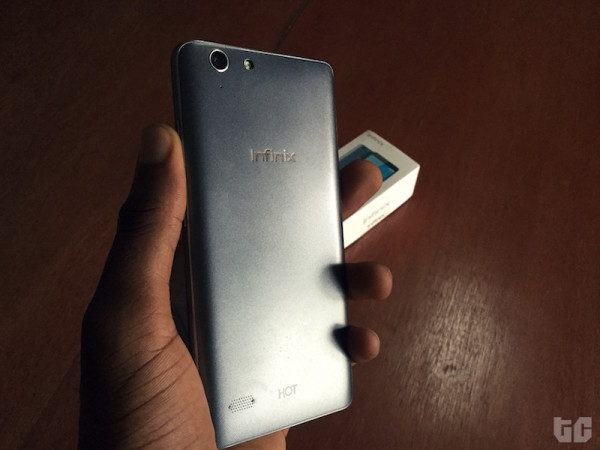 I’ve got pretty large hands, so the Hot 3 fit snugly in my palm. It was also pretty easy to balance it on my pinky and type with just my left thumb. More on that later. It’s also got the usual three capacitive buttons on the front end; menu, home, and back.
Just a thought. How come these thing aren’t standardised? The last few phones I’ve reviewed all had their back buttons in different places. Muscle memory is a thing, and it’s a bit of a peeve to have to recalibrate my brain every time I want to review an Android smartphone.
I’ve got pretty large hands, so the Hot 3 fit snugly in my palm. It was also pretty easy to balance it on my pinky and type with just my left thumb. More on that later. It’s also got the usual three capacitive buttons on the front end; menu, home, and back.
Just a thought. How come these thing aren’t standardised? The last few phones I’ve reviewed all had their back buttons in different places. Muscle memory is a thing, and it’s a bit of a peeve to have to recalibrate my brain every time I want to review an Android smartphone.
Android OEMs need to come together and decide whether to put the capacitive back button on the right or left side. Not this confusion.
— osarumen (@skweird) April 7, 2016
Moving on. Infinix’ tagline for the Hot 3 was Selfie with soft flash makes life colorful. Taglines don’t come much more mawkish than this (in my opinion) and they should have just let the camera do the talking for itself. This point becomes a lot more prominent when you consider that the (front, especially) camera didn’t have that much to say in the first place. Infinix threw a few ideas into the camera app which, in theory would have made it a pretty nifty shooter but their implementation let me down. For example, in addition to the front-facing flash, the Hot 3 has a “skin beautification mode”, which I presume is supposed to help cover up spots and other facial imperfections. In theory. Instead, the images I took using this feature ended up looking like some weird Gaussian blur was applied to them..@grey_adanna the fact that you just said "mostly" and not "always" is the real problem here. Standardization >>>> pic.twitter.com/4GS5s8TvNk
— osarumen (@skweird) April 7, 2016
 Then…there’s the front flash itself. With the tagline, I expected a flash that changed in hue to match the color of light in whatever room you’re in, you know, like Apple’s True Tone. Although, as I type this, I realise that I may be asking too much of a smartphone that costs what…N28,000?
My nitpicking aside, the back camera did a pretty good job. A quick look at the specsheet says it’s 8MP but I daresay it does better than many other phones with the same pixel count. Of course, it’s common knowledge that a multitude of megapixels, doth not a good camera make. Translation: Who pixels don epp?
Then…there’s the front flash itself. With the tagline, I expected a flash that changed in hue to match the color of light in whatever room you’re in, you know, like Apple’s True Tone. Although, as I type this, I realise that I may be asking too much of a smartphone that costs what…N28,000?
My nitpicking aside, the back camera did a pretty good job. A quick look at the specsheet says it’s 8MP but I daresay it does better than many other phones with the same pixel count. Of course, it’s common knowledge that a multitude of megapixels, doth not a good camera make. Translation: Who pixels don epp?


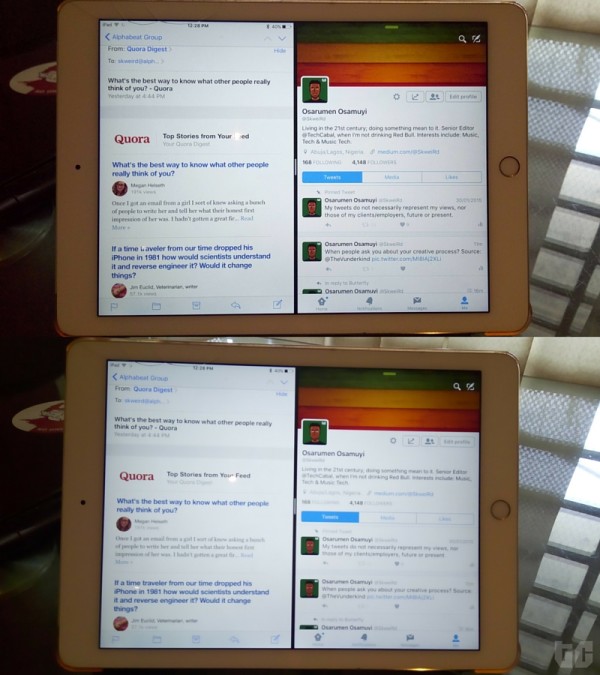
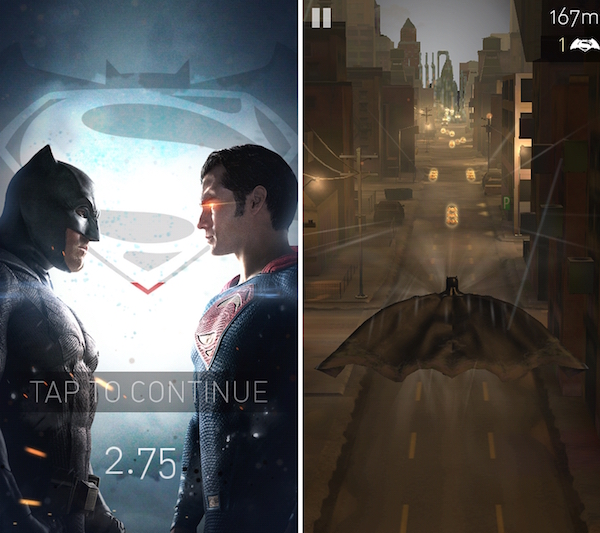
 I did not notice any of the under-exposure that characterizes cameras on phones in this price bracket. Although I must say that shots got considerably grainier in low light. Presumably to address this, Infinix put in a night mode to smoothen things out. The problem is, while a lot of the grain went away, it was replaced by the same blur that ruined the beautification mode for me. To illustrate, here’s a picture of some text on my iPad screen, comparing the normal and night modes.
 The thing is, Infinix released 2 versions of the Hot 3. One with 1GB RAM, and the other with twice that. It appears the 2GB RAM version is scarce as petrol in Nigeria right now, because I searched both Jumia and Konga, and I couldn’t find it. Neither could he…
@TechCabal can't find the 2gb variant of infinix hot 3. Any Idea where I can get?
— dev. (@hopizle) April 9, 2016
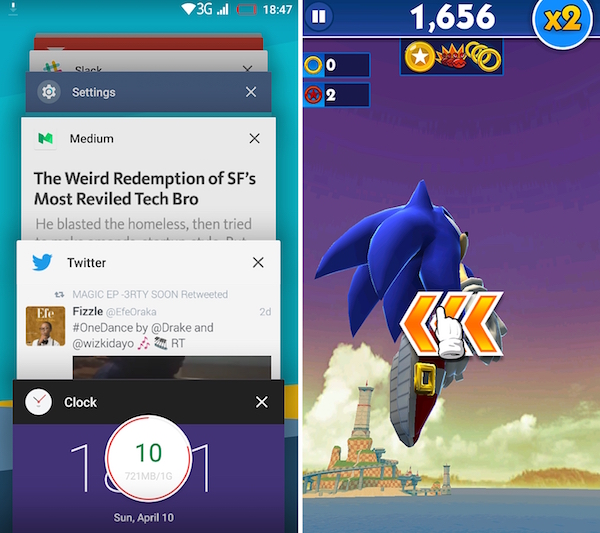 Sonic Dash played really smoothly when I closed all the apps I was running to free up RAM. Infinix should have put 2GB of RAM in all the versions of the phone, no excuses. It’s no news that the Android OS isn’t great at multitasking, so I’m not sure why Infinix tried to leave all the power/memory management to XUI.
“XUI is designed to optimize power consumption for long-lasting standby time.”
Which brings me to the Hot 3’s 3000 mAh juice pack. If you’re going to charge other phones (like Infinix advertised), then you better have stellar battery life yourself. Hint: Infinix Hot 3 does not. It took me through 7-8 hours of fairly intensive use, and on the days I didn’t do much, it got me through a full working day. That’s adequate, not amazing, for most users. Meanwhile, Huawei’s G-Power has a 4000 mAh battery that powered Ire through 4 days of medium use. Don’t throw out your power bricks just yet. I like the display. It’s 5.5 inches from corner-to-corner, and looks and feels a lot better than a ton of the other phones I’ve used in this price range. The feel becomes important when you need to type messages on Telegram, long-form articles on Medium or play Subway Surfer-esque games. I left on the plastic screen protector Infinix included, and surprisingly, it didn’t negatively impact my interaction with it.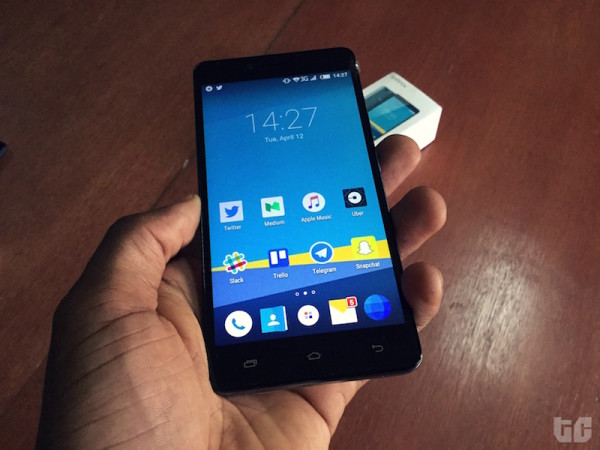 The screen’s got pretty deep blacks, yet it’s not oversaturated like on a lot of low-tier Android phones. This means that I don’t get a headache whenever I look at it in the middle of the night. I’m ever-grateful for the little things.
Let’s talk about Audio. A common thread I’ve noticed with Android devices is their poor sound design. I’m obviously much more attentive to it because I’m a sound designer, myself but it’s a peeve nonetheless.
The screen’s got pretty deep blacks, yet it’s not oversaturated like on a lot of low-tier Android phones. This means that I don’t get a headache whenever I look at it in the middle of the night. I’m ever-grateful for the little things.
Let’s talk about Audio. A common thread I’ve noticed with Android devices is their poor sound design. I’m obviously much more attentive to it because I’m a sound designer, myself but it’s a peeve nonetheless.
The palliative is that the Hot 3 had decent speakers. Did I say speakers? I meant speaker. Yes, it sports a mono-speaker unit behind the phone (which means the sound gets fed into my palm when I hold it upright to consume video content). I was pleasantly surprised at how good this sounded, because mono speakers as a rule, sound horrid. I must say though, that there’s almost no bass representation, so listening to bass-heavy genres like Dubstep or Drum ‘n’ Bass resulted in this weird pumping sound. Kind of like thoseBecause I promise you, you can alert me to a new Twitter mention or SMS or email without making me cringe every single time. Ah.
— osarumen (@skweird) March 27, 2016
Software
Let’s talk about XUI. There was a lot of annoying bloatware, but I guess that’s an evil we have to live with on every phone in this tier, these days. A simple fix for me, was moving the apps I wanted to use to the homescreen and avoiding the app drawer altogether.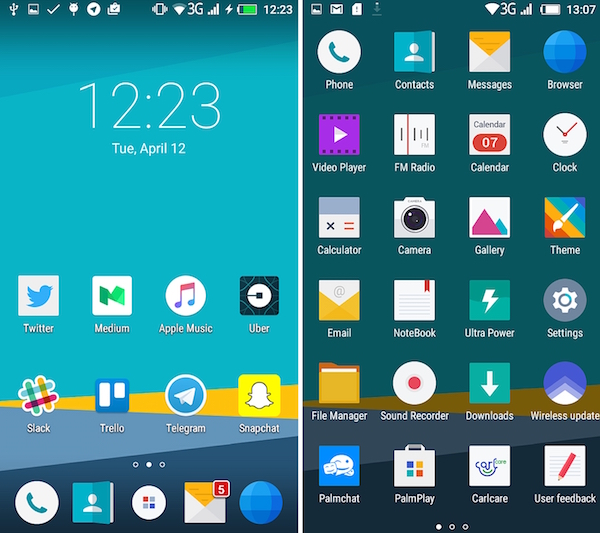 Annoying bloatware aside, I was pleasantly surprised with Infinix’ take on a third party UI skin. Honestly. It looks like a well-made re-presentation of Google’s Quantum Paper with touches of Microsoft’s Metro UI here and there. Most importantly, it. did. not. slow. the. phone. down.
Typing in XUI was a joy. I’ve been a bit passive aggressive about typing on Android phones in general. The last device that impressed me was the Blackberry PRIV, and considering the large gulf between their prices, the Infinix Hot 3 held its own in this department. Because of how good it was, I did not relegate it to hotspot-duty after a few days of use (like I usually do). I did a lot of my reading via the Medium mobile app, and actually used the phone to type out portions of this review as well as communicate via Slack and Telegram. That’s a HUGE plus for me. I really don’t like typing with my thumbs on glass. I really, really don’t like it.
The Hot 3 helped alleviate the pain, and for that, I’m grateful.
Annoying bloatware aside, I was pleasantly surprised with Infinix’ take on a third party UI skin. Honestly. It looks like a well-made re-presentation of Google’s Quantum Paper with touches of Microsoft’s Metro UI here and there. Most importantly, it. did. not. slow. the. phone. down.
Typing in XUI was a joy. I’ve been a bit passive aggressive about typing on Android phones in general. The last device that impressed me was the Blackberry PRIV, and considering the large gulf between their prices, the Infinix Hot 3 held its own in this department. Because of how good it was, I did not relegate it to hotspot-duty after a few days of use (like I usually do). I did a lot of my reading via the Medium mobile app, and actually used the phone to type out portions of this review as well as communicate via Slack and Telegram. That’s a HUGE plus for me. I really don’t like typing with my thumbs on glass. I really, really don’t like it.
The Hot 3 helped alleviate the pain, and for that, I’m grateful.