TechCabal

Search

Follow us

  • X
  • LinkedIn
  • TikTok
  • WhatsApp
  • Facebook
  • Instagram
  • YouTube

Flagships

Ask An Investor

Center Stage

My Life In Tech

Factsheet

Digital Nomads

The BackEnd

Web3

Quick Fire

Newsletters

TC Daily

Entering Tech

The Next Wave

TC Weekender

Events

Reports

TC Insights

Video

About

Advertise

Tech Women Lagos

Our Editorial Policies

TechCabal

Quick Links

  • EOY2025
  • The Builders’ List 2025
  • Calculate your tax

Search

Menu

  • Oluwaleke Fakorede’s story begins on a grim note. On a random weekend in July 2022, after visiting friends in Osogbo, southwest Nigeria, he rode home on his superbike, the sun warming his skin.

    Fakorede loved his superbike. For the Nigerian-born software engineer, the bike presented a regular rush of adrenaline break from sedentary work. But on this day in July, zooming through the asphalt tracks of the Osogbo highway, a car appeared out of nowhere and suddenly swerved in front of him. He skidded off the path, his body lurching forward, and in a blur, came crashing down helmet-first onto the hard floor.

    “I saw my life flash before my eyes,” recalled Fakorede. “I wasn’t going too fast, so I could still control where I dived to. Thankfully, I was wearing complete gear when [the accident] happened, but I still sustained bruises and sprained my ankle badly.”

    The accident occured right in front of a police station. The driver of the rogue car that hit him turned out to be a police officer who claimed his tyre had burst. Instead of holding the officer accountable, other officers turned on Fakorede and threatened to lock him up.

    Fakorede’s Kawasaki Ninja superbike after the accident
    Fakorede’s Kawasaki Ninja superbike after the accident/Image retrieved on August 25, 2025/Source: Fakorede

    “This is an insane country,” he remembers thinking after leaving the station in disbelief. The following day, still bandaged from the accident and walking cautiously with a limp, Fakorede headed out to drop his damaged bike parts at the mechanic’s. There, another unmarked police car pulled up, and officers jumped out with their guns drawn, demanded his papers, and tried to extort him. They detained him for nearly two hours until he called his father to intervene.

    Fakorede would spend weeks recovering physically, and several more years healing from the emotional scar. Until then, he had never seriously considered leaving Nigeria. But it was the accident, and the events that followed, that ignited a strong desire to move abroad and build his career in an environment where, as he puts it, “freedom of movement meant safety.”

    The man, his bike, and his dreams abroad

    Fakorede the biker, circa June, 2022, before the accident
    Fakorede the biker, circa June 2022, before the accident/Image Source: Fakorede

    Fakorede is the founder of Proton Tech Lab, but is best known as the Chief Technology Officer (CTO) of GoWagr, a Nigerian ‘prediction market’ startup where over 400,000 users can win money from predicting real-life events. He co-founded the startup with longtime friends, Daniel Oladepo and Michael Okoko, in 2021. But they built their conviction two years later, during the country’s 2023 general elections, when they saw an opportunity to help Nigerians make money. 

    They tested the idea by building a small spreadsheet to track people’s predictions on election outcomes and awarding winners a share of pooled contributions; a low-tech experiment that validated demand before they shipped the product.

    Before GoWagr, Fakorede had built his career across several high-profile Nigerian and foreign startups. An Andela-trained talent, he cut his teeth at Terragon as a data engineer before stints at Denmark’s Sports Compass, Nestcoin, Binance, and Yellow Card. But it was a remote job at  Insomnia Labs, a US-based venture studio he joined in 2022, that gave him a real foretaste of life outside Nigeria.

    In his two-room apartment in Ife, Osun State, Fakorede built and scaled a tech team to deliver products for companies like Coca-Cola, ICC, Ava Labs, and Coinbase. Steadily, his importance to the team grew. He rose to VP of Engineering, then became CTO. The company decided it was time to meet the man in person.

    After his bike incident in July 2022, Fakorede travelled out of Nigeria to the UK for the first time to meet the top brass executives at Insomnia Labs. It left an impression on his employers, and soon, the company wanted him to move permanently.

    Fakorede in Scotland, United Kingdom, in 2023
    Fakorede in Scotland, United Kingdom, in 2023/Image Source: Fakorede

    “I thought, if I were physically closer to the team, we could get so much more done,” he said. 

    Though he romanticised what life in the UK would look like, Fakorede also thought about Scandinavian countries to settle in. Yet his dream to build GoWagr, the desire that nudged him all along, drew him to the United States, where Insomnia Labs is headquartered. 

    Moving to the US on an H-1B

    In April 2023, Insomnia Labs filed a petition for Fakorede’s H-1B visa, America’s tightly regulated work permit for specialty occupations. The application process was a gamble because the visa is awarded through a lottery. Every year, American companies file petitions for skilled foreign workers, but the demand is far higher than the supply. Hundreds of thousands apply, yet only about a minimum of 85,000 names are selected.

    Fakorede’s name did not make the cut at first. He waited with uncertainty, unsure if the door to his American dream had closed. Then, in August that same year, while still at home in Nigeria, he received the call that changed everything. His petition had been picked after all. It took four months.

    Get The Best African Tech Newsletters In Your Inbox

    Bubbling with joy, he moved into the next phase of the journey, starting with the filing of the I-129 petition with the US Citizenship and Immigration Services (USCIS), the official request that allows an employer to sponsor a foreign worker for an H-1B visa. After that came legal filings, credential checks, and preparations for the embassy interview. Fakorede quickly realised that getting his petition picked was only the first hurdle. Insomnia Labs, as his sponsor, handled the paperwork and lawyer fees, but it required patience despite the fast-tracked process.

    “We opted for premium processing to expedite the full H-1B visa approval; this usually takes about two weeks,” said Fakorede, adding that his petition got approved, inching him another step closer to the American dream. “But I was outside the United States at the time, so I needed a visa to enter the country. I went back to the embassy to do that.”

    When he went for his visa interview at the US embassy in Nigeria, officials said the administrative processing would take two weeks and held on to his passport. What was meant to be a short wait stretched into nearly two months. He couldn’t travel. Every day, he refreshed the portal, checking anxiously as the status remained pending. Finally, after another two months, he saw that his visa had been issued.

    By December 2023, everything was finally in place. He sold his bike, said goodbye to friends and family, and boarded a plane to the United States on February 1, 2024. The day marked a personal rebirth and the start of a new chapter he anticipated would be radically different from what he was used to in Nigeria, Fakorede reminisced.
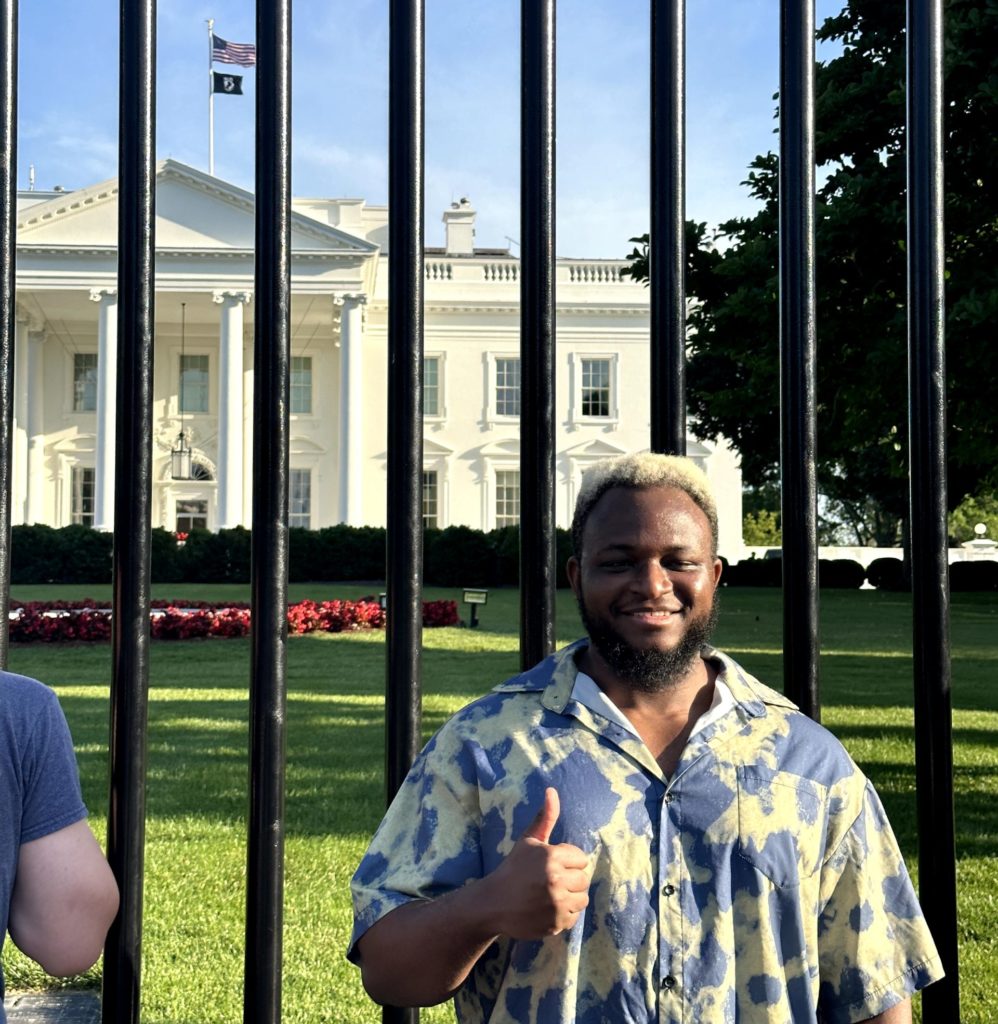
    Fakorede in front of the White House, Washington at the District of Colombia, United States
    Fakorede in front of the White House, Washington, District of Columbia, United States/Image Source: Fakorede

    Embracing life at Insomnia Labs in the US, he thrived, quickly integrating into the team and making significant contributions at the highest levels. But even as he found stability, he was already thinking ahead. 

    A year later, in mid-2025, Fakorede upgraded his stay in the US to the O-1 nonimmigrant work visa, reserved for individuals of “extraordinary ability.” This gives him a clearer path to permanent residency in the US, and finally, the freedom to leave employment and focus fully on GoWagr. 

    In July 2025, he resigned from his role at Insomnia Labs.

    Life on the East Coast

    No stranger to travelling before his migration to the US, Fakorede admitted there were the usual culture shocks. But living costs probably rank high up that list. In Manhattan, New York, where he briefly lived when he was visiting the US in 2023, he paid $2,800 for a studio apartment monthly. He was also mostly ordering food and eating out, stretching those costs.

    Fakorede takes a photo at the Lightship Ambrose, South Street Seaport Museum, New York
    Fakorede takes a photo at the Lightship Ambrose, South Street Seaport Museum, New York/Image Source: Fakorede

    “I even made a little app just to calculate what I’d actually spend,” he said, laughing. “But cooking is definitely cheaper than weeks of spending $500 on Uber Eats and DoorDash; I’ve done the math multiple times.”

    To cut costs, Fakorede moved to a one-bedroom house in downtown Newark, New Jersey, where he pays $2,200. There, he began cooking his own meals, saving a fraction of the costs. When it came to work, Fakorede settled into a routine of late-night work calls with his GoWagr Nigerian teammates.

    “We joke that our startup runs 24/7,” he said. By day, he leads the engineering team to ship features; at other times, he anchors partnerships, strategy, and investor meetings abroad.

    Fakorede driving in New Jersey, 2024
    Fakorede driving in New Jersey, 2024/Image Source: Fakorede

    Communities have helped him adjust in the US. In New York, he inserted himself into founder meetups and immigrant-focused groups where dinners and casual introductions opened doors to people he once only read about. 

    “Three months ago, I was in Goldman Sachs HQ in New York, speaking with a couple of VPs and some very big shots,” said Fakorede. “No way I’d be doing that in Nigeria.”

    Fakorede at the famous Golden Gate Bridge, California, the suspension bridge connecting the city to Marin County across the Golden Gate strait
    Fakorede at the famous Golden Gate Bridge, California, the suspension bridge connecting the city to Marin County across the Golden Gate Strait/Image Source: Fakorede

    Build for home, but don’t lose touch with home 

    If Nigeria gave Fakorede grit, the United States gave him perspective. In America, prediction markets like Polymarket are edging towards unicorn status, riding on the back of stronger regulatory clarity and investor appetite. Africa, by contrast, has no defined regulatory category. Prediction often risks getting lumped together with gambling, almost comically, and this stifles innovation.

    “What I saw here was different,” Fakorede noted. “In the US, it’s not just luck. It’s skill-based, community-driven. That was refreshing, and that’s what we wanted to bring back home.”

    GoWagr officially launched in 2023, just after Nigeria’s elections. By re-framing prediction markets as skill and participation rather than gambling, the startup found a foothold among young Nigerians. 

    Yet African investors remain cautious. Many struggle to differentiate prediction markets from betting, and few understand the model deeply.

    “Some local investors in Nigeria don’t understand the model until you mention Polymarket,” he explained. “Others just wait to see numbers. But with or without them, we’ll get there. The only question is how fast.”

    With some good numbers now rolling in across users and revenue, Fakorede doesn’t think it is harder to convince sceptical investors.

    Yet his fundraising game of chess is two-pronged: he uses his location advantage to speak with high-value foreign investors who understand the model, scale potential, early-to-market appeal, and Africa’s massive exposure to eSports. Locally, the numbers, culture tap-in, and a gateway to buying into a global business become the sell.

    Fakorede at Nigerian Tunde Onakoya’s world-record-breaking chess event, New York, 2024
    Fakorede at Nigerian Tunde Onakoya’s world-record-breaking chess event, New York, 2024/Image Source: Fakorede

    For the ex-Insomnia Labs chief, being global is not just a strategy—it’s survival. Okoko, his equally technical co-founder, covers the Nigerian time zone; Fakorede anchors the American side. Between them, the product never sleeps.

    The Osogbo accident on that fateful afternoon taught Fakorede about uncertainty—no, the fickleness of existence, yet the grace to lead a life of urgency. Throughout his career, he has earned high praise, but he considers GoWagr his life’s work, and there’s an unreal work ethic he has committed to building the company of his dream.

    He’s chasing scale. The United States, its savoir faire that rubs off on just about anyone who spends a week there, and Silicon Valley’s somewhat performative élan for business-dealing have become all too familiar to Fakorede. GoWagr will be a global affair, he tells me, quite possibly the biggest startup of its kind from Africa. And there in America, he has the precedents he badly lacks in his home continent to learn from.

    Fakorede at Google’s I/O event, 2024
    Fakorede at Google’s I/O event, 2024/Image Source: Fakorede

    As we wrapped up our call, Fakorede didn’t punt. He delivers his point like a rugby wing diving for the try line, making it clear that you cannot build for an African market you are losing touch with as a nomadic or location-independent founder. His hack is to have co-pilots—comrades-in-arms if you like—on the ground building GoWagr for an African market where consumer behaviour is often erratic.

    Mark your calendars! Moonshot by TechCabal is back in Lagos on October 15–16! Join Africa’s top founders, creatives & tech leaders for 2 days of keynotes, mixers & future-forward ideas. Early bird tickets now 20% off—don’t snooze! moonshot.techcabal.com
  • One year since it issued provisional crypto licences to two startups, Nigeria’s Securities and Exchange Commission (SEC)—under the capital market institute (NCMI)—and Kenya School of Government (KSG) have partnered with crypto startup Busha to launch a cryptocurrency course. The module, to be developed and facilitated by the UK’s Cambridge Enterprise, part of the Cambridge University, will aim to teach financial institution leaders and decision-makers about digital assets and the role they play in creating financial access.

    The programme, “Digital Assets Innovation, Industry, Regulation and Compliance (DAIIRC),” will target regulators and enforcement professionals, financial sector executives, policymakers, legal and compliance professionals, innovators, and ecosystem leaders, in a major collaboration between regulators and industry operators, signalling a clear push for institutional crypto adoption.

    “This partnership with the University of Cambridge and Busha to deliver a world-class executive programme reflects our commitment to equipping regulators, policymakers, and market leaders with the tools they need to engage with digital assets from a position of confidence, not caution,” said Dr Emomotimi Agama, SEC director general, in the programme brochure seen by TechCabal.

    According to the SEC, the four-way collaboration is underway and has not been finalised yet.

    Launching on September 30, DAIIRC will be a six-week Africa-focused hybrid programme facilitated by an ensemble cast of experienced digital asset academics, including Simon Callaghan, former director of the Cambridge Digital Assets Programme; Dr Dee Allen, associate professor at the University of Bahamas; Dr Patrick Conteh, CEO of Africa Fintech Network; Dr Tanya McCartney, CEO of GEM Advisory, a US-based regulatory compliance firm; and Olaoluwa Samuel-Biyi, Busha co-founder.

    The programme will cost $1,500 and participating institutions will be required to sponsor executives in their ranks.

    Get The Best African Tech Newsletters In Your Inbox

    Crypto licences? One year later

    While the collaboration between regulators and a startup is a landmark occurrence, access to formal banking rails remains the biggest hurdle for crypto firms.

    When the SEC issued its first batch of provisional licences in August 2024 to Quidax and Busha as part of a sandbox programme, the move was billed as the beginning of a new era for the industry. The expectation was that both startups would transition to full operating licences within a year and that more operators would be admitted to the sandbox.

    But progress has been slower than anticipated. In April, the regulator paused new approvals, citing difficulties in its due diligence process. This has left dozens of applicants in limbo and put added pressure on the two provisional licence holders to demonstrate what regulated crypto activity should look like.

    “A lot has changed since August [2024],” said Samuel-Biyi. “We’ve been able to grow, hire more people, and interact more formally with the banking system. But it also means there are many things hundreds of other players are doing in this space that we cannot do by virtue of being regulated.”

    Busha has had to scale its compliance processes. According to Samuel-Biyi, about 30% of the startup’s operations are now tied to regulatory obligations, up from 10% before licencing.

    These routines include real-time reporting to the SEC through APIs, stricter Know Your Customer (KYC) and anti-money laundering (AML) checks, proof of sufficient reserves, and intensive transaction monitoring through global tools such as Chainalysis and Fireblocks for wallet security.

    The licencing regime has also nudged corporations out of the shadows. More companies and businesses are holding crypto in their treasury and making payments using digital assets, according to Busha. But this sits in contrast to banks, which remain hesitant without explicit approval from the Central Bank of Nigeria (CBN).

    Banking hesitation

    The SEC’s efforts have encouraged banks to slowly warm up to the sector, but uncertainty at the CBN continues to cast a shadow for banks.

    Banks are no longer adversaries; they are making outreach to crypto players like Busha, yet they’ve been so punished in the past that it’s going to take more green light from the CBN to give them complete confidence, said Samuel-Biyi.

    While digital assets now have legal status in Nigeria, account holders still cannot reference crypto transactions in bank dealings without risking their accounts being frozen—a clear sign of the government’s contradictory stance.

    Get The Best African Tech Newsletters In Your Inbox

    What comes next

    One year after granting its first provisional licences, the SEC is still moulding the contours of Nigeria’s crypto regulation. Busha and Quidax, the two crypto startups provisionally licenced last August, are yet to advance full licences.

    “You can imagine the SEC, a near 50-year-old institution, suddenly having to build internal capacity in fintech to deal with crypto,” said Samuel-Biyi. “There’s been a lot of back and forth; before the [SEC] opens the floodgates, they want to be sure they have the rigour to work through issues like setting listing criteria for digital assets and understanding the liability of approving an asset that later fails globally.”

    A year has been a very short time for the regulator to learn, but there are indications that graduation to full licencing is imminent, according to Samuel-Biyi. But that would also need to come with additional admittance into the regulatory sandbox for other crypto firms.

    The regulator is expected to issue another batch of provisional crypto licences in the last quarter of the year, according to an industry source, reopening the door for startups that have been stuck in limbo. If it happens, it will serve as a test of how much progress the SEC has made in resolving its due diligence bottlenecks.

    The new course with Cambridge and KSG signals intent: after a year of stop-start regulation, the regulator wants to arm banks, policymakers, and other financial institutions (OFIs) with the knowledge to turn a volatile industry into a structured market.

    Editor’s Note: Loretta Joseph, advisor to the Financial Services Commission of Jamaica on virtual asset regulation, earlier listed as a facilitator, has been removed as she’s no longer co-facilitating the course.

    Mark your calendars! Moonshot by TechCabal is back in Lagos on October 15–16! Join Africa’s top founders, creatives & tech leaders for 2 days of keynotes, mixers & future-forward ideas. Early bird tickets now 20% off—don’t snooze! moonshot.techcabal.com
  • Getting a mortgage in South Africa is starting to look a lot like buying a fridge. Digital platforms are turning the long, paperwork-heavy process into something that can be done with a few clicks, and consumers are responding.

    The latest signal came last week when Takealot, the country’s largest e-commerce platform, launched a Home Loan Hub in partnership with MortgageMarket, the country’s online home loan marketplace. Within 48 hours, more than 1,000 people had applied, according to Tim Akinnusi, MortgageMarket CEO. 

    They join a growing list of South Africans turning to online platforms like MTN, EasyEquities, and BetterBond to secure home financing, bypassing brokers and branch visits.

    With just one digital application on Takealot, users can receive instant pre-approval insights without affecting their credit score, compare offers from lenders such as Absa, FNB, Investec, RMB, and Standard Bank, and get loan proposals within 72 hours. Successful applicants even receive up to R20,000 (over $1,100) in Takealot vouchers once their bond is registered, a tactic reminiscent of e-commerce bundling logic designed to make online shopping stickier.

    “It’s a smart move by Takealot as they have established distribution and additional data from past purchases to help determine the credit risk,” said Michael Jordan, a chartered enterprise risk analyst. “I think it will be a success and would not be surprised if they expand into insurance next.”

    Davison Mudzingwa, an entrepreneur and business analyst, noted that accessing home loans through e-commerce platforms like Takealot speeds up the process of bond application and approvals. “I hope this will increase activity within the property and long-term loan market due to ease of access,” he said.

    This trend is unfolding as South Africa’s housing market shows signs of recovery from the pressures of high interest rates, rising costs of living, and post-pandemic economic strain. The recovery is driven by first-time buyers, who accounted for nearly 53% of the total applicants coming from this segment in Q1 2025, according to Absa’s Homeowner Sentiment Index. For BettaBond alone, loan approvals increased by 8.2% in the past 12 months ending in March 2025, compared to the same period the previous year

    Takealot’s move reflects a larger trend of digital platforms expanding into lifestyle services driven by surging internet, mobile, and social media use. Avo, an e-commerce run by Nedbank, bundles banking, shopping, and more in one digital interface. For younger, tech-savvy consumers, the ability to manage applications online without endless trips to banks is a major shift. Analysts say technology-driven distribution channels are well-positioned to ride this wave.

    “If getting a mortgage can be as seamless as buying a fridge, more people might finally buy both,” Mudzingwa added. “It’s a good development that shows technology as both an enabler and a frontier that takes down barriers for both business and consumers.”

    Mark your calendars! Moonshot by TechCabal is back in Lagos on October 15–16! Join Africa’s top founders, creatives & tech leaders for 2 days of keynotes, mixers & future-forward ideas. Early bird tickets now 20% off—don’t snooze! moonshot.techcabal.com

  • Guaranty Trust Holding Company Plc (GTCO), one of Nigeria’s largest financial services groups, has injected ₦365.85 billion ($236 million) into its flagship subsidiary, Guaranty Trust Bank Limited (GTBank), to meet Nigeria’s new capital requirements for lenders with international authorisation. The move, announced in a regulatory filing on Friday, comes through the issuance of nearly 7 billion ordinary shares of the bank to GTCO via a rights issue.

    The capital raise underscores how Nigerian banks are racing against time to comply with the Central Bank of Nigeria’s (CBN) recapitalisation directive, which gives commercial lenders until March 2026 to shore up balance sheets. GTCO’s injection ensures GTBank retains its international licence while positioning it to expand lending, grow its branch network, and fortify technology infrastructure.

    With the fresh capital, GTBank’s share capital has risen from ₦138.2 billion to ₦504 billion, keeping the bank well above the CBN’s new minimum of ₦500 billion for international banks. It joins other tier-1 lenders, Access Bank and Zenith Bank, that have met the new capital thresholds.

    “The additional equity capital will be deployed by GTBank primarily for branch network expansion and asset growth (loans/advances and investment securities portfolio), fortification of its information technology infrastructure, and to leverage emerging opportunities in Nigeria and the operating environments where it maintains banking presence,” GTCO said in the filing.

    GTCO’s equity raising programme was first approved at its 2024 annual general meeting and executed in two phases with clearance from regulators. The group continues to own 100% of GTBank following the allotment.

    The recapitalisation push has been one of the defining themes in Nigeria’s banking sector this year. In March 2024, the CBN ordered lenders to raise fresh equity in a bid to “build a more resilient banking system” after the naira’s historic devaluation and inflationary shocks battered capital buffers. Analysts have warned that banks unable to meet the new thresholds face the risk of mergers or losing licences.

    At least eight banks have fully met the recapitalisation requirements, CBN governor Olayemi Cardoso said in July, while others scramble to meet the 2026 deadline. Smaller lenders are exploring consolidation to survive.

    For GTCO, the injection shores up one of Nigeria’s most profitable lenders, whose pan-African presence spans Ghana, Kenya, and the UK. The group is betting that stronger capitalisation will allow it to compete for bigger ticket loans and digital banking opportunities across its markets.

    Mark your calendars! Moonshot by TechCabal is back in Lagos on October 15–16! Join Africa’s top founders, creatives & tech leaders for 2 days of keynotes, mixers & future-forward ideas. Early bird tickets now 20% off—don’t snooze! moonshot.techcabal.com

  • eBee Africa, the Kenyan mobility startup that once promised to put one million electric bicycles on African roads by 2030, laid off most of its roughly 50 employees across all departments in early 2025 and scaled back operations after struggling to drive sales, according to five people familiar with the company. 

    eBee told staff in a February redundancy notice seen by TechCabal that it would cut jobs across all departments, citing a “substantial decline in revenue, extremely high cost of operations, an unsustainable employee wage bill, and restructuring of the business to adopt a leaner, more efficient structure.“

    About 10 staff survived the cuts but eventually left on their own, with the last batch of employees departing in July, sources said.

    “We understand that this news is difficult, and we share in the sadness of having to take these steps. Please know that we are doing everything we can to minimize the impact of these layoffs, and that the decision is driven solely by the need to ensure the company’s sustainability in the face of the current economic climate,” the notice read. 

    The layoffs reflect broader challenges facing  Kenya’s e-mobility sector, where riders are opting for cheaper electric motorbikes over eBee’s bicycles, whose flagship eBX model costs KES 99,999 ($774) or about KES 9,500 ($74) a month to rent—pricing that many target customers, like delivery riders, struggle to afford. Even with financing options, eBee’s bikes couldn’t compete with the cheaper second-hand motorbikes dominating the market.

    In an emailed response to TechCabal, eBee said it “remains operational and focused on serving customers and partners” but declined to comment on the exact number of affected employees. Affected staff received exit packages, although eBee did not give specifics of that financial arrangement. 

    Get The Best African Tech Newsletters In Your Inbox

    Founded in 2021 by Sten Van Der Ham, Jaap Maljers, Isidoor Maljers, and Joost Boeles, eBee manufactures and rents electric bicycles and also operates delivery fleets for platforms including Jumia, Glovo, and Bolt. By mid-2024, eBee had expanded operations to Uganda and Rwanda through partnerships with the City of Kigali and Jumia. 

    “The company is not doing well, and the uptake of their bikes has been slower than projected,” said one person privy to eBee’s operations, who requested anonymity to speak freely. The source said that the business has struggled with sales due to low demand for its electric bicycles.

    The company acknowledged that 2025 began with a “renewed strategy to strengthen commercial traction and ensure sustainable growth,” which involved streamlining operations and merging select locations. However, it did not specify which locations were merged. 

    In the redundancy note, eBee said the decision sought to safeguard the company’s long-term stability and protect the majority of jobs. It also promised consultations with departments and clear communication with affected staff.

    “We have been impacted by broader economic conditions and the pace of adoption of electric mobility in Kenya,” eBee said, maintaining that warranty and after-sales support will continue. 

    eBee has promoted its bikes as two to three times more affordable than petrol motorbikes, with the added advantage of charging on ordinary home sockets. Models such as the Nyuki cargo bike were marketed as ideal for last-mile deliveries. The company said it is “developing new partnerships that will further strengthen our offering.”

    In March 2025, CEO and co-founder Sten Van Der Ham stepped down after four years at the company. Ham’s exit came a month after eBee lost a tax dispute with the Kenya Revenue Authority (KRA) over the classification of imported electric bicycles.

    Mark your calendars! Moonshot by TechCabal is back in Lagos on October 15–16! Join Africa’s top founders, creatives & tech leaders for 2 days of keynotes, mixers & future-forward ideas. Early bird tickets now 20% off—don’t snooze! moonshot.techcabal.com

  • Four months after talks began, Roqqu, a Nigerian crypto company, has listed the compliant Naira (cNGN), the stablecoin pegged 1:1 to the local currency. It joins Busha, Quidax, Xend Finance, Blockradar, and Boundlesspay, among startups that now support the token.

    Launched in February and distributed by the WrappedCBDC team, the cNGN stablecoin now has ₦603 million ($395,000) in circulation. While the stablecoin is minted across six blockchains—Asset Chain, Base, Bantu, Polygon, Ethereum, and Binance—to provide easy access and reduce transaction costs, retail adoption remains slow.

    Roqqu is still awaiting a provisional crypto licence from Nigeria’s Securities and Exchange Commission (SEC). But its decision to list the SEC-approved cNGN signals growing acceptance of the token among operators. Roqqu, which claims it now has 1.8 million users and an entrenched grassroots presence, says its listing will help bring the stablecoin to everyday users.

    “We know our way when it comes to the grassroots market,” said Emmanuel Peter, Roqqu’s head of academy and business partnership. “A currency is not a thing if it’s not embraced by the people, and we know how to get to these people. This could be what the cNGN token has been missing—wider distribution.”

    Roqqu will earn exchange fees from fiat-to-cNGN swaps but plans to make cNGN transactions feeless to lower barriers and encourage adoption. It has already integrated with Base, one of the six supporting networks.

    The plan to go deep and wide

    Roqqu is accessible nationwide through its mobile app and has built its reputation for “last-mile crypto delivery” through campus tours, community-driven blockchain awareness programmes, and offline engagement in underserved cities. The startup claims this strong local presence is key to getting cNGN into more hands.

    The crypto startup recently expanded its regional footprint. In July, Roqqu completed the acquisition of Flitaa, a Kenyan crypto startup, adding over 70,000 users to its platform. That acquisition potentially sets the stage for cNGN to be used in cross-border transfers between Nigeria and Kenya.

    Roqqu will also partner with the cNGN team on a co-marketing campaign, hosting educational and promotional events across campuses and other venues in multiple Nigerian cities, Peter said.

    “We have a lot of major plans for cNGN,” said Roqqu CEO Benjamin Onomor. “We want to unlock all the opportunities this [cNGN] stablecoin brings, including eventually providing users with low-interest loans and other financial services.”

    Mark your calendars! Moonshot by TechCabal is back in Lagos on October 15–16! Join Africa’s top founders, creatives & tech leaders for 2 days of keynotes, mixers & future-forward ideas. Early bird tickets now 20% off—don’t snooze! moonshot.techcabal.com

  • A decade ago, Nairobi’s co-working spaces were touted as temples of Kenya’s innovation economy—glass-walled hubs, adorned with local art and furnished with sleek chairs, where young founders could incubate the next groundbreaking ideas.

    Today, founders and small business owners are opting for restaurants and cafés, securing seats with a coffee or a bottle of water as they stretch their budgets. The dream of affordable, flexible workspaces has collided with a more challenging fundraising climate, slowing growth for small businesses, and weak consumer spending.

    When global flexible workspace provider Regus opened its Nairobi offices in 2016, followed closely by homegrown Nairobi Garage and upscale operator Ikigai, the city’s startup scene was buzzing. Venture capital was taking off, especially after 2017, and the need for flexible, plug-and-play spaces seemed obvious.

    However, founders and remote workers, who are the primary targets now, believe the economics tell a different story.

    The promise and price

    Daily desk passes in most Nairobi co-working spaces cost between $15.45 (KES 2,000) and $23.17 (KES 3,000), while boardroom rentals range from $3.86 (KES 500) to ($15.45 (KES 2,000) per hour. Long-term packages are more affordable but still expensive: a dedicated desk costs between $193 (KES 25,000) and $386 (KES 50,000) per month, while private offices range from $540 (KES 70,000) to $1,930 (KES 250,000), depending on size and the number of occupants.

    These prices often exceed the rent of traditional offices. In the Central Business District (CBD), small commercial units can still be leased for less than $386 (KES 50,000) a month. Even in Nairobi’s leafier suburbs, two-bedroom apartments—easily converted into offices—rent for $656 (KES 85,000) to $1,390 (KES 180,000), often less than what co-working providers charge for equivalent space.

    “The cost doesn’t make sense for someone building ground up,” says David Saria, a 27-year-old freelance developer. “I could spend the same amount and rent a private office, or even a house. The co-working concept was supposed to make things affordable, but it’s out of reach for many.”

    Get The Best African Tech Newsletters In Your Inbox

    Cafés are the new offices

    Instead, people are turning to restaurants, some of which have adapted to the shift in demand. In Nairobi’s CBD, a growing number of establishments now offer lounges with comfortable seating, reliable Wi-Fi, and power outlets—spaces that can double as meeting areas for client presentations or team meetings.

    While restaurants lack the calm and focus of co-working spaces, the savings are apparent. With a daily budget of $19.31 (KES 2,500), a founder can secure internet access, a meal, and a working spot. By comparison, the same amount barely covers the cost of a desk at a co-working hub. 

    Restaurants see the arrangement as symbiotic. A steady stream of remote workers means predictable foot traffic during weekdays, a time when eateries otherwise struggle to fill seats. Some cafés now advertise themselves as “work-friendly,” offering packages with unlimited refills, discount meal plans, and reserved quiet zones.

    “It’s cheaper and it makes more sense,” Saria says. “With two or three thousand shillings, I get Wi-Fi, a place to sit, and a meal for two. That’s the same amount most co-working spaces charge just for the seat.”

    He admits, though, that cafés are more of a meeting spot than a daily office. Most of his work happens at home, where the real savings are made. The restaurant routine only comes into play when he needs to meet clients or collaborators, an occasional expense rather than a fixed overhead.

    Economic chill

    The shift comes at a challenging moment for Kenya’s startup and SME ecosystem. Venture capital inflows, while showing signs of recovery, remain well below the highs of 2020–2022. The downturn in 2023 and 2024 mirrored global trends but cut deeper in markets like Kenya, which rely heavily on external funding.

    For SMEs, double-digit loan rates have made credit costly, while freelancers—some of whom rely on foreign contracts—have been squeezed by a slowdown in overseas deals that has eroded their incomes amid rising living costs.

    In this climate, every shilling counts. “Nearly every entrepreneur I meet is trying to save on overheads,” says Hassan Shukri, a property manager in Nairobi’s South B. “They’ll ask me for the most affordable properties, not the most stylish ones. They would rather put money into licenses, supplier payments or salaries than a fancy office.”

    While some multinationals, cash-rich startups, and NGOs still use premium spaces like Ikigai or Kofisi for their Nairobi bases, local entrepreneurs—the very demographic these hubs were meant to serve—are seeking cheaper alternatives.

    For cash-strapped startups and freelancers, cafés and converted apartments make sense. However, for well-funded firms or foreign outfits, co-working spaces still offer high-end design, a professional ambience, and networking opportunities.

    Even for those struggling with tight budgets, co-working spaces remain appealing.  For teams requiring a central location with reliable infrastructure, or freelancers seeking a professional environment to host investors, the value proposition remains. Aesthetics—polished furniture, curated art, and a corporate address—carry weight in Nairobi’s competitive business scene.

    KMA Apartments, which has been retrofitted into offices.
    Image Source: KMA

    Office space glut

    The strain on co-working spaces also arises as Nairobi faces a surplus of unused office space. In July, Knight Frank estimated that 23% of prime office space in the city is vacant, as corporates adopt hybrid work arrangements and reduce their reliance on expensive leases.

    This has driven down rents in traditional office markets but has not translated into lower co-working costs. Industry insiders say operators face higher fit-out and service expenses than landlords of bare offices, forcing them to maintain premium pricing.

    Consultants, law firms, and small startups are increasingly renting apartments and turning them into offices. “If we are sharing space, then it should be cheaper than renting an entire house,” says Charles Ireri, a due diligence consultant who worked as head of compliance at Equity Bank. “Instead, co-working rents are enough for a nice two-bedroom apartment, enough for both living and working.”

    The economics are better: a two-bedroom apartment at $695 (KES 90,000) a month can comfortably house a team of 8–15, at less than half the cost of renting equivalent space in Nairobi’s co-working spaces.

    Mark your calendars! Moonshot by TechCabal is back in Lagos on October 15–16! Join Africa’s top founders, creatives & tech leaders for 2 days of keynotes, mixers & future-forward ideas. Early bird tickets now 20% off—don’t snooze! moonshot.techcabal.com

  • In partnership with
    Fincra logo
    Lire en Français
    اقرأ هذا باللغة العربية

    TGIF! ☀️

    We effectively came to flex on here, pointing out that we’ve now correctly predicted Egypt’s rate decisions twice in a row—but hey, who’s counting? 👀

    Yesterday, Egypt’s Central Bank cut key rates by 200 basis points across lending, deposit, main operation, and discount rates, after previously keeping them steady in July. Egypt’s monetary policy might now be matching its economic reality. Next decision? We expect more cuts if inflation continues to ease.

    In today’s dispatch, we talk about Nigeria’s tech minister, Bosun Tijani, featured alongside other AI innovators in Africa on TIME’s list, much ado about telecom infrastructure vandalism, and South Africa’s BankservAfrica getting closer to receiving approval, to lead you into the weekend.

    Let’s dive in.

    today's edition image
    • Nigeria’s Bosun Tijani honoured on TIME’s AI list
    • Telecom firms want tougher crackdown on vandalism
    • South Africa’s BankservAfrica inches closer to approval
    • Funding Tracker
    • World Wide Web 3
    • Job Openings

    Features

    Nigeria’s Bosun Tijani joins Elon Musk, Sam Altman on TIME’s 2025 AI List

    Nigeria’s tech minister, Dr. Bosun Tijani

    Nigeria’s Minister of Communications, Innovations, and Digital Economy, Dr. Bosun Tijani, has been named among TIME’s 100 most influential people in AI for 2025. The recognition comes as Nigeria pursues ambitious AI goals, despite still grappling with basic digital infrastructure challenges. 

    How come? Tijani was recognised for driving the 3MTT program, which has trained about 300,000 people toward its target of three million tech talents, and for convening over 120 Nigerian experts to co-create a National AI Strategy. The strategy targets critical sectors like healthcare, agriculture, and education—sectors where Nigeria still struggles with service delivery.

    State of play: Nigeria may have strategy documents and high-level partnerships, but it still lags in AI readiness.It ranks 94 in the global AI readiness index, 29 places behind Egypt and 22 behind South Africa. Progress will require more than vision: data infrastructure, local research support, and sustained execution remain missing pieces.

    Zoom out: This global recognition validates Nigeria’s AI ambitions and feeds into President Tinubu’s trillion-dollar economy vision. But being on a list is easier than delivering AI-powered improvements. Nigeria’s real test is whether its AI ambitions translate from international accolades to tangible benefits for citizens still waiting for reliable digital services.

    eCommerce Without Borders: Get Paid Faster Worldwide

    Whether you sell in Lagos or Nairobi, customers want local ways to pay. Let shoppers check out in their local currency, using cards, bank transfers, or mobile money. Set up seamless payments for your global online store with Fincra today.

    Telecoms

    Nigerian telecom operators want the government to get tougher on vandals

    Image Source: Google

    Here’s why: The rampant cases of vandalism on telecom infrastructure. Operators say these acts undermine billions of naira in investments and slow down connectivity.

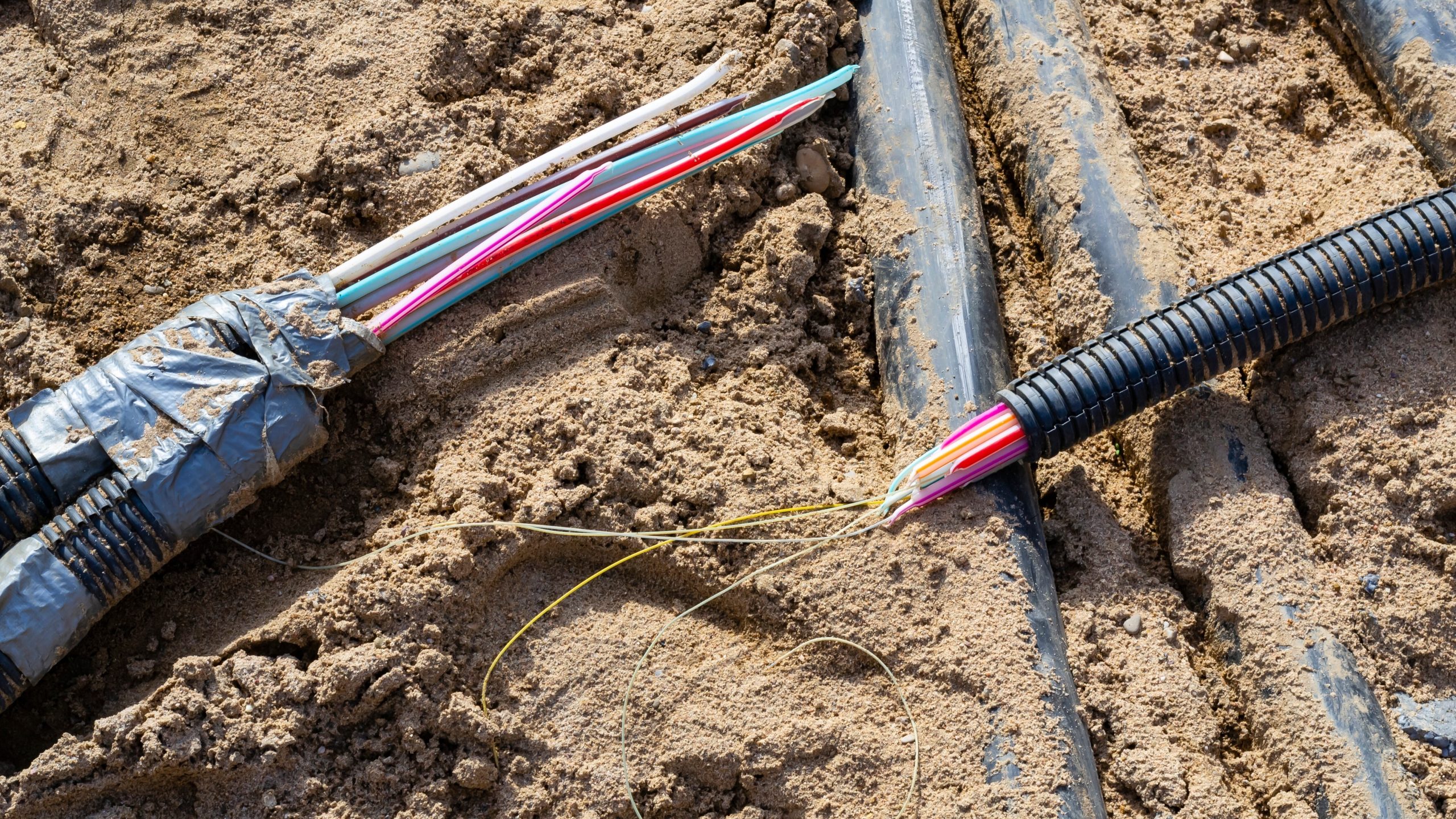
    The fibre is protected: Yes, it is. In June 2024, Nigeria signed the Designation and Protection of Critical National Information Infrastructure Order (CNII), making the protection of telecom infrastructure a matter of national security. Under this law, wilful damage to telecom infrastructure is punishable by up to 10 years’ imprisonment.

    However, despite the numerous headlines of arrests made, the Nigerian Communications Commission (NCC) still reports that Nigeria records an average of 1,100 fibre cuts weekly.

    Telecom operators argue that weak enforcement is emboldening vandals, who hold cables hostage until they are paid a ransom. They urge the government to strengthen both penalties and accountability mechanisms to discourage future vandals. 

    Why should you care? Fibre vandalism drives up the cost of data. Each repair adds to operators’ expenses, which they pass on to consumers. It also slows down network expansion and causes frequent connectivity issues, resulting in higher costs for unreliable service.

    The bottom line: Staying online is vital for Nigeria’s economy, but if vandalism persists, the country’s digital future could be defined by higher costs, weaker coverage, and constant disruptions.

    Shop anywhere with Paga’s physical prepaid card

    Own every checkout with Paga’s Physical Prepaid Card. Suitable for all your security and speed needs. Just fund, shop, and pay anywhere with confidence. Get yours today.

    Banking

    South Africa’s Competition Commission clears acquisition of BankservAfrica

    Image Source: TCS

    The South African Reserve Bank (SARB) got some good news today: regulators have unconditionally approved its proposed acquisition of BankservAfrica, a critical payment clearing house in the country. 

    Catch up: BankservAfrica is an important player in South Africa’s financial system: it makes interbank switching, clearing and settlement possible. The SARB, the country’s central bank, announced its acquisition plan in November 2024 as part of a strategy to create a national payments utility. The payment clearing house was owned by South Africa’s major commercial banks, including Absa, Nedbank, FirstRand, and Standard Bank. 

    State of play: The Competition Commission found no competition concerns or public interest issues with the deal. BankservAfrica manages critical infrastructure through systems enabling interbank switching, clearing and settlement. With the acquisition, SARB can transition the company to a national payments utility focused on serving the entire South African economy. SARB will rely on Payshap, a key digital offering of BankservAfrica that enables over 1 million daily real-time, low-value interbank payments. 

    Zoom out: SARB’s acquisition aligns with its Vision 2025 to make South Africa’s payment system safer, more efficient and accessible by promoting competition, financial inclusion, and cost effectiveness. SARB wants to eliminate cash in South Africa and move to more secure digital payment methods. However, much like its peer Nigeria, cash is still king: 90% of transactions in South Africa are still cash-based, especially in the informal sectors. The challenge ahead for South Africa’s apex bank will be to execute an ambitious cashless policy that actually works for everyone.

    Here’s what happened at Paystack in 2024!

    See what Paystack built last year! From major product upgrades to new ways we supported African businesses. Check out our Year in Review →

    Insights

    Funding Tracker

    Image Source: Stephen Agwaibor for TechCabal Insights

    This week, Egyptian quick-commerce grocery app Breadfast raised $10 million from the European Bank for Reconstruction and Development (EBRD) as part of its Series B2 financing, led by Novastar Ventures. (Aug 26)

    Here’s the other deal for the week:

    • South African fintech startup StraTech secured undisclosed funding from VEA Capital Partners. (Aug 26)

    Follow us on Twitter, Instagram, and LinkedIn for more funding announcements. Before you go, how were African startups able to raise $1.42 billion in H1 2025, a 78% surge from last year? Read here.

    Manage bills and make instant transfers with DNIPay

    Born from Octavia Securities’ estate DNI Security App. DNI Pay is fixing Nigeria’s broken local payments. Focused on small, everyday transactions, it offers fast, reliable and secure payments positioning itself as “Zelle for Africa.” DNI Pay is available on the Apple App Store and Google Play Store.

    CRYPTO TRACKER

    The World Wide Web3

    Source:

    CoinMarketCap logo

    Coin Name

    Current Value

    Day

    Month

    Bitcoin $111,304

    – 1.38%

    – 5.66%

    Ether $4,475

    – 2.09%

    + 17.63%

    Pyth Network $0.2228

    + 88.43%

    + 79.17%

    Solana $215.18

    + 1.54%

    + 19.22%

    * Data as of 06.30 PM WAT, August 29, 2025.

    Job Openings

    • Palmpay — Lead, User Growth — Lagos, Nigeria
    • Squads Game — Product Manager — Hybrid (Lagos, Nigeria)
    • Tuteria — Performance Marketing Specialist — Lagos, Nigeria
    • Flourish Health — Crypto Marketing — Lagos, Nigeria
    • Fairmoney — Growth Marketing Manager — Hybrid (Lagos, Nigeria)
    • Busha — Senior Technical Product Manager — Hybrid (Lagos, Nigeria)
    • Promasidor — Digital Marketing Specialist — Lagos, Nigeria
    • Parcelhero — Senior Performance Marketing Manager — Remote (Lagos, Nigeria)
    • Moniepoint — CRM Manager — Lagos, Nigeria
    • Reliance Health — Product Manager (Clinical Services) — Remote (Lagos, Nigeria)
    • Pharmarun — Growth Associate (B2B Sales – HMO Focus) — Lagos, Nigeria
    • There are more jobs on TechCabal’s job board. If you have job opportunities to share, please submit them at bit.ly/tcxjobs. 

    in other news image
    • Road to 2027: Preparing for Nigerian elections in a world of AI deepfakes
    • Apps push retail investments to ₦516.5bn on Nigeria’s stock market
    • Chinese EV makers are cashing in on Western luxury knockoffs

    Written by: Ifeoluwa Aigbiniode, Opeyemi Kareem, and Stephen Agwaibor

    Edited by: Ganiu Oloruntade

    Want more of TechCabal?

    Sign up for our insightful newsletters on the business and economy of tech in Africa.

    • The Next Wave: futuristic analysis of the business of tech in Africa.
    • TC Scoops: breaking news from TechCabal
    • TNW: Francophone Africa: insider insights and analysis of Francophone’s tech ecosystem

    P:S If you’re often missing TC Daily in your inbox, check your Promotions folder and move any edition of TC Daily from “Promotions” to your “Main” or “Primary” folder and TC Daily will always come to you.

    Email Us
  • Global financial institutions are integrating stablecoins for payments and treasury operations, with corporate transactions growing by 25% in 2024, particularly in cross-border payments and supply chain settlements, according to a new report by Yellow Card, a stablecoin infrastructure startup operating in 20 African countries.

    The report noted that stablecoins accounted for 43% of total crypto transaction volume in Sub-Saharan Africa in 2024. Nigeria processed nearly $22 billion in stablecoin transactions between July 2023 and June 2024, while South Africa has seen stablecoins displace Bitcoin as the country’s most used cryptocurrency. Adoption is spreading to Ghana, Kenya, Zambia, Ethiopia, and Uganda.

    Stablecoins are becoming critical tools for business operations dealing with volatile currencies and limited access to FX. Treasury management, payroll, and supplier payments are the top use cases. Yellow Card reported that 99% of its transactions now involve stablecoins, mostly among businesses using USDT, serving more than 30,000 of them across 20 African countries and processing over $6 billion in transactions.

    The growth is being driven by necessity rather than speculation. Businesses rely on stablecoins to bypass FX shortages and banking delays, moving money quickly and predictably across borders. In South Africa, companies are even running payroll on stablecoin rails, paying staff and contractors across the continent without the costs and inefficiencies of traditional banking systems.

    Despite rising adoption, traditional financial institutions in most African countries remain cautious. Many banks do not provide services to crypto firms or publicly integrate stablecoin rails into their operations, citing regulatory uncertainty. South Africa is the exception, having introduced clear rules for digital assets that make it the continent’s most advanced regulatory environment.

    Meanwhile, fintechs are pressing ahead. Yellow Card has partnered with PayPal’s Xoom service to enable international transfers using PayPal USD, and with Coinbase, the largest crypto firm in the US, to broaden access to dollar-backed stablecoins. The pan-African stablecoin startup is also planning to expand to emerging markets across the globe, including Argentina, Brazil, Bangladesh, India, Mexico, Pakistan, and Colombia.

    As stablecoins become increasingly embedded in African business operations, regulators face mounting pressure to provide clarity. The direction they take will determine whether banks catch up or whether fintechs and businesses continue to lead the charge for stablecoin adoption.

    Mark your calendars! Moonshot by TechCabal is back in Lagos on October 15–16! Join Africa’s top founders, creatives & tech leaders for 2 days of keynotes, mixers & future-forward ideas. Early bird tickets now 20% off—don’t snooze! moonshot.techcabal.com

  • Every Thursday, Delve Into AI will provide nuanced insights on how the continent’s AI trajectory is shaping up. In this column, we examine how AI influences culture, policy, businesses, and vice versa. Read to get smarter about the people, projects, and questions shaping Africa’s AI future. Let us know your thoughts on the column through this form.

    In 2024, a video of President Bola Ahmed Tinubu made the rounds online. In the clip, Tinubu stands before a microphone, two men behind flanking him, addressing an unseen audience. “I am a fan of Chelsea, and I don’t like the way they are losing. Anytime they loss (sic), it gives me heart attack. So I’m planning to buy from their owner,” he says.

    The problem is he never actually said it; the viral footage was AI-generated. And though the deepfake was not directly political, it revealed just how easily AI tools can fabricate a politician’s words, and how quickly such fabrications can spread, shaping public perception before the truth catches up.

    As Nigeria looks toward the 2027 general elections, the dangers of AI-powered misinformation loom large. What happens when videos, voices, and images of political leaders can be convincingly faked? In a country where trust in visuals runs high and misinformation spreads at lightning speed, the risks are profound; as seen during the #EndSARS protests and the infodemic during COVID 19. Electoral bodies, political parties, fact-checkers, and AI researchers are already bracing for the challenge. From INEC’s new Artificial Intelligence Division to grassroots fact-checking networks and digital literacy drives, Nigeria is racing to build defences against a threat that could distort democracy itself.

    In other climes

    Nigeria is not the only country at risk of AI-powered misinformation. AI tools are being used in some parts of the world to generate voice-cloned robocalls impersonating politicians, create face-swapped campaign videos and fabricated screenshots, and amplify falsehoods through bot-driven social media networks. 

    In March 2024, the daughter of former South African President Jacob Zuma shared a deepfake video of Donald Trump, the current US President, endorsing the uMkhonto weSizwe (MK) political party, which gained significant online attention. 

    In Indonesia’s 2024 presidential race, deepfake videos falsely showed then presidential candidate, Prabowo Subianto, speaking Arabic to appeal to Muslim voters.

    In Germany, a “Storm-1516” operation, set up numerous AI-powered websites to distribute deepfake content attacking politicians ahead of national elections.

    The list goes on and on: in the US, France, Argentina, Bangladesh, Philippines, Canada and Spain to mention a few.

    Similar tactics used with AI in these countries can be used to exploit Nigeria’s unique situation: high trust in visual and audio media, ethnic/religious sensitivities, and low digital literacy in many communities.

    Get The Best African Tech Newsletters In Your Inbox

    AI and elections: What’s at stake

    For decades, elections in Nigeria have been mistrusted. Many citizens doubt the process not only because of allegations of ballot rigging or opaque collation procedures, but also because political parties themselves rarely stand on firm ideological ground. Politicians switch parties at will, alliances are built more on expediency than philosophy, and campaigns are often more about personalities than policies.

    Elections are tense national events, shadowed by fears of manipulation, violence, or post-election unrest. Nigerians already brace themselves for outcomes they believe may be predetermined. This history has created a trust deficit now complicated further by technologies that influence the electoral process. 

    “In 2019 it was cheap fakes; in 2023 it was [false] edits and captions. Today, we face hyper-realistic voices and videos that ordinary citizens can hardly distinguish from reality,” says Dr. Chinonso E. Okoye, who serves as Senior Special Assistant to the Governor of Anambra State on Cyber & Infrastructure Security, and works at the nexus of technology, governance, and AI research under the Anambra State ICT Agency.

    Funso Doherty, a former Lagos gubernatorial candidate, says though misinformation has always existed in politics, “AI has the capacity to take this higher to another level.”

    Fact-checkers and journalists on the frontline

    As AI tools have become more adept at distorting reality, journalists and fact-checkers are creating and adapting tools to counter their influence.

    “There are a wide range of tools,” says Fatimah Quadri of The FactCheckHub, “but the most common ones are Hive Moderation and Illuminarty AI. The challenge is speed: “Misinformation often travels faster than our corrections,” Quadri says.

    “Now that we are dealing with AI misinformation, people need to be kinder to journalists working on misinformation,” says Nelly Kalu, Editorial Projects and Product Manager at the Center for Collaborative Investigative Journalism (CCIJ). AI tools can be “too fast, too quick, and too much for them to deal with.”

    To address timeliness, fact-checkers are turning to prebunking: providing voters with verified facts before falsehoods spread. “Trust is built not just by debunking, but by being proactive, transparent, and consistent,” Quadri explains.

    Yet, the awareness problem is real. “Many voters can identify simple photo manipulations,” she says, “but deepfakes, AI-generated audio, or hyper-realistic images are much harder to detect. In Nigeria, where trust in visuals and voice recordings is high, this makes voters particularly vulnerable.”

    The Citizen Report 2025

    Regulators and preparedness

    In May 2025, Nigeria’s electoral commission, INEC, set up an Artificial Intelligence Division mandating it to use AI to improve decision-making, voter engagement, and fight disinformation.

    But Kingsley Owadara, AI ethicist and founder of the Pan-Africa Center for AI Ethics, says the electoral body must go beyond setting up new divisions. “There is a need to invest in training electoral officials, cybersecurity experts, and fact-checkers. Educating the electorate about AI disinformation is crucial. And platforms must be held accountable for removing manipulated content quickly.”

    He outlines a three-layered response: restricting AI models from producing harmful propaganda, detecting synthetic content with forensic and provenance tools and removing harmful material with escalation protocols and evidence capture.

    But he concedes that gaps exist in telling which content is AI generated, and which isn’t: “No detector is fully reliable as generators evolve. Detection must combine tech, human review, and clear ‘confidence labels’ on content.”

    He recommends using auditing toolkits such as IBM’s AI Fairness 360 “to measure bias and apply mitigations”.

    Victoria Oladipo, founder of Learn Politics, says the real risk is Nigeria’s weak policy framework. “Our cybercrime laws touch on internet fraud, but we lack a comprehensive AI policy. We need guidelines for usage, clear consequences for misuse, and investment in training. Otherwise, AI misinformation will outpace our institutions.”

    Electoral bodies in other countries are already taking action. In the Philippines, the electoral body introduced guidelines mandating candidates to disclose their use of AI in campaign materials. The use of deepfakes was also considered an electoral offence in the May 2025 elections to curb the spread of misleading and malicious information. 

    Nigeria’s legal and policy systems address traditional forms of fake news and hate speech, but have not yet evolved to account for election-related AI misuse. Section 123 of the 2022 Electoral Act prohibits publishing statements about a candidate’s character that are false and misleading. This offence could result in a fine of 100,000 Naira ($65), six months’ imprisonment, or both. 

    The 2015 Cybercrimes Act is another applicable legislation for curbing the spread of malicious information. However, it is often criticised for its lack of clarity on scope and procedure, potentially leading to ambiguity and concerns about abuse. In the past, it has been used to silence critics of government officials and corporations. 

    “Regulation in this part of the world, sometimes, is not done honestly,” says Hamza Ibrahim, content moderation lead at the Centre for Information Technology and Development (CITAD). 

    He says that some of Nigeria’s laws are created without broad consultation with stakeholders, which can create some political bias.  In the long run, these laws may not achieve the objective of addressing the growing spread of misinformation and disinformation narratives online. 

    Get The Best African Tech Newsletters In Your Inbox

    What are tech startups and academia doing?

    The fight cannot be left to INEC, regulators, and global platforms alone. Nigerian startups and universities have a role to play.

    “Our edge is local innovation,” says Okoye. “Startups can build detectors tuned to Nigerian voices and imagery; academia can train AI models on our datasets; fact-checkers can deploy AI-assisted claim matching to cut response time in half.”

    At Purplebee Technologies in Ekiti State, Operations Manager Omotayo Ibidunmoye sees the grassroots as key: “Trust is built through digital literacy training, transparent communication, and community-driven information hubs. We must train young Nigerians to recognise manipulated content and create local reporting channels to flag suspicious material.”

    Civil society groups and newsrooms aren’t waiting on tech startups. Instead,  they’re leading the charge by developing their own tools to tackle AI-driven misinformation.

    “We can help to fight AI misinformation by making AI tools that are intelligent and fast enough to counter it,” says Kalu. “Think of Transformers [the movie], you know, the good machines fight the bad machines.”

    The CCIJ  is developing a data-driven tool called ElectionWatch, which is being trained on Nigerian electoral data to analyse election misinformation and spot emerging patterns across platforms such as TikTok and Telegram. The project aims to strengthen fact-checking for Nigerian journalists and hopes to expand to other African regions in the coming years.  “The tool is something we would have wanted when we did an investigation into Nigeria’s elections,” Kalu says. The CCIJ is currently developing ElectionWatch with support received from JournalismAI and the Google News Initiative. 

    FactCheckAfrica, a civil society group, has also built a news authenticator called MyAIFactChecker. The online AI-powered tool is designed for quick news verification. Users can submit a claim or headline, and the app provides a credibility assessment in seconds. It offers quick summaries of fact-check results alongside tone analysis of news content in languages like Hausa, Yoruba, and Swahili. The tool’s potential was also recognised by Google, which selected the fact-checking platform to join its 2024 Startup Accelerator Program. 

    “There’s a need for more homegrown tools made by Nigerians and Africans to combat misinformation,” Prudence Emudianughe, Chief Operating Officer of MyAIFactChecker, notes. “When a tool is made locally, it’s easier for people to relate to and use.”

    But it has its limitations. The tool is still unable to verify deepfake audio, images, and videos, which are becoming increasingly prevalent in the election space. 

    “In the buildup to the [2023] general elections, we observed the release of phone calls with cloned voices exposing politicians planning to rig elections,” Samson Itodo, Executive Director of Yiaga Africa, a nonprofit focused on promoting democratic governance, says. 

    Ahead of the 2023 Nigerian presidential election, a voice clip featuring figures of an opposition party, the People’s Democratic Party (PDP), started gaining popularity on social media. It featured the presidential candidate, Atiku Abubakar, and his then-running mate, Ifeanyi Okowa, and former Sokoto State governor, Aminu Tambuwal, discussing how to rig the upcoming elections. 

    Further analysis by fact-checkers, including the Collaborative Media Project and the Center for Democracy and Development (CDD), analysed the audio and identified some unnatural characteristics that suggested the voices in the synthetic audio were AI-generated deepfakes. 

    Emudianughe says her organisation is currently upgrading MyAIFactChecker’s capabilities to better analyse AI-generated video, image, and audio content. 

    The road to 2027 Nigerian elections 

    There are already warning signs. Platforms like Google and TikTok have rolled out watermarking tools such as SynthID and auto-labels for synthetic content. The 2024 Tech Accord provides a global template for platform cooperation on election integrity.

    As Okoye cautions, “detection alone is not enough. It must be paired with policy, rapid response, and human judgment.”

    For Nigeria, the road to 2027 is clear but urgent: build digital literacy across rural and urban communities, hold platforms accountable, empower fact-checkers with real-time data, and establish national protocols for AI-driven political propaganda. Because in the age of AI, the question is no longer whether fake content will appear but whether democracy can survive the speed and scale at which it spreads.

    We would love to know what you think about this column and any other topics related to AI in Africa that you want us to explore! Fill out the form here. 

    Mark your calendars! Moonshot by TechCabal is back in Lagos on October 15–16! Join Africa’s top founders, creatives & tech leaders for 2 days of keynotes, mixers & future-forward ideas. Early bird tickets now 20% off—don’t snooze! moonshot.techcabal.com

  • Retail investors are tapping into Nigeria’s ₦89.06 trillion stock market as apps lower barriers to entry, pushing retail trades up 88.07% month-on-month to ₦516.50 billion in July 2025, from ₦274.63 billion in June.

    Trading activity on the Nigerian Exchange (NGX) hit ₦1.82 trillion ($1.18 billion) in July, a 133.09% jump from June’s ₦778.65 billion ($509.02 million). Domestic investors led the charge with ₦1.67 trillion—a 161.07% month-on-month rise—while foreign transactions were up 4.76% to ₦145.95 billion ($95.17 million), according to the NGX’s July breakdown of investment flows. 

    While institutional investors, accounting for 69.06% of domestic trade, continue to dominate, there has been an uptake in retail investors as stockbrokers, investment firms, and fintechs roll out digital platforms.

    According to a report quoting Central Securities Clearing System data, the rise of digital-first brokerage firms has fuelled a rise in the number of brokerage accounts. Between January and May, just five firms captured 70% (105,442) of 151,749 new accounts. Bamboo (via Lambeth Capital) led with nearly 48,000, followed by Afrinvest (34,473) and Meristem (9,041).

    “Traditional minimum investment thresholds of ₦100,000 to ₦500,000 immediately exclude most Nigerians,” said Oluwagbenga Magbagbeola, MD of Sycamore Investment and Asset Management, an asset management platform. “Technology now enables fractional and micro-investments, allowing people to start with as little as N8,000, which significantly expands the potential investor base.”

    This shift has not gone unnoticed by the NGX, with the 2024 launch of NGX Invest, an e-offering platform to improve capital flow between investors and the market. “Our digital product can distribute various services,” said Temi Popoola, group managing director, NGX Group, at the time.

    “In Nigeria, 74% of the population is under 24 years. This demographic requires us to digitise our processes and engage them through technology they understand, like apps and digital platforms,” said Emomotimi Agama, DG, Securities and Exchange Commission (SEC), at NGX Invest launch.

    Traditional institutions are now embracing digital platforms. Stanbic IBTC now has BluNest, Sterling Bank has Doubble, and Meristem runs Meritrade. Meanwhile, fintechs like Cowrywise and Sycamore have moved into the local capital markets.

    As inflation and naira volatility push Nigerians toward assets that protect value, fintechs believe they can plug the gap. “Traditional banks aren’t adequately addressing these challenges for everyday Nigerians, creating a significant opportunity gap,” said Magbagbeola.

    In a customer note, Cowrywise highlighted the NGX’s 15% historical average return over the past decade, far outpacing bank savings rates of 2–5% which was well below the average inflation rate of 18–22% rate, as it asked people to join its waiting list. 12,000 people joined in less than a week.

    However, as access widens, so does competition. Magbagbeola believes that accessibility, personalisation, and user experience will be key battlegrounds.

    “The most intense competition will emerge around data capabilities, specifically who can best leverage customer data to deliver truly personalised investment strategies that adapt to changing market conditions and individual circumstances,” he said. “This differs dramatically from the traditional one-size-fits-all fund approach and requires technological innovation and investment expertise to execute successfully.”

    Fintechs disrupted Nigeria’s financial market and accelerated the growth of digital payments and financial inclusion in the country. A similar disruption might now be emerging in the investment sector.

    “The winners in this converging landscape will be those who successfully combine institutional-grade investment capabilities with fintech’s accessibility and user-centricity,” Magbagbeola added.

    Mark your calendars! Moonshot by TechCabal is back in Lagos on October 15–16! Join Africa’s top founders, creatives & tech leaders for 2 days of keynotes, mixers & future-forward ideas. Early bird tickets now 20% off—don’t snooze! moonshot.techcabal.com

  • Nigeria’s telecom operators have raised fresh alarms over the rising wave of fibre and site vandalism, warning that unless tougher penalties are strictly enforced, the stability of digital services nationwide will remain under threat while perpetrators grow bolder.

    Despite telecom infrastructure being classified as Critical National Information Infrastructure (CNII) under a 2024 presidential order, sabotage remains rampant, undermining investments, raising costs, and disrupting the quality of service.

    Gbenga Adebayo, President of the Association of Licensed Telecommunication Operators of Nigeria (ALTON), said vandalism has become entrenched in some communities, where youths deliberately destroy telecom sites and then extort technicians by demanding payment before allowing repairs.

    “There are local communities where, when the youths are tired or they want to drink some bottles of beer, they vandalise the site,” Adebayo said at the launch of the NCC Impact Report on Nigeria’s Telecommunications Sector on Wednesday.

    “They wait for the technicians to arrive and demand that, unless payment is made, they will not allow them access to restore those sites. It is so common in some parts of the country that we may have to start abandoning such sites.”

    He cited a case in southeastern Nigeria where a single site was vandalised 45 times within two months—nearly once every two days—making service delivery almost impossible. The ripple effects, he added, go beyond the immediate community, cutting off connectivity in adjoining towns that depend on the same hub.

    Operators argue that vandalism is also driving up broadband costs. Fibre repairs have to be priced into operations, making it more expensive to move internet traffic within Nigeria than overseas.

    “You may find it cheaper to buy bandwidth between Lagos and London than from Lagos to Kano,” Adebayo noted. “The submarine cable is undisturbed for years, but the terrestrial fibre is repeatedly vandalised, repaired, and factored into the price of service. These are issues we must fix to guarantee future availability.”

    Under the CNII framework, telecom assets, including fibre networks, towers, and data centres, are legally recognised as critical infrastructure, alongside assets in energy, finance, and health. Willful damage to such facilities is now punishable by up to 10 years imprisonment without the option of a fine. Enforcement is the joint responsibility of the Nigerian Communications Commission (NCC), the Nigeria Police Force, and the Nigeria Security and Civil Defence Corps (NSCDC).

    Yet operators insist enforcement remains weak. “Until we start bringing consequences to these actors and bringing them to justice, this will not stop,” Adebayo warned.

    At a media briefing in August 2025, Nigerian Communications Commission (NCC) Executive Vice Chairman Aminu Maida said the commission is working on advocacy programmes to encourage communities to safeguard telecom sites. 

    “Ultimately, we call on all Nigerians to regard telecom infrastructure as a shared national asset—one that underpins banking, healthcare, education, and everyday communication,” he said.

    Operators warn that if vandalism continues unchecked, it could undermine Nigeria’s digital transformation goals. From financial transactions to e-learning, e-health, and public safety, much of the country’s socio-economic activity depends on reliable connectivity.

    “There is willingness on the part of operators to deploy sites,” Adebayo said. “But when sites are not protected, they remain vulnerable. No matter the investment we make, if these basic things are not addressed, it will compromise quality of service and weaken the resilience of our networks.”

    Mark your calendars! Moonshot by TechCabal is back in Lagos on October 15–16! Join Africa’s top founders, creatives & tech leaders for 2 days of keynotes, mixers & future-forward ideas. Early bird tickets now 20% off—don’t snooze! moonshot.techcabal.com
  • Compound AI, an applied AI research lab based in Lagos and San Francisco, has unveiled KidGPT, an AI agent designed specifically for children aged five to thirteen and their parents.

    The launch comes as tech giants face mounting scrutiny over the risks AI poses to young users.  On Tuesday, the parents of a 16-year-old Adam Raine filed a lawsuit against OpenAI, claiming ChatGPT contributed to their son’s death in April. The case underscores the growing unease families feel as generative AI becomes embedded in daily life. Segun Bash, Compound AI’s co-founder and a former Google product manager, says KidGPT was built with those concerns in mind. 

     “Children are usually the last group technology is designed for,” he said. “Kids are forced to adapt to technology not made for their needs or safety.” 

    Building for children and parents

    Researchers and parents worry that exposure to mainstream AI tools could stunt cognitive development. A June 2025 MIT study published by researchers at the Massachusetts Institute of Technology (MIT) warned that overreliance on large language models for instant answers may impair long-term brain growth. The findings have fueled calls for age-appropriate alternatives.

    Global players have begun to respond. OpenAI and Google introduced optional “study mode” features to their AI assistants this year. But the settings are easy to bypass, and the tools still supply ready-made answers that minimise effort.

    KidGPT, by contrast, is designed in permanent study mode, according to Bash. When a child wants to learn about fractions or write history essays, it guides them through questions and additional prompts rather than simply solving the problem and providing the answers. 

    Core KidGPT product view with different themes, games, and AI-powered learning assistance. Image source: Compound AI

    The platform also promises “child-appropriate responses” and “protected interactions,” features still absent from mainstream tools.  Parents can monitor their child’s search activity through their own dashboard, which provides weekly insights, conversation histories, and allows them to set age-appropriate boundaries. 

    “Kids need to be encouraged to discuss with parents and family what they are learning on AI, the same as they would discuss what they learnt at school or with friends, “ Bash said.  “This helps the parent guide the child appropriately.”

    KidGPT dashboard for parents to track conversations and review flagged interactions. Image source: Compound AI

    The agentic edge

    KidGPT is built on what Compound AI calls an “agentic” framework: AI systems that can act on goals with limited supervision, rather than simply generate text.  Agentic systems extend the current capabilities of generative AI models, such as OpenAI’s ChatGPT, by applying generative outputs towards particular goals. 

    “The agentic approach for KidGPT allows us to go beyond flat answers and replies in regular chatbots,” Bash said. “ It allows us to have a tool that can make decisions on the fly to craft and shape product experiences differently for each child and parent.”

    The team previously deployed such systems for Paystack, a leading African fintech, where an autonomous agent handled customer support while keeping human workers in the loop.

    Building for a global market

    Compound AI is developing KidGPT with a global audience in mind. The tool supports more than 30 languages, including French, Hindi, Yoruba, Hausa, and Igbo. Beyond child-focused products, the lab also backs founders creating AI-native solutions across education, enterprise, and civic impact.

    African AI startups face a familiar challenge: how to build products that aren’t easily outflanked by feature rollouts from giants like OpenAI or Anthropic. Investors have urged companies to focus on speed and execution.

    “We just have to out-execute and move faster, and that’s what we are thinking about right now,” Bash said. 

    Still, opportunities exist. PlayAI, an Egyptian-founded AI startup in the voice technology space, was acquired by Meta for an undisclosed amount in July. 

    “If a bigger player decides to invest in this space fully, we will be a great acquisition target because we have done the work and built a brand that people trust, so that we can create some opportunities,” Bash added.

    For now, the focus is on the product. “We are just focused on customers and creating the best experience we can for kids,” he said.

    Mark your calendars! Moonshot by TechCabal is back in Lagos on October 15–16! Join Africa’s top founders, creatives & tech leaders for 2 days of keynotes, mixers & future-forward ideas. Early bird tickets now 20% off—don’t snooze! moonshot.techcabal.com

  • Access Holdings has appointed Innocent Ike as its substantive Group Managing Director and Chief Executive Officer, effective August 29, 2025, after securing regulatory approval. The move marks the end of Bolaji Agbede’s 18-month stint as Acting Group CEO, during which she guided the financial services group through one of the most turbulent periods in its history.

    The appointment marks a key leadership reset for the parent company of Nigeria’s biggest bank by assets. Agbede, a long-serving executive, stepped in after Herbert Wigwe’s sudden death in February 2024, guiding the company through regulatory hurdles and investor uncertainty. However, the Central Bank of Nigeria’s rules on minimum CEO experience for a financial holding company barred her from taking the role permanently.

    “Her outstanding contributions over the past 18 months have been invaluable, and we appreciate her dedication in navigating the Company through challenges and opportunities,” Chairman Aigboje Aig-Imoukhuede said in a regulatory filing on Wednesday. “While regulatory requirements necessitate this change, we are grateful for the strong foundation that has been laid.”

    During her interim leadership, Agbede oversaw key milestones, including the successful execution of a ₦351 billion ($229 million) rights issue, stabilization of the group’s workforce, and the seamless hosting of two Annual General Meetings. She would return to her substantive role as Executive Director, Business Support.

    Ike brings over three decades of banking experience, including ten years at Access Bank, where he rose to General Manager with oversight of corporate, commercial, and public sector portfolios. Most notably, he served as CEO of Polaris Bank between 2020 and 2022, where he launched VULTe, its digital banking platform, earning multiple industry awards. A chartered accountant and fellow of both ICAN and CIBN, Ike was also the best graduating student of accounting at the University of Lagos in 1988.

    “I look forward to building on the strong legacy established by Herbert Wigwe and Bolaji Agbede,” Ike said in a statement, pledging to deliver “exceptional value to shareholders and stakeholders.”

    Access Holdings, with operations spanning more than a dozen African countries and a presence in Europe and Asia, said the appointment reinforces its ambition of becoming the “world’s most respected African financial services group.”

    Mark your calendars! Moonshot by TechCabal is back in Lagos on October 15–16! Join Africa’s top founders, creatives & tech leaders for 2 days of keynotes, mixers & future-forward ideas. Early bird tickets now 20% off—don’t snooze! moonshot.techcabal.com

  • In partnership with
    Fincra logo
    Lire en Français
    اقرأ هذا باللغة العربية

    Happy pre-TGIF. ☀️

    It seems the YouTube Music versus Spotify debate is not cooling off anytime soon. Last week, YouTube Music launched new “Taste Match” playlists that allow friends to merge their music tastes into single playlists (yes, roll your eyes if you’re team Spotify). This week, Spotify has responded with in-app messaging that allows users to chat with anyone while streaming. From my lens, collaborative playlists seemed enough, but as one user put it, “nothing is sacred anymore.” Imagine getting a random DM from a stranger while vibing to Norah Jones and getting into your flow state.

    Anyway, here’s one random quip for you (especially if you have any fanatical attachment to a certain football club that had a horrendous display yesterday): As you get into your day, remember that records get broken all the time. It’s nothing really special. The only limit to how low you sink or how high you climb is what you believe you can do.

    Finish the week strong.

    – Emmanuel

    today's edition image
    • CBN mandates PoS terminals to be no further than 10 metres from their location
    • UBA Kenya seeks capital from its parent company
    • Old Mutual Bank goes digital, eyes profitability
    • CBK rewires loan pricing with KESONIA
    • World Wide Web 3
    • Events

    Mobile money

    CBN wants every PoS terminal within 10 meters of registered location

    Image Source: Wunmi Eunice/TechCabal

    If you own a Point of Sale (PoS) machine in Nigeria, you need to go out and get a tape measure. 

    Why? From October 2025, the Central Bank of Nigeria (CBN) will be checking if your machine exceeds the 10-meter radius it has now set for the 8 million registered terminals. in the country.

    How will this work? Per the CBN’s new geofencing rule, every PoS device must be geo-tagged to an exact GPS coordinate, and every transaction will now include location data. Operators like OPay, Moniepoint, and PalmPay have only 60 days to comply. Side note: How do you geotag over 8 million devices in two months?

    Why is CBN doing this? The industry consensus is that the regulator is intensifying its fight against fraud. Nigeria’s presence on the Financial Action Task Force (FATF) grey list in 2023 left a sour taste in the agency’s mouth.

    Across Africa: In 2024, Kenya’s Central Bank (CBK) restricted where M-PESA agents could set up shop. However, the policy, aimed at tightening control over mobile money transactions, pushed over 8,300 agents to ditch M-PESA. 

    Critics say the CBN’s new rule is blind to operational realities. They question how hotels that run multiple terminals, malls, and fuel stations are expected to comply with the 10-meter restriction. Some claim that 10 meters is too short a distance. On the flip side, some citizens have commended the agency for this regulation, pointing out its relevance in aiding financial security.

    Whether the policy curbs fraud or simply frustrates a key payment channel remains to be seen.

    eCommerce Without Borders: Get Paid Faster Worldwide

    Whether you sell in Lagos or Nairobi, customers want local ways to pay. Let shoppers check out in their local currency, using cards, bank transfers, or mobile money. Set up seamless payments for your global online store with Fincra today.

    Get The Best African Tech Newsletters In Your Inbox

    Banking

    UBA Kenya seeks fresh capital injection from its parent company

    UBA Kenya head offices in Westlands, Nairobi. IMAGE | UBA

    UBA Kenya Bank, the East African subsidiary of the Nigerian tier-1 lender, is seeking a fresh capital injection from its parent company to meet Kenya’s recapitalisation requirement.

    In H1 2025, UBA Kenya cut its losses to KES306,000 ($2,400), down from a massive KES248.5 million ($2 million) a year earlier. But even with that turnaround, the bank’s loss-making streak could still stand in the way of meeting the central bank’s tenfold capital requirement.

    Catch up: In December 2024, the Central Bank of Kenya (CBK) passed a bill requiring commercial banks to raise their capital base tenfold from KES1 billion ($7.7 million) to KES10 billion ($77.4 million) by 2029. The recapitalisation will be phased, with banks expected to hit KES3 billion ($23.2 million) by December 2025 as the first milestone.

    Between the lines: Banks that miss the 2029 deadline will have to sell, merge, or accept a downgraded licence. The phased milestones give the regulator room to track progress, but CBK estimates that only 14 of Kenya’s 39 banks are on track to comply.

    State of play: Kenya’s banking industry has become an enticing market. Foreign banks, including Nigeria’s Zenith and South Africa’s FirstRand, plan to make their East African debut.

    Shop anywhere with Paga’s physical prepaid card

    Own every checkout with Paga’s Physical Prepaid Card. Suitable for all your security and speed needs. Just fund, shop, and pay anywhere with confidence. Get yours today.

    Fintech

    South Africa’s Old Mutual Bank launches a digital-first banking platform

    Old Mutual Bank, South Africa/Image Source: Old Mutual

    Old Mutual, a South African challenger bank that secured regulatory approval to set up a bank in 2024, has launched its digital-first banking product, OM Bank, to take on Capitec in South Africa’s mass-market banking space. The rollout has begun with Money Account users and early sign-ups, invited to switch to the new app. A full product launch is expected by year’s end.

    Between the lines: OM Bank is pitching itself with quick sign-ups, budgeting tools, up to 10% credit card rewards, savings rates of 7.23%, and a monthly account fee of just R4.95 ($0.28). Customers can still use their Money Account until 2026, but Old Mutual is clear: OM Bank is the future.

    State of play: The bigger story is competition. Capitec has long dominated the banking market with simple, low-cost products to South Africans earning between R5,000 ($283) and R80,000 ($4,523) a month. 

    Old Mutual is targeting the same segment, but with deeper pockets and 3.1 million existing customers. It has already spent R2.8 billion ($158 million) building the bank and expects to incur losses until at least 2028. Yet the bank says it can turn a profit by 2026, betting on a digital product in a market already familiar with digital payments.

    This could be good news for retail customers. More competition usually means lower prices, bigger rewards, and banks working harder to keep customers loyal. But OM Bank still has to prove itself in a market where trust, simplicity, word of mouth, and strong security matter most, especially in South Africa’s payments space, where scams are a dime a dozen.

    Here’s what happened at Paystack in 2024!

    See what Paystack built last year! From major product upgrades to new ways we supported African businesses. Check out our Year in Review →

    Get The Best African Tech Newsletters In Your Inbox

    Banking

    Kenya’s Central Bank rewires loan pricing with KESONIA

    CBK governor Kamau Thugge. IMAGE | COURTESY

    From September 1, all new loans will be priced off the Kenya Shilling Overnight Interbank Average (KESONIA).

    After months of back and forth with commercial banks, the Central Bank of Kenya (CBK) has finally pushed through its new lending model. The reform comes after the bank’s frustration with commercial banks’ reluctance to lower interest rates despite successive rate cuts by CBK.

    How will KESONIA work? KESONIA is a renamed version of the overnight rate that reflects transactions between banks, including the average interest rates that banks pay to borrow money from other financial institutions. 

    Your loan rate will then be KESONIA + ‘K.’ That ‘K’ covers the bank’s cost of funds, shareholders’ returns, and your borrowers’ risk profile. Other fees like commitment charges will sit on top, but banks are now mandated to disclose how much of ‘K’ they are charging.

    Why does this matter? The CBK says the move should bring more clarity to credit pricing and make monetary policy bite harder: so when rates are cut, households and businesses actually feel it.

    This impact may be uneven: As a borrower’s credit profile is factored into the new pricing system, it will mean that a higher social credit will buy cheaper loans, while a lower credit will keep them pricey.

    Manage bills and make instant transfers with DNIPay

    Born from Octavia Securities’ estate DNI Security App. DNI Pay is fixing Nigeria’s broken local payments. Focused on small, everyday transactions, it offers fast, reliable and secure payments positioning itself as “Zelle for Africa.” DNI Pay is available on the Apple App Store and Google Play Store.

    CRYPTO TRACKER

    The World Wide Web3

    Source:

    CoinMarketCap logo

    Coin Name

    Current Value

    Day

    Month

    Bitcoin $112,965

    + 1.18%

    – 4.86%

    Ether $4,575

    – 1.57%

    + 20.50%

    Cronos $0.3513

    + 62.04%

    + 138.17%

    Solana $212.47

    + 4.26%

    + 15.46%

    * Data as of 06.30 PM WAT, August 28, 2025.

    Events

    • This November, Lagos will host Africa’s first-ever large-scale celebration of customer loyalty—the Bvndle Rewards Festival. Happening November 14–15, 2025, the two-day event by Bvndle Loyalty Limited will welcome 5,000+ attendees and 70+ speakers for immersive brand activations, live performances, thought leadership, and customer appreciation awards—all aimed at redefining loyalty beyond transactions. Join the waitlist.
    in other news image
    • My Life In Tech: For sociologist, Chenai Chair, tech isn’t just tech
    • Inside Codex’s plan to build a stablecoin-only settlement layer for payments in Africa
    • ‘Vibe-hacking’ is now a top AI threat

    Written by: Opeyemi Kareem and Emmanuel Nwosu

    Edited by: Ganiu Oloruntade

    Want more of TechCabal?

    Sign up for our insightful newsletters on the business and economy of tech in Africa.

    • The Next Wave: futuristic analysis of the business of tech in Africa.
    • TC Scoops: breaking news from TechCabal
    • TNW: Francophone Africa: insider insights and analysis of Francophone’s tech ecosystem

    P:S If you’re often missing TC Daily in your inbox, check your Promotions folder and move any edition of TC Daily from “Promotions” to your “Main” or “Primary” folder and TC Daily will always come to you.

    Email Us
  • Uncovered Fund, a Tokyo-based venture capital firm with portfolio companies like Piggyvest and Lemfi, has partnered with Monex, a Japanese financial services firm, to invest $20 million in startups across Africa and the Middle East, with cheque sizes ranging from $100,000 to $2 million. 

    The fund, Uncovered Monex Africa Investment Partnership (UMAIP), will invest between $100,000 and $500,000 as its initial ticket size in 30 companies and reserve half of its fund size for follow-on rounds with $1-2 million cheques. The fund will also raise debt in Japan, given its low interest rates, and provide debt financing to fintech startups. 

    “Monex was one of our LPs back when I was at my previous firm,” Takuma Terakubo, Uncovered’s CEO, told TechCabal. “It is a major Japanese financial institution and also operates Japan’s largest crypto exchange. They have long been interested in investing in Africa and are looking to leverage Japan’s financial strength to support African fintech and crypto-related companies.”

    The UMAIP fund mirrors Tokyo’s recent investment push into Africa as the country cautiously moves from aid toward de-risked private investment. Last week, Japan’s government signed an agreement with the African Development Bank to provide $5.5 billion in loans to African businesses in three years. The Nigerian government is also set to establish a $40 million fund to invest in early-stage technology startups, with half of the fund coming from Japan’s overseas development assistance arm, the Japan International Cooperation Agency. 

    Equally managed by Uncovered and Monex, the fund saw participation from Japanese financial institutions, trading houses, automotive companies, and logistics firms. Given its diverse limited partners’ base, the fund is sector-agnostic with a preference for fintech, mobility, retail, logistics, and climate tech startups. 

    “We focus on businesses that can leverage the scale advantages of Africa’s vast market and population, such as fintech, retail, the supporting logistics sector, and mobility,” Terakubo said. “We are also paying close attention to climate tech, which can harness Africa’s abundant land and solar potential.”

    The fund will invest in startups building infrastructure-like functions, and connect these startups to Japanese companies for partnerships, acquisitions, and funding. 

    “We not only provide access to Japanese technology and business know-how, but also monitor and track the outcomes of these connections to ensure long-term value creation,” Terkaubo said. “Regarding climate tech, we will support enabling Japan to trade carbon credits issued by African startups in the future.”

    The UMAIP fund will focus on Egypt in North Africa and will mostly back consumer-focused businesses in the country. “Egypt represents one of the largest markets in Africa with strong consumer purchasing power,” Terakubo said. “We are focusing on business opportunities expanding from Egypt across the entire MENA region.”

    Uncovered has previously invested in 29 early-stage African startups across 17 countries and the Middle East, with companies like Gozem, Autochek, Termii, Chari, and Yoco in its portfolio. Based on its learnings from the first fund, the firm decided to double down on fintech, mobility, logistics, and online retail for the UMAIP fund.

    Another thing the firm will carry on is its annual Showcase Africa event, where it connects African startups to Japanese businesses and investors. So far, the firm claims to have connected over 500 Japanese businesses with 50 African startups.

    “While mergers and acquisitions activity from the US and Europe may be more familiar to African startups, our aim is to bring opportunities for acquisitions from Asian companies, particularly Japanese corporates, into the African ecosystem,” Terakubo said. 

    Outside of Africa, the UMAIP fund will invest in scalable businesses that can expand across Asia and Latin America. 

    Mark your calendars! Moonshot by TechCabal is back in Lagos on October 15–16! Join Africa’s top founders, creatives & tech leaders for 2 days of keynotes, mixers & future-forward ideas. Early bird tickets now 20% off—don’t snooze! moonshot.techcabal.com
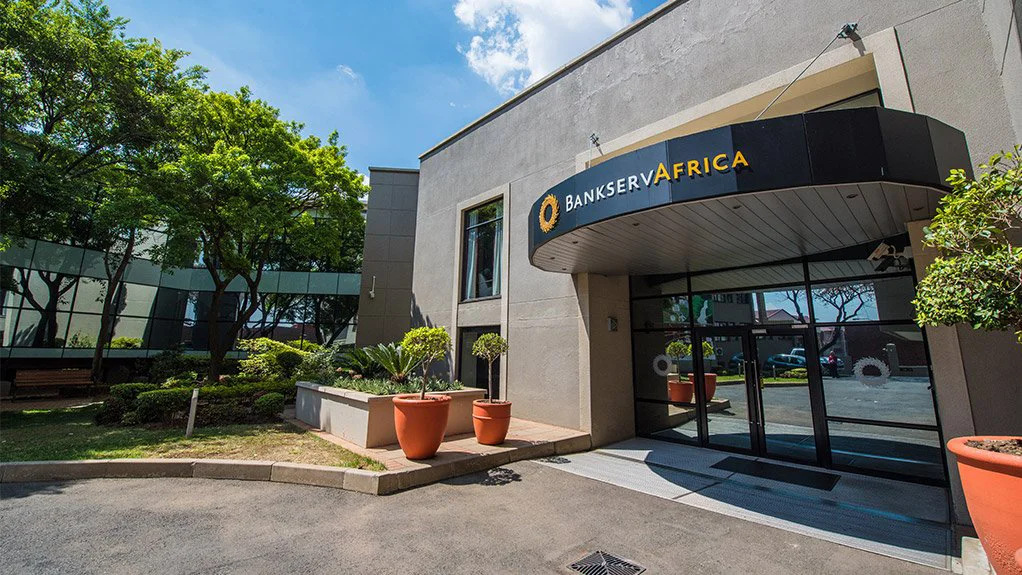
  • Moving money across African borders has always been complicated. Transactions take time to complete, when or if they do, and come with extra costs. When dollars or euros are involved, exchange rates fluctuate, compliance checks hold up settlements, and companies are left scrambling to cover gaps.

    Codex, a global blockchain startup, is wagering that a narrow focus can fix this. It is building a blockchain that supports only one thing—stablecoins. Most blockchains try to do many things at once, hosting thousands of tokens and apps. Codex’s bet is that by focusing only on stablecoins, it can make payments faster and easier across borders.

    Founded by Haonan Li, Victor Yaw, and Momo Ong, Codex came out of stealth in April 2025 after raising $15.8 million to build a blockchain designed for stablecoins only. The seed round was led by Dragonfly Capital, with additional participation from Coinbase, Circle, Cumberland Labs, Wintermute Ventures and others.

    Codex competes in the global $230 billion stablecoin infrastructure market, where the demand for fiat-backed digital assets is growing and regulators are beginning to align around them. The startup is already active in Europe and North America, but its eyes are now on Africa, where cross-border payments remain one of the continent’s thorniest financial problems.

    Get The Best African Tech Newsletters In Your Inbox

    A market defined by friction

    To understand Codex’s play, it helps to first look at how money actually moves in and out of Africa today. Sending money from Lagos to Accra can take days, with multiple middlemen adding fees and delays. Digital transfers also face blockages once currencies change. This creates uncertainty and pushes up transaction costs for businesses and consumers.

    Stablecoins were supposed to solve this. These are digital tokens pegged to real-world currencies like the US dollar or the Euro. A Nigerian company can hold digital dollars on-chain, send them across the world in minutes, and then cash out locally. Yet in practice, stablecoins rarely behave like perfect dollars. The exchange rate can shift depending on the platform, the chain, or the compliance checks involved.

    “One USDC does not always equal one US dollar when you off-ramp into local currencies,” said Oluwaferanmi Ajetomobi, Codex’s Africa expansion lead. “You see differences in price across exchanges, across countries, across compliance checks. That lack of singleness is what Codex wants to solve.”

    That “singleness of money” is the critical gap Codex says it was built to close.

    Codex’s big bet

    Codex runs as a Layer 2 blockchain on Optimism, which means it is built on Ethereum but optimised for speed and lower fees. It is not trying to host all kinds of tokens. Instead, it focuses only on stablecoins, making them equal and interchangeable across markets.

    The chain already supports USDC and USDT, two of the most widely used stablecoins, and is preparing to integrate Nigeria’s cNGN. 

    Codex has also drawn a firm line on what types of stablecoins it will support. Ajetomobi said the blockchain will not list algorithmic stablecoins, pointing to the collapse of Terra’s UST in 2022 as a cautionary tale. Algorithmic stablecoins tried to hold their value using formulas and automatic trades instead of being backed by real dollars in reserve. 

    When UST lost its peg, it triggered a chain reaction that erased more than $40 billion in value and damaged trust across the industry. Steering clear of that model signals that Codex only wants fiat-backed stablecoins, the versions that regulators are warming up to, and that businesses already use for payments.

    “We only list fiat-backed stablecoins, and we work closely with issuers to ensure there is real demand,” said Ajetomobi.

    Codex has built what it calls “Swap Avenue,” a product that allows instant swaps across different stablecoins and chains. A company can hold a single Codex balance and move stablecoins to Solana, Polygon, Ethereum, or Tron in seconds, without juggling accounts across multiple blockchains. The transaction fees are paid in USDC, which simplifies accounting for firms used to reconciling charges in volatile digital assets like $ETH or $SOL.

    Global players have taken notice. Trading firm Wintermute is already a customer. In Nigeria, Codex has partnered with Canza Finance and is preparing an integration with Blockradar, a custodial platform that services African fintechs.

    Why Africa matters in Codex’s strategy

    Codex is rolling out globally, but Africa stands out as a proving ground. Cross-border payments remain expensive and unreliable, and intra-African trade is still hampered by mismatched currencies and poor settlement systems. Crypto remittance flows into the continent crossed $100 billion in 2024, with nearly half of it routing through stablecoins.

    “Moving money from Nigeria to Ghana is trouble. Moving money from Nigeria to a French-speaking country is trouble. Stablecoins are already being used in these corridors, but the settlements are inefficient.”

    Codex believes that by making stablecoins more predictable and liquid, it can become the default settlement layer for African fintechs, remittance providers, and eventually, banks. The company is setting its sights on Nigeria, Kenya, Ghana, Uganda, Morocco, and South Africa.

    Regulation as the deciding factor

    The bigger stakes may lie in regulation. Most African countries have yet to define rules for stablecoins, and those that have, like South Africa, still stop short of detailed frameworks. Codex is attempting to pre-empt the uncertainty by making compliance part of the blockchain itself.

    Transactions on Codex run through built-in anti-money laundering (AML) checks, identity verification, and fiat integrations. If a payment fails compliance, the system reverses it instantly rather than letting it get stuck in a bank’s queue.

    “We are compliance-first,” said Ajetomobi. “We want to ensure that any money leaving Codex for a bank account is 100 percent clean before it settles.”

    This approach could appeal to regulators, but it could also slow adoption among businesses used to more flexible systems. The risk, as with any crypto infrastructure, is that sudden regulatory crackdowns disrupt growth just as the market begins to scale.

    Get The Best African Tech Newsletters In Your Inbox

    What success looks like for Codex 

    Codex’s roadmap is ambitious. It wants to enable instant fiat settlement (known as T+0) and support regional stablecoins, as well as potential franc- and shilling-backed tokens. The company has set a target of capturing a quarter of corporate stablecoin flows in Africa within the next year.

    The blockchain company’s value will be measured by the quality of its clients and the scale of real-world flows on its rails, said Ajetomobi.

    “We are not here to attract noise,” he said. “Our goal is to bring in names that matter and to handle huge volumes.”

    If Codex delivers, it could become the backbone of Africa’s cross-border payment infrastructure, smoothing the flows that underpin remittances and trade. If it does not, it will be another blockchain in a crowded global market, competing against giants like Circle and Tether that are already racing to control the stablecoin infrastructure rails.

    With players like Codex entering the African Web3 market, it is becoming clear that there’s a real adoption potential for these global players. Stablecoins, too, are no longer a side story in crypto.

    In Africa, there are early signs that these digital assets could become a practical bridge between decentralised and traditional finance. Codex is betting that a stablecoin-only blockchain can become the settlement layer for that bridge.

    Mark your calendars! Moonshot by TechCabal is back in Lagos on October 15–16! Join Africa’s top founders, creatives & tech leaders for 2 days of keynotes, mixers & future-forward ideas. Early bird tickets now 20% off—don’t snooze! moonshot.techcabal.com

  • Foreign direct investment (FDI) in Nigeria’s telecom sector has slumped to its lowest in over a decade, but industry leaders expect inflows to rebound from late 2025 into 2026 as currency stability and tariff hikes restore investor confidence.

    Telecoms attracted just $80.78 million in FDI in the first quarter of 2025, a 57.8% drop from $191.57 million a year earlier, according to the National Bureau of Statistics. That’s a steep fall from the $994.33 million peak recorded in 2014. Although inflows briefly rebounded to $944.05 million in 2019, they haven’t crossed the $500 million mark since.

    Industry players blame this decline on years of price controls that ignored market realities and the country’s volatile foreign exchange regime.

    “Investments will not continue to come. No one will put in a dollar and continue to get 66 cents… We are in a big crisis,” said Karl Toriola, CEO of MTN Nigeria, at the Financial Derivatives Company Telecoms Industry 2.0: The Next Investment Frontier in Nigeria in 2024. 

    Before 2023, Nigeria operated a pegged exchange rate system. A collapse in oil earnings, especially in 2020, forced businesses to source dollars from the parallel market at steep premiums, creating spreads as wide as 40% between official and black market rates.

    The Central Bank of Nigeria eventually abolished the peg in June 2023, but the move triggered a steep naira slide, from ₦471/$ before stabilising at around ₦1,500/$ in 2025 — ₦1,536/$ as of August 26, 2025.

    The initial volatility reduced investors’ appetite, according to Gbenga Adebayo, chairman of the Association of Licensed Telecom Operators of Nigeria (ALTON).

    “While we trade in naira, a lot of our inputs are foreign exchange dependent — equipment, hardware, software, bandwidth, satellites. They are all dollar-denominated,” he said.

    However, a combination of factors, including the stability of the naira and the approval of a 50% hike in telecom tariffs, is turning the tide.

    “Investors plan based on forecasts. Decisions for 2025 were made last year when the industry was struggling,” Adebayo said. “We expect the second half of this year and early 2026 to show improvements, barring any shocks.”

    He noted that since most investors in the space are deep-pocketed with patient capital, certainty plays a big role in their decisions.

    “The market leaders of today are those who invested at the right time in the years past. Yes. They are the market leaders of today,” he said.

    However, telecom operators are not waiting for foreign capital as they are deploying $1 billion in their businesses in 2025. This signals a rebound, and according to Adebayo, “the industry is now back on the path of sustainability.”

    Mark your calendars! Moonshot by TechCabal is back in Lagos on October 15–16! Join Africa’s top founders, creatives & tech leaders for 2 days of keynotes, mixers & future-forward ideas. Early bird tickets now 20% off—don’t snooze! moonshot.techcabal.com
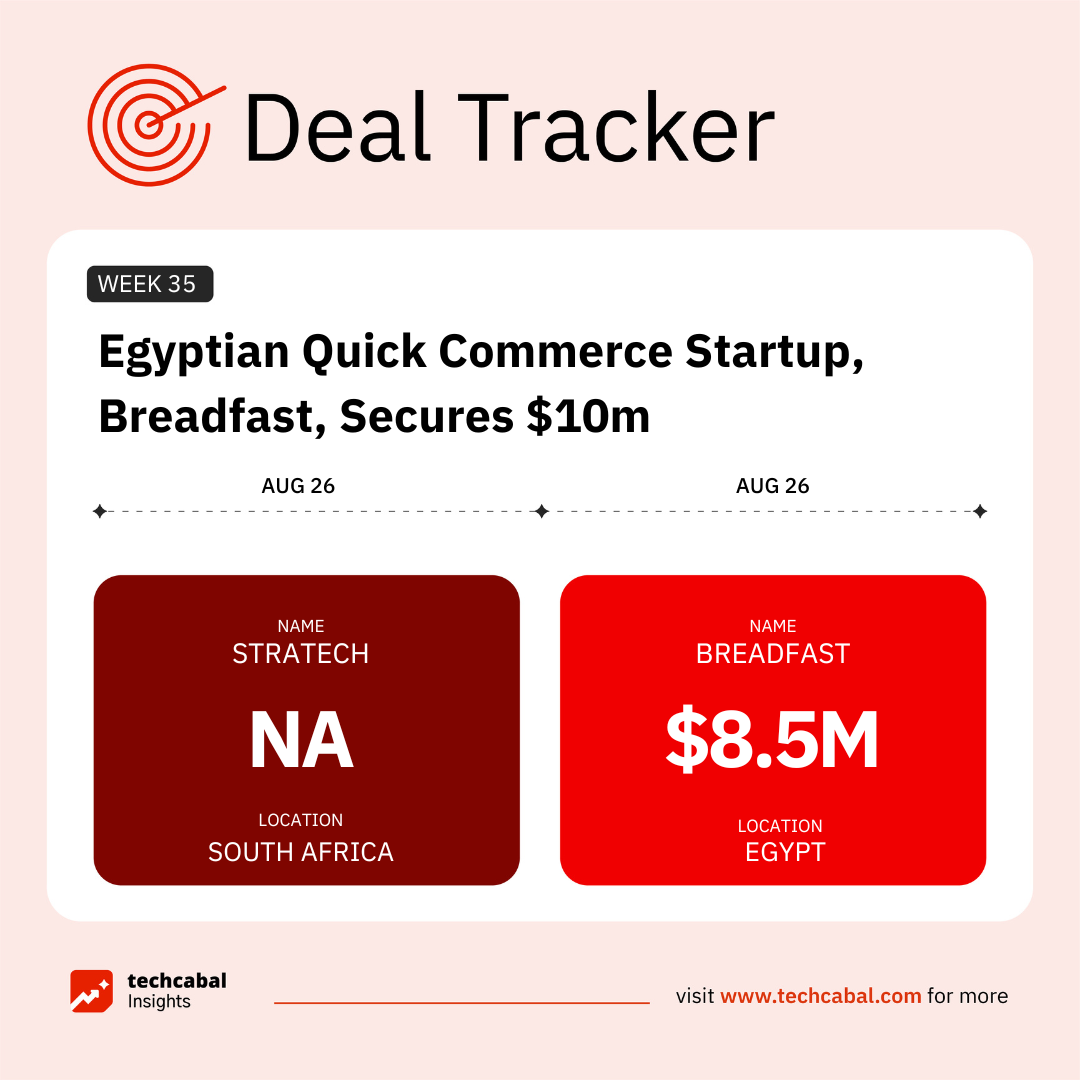
  • Table of contents

    Where to buy authentic tech gadgets online

    Where to buy authentic tech gadgets in physical stores

    Payments, warranties, and protection

    How to buy safely in Nigeria

    Buying a tech gadget in Nigeria can feel like gambling. Between counterfeit phones, cloned laptops, and refurbished items sold as brand new, it’s easy to spend hundreds of thousands of naira on a device that won’t last. Our earlier guide on identifying authentic tech gadgets in Nigeria covered this problem, sharing practical tips to help you spot fake devices before parting with your money.

    Spotting a fake is one thing. Finding a place to buy the real deal is another challenge entirely. In Nigeria’s gadget market—where counterfeits often sit side by side with originals—knowing where to shop can make all the difference.

    In this guide, we return to the experts we interviewed in our earlier piece on identifying fake gadgets. This time, they share their best advice on where to safely buy authentic devices, so you don’t have to second-guess every purchase.

    Where to buy authentic tech gadgets online in Nigeria

    Buying gadgets online in Nigeria offers convenience, variety, and competitive prices, but it also carries the risk of ending up with counterfeits or refurbished devices To help you shop smarter, let’s look at the biggest online platforms and the more trusted specialist stores, plus payment options like “Buy Now, Pay Later” that many Nigerians now use.

    1. Jumia & Konga

    Jumia and Konga are some of Nigeria’s most significant online marketplaces. You can find almost anything on them, from phones and laptops to everyday household items. Their wide range of sellers gives you options and often lower prices, making it harder to guarantee authenticity.

    Desmond, who runs DesonTechHub in Computer Village, explained it this way: “Jumia itself isn’t the problem, it’s the third-party sellers. You’re usually fine if you buy from the official or branded stores listed on Jumia. But random sellers? That’s where fake gadgets sneak in.”

    Konga, on the other hand, enjoys slightly better trust. Chioma, a sales rep at BrightTech Hub, shared her experience: “Konga feels safer because they push vetted sellers and their return policy works. But still, I always tell people to carefully check the seller’s name. Don’t just assume it’s authentic because it’s on Konga.”

    Jumia and Konga are convenient, affordable, and popular, but you need to be careful; always check reviews, ratings, and seller information before placing an order.

    2. Specialist stores

    Unlike general marketplaces, specialist stores deal exclusively in gadgets and electronics, which makes their sourcing stricter and their reputations stronger. Take Slot, for instance: it’s widely known for phones and accessories, and customers trust it for genuine products, warranties, and clear return policies. Because these retailers trade on brand credibility, they can’t afford to risk selling counterfeits. For buyers, especially when purchasing big-ticket devices, specialist stores remain a safer bet than larger marketplaces.

    3. “Buy Now, Pay Later” (BNPL) option

    With gadgets becoming more expensive, many Nigerians use “Buy Now, Pay Later” services. These platforms let you spread payments over weeks or months instead of paying the full amount upfront.

    CDcare, for example, delivers your gadget after you’ve paid just 50% of the cost, with the rest spread over a 2-month plan. This model builds trust because the company is confident enough to give you the product before you finish paying.

    BNPL services make it easier to buy genuine gadgets without breaking the bank at once. They also reduce the risk of scams since you’re not handing over your full payment upfront to an untrusted seller.

    Where to buy authentic tech gadgets in physical stores

    Regarding tech gadgets in Nigeria, open markets and retail chains remain very popular. The most famous of all is Computer Village in Ikeja, but there are also nationwide stores that provide safer and more structured options. Let’s break it down so you know where and how to shop offline without losing money.

    1. Computer village, Ikeja

    Computer Village in Ikeja, Lagos, is Nigeria’s biggest gadget market. You can find everything here, from new phones and laptops to accessories and repair services. But while it’s convenient, the market also has a reputation for scams and fake products.

    The main risks usually come from roadside sellers and unregistered traders. These vendors often don’t have a shop or brand name to protect, so they’re most likely to push counterfeit or stolen items. Your best bet is to stick with proper shops that have a physical location and reputation to maintain.

    Frequent visitors always share the same advice:

    • Buy only from established shops, not street sellers.
    • Go with a tech-savvy friend or someone who knows trusted dealers.
    • Always check for warranties and receipts.
    • Inspect the gadget thoroughly before paying.

    As Desmond, who runs DesonTechHub inside Computer Village, put it: “The market works if you know where to look. Don’t buy from someone standing by the roadside waving a phone at you. Walk into a shop with a name, request a receipt and warranty, and test everything on the spot. That’s the only way Computer Village pays off.”

    Chioma, a sales rep at BrightTech Hub, explained another key step: “After testing, don’t let the seller take the phone back to ‘repackage’ it. Hold it yourself and walk out with it. Too many people test a phone, then end up with something different once it’s boxed.”

    Beyond fakes, there’s also the issue of stolen phones. The unnamed trader we spoke to was blunt about this risk: “People don’t realise some phones here are stolen from abroad and shipped in. Later, they’re reported stolen, and the buyer suffers. That’s why you must check the IMEI number online. A phone can look brand new but still get you in trouble.”

    2. Trusted retail chains across Nigeria

    Retail chains are safer if you prefer a more structured buying experience. The most significant benefit is that you can physically inspect a device before paying, which is something online shopping doesn’t fully offer.

    Some of the most trusted gadget chains in Nigeria include:

    • Slot – Known for genuine phones and accessories, plus warranty support.
    • Pointek – Popular for both wholesale and retail sales of mobile phones.
    • TD Gold Electronics (Abuja) – Offers fast delivery and secure payments for buyers in the capital.

    These stores thrive on their reputation, making them less likely to risk selling fake items. They also provide after-sales support, meaning you can return or exchange your gadget if you have issues.

    How to identify authentic tech gadgets in Nigeria

    Payments, warranties, and protection

    Buying the gadget is just the first step. How you pay, handle returns, and protect your device afterwards can make all the difference.

    1. Safer payment options

    Always choose secure payment methods:

    • Cards and bank transfers (MasterCard, Visa, Verve).
    • POS or transfer in Computer Village, avoid cash to prevent fake notes.
    • Buy Now, Pay Later (BNPL) is safer because a financial service is involved.

    2. Warranties and returns

    Your receipt or invoice is everything. Without it, you cannot return a gadget or claim a warranty. Policies vary:

    • Electromart: 3-day return for defects.
    • Konga: 7-day return window.
    • Some gadgets (especially phones/laptops) may be marked “non-returnable” unless they’re defective at delivery.

    Always inspect your gadget immediately upon arrival.

    3. Gadget insurance

    An emerging trend in Nigeria is device insurance. Companies like Prestige Assurance now offer gadget insurance covering theft and accidental damage. It costs extra but gives peace of mind, especially for high-value phones and laptops.

    How to buy safely in Nigeria

    Buying gadgets in Nigeria can be tricky, but you don’t have to fall for scams. Here are a few things to always keep in mind:

    • Pick the right seller: Only buy from shops or websites you trust.
    • Check before you pay: Look at the packaging, test the device, and confirm the IMEI or serial number on the brand’s website.
    • Ask for a receipt: This is the only way to claim a warranty or return the product if something goes wrong.
    • Listen to others: People often share honest experiences in online forums and groups, and use that to guide where you shop.
    • Protect your gadget: Get insurance or an extended warranty for peace of mind.

    Ultimately, being careful and asking the right questions will save you money and stress.

  • When Airtel Africa listed in London in June 2019, it raised nearly $700 million and successfully entered the FTSE 100 within two years. Helios Towers followed soon after, securing a $364 million IPO and joining the FTSE 250 within just two months. These examples show the scale, pace, and visibility African companies can achieve when they tap global capital markets.

    Yet for Africa’s new generation of high-growth, tech-driven companies, it’s been a road far less travelled. Legacy listing rules and the steep requirements of international exchanges were insurmountable barriers, leaving a gap between the continent’s burgeoning tech operators and its global capital offering – even as private capital continues to pour in, in record numbers. 

    Now, with London’s most significant listing reform in four decades – reducing the free-float requirement from 25% to 10%, removing the three-year revenue track record, and introducing other measures to speed up market entry – that trajectory may finally begin to change for African high-growth companies, if they seize the opportunity.

    Why IPO?

    An IPO is a transformational point in a company’s lifecycle, marking the moment a private company steps onto the global stage, standing shoulder to shoulder with international peers. It unlocks long-term capital, sustains growth, validates worth, and provides liquidity for shareholders and wider stakeholders alike. 

    The benefits ripple outward: a listing elevates a company’s brand, strengthens market positioning, and signals best-in-class as an operator, including governance. Customers, regulators, and investors notice. Employees feel it too, especially when they can own a part of the company they helped build, turning loyalty into active participation in growth.

    Public shares also become a strategic tool. Liquid and tradable, they can finance expansion, acquisitions, or talent incentives. For founders, IPOs offer a window to create a legacy without the need to step away. For investors, they provide clear pathways to liquid returns, reinforcing the case for investing more capital into African companies and markets. History reinforces this upside. IPOs as a global asset class have consistently outperformed benchmarks.     

    London: Africa’s gateway to global capital

    For African founders, choosing where to list is as important as deciding to list at all. London has been a financing partner for Africa for almost a century, offering companies both growth capital and global visibility through the London Stock Exchange.

    Today, the LSE hosts about 110 African companies from over 20 countries, with a combined market capitalisation of over $110 billion, and has facilitated 90%+ of the continent’s international bond listings since 2023. 

    The market also offers a unique advantage of dual listings. Today, about fifty African companies have chosen to list both at home and in London, with some in an additional market, gaining access to international investors, global liquidity, and a platform for strategic acquisitions, without abandoning their local roots. Seplat Energy, for example, is listed in London and later used its shares to acquire $1.3 billion of ExxonMobil assets in Nigeria, with its LSE share price climbing 30% since the deal announcement (73% YTD).

    Over a third of LSE-listed companies are international, giving London unmatched global reach. International investors own about 60% of the listed shares, against a backdrop of the UK’s £10.9tn asset management industry (3.6x the country’s 2023 GDP) 

    These are very interesting numbers, especially given the rarity of IPOs in Africa (of late), but they also signal the significant opportunities the new generation of companies on the continent, no matter the size, can tap into.

    AIM: Charting the path to London’s main market

    We must, however, acknowledge the current reality that not all African tech-driven companies are yet suited for the Main Market. The Alternative Investment Market (or AIM), established in 1995, however, provides a flexible, growth-friendly alternative. It acts less like a final destination and more like a launchpad, enabling founders to access public capital early while operating under a lighter regulatory framework suited to lean, founder-led companies. 

    AIM’s rules are intentionally lighter, offering a flexible, principles-based system centred on nominated advisers (or Nomads). Unlike the main market, it requires no revenue track record, minimum market cap, or free float. Its structure reduces listing costs and streamlines reporting. More than 60% of AIM-listed firms receive dedicated broker and analyst coverage, offering visibility that many private or smaller companies struggle to achieve on other exchanges.

    AIM-listed companies can access a distinct segment of the UK investor base, including those participating in Venture Capital Trusts (VCTs) and Enterprise Investment Scheme (EIS) funds, which are designed to support high-growth businesses and incentivised by UK tax incentives. This investor appetite contributes to the UK’s thriving tech sector, valued at over £1 trillion, and demonstrates the depth of capital available for innovative companies navigating the early stages of growth.

    Bridging the IPO-readiness gap

    Even with London’s reforms, becoming IPO-ready remains a multi-year journey. Working with quality advisers who target Africa is key, their guidance clarifies the refining the equity story, choosing a favourable location for a topco’s incorporation, strengthening governance and financial reporting, shoring up internal controls and risk management, and finally evaluating the appropriate public market (AIM or Main Market). Timelines can accelerate (or slow) depending on internal readiness. 

    The key lesson is that the earlier a company begins its preparation (whether pursuing a private or a public raise), the more effectively it will leverage the global network of advisors, investors, and capital markets to accelerate growth and opportunity.

    ______

    Tracey Austin is the Sector Director for Financial & Professional Services at the UK’s Department for Business & Trade (DBT). She has over 25 years of experience in banking and investing across most of Africa and other key emerging markets.

    Mark your calendars! Moonshot by TechCabal is back in Lagos on October 15–16! Join Africa’s top founders, creatives & tech leaders for 2 days of keynotes, mixers & future-forward ideas. Early bird tickets now 20% off—don’t snooze! moonshot.techcabal.com
  • AyaHQ, a pan-African Web3 talent development startup, is in talks with investors to raise $10 million, with plans to split the funds between a $5 million microfund for incubated startups and a special economic zone in Accra that will double as a founder campus and residency.

    The startup is betting on Africa’s emerging blockchain sector. By creating a collective pool of talent backed by training and equity-based incentives, AyaHQ wants to strengthen an ecosystem where several startups, including Nigeria’s LazerPay, VIBRA, and South Africa’s Momint, have folded within four years due to funding and regulatory challenges. If AyaHQ’s strategy works, it could give investors a de-risked entry into Africa’s crypto sector and allow founders to build with long-term support.

    Founded in 2020 by Eric Annan, Pishikeni Tukura, and Dennis Ukonu, AyaHQ began by connecting African developers with global Web3 jobs. Its first venture, Ayagigs, launched in 2021 as a marketplace modelled after Fiverr and Upwork, but it struggled to scale and was closed the following year. 

    AyaHQ has since repositioned itself as a collective incubator that provides training, incubation and founder residencies in Ghana and Kenya, supporting over 50 startups.

    “Aya is a trust layer,” Annan said in an interview. “ It is not just about talent. It is about collaboration and building conviction together.” 

    Get The Best African Tech Newsletters In Your Inbox

    The startup has raised about $1 million in total funding, including equity and grants. Backers include Flori Ventures, Orange DAO and Techstars Crypto Boston, an accelerator run by the firm, which invested $120,000 in the startup’s only publicly disclosed round in 2022. Coinbase also provided a grant that financed AyaHQ’s first training cohort, which drew 8,000 applications from 34 countries for just 350 places.

    AyaHQ’s model is built around equity stakes. It takes 2% of every incubated company. AyaHQ owns 1% of every Web3 startup in its ecosystem, while the other 1% is pooled and shared across all founders in a community-like play. This makes every founder a co-owner in every startup incubated by AyaHQ, incentivising them to share advice, mentorship, connections, resources, and often, talent, with other co-builders in the ecosystem.

    AyaHQ-incubated startups do not share profit with the company, since the equity AyaHQ holds is a long-term play rather than an immediate revenue arrangement, giving them confidence to build, said Annan. With a microfund, that confidence will grow further as AyaHQ begins to directly back its startups with capital, putting money behind its ambitions.

    Vicentia Asilevi, co-founder of Soccersm, a Web3 e-tournament hosting platform, one of the ventures incubated by AyaHQ, confirmed this arrangement to TechCabal.

    “We are an AyaHQ incubated company, and AyaHQ has 2% equity in Soccersm with no profit share agreement,” said Vicentia. “We are also aware that of the 2% equity, AyaHQ only has 1%, while the remaining 1% goes into the collective pool managed by AyaHQ.”

    AyaHQ’s portfolio includes 50 startups operating in payments, gaming, edtech and decentralised finance (DeFi). The startups are small and mostly pre-revenue, but AyaHQ views the equity as a future asset. The value is only realised if companies in the portfolio raise funding, are acquired, or go public.

    AyaHQ also runs AyaLabs, a technology platform that functions as an end-to-end infrastructure for Web3 hackathons and developer experiments. Inspired by global players such as DoraHacks, AyaLabs allows blockchain companies and organisations to host hackathons, run bounties and reward developers directly on the platform. 

    Since launch, AyaLabs has attracted nearly 5,000 developers, hosted more than 100 hackathons, and distributed close to $100,000 in prizes, Annan said. AyaHQ monetises the platform by charging blockchain companies to engage developers and run product tests.

    AyaHQ also makes money from providing incubation services for blockchains. Its most prominent partnership is with Lisk, a layer 2 blockchain company. AyaHQ-incubated startups are encouraged to build on Lisk but are not barred from integrating other blockchains later.

    “Our incubation-as-a-service is generating revenues for AyaHQ at the moment. We are presently working exclusively with Lisk but will entertain other conversations once our contract lapses,” Annan said.

    18 blockchain ecosystems driving Africa’s Web3 growth amid investor pullback

    The partnership is crucial as it connects AyaHQ’s growth trajectory with Lisk’s push for adoption in Africa. As more startups launch on Lisk, it increases the transaction volumes and total value locked (TVL)—a key adoption metric—on the blockchain. AyaHQ and Lisk review the partnership terms yearly, but Annan declined to disclose its monetary value of that deal.

    AyaHQ disclosed it earned $350,000 in revenue in 2024 and has about six to ten months of runway left. The $10 million the startup is seeking would extend that runway. The microfund would allow AyaHQ to write cheques of $25,000–$50,000 for early-stage Web3 startups, while the rest would fund its physical campus in Accra and a second hub in Kilifi, Kenya.

    The Web3 startup, primarily pan-African, has previously run programmes, hackathons, and roadshows across Ghana, Kenya, Nigeria, Rwanda, Uganda, and South Africa. Its expansion plans are pinned on building residencies into what Annan calls “tech campuses” that provide housing, workspace and incubation under one roof. AyaHQ says in-person incubation delivers stronger results than virtual programmes, hence why these campuses strongly underpin its expansion plans.

    Get The Best African Tech Newsletters In Your Inbox

    Across major crypto hubs in Africa, there is a strong competition among Web3 edtech and talent development startups. Web3Bridge, a Nigerian startup, runs training programmes for blockchain developers, and smaller accelerators across Kenya and South Africa are also building talent pipelines. Yet AyaHQ frames its model less as competition and more as collaboration. It has already partnered with Web3Bridge to share resources and training.

    “Our biggest competition is ourselves,” said Annan. “There are more than a billion people in Africa. Even if [AyaHQ] decides to build the talent layer for the continent, we cannot do everything. So we think about collaboration.”

    AyaHQ’s ambitions are big, but so is its founder’s conviction. Annan co-built Nigeria’s first stablecoin project, NGNX, in 2019, which failed to gain traction, and later launched Digital Kudi, an over-the-counter (OTC) platform that allowed people to buy crypto, which also folded. Yet he remains optimistic that this time, AyaHQ is on the right track.

    “I believe blockchain needs Africa more than Africa needs blockchain. AyaHQ is building the trust layer that will unlock that future,” said Annan.

    Mark your calendars! Moonshot by TechCabal is back in Lagos on October 15–16! Join Africa’s top founders, creatives & tech leaders for 2 days of keynotes, mixers & future-forward ideas. Early bird tickets now 20% off—don’t snooze! moonshot.techcabal.com

  • On a Tuesday morning in Johannesburg, Chenai Chair is still carrying the energy of Kigali where,  just a week earlier, she attended a Deep Learning Indaba summit—the continent’s biggest AI gathering. She is doing what she often does after major conferences: sitting quietly, sifting through the noise of the previous week, pulling out the threads worth keeping.  

    Her desk is scattered with notes. One pile is about Masakhane’s African Languages Hub, which she leads. Another is for My Data Rights, the feminist group she founded. The rest are everyday tasks: budgets, reports, and memos. Some people might see these as too many things to juggle. But for Chair, they all fit together. “I exist in multiplicity,” she says, 

    That multiplicity is what makes her day complicated: one hour she’s thinking about how to fund natural language processing for African languages, which she believes must not be left behind in the AI revolution. The next, she is thinking about how to unpack gender inequality in AI policy, the next about filing the paperwork that keeps all of this running. 

    A sociologist meets tech

    Chair did not set out to be in tech. She was by training, a sociologist. Her first serious encounter with technology as something more than gadgets came while working on her master’s thesis at the University of Cape Town. She wanted to understand how women in Khayelitsha — one of South Africa’s largest townships — were using mobile phones. What she found was both ordinary and revolutionary. Women posted on Facebook to attract customers for their home businesses. Younger family members, more digitally fluent, managed household enterprises on behalf of their elders. And yet, cultural norms meant that even when women bought their own devices, men in their households often dictated how they were used.

    “It hit me,” Chair recalls. “Technology is never just about the gadget. It’s mediated by social norms, by culture, by trust. For tech to work, you have to understand the social fabric that surrounds it.”

    That sociological framing—technology as a human, social, and political phenomenon—has shaped her career ever since.

    The rooms that shaped her

    Chair’s early professional years started with an internship at Research ICT Africa, collecting data on mobile phone costs and mapping internet usage in Africa. There she met mentors who widened her lens — academics like Dr. Alison Gillwald, feminists from the Association for Progressive Communications, Emilar Vushe Ghandi, Jan Moolman, and Jac sm Kee, and colleagues from across Africa, Asia, and Latin America who taught her that technology policy was also about power, equity, and justice.

    Later, global feminist networks pulled her deeper into questions of gender and digital rights. Programs like the Gender and Internet Governance Exchange exposed her to women and queer activists who were carving out space in male-dominated policy rooms. “I found myself in rooms where being curious and playful was uplifted,” she says. “It allowed me to continue on the tech journey, even when people did not understand what I was doing if I was not building an app.”

    For Chair, those networks were not just professional. In a field where structural racism and gendered exclusions were constant barriers, community became both shield and strategy. “I was never really alone. There was always someone I could call—sometimes from another country, sometimes from another discipline—who understood and who strategised with me on how we uplift each other.”

    If there is a hidden chapter in her story, it is this: survival through community. For every conference panel where she was the only African woman in the room, there was a late-night conversation with peers from Brazil, India, or Kenya — a shared laugh about visa struggles, a whispered strategy on how to uplift each other, a vow not to let exhaustion isolate them.

    Get The Best African Tech Newsletters In Your Inbox

    The hard stops and the reset

    After working for years as part of organisations from Research ICT Africa to World Wide Web Foundation, and Mozilla Foundation, Chair was navigating what she calls “the song and dance” of convincing funders to see value in African projects. She admits,  “It was just too much.” “Having to prove that you are an expert in your own region, negotiating structures that were not designed for you, dealing with biases so subtle they eat away at you.”

    “I took nine months off,” she says. “It was a privilege, yes, but I needed that time to recalibrate and ask myself what I truly wanted to commit to.”

    When she returned, it was with renewed clarity: she would continue working at the intersection of tech and society, but on her terms — centering community, uplifting overlooked voices, and making space for others to lead.

    Multiplicity in leadership

    Today, Chair is director at the Masakhane African Languages Hub, where she oversees investments into natural language processing for African languages. At My Data Rights, she nurtures a feminist platform that produces open-source knowledge about technology’s impact on society. And across both, she acts as a connector, introducing young researchers to opportunities, naming them in rooms where she herself is invited, declining panels so others can take her place.

    Leadership, for Chair, is less about authority, but knowing when to speak, when to hold space, and when to step back. “It’s not about being the only person in the room,” she says. “It’s about making sure others are visible, that panels do not recycle the same names, making sure young African women find doors open for them.”

    Her proudest moments are not tied to her own accolades, but to the success of communities she has resourced. She lights up when recalling a project in the Democratic Republic of Congo that developed tools to help women understand land rights, or when young researchers thank her for insights that shaped their work. “That’s the wow moment,” she says. “When someone tells me, your presence in the room made me feel like I could do it too.”

    Balancing principle and ambition

    Chair is candid about the harder parts of the journey such as structural racism. The subtle codes of global diplomacy that force Africans to constantly prove themselves. The reality that, as an African woman, some doors will open only halfway, if at all.

    Her strategy is to name these barriers for what they are — structural, not personal — and then decide what is hers to change and what is simply to be documented. “You cannot carry it all,” she says. “Sometimes you just do the work because you believe in it, and you hope others will catch up.”

    “It’s about being very clear on my why,” she says. “And your why changes. At first it’s just to get a job. Later it becomes about care — care for yourself, care in the work, care for others. You have to keep checking if your why still aligns with what you are doing.”

    The work ahead

    The next few years will be full. Masakhane’s African Languages Hub is preparing its first major investments in natural language processing, building datasets in multiple African languages and publishing playbooks for how to engage ethically with communities. My Data Rights is consolidating as a feminist knowledge platform, curating open resources on tech and society, and grooming new leaders to take the baton.

    Chair insists that much of this will happen in the background, by design. She sees herself as a connector, not a spotlight seeker. It’s about how we leverage resources, credibility and trust in order to ensure that other people are being uplifted as well,” she says. 

    Mark your calendars! Moonshot by TechCabal is back in Lagos on October 15–16! Join Africa’s top founders, creatives & tech leaders for 2 days of keynotes, mixers & future-forward ideas. Early bird tickets now 20% off—don’t snooze! moonshot.techcabal.com

  • In partnership with
    Fincra logo
    Lire en Français
    اقرأ هذا باللغة العربية

    Howdy. ☀️

    Both Nigeria and Kenya are moving to tighten data quality in their financial systems. On Tuesday, Nigeria’s central bank ordered all banks, mobile money firms, and payment providers to adopt the ISO 20022 messaging standard and geo-tag all payment terminals by October 31. In Kenya, the central bank has approved ValiData, a tool that helps banks verify borrower information and cut credit risk. Together, the two regulators are pushing for cleaner data and stronger oversight as lending and payments grow across the continent.

    Let’s dive in.

    today's edition image
    • Kenya approves ValiData to tighten credit discipline
    • Nigeria to launch a central data platform by end of 2025
    • Kenyan banks lose income on loans as interest rates fall
    • Standard Bank debuts virtual cards
    • World Wide Web 3
    • Opportunities

    Banking

    Kenya’s Central Bank approves ValiData to tighten credit discipline in banking

    Image Source: Meme Arsenal

    In lending, the data and tools for writing loans are as important as having capital to give out. For years, this mismatch between the tools of the trade and the available capital has been a contentious problem for Kenyan lenders, resulting in poor assessments and piles of bad loans.

    The ripple effects are now playing out between banks and the Central Bank of Kenya (CBK), with the regulator cutting benchmark rates while banks hesitate to follow suit.

    On August 26, the CBK approved ValiData, a due diligence tool built by the country’s Credit Information Sharing Association. ValiData acts as a filter inside each bank, checking loan files against industry rules.

    State of play: The tool checks that mandatory fields are filled, formats are correct, IDs are valid, and there are no duplicates or obvious errors. Each batch of records is scored, and if fewer than 80% pass, the system blocks the submission and sends it back to the bank to fix before anything goes to the credit bureaus.

    Between the lines: When credit bureaus receive quality data, banks get a clearer view of risk, which helps them cut bad loans, price credit fairly, and lend more confidently. Kenyan banks say ValiData delivers on this promise, calling it a move that strengthens the country’s entire credit market.

    Zoom out: More than a decade in the making, the project began as a central hub before evolving into secure in-house software for banks. Backed by the Bill & Melinda Gates Foundation through FSD Kenya, it’s now rolling out nationwide.

    eCommerce Without Borders: Get Paid Faster Worldwide

    Whether you sell in Lagos or Nairobi, customers want local ways to pay. Let shoppers check out in their local currency, using cards, bank transfers, or mobile money. Set up seamless payments for your global online store with Fincra today.

    Get The Best African Tech Newsletters In Your Inbox

    Government

    Nigeria is tired of asking for the same data over and over again

    Image Source: Zikoko Memes

    If you’re Nigerian, you know the drill: one government office wants your National Identification Number (NIN), the next wants the same NIN plus your Bank Verification Number (BVN). Walk into yet another establishment, and now it’s your NIN, BVN, and Driver’s License that is being requested. Same data, different desks. Nigeria is finally saying, “Enough is enough.”

    By the end of 2025, the government will roll out the Nigerian Data Exchange (NGDX). This central platform enables government agencies to pull verified data directly, eliminating the need for resubmission.

    How will it work? Authorised Ministries, Departments, and Agencies (MDAs) will be able to log in to a unified backend to access citizens’ data. This platform will also allow private companies like fintechs and startups to tap into anonymised datasets for new users’ KYC verification and to provide healthtech, agri-tech, and edu-tech solutions.

    For years, Nigerians have been asking why multiple registrations exist despite the existence of NIN, BVN, and SIM linkage efforts. NGDX is the government’s response to that query.

    On the flip side: centralising that much sensitive data raises the stakes. The first quarter of 2025 saw 119,000 data breaches recorded in Nigeria alone. In June 2024, a report revealed that unauthorised websites were providing access to sensitive data of Nigerians for as low as $0.065.

    If NGDX is going to hold Nigeria’s most important citizen data, it must be strong enough to actually keep it safe.

    Shop anywhere with Paga’s physical prepaid card

    Own every checkout with Paga’s Physical Prepaid Card. Suitable for all your security and speed needs. Just fund, shop, and pay anywhere with confidence. Get yours today.

    Banking

    Kenyan banks feel the pinch of cheaper loans

    Image Source: Imgflip

    In more banking news from Kenya, the Central Bank’s rate cuts are showing up in bank earnings. After slashing the base rate from 13% in February 2024 to 9.5% this August, banks have seen their interest income shrink. Half-year results from Absa, Equity, Standard Chartered, Family Bank, and DTB all reveal thinner returns from lending.

    Between the lines: Absa’s loan income dropped by nearly KES5 billion ($39 million) year-on-year (YoY) to KES22.4 billion ($174 million), while Standard Chartered saw a 10.4% decline during the same period. Equity Bank managed to lift net interest income by slashing deposit costs, and KCB bucked the trend with loan income growth.

    Catch up: Lower rates were supposed to stimulate borrowing, but weaker household incomes meant many customers held back. Banks leaned more on government securities, but as yields fell there too, institutions like Equity and Family Bank are now pledging to rotate cash back into private-sector loans.

    Zoom out: Yet the squeeze shows how rate policy filters into bank strategy. As government paper becomes less attractive, lenders face pressure to take on more private credit risk. This could be good news for businesses and households starved of affordable loans—provided banks can keep a lid on bad debt.

    It’s no wonder Kenyan banks are backing a tool like ValiData. A more decisive way to lend effectively, cut risk, and grow private loan books is the next frontier for gains. The Central Bank is showing no sign of stopping rate cuts, and with yields on government securities falling (averaging 8% returns), the way forward is to repair lending.

    Here’s what happened at Paystack in 2024!

    See what Paystack built last year! From major product upgrades to new ways we supported African businesses. Check out our Year in Review →

    Get The Best African Tech Newsletters In Your Inbox

    Banking

    Standard Bank bets on 100% fraud protection with a newly launched virtual card

    Image Source: Daily Investor

    In South Africa, your money is now insured against card fraud (if you meet the conditions).

    South Africans just got a new weapon against online fraud with Standard Bank’s newly launched virtual credit card. The bank says it’s so confident in its security upgrades that it is promising a 100% refund if your virtual card is ever used fraudulently.

    That’s the headline, but how does the card protect you? The card is created on the banking app. It is loaded with security features, including a dynamic card verification value (CVV) that changes every time you initiate a transaction and screening tools that tell users what merchants have saved their card details.

    Before you celebrate, this money-back guarantee comes with a few conditions. You’ll only get a refund if you didn’t authorise the transaction, if you reported it within two days, or if the transaction wasn’t from a trusted device. If your phone with the virtual card gets stolen and is used in a transaction, you will most likely not receive a refund.

    Why it matters: South Africa’s Financial Ombud Scheme recorded a 73% year-on-year increase in digital banking fraud complaints between January and May 2025. Standard Bank’s new virtual card is promising insurance and reassurance. 

    The refund promise is a bold move, but a refund doesn’t stop scammers from trying. It just means the bank, not you, will carry the loss. But with Standard Bank’s confidence in their product, it’s clear they’re not too worried about fraud happening.

    Receive up to $50,000 in funding at Mest Africa

    $50K in funding, mentorship opportunities, global visibility & so much more! If you’re building FinTech—or a startup with embedded FinTech rails in Africa —this is your launchpad. Apply now for the MEST Africa Challenge 2025 →

    CRYPTO TRACKER

    The World Wide Web3

    Source:

    CoinMarketCap logo

    Coin Name

    Current Value

    Day

    Month

    Bitcoin $111,414

    + 1.62%

    – 6.96%

    Ether $4,585

    + 4.16%

    + 17.53%

    Cronos $0.2069

    + 31.63%

    + 42.82%

    Solana $196.53

    + 5.97%

    + 4.00%

    * Data as of 03.30 PM WAT, August 27, 2025.

    Opportunities

    • Nithio is offering $50,000–$500,000 in flexible financing to clean energy startups in Kenya and Nigeria. Eligible companies include solar home system providers, clean cooking ventures, and businesses selling appliances like solar fridges or mills. Applications open on July 21; learn more.
    • SheScales Africa – Investment Readiness Program for Female Founders: SheScales Africa is a 6-week, high-impact investment readiness program designed to help tech-enabled African female founders become truly fundable in a landscape where women-led startups receive less than 2% of VC funding in Africa. Through expert-led masterclasses, pitch deck and financial model support, targeted coaching, and an exclusive Demo Day with venture capitalists and angel investors actively deploying capital, the program equips founders with the tools, networks, and investor access they need to raise successfully. Apply here.
    • Africa’s venture scene takes the spotlight at the Lagos Venture Finance Summit on September 5th, 2025. Hosted by Vencapital, the Summit gathers top LPs, GPs, policymakers, and ecosystem leaders for high-level conversations, networking, and dealmaking—a must-attend for those shaping Africa’s next wave of venture capital. Register to attend.
    • Applications are now open for Techstars’ Spring 2026 accelerators. Startups that make it in get a $220,000 investment, mentorship, lifetime access to a global network of investors and alumni, plus over $4 million worth of partner perks. Techstars says graduates raise an average of $1 million+ after the programme. Apply by November 19.
    • Cohere Labs is recruiting its next class of research scholars—early-career researchers with fresh ideas and a drive to push the limits of AI. Over an 8-month, full-time paid programme, scholars receive mentorship from leading ML experts, access to large-scale experimental tools, and the opportunity to lead high-impact projects in areas like multilingual and multimodal research. Alumni have gone on to roles at Nvidia, Stanford, and Carnegie Mellon. Apply by August 29.
    in other news image
    • The BackEnd: Tracking company laptops, other devices, with Rayda
    • Open Access Data Centres rolls out new service to connect African businesses directly to the cloud
    • AI super PACs, the hottest investment in tech

    Written by: Emmanuel Nwosu and Opeyemi Kareem

    Edited by: Ganiu Oloruntade

    Want more of TechCabal?

    Sign up for our insightful newsletters on the business and economy of tech in Africa.

    • The Next Wave: futuristic analysis of the business of tech in Africa.
    • TC Scoops: breaking news from TechCabal
    • TNW: Francophone Africa: insider insights and analysis of Francophone’s tech ecosystem

    P:S If you’re often missing TC Daily in your inbox, check your Promotions folder and move any edition of TC Daily from “Promotions” to your “Main” or “Primary” folder and TC Daily will always come to you.

    Email Us
  • T2 Mobile, formerly 9mobile, posted its first subscriber gain in nearly two years in July 2025, reversing a 20-month decline, even as Nigeria’s telecom industry shed 2.4 million customers, according to the Nigerian Communications Commission (NCC) data.

    The rebound comes on the heels of T2’s August 2025 rebrand and a roaming deal with MTN Nigeria, giving its subscribers access to MTN’s network across the country.

    In July, T2 added 290,601 users, expanding its base to 2.7 million from 2.4 million in June, and marking its first net growth since late 2023. Its market share also inched up from 1.4% in June to 1.6% in July, suggesting early signs of recovery.

    Made with Flourish

    By contrast, the rest of the telco industry contracted. Airtel Nigeria led the decline, losing 2.4 million customers in July, shrinking its base to 56.5 million from 58.9 million in June. Globacom shed 143,701 users to end the month with 20.7 million subscribers, while MTN Nigeria slipped by 106,345 to 89.1 million from 89.2 million in June.

    Made with Flourish

    The industry’s loss of 2.4 million subscribers in July was the sharpest since February 2025, underscoring the sector’s ongoing struggle to regain growth momentum after tariff hikes introduced in January. 

    However, some industry players argue that higher tariffs alone do not explain the decline, given the central role of data in essential services such as digital banking. Internet data traffic—a clear indicator of Nigeria’s growing digital appetite—has been climbing steadily since March and reached a record 1.1 billion terabytes in July 2025.  

    “I think the drop is attributable to the ongoing industry audit,” said one telecom executive who asked not to be named to speak freely. “Operators are continuously delisting numbers that have been inactive for 365 days, in line with the NCC’s guidelines.”

    In July 2024, the Nigerian Communications Commission (NCC) launched a sector-wide audit aimed at enhancing transparency and accuracy in subscriber reporting. The exercise scrutinised billing systems and subscriber records after previous data corrections, including the NIN-SIM linkage, revealed widespread over-counting of active lines. 

    The clean-up resulted in the removal of more than 64 million inactive subscriptions, cutting Nigeria’s active mobile base from 219.01 million to 154.63 million by September 2024. All major operators were affected: MTN’s base fell by 4.5%, Airtel by 15%, while Globacom and 9mobile were hit hardest with declines of 69% and 68%, respectively. In one case, an operator was found to have overstated nearly 40 million “active” numbers that had generated no revenue for over 90 days.

    To tighten oversight, the NCC followed up with its 2025 Telecom Identity Risk Management Policy (TIRMP), which set stricter rules for managing inactive lines. Under the policy, any number with no revenue-generating activity—such as calls, SMS, billed USSD, or data usage—for 180 days is classified as inactive. If this inactivity persists for another 180 days, the number becomes eligible for “churning” and may be reassigned after 365 days of total dormancy.

    “Please note that if you have not made a revenue-generating event on your mobile number for 365 days, the line can be churned,” the NCC said in a June 2025 post. “However, service providers regularly send a file containing lists of churned numbers to the banks.”

    Mark your calendars! Moonshot by TechCabal is back in Lagos on October 15–16! Join Africa’s top founders, creatives & tech leaders for 2 days of keynotes, mixers & future-forward ideas. Early bird tickets now 20% off—don’t snooze! moonshot.techcabal.com

  • The Central Bank of Kenya (CBK) has overhauled how commercial banks price credit, introducing a revised risk-based model that will peg lending rates to a new interbank benchmark to improve transparency and strengthen the transmission of monetary policy decisions.

    From September 1, interest on new loans will be tied to the Kenya Shilling Overnight Interbank Average (KESONIA) — a renamed version of the overnight interbank rate that reflects actual transactions between banks. Existing loans will migrate to the system by February 2026 after a six-month transition.

    Banks will be required to publish the average lending rates and fees for each product on their websites and the CBK’s Total Cost of Credit portal. The regulator hopes the model will end opaque pricing practices by forcing lenders to clearly separate the benchmark from their own risk premiums and charges.

    The formula sets the lending rate as KESONIA plus a margin, “K”, which covers banks’ cost of funds, returns to shareholders, and the borrower’s risk profile. The overall cost of credit will also include fees such as processing and commitment charges.

    “KESONIA will be applicable to all variable rate loans except for foreign currency-denominated loans and fixed rate loans,” CBK said on Tuesday in a memo. “Where KESONIA is not practical, customers may be availed the use of the Central Bank Rate (CBR) as the alternative reference rate.”

    The reform follows months of friction between CBK and commercial banks. When the plan was floated in April, lenders pushed back, warning that prescriptive rules could distort the market. The Kenya Bankers Association argued then that the approach could restrict how banks assess risk.

    Adopting KESONIA appears to be the regulator’s answer to that criticism. By tying credit pricing to a transaction-based benchmark— similar to SONIA in the UK and SOFR in the US —CBK hopes to gain a transparent anchor rate, while banks retain room to set borrower-specific premiums.

    The effects of the new system could be uneven. Stronger credit profiles will benefit from clearer risk differentiation, but weaker borrowers could face higher costs. However, CBK hopes to improve monetary policy transmission, long seen as weak in Kenya, where changes in the central bank rate have not always flowed through to the economy.

    CBK’s new credit pricing formula is a response to its frustrations over the banking sector’s reluctance to lower interest rates despite multiple reductions in the benchmark lending rate since October 2024. 

    The first test for the new formula comes in September, when banks start rolling out new loans under the framework. How they disclose and justify the “K” premium would show whether the new model delivers on CBK’s promise of fairer and more transparent lending.

    Mark your calendars! Moonshot by TechCabal is back in Lagos on October 15–16! Join Africa’s top founders, creatives & tech leaders for 2 days of keynotes, mixers & future-forward ideas. Early bird tickets now 20% off—don’t snooze! moonshot.techcabal.com

  • The Central Bank of Nigeria (CBN) wants all Point of Sale (PoS) terminals restricted to a 10-metre radius of their registered address. In practice, agents will no longer be able to operate outside a tightly defined space.

    “A radius of 10 meters outside the registered business/service location is the permitted geofence for all merchant activity,” the CBN said in a Monday circular signed by Rakiya Yusuf, director of the payments system supervision department. 

    Geo-location data will be captured at transaction points and included in the message payload as a mandatory reporting field, and all existing terminals—about 6 million—must be geo-tagged by operators such as Moniepoint, Opay, and Palmpay, within 60 days of the circular, with compliance validation exercises to begin from October 20, 2025. 

    The circular also mandates adopting the ISO 20022 messaging standard for payments and settlements and requires all PoS devices to have native geolocation services enabled with GPS for monitoring.

    ISO 20022 is designed to create a single global language for transactions, and aligns Nigeria with SWIFT’s migration timeline. However, the biggest move from the regulator is geotagging, which means that every PoS device will now be tied to exact GPS coordinates.

    According to one ecosystem insider who asked not to be named to speak freely, this policy is part of efforts to curb fraud, stop terminals from being moved around, and strengthen Nigeria’s case to exit the Financial Action Task Force (FATF) grey list, where it was placed in 2023 over deficiencies in combating money laundering and terrorist financing.

    Since their 2013 introduction, PoS terminals have become the go-to for cash for many Nigerians, with about 1,600 PoS operators per square kilometre. There were 8.36 million registered PoS terminals, with 5.90 million active/deployed as of March 2025. Transactions hit a record ₦10.51 trillion in Q1 2025, a 301.67% increase from Q1 2024. However, this growth has come with risks. Agents often unknowingly serve as access points for fraud and criminal activity. The CBN believes geotagging and strict radius limits will curb these activities.

    In 2024, TechCabal reported that the Nigerian Interbank Settlement System (NIBSS) had been mandated to develop a geofencing plan to prevent terminals from being used outside their deployment addresses. Under this latest directive, NIBSS will disable a terminal that has been moved beyond its certified location.

    To ensure compliance, the CBN has ordered all payment terminals to be registered with a Payment Terminal Service Aggregator (PTSA) — Nigeria Inter-Bank Settlement System Plc (NIBSS) or Unified Payment Services Limited — with accurate latitude/longitude coordinates indicating the merchant/agent place of business/service and status.

    Terminals not directly routed to a PTSA are not permitted to transact, and all operators must ensure that their PoS terminals and applications are certified by the National Central Switch (NCS).

    “Nigeria should align with global standards, improve data quality, and fight fraud. But the directive shows little understanding of operational realities in Nigeria’s payments system,” one payments operator told TechCabal on condition of anonymity.

    The operator noted that with millions of active terminals, at least 60,000 would need to be geotagged daily to meet the CBN’s deadline.

    “Nigeria does not have the manpower for this. Retrofitting and certifying millions of terminals requires thousands of engineers and field agents. The people simply do not exist.”

    Hardware imports and certification through the NCS are additional bottlenecks. The operator warned that smaller PTSPs and MMOs may go bankrupt due to the cost of replacing and upgrading terminals to support geofencing. Beyond that, the 10-metre rule could cripple merchants.

    “The rule of a 10-metre radius may work for a roadside kiosk,” the operator added. “But what about a large supermarket, hotel, mall, or fuel station? Transactions often happen far beyond that range. The rule is unworkable in real life.”

    Oluwagunwa Ibirogba, chairman of the Lagos chapter of the Association of Mobile Money and Bank Agents in Nigeria (AMMBAN), agrees that fraud needs tackling but argues for a more practical approach.

    “They should leverage existing networks to map terminals. Onboarding is just one part; it is reverification that tells us who is active, who isn’t, and where they operate,” he said.

    For Ibirogba, trust is crucial to the PoS business, and many agents have built customer bases outside their immediate location because of this. A rigid 10-metre restriction risks breaking this, he warns. 

    Mark your calendars! Moonshot by TechCabal is back in Lagos on October 15–16! Join Africa’s top founders, creatives & tech leaders for 2 days of keynotes, mixers & future-forward ideas. Early bird tickets now 20% off—don’t snooze! moonshot.techcabal.com
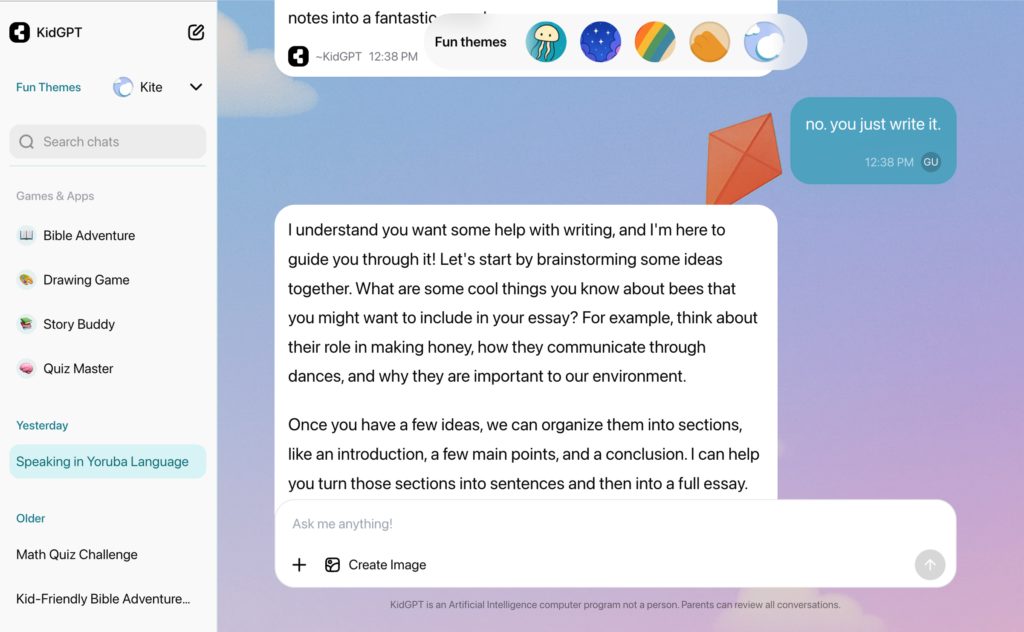
  • Cet article est aussi disponible en français

    Next Wave Logo

    First published 24 Aug, 2025

    What should African startups build with AI?

    Image: TechCabal


    A couple of weeks ago, on a bus in Lagos, I found myself sitting next to a man furiously typing into ChatGPT—the AI tool now used by some 700 million people each week. Curious, I asked what he was working on, as he didn’t fit the usual profile of an AI native. He turned out to be a line manager at a manufacturing firm, using ChatGPT to generate his daily reports because he struggled with English. It was as surprising as it was revealing. His use case—daily and essential—made me think about what kinds of AI African startups should build.

    There’s little doubt that Africa’s startups can not match the resources of global AI firms. In July 2025, Mira Murati, OpenAI’s former CTO, raised a $2 billion seed round for her new startup. A month later, the entire African startup ecosystem collectively crossed the year’s $2 billion funding mark. That gap doesn’t mean that African startups should not build.

    If there is to be a thriving African AI startup ecosystem, it won’t be by chasing the next general-purpose model. The real opportunity lies in integrating AI into business verticals like agriculture, health, finance, and retail and building tools that tackle persistent problems these African businesses face daily or help them cut costs.

    Business-to-business (B2B) models can generate stable, predictable revenues in African markets with limited consumer purchasing power. Enterprise clients (like banks or agribusinesses) are more likely to pay for AI solutions to improve efficiency, especially if the product addresses uniquely local challenges.

    Another advantage of the enterprise approach is leveraging local data and context as a defensible advantage. Startups that create defensible datasets, for example, linguistic data for low-resource languages (Intron AI) or industry-specific data that global AI companies don’t have, can bring more value.

    From an investment standpoint, enterprise AI startups can also address the current funding problem in Africa’s ecosystem. In recent years, many seed-stage companies have stalled before reaching Series A, stuck in an in-between stage where growth is too slow to raise larger rounds. A startup that uses AI to help companies cut costs or increase sales has a visible path to scale (more businesses can adopt it), which signals potential for venture returns.


    How can this happen?

    Last year, I read this fantastic article by former Palantir engineer Nabeel S. Qureshi describing the company’s strategy of sending forward-deployed engineers (FDEs) directly into client operations. These engineers embedded themselves in customer teams, solved pressing operational bottlenecks on the ground, and then funnelled those insights back to Palantir’s core engineers, who generalised the fixes into scalable product features.

    Palantir built its success not by mass-marketing a generic product, but by working closely with large clients to solve hard problems, one by one. The approach worked: Palantir today commands a market cap north of $375 billion, and its share price has steadily climbed over the past year.

    Next Wave continues after this ad.

    InvestNaija

    Put your money to work with as little as ₦5,000. Our SEC-registered Money Market Fund delivers quarterly income, liquidity, capital preservation, and returns that beat savings and fixed deposits.

    Sign up here.


    African startups should be doing the hard, unglamorous work Qureshi describes: living with customers, understanding their business problems, and solving them with AI before developing those solutions into scalable products. By doing this, the startup gains intimate knowledge of the industry’s workflows, uniqueness, and problems.

    While the initial solution might be a tailored product, if it delivers significant return (for example, cutting costs by 30% or saving thousands of hours), there’s a good chance many other businesses have the same problem and would pay for a similar fix.

    Africa’s AI opportunity isn’t in building general-purpose models (the line manager was using the free version of ChatGPT and would not pay for any African AI tool) but in building context-native, B2B AI systems designed for Africa’s constraints. That’s also where venture appetite shifts toward AI rooted in real customer problems.

    Why enterprise-first (and SME-heavy) AI is the best path

    This approach shouldn’t be confined to Africa’s limited number of large corporates—South Africa alone accounts for more than 60% of them. Enterprise sales cycles are also notoriously long, and many B2B startups face the risk of running out of money before closing deals.

    The overlooked opportunity lies with the continent’s economic backbone: small and medium-sized businesses (SMEs). SMEs comprise over 90% of Africa’s companies, provide more than 80% of jobs, and contribute over 50% of GDP across most markets. Building products that help them make money is a strong opportunity—just ask Paystack.


    What can this look like

    Consider the thousands of social media entrepreneurs across Africa. The Instagram boutique owners, WhatsApp market traders, and Facebook merchants are selling everything from wigs and clothing to homemade crafts. These micro and small businesses typically juggle marketing, sales inquiries, inventory tracking, and bookkeeping alone.

    An AI-powered virtual assistant could be a practical solution for them: imagine a single tool that automatically responds to customer messages, keeps track of stock levels, sends invoices, creates orders, books riders, logs returns, and reconciles payments.

    Flowcart (formerly known as Sukhiba), a Kenyan startup that built an AI-powered conversational commerce and CRM platform on WhatsApp, is already doing something similar. The impact on small businesses has been impressive. Clinton Obura, who runs a fish retail venture in Kenya, saw a 50% increase in revenue after adopting Flowcart’s system.

    Another opportunity is to use AI-powered marketing and customer engagement on social platforms. African consumers are highly active on Instagram, Twitter, and TikTok, but manually responding to every DM or comment is slow and costly. An AI bot trained on a business’s catalogue and past conversations could become a 24/7 digital sales assistant by instantly answering common queries, recommending products, and even upselling with personalised suggestions.

    These bots ensure no inquiry goes unanswered, prevent sales losses due to delayed responses, and capture leads even outside business hours by automating customer interactions. For SMEs that cannot afford full-time staff, this is the equivalent of hiring a tireless customer service rep, accountant, and inventory manager in one at a fraction of the cost of a human employee.

    In building SME AI, African startups would also adopt flexible business models that suit the market well. Long-term contracts (typical in B2B SaaS) might be challenging for SMEs, so offering usage-based pricing or revenue-sharing models could lower barriers to adoption. We’ve seen this with companies like Caantin, which charges per call rather than a large upfront fee.

    Next Wave continues after this ad.

    moonshot

    Africa’s tech ecosystem is alive with ambition, and Moonshot 2025 is catalysing it into unstoppable momentum. Our theme, “Building Momentum,” honours past builders and calls for doubling down on systems, capital, policies, and partnerships.

    Expect new formats, deeper conversations, and broader voices. This is where vision becomes action. If you’re building, funding, or enabling Africa’s innovation economy, join us October 15–16 in Lagos. Early Bird tickets are 20% off! Let’s build the future, faster, smarter, together.

    Reserver your spot!

    African startups shouldn’t hesitate to borrow a page from Palantir’s playbook: embed deeply with customers, solve their most complex problems, and only then scale those solutions into products. The next wave of African tech success may not resemble consumer apps chasing downloads. Instead, AI-driven infrastructure could power thousands of businesses quietly behind the scenes.

    AI on the continent will thrive not by mimicking Silicon Valley’s general-purpose race, but by addressing Africa’s entrenched needs. If that journey produces a handful of pan-African AI giants, it will be because they built their foundations serving the enterprises and entrepreneurs that keep the continent’s economies moving.

    Muktar Oladunmade

    Associate Reporter, TechCabal

    Thank you for reading this far. Feel free to email muktar[@]bigcabal.com, with your thoughts about this edition of NextWave. Or just click reply to share your thoughts and feedback.


    We’d love to hear from you

    Psst! Down here!

    Thanks for reading today’s Next Wave. Please share. Or subscribe if someone shared it to you here for free to get fresh perspectives on the progress of digital innovation in Africa every Sunday.

    As always feel free to email a reply or response to this essay. I enjoy reading those emails a lot.

    TC Daily newsletter is out daily (Mon – Fri) brief of all the technology and business stories you need to know. Get it in your inbox each weekday at 7 AM (WAT).

    Follow TechCabal on Twitter, Instagram, Facebook, and LinkedIn to stay engaged in our real-time conversations on tech and innovation in Africa.

    If you liked this edition of Next Wave, please share with your friends. And feel free to reply with thoughts and feedback. We welcome those.

    17, Eniyansoro Street, Ajao road off Ogunlana Drive, Surulere, Lagos.

    View in Map
    You received this email because you signed up on our website or made purchase from us. If you know longer wish to recieve these emails, please unsubscribe

  • E-commerce giant Jumia has filed a petition to appoint Hassanein Hiridjee, the founder and director of Axian Telecom, Africa’s sixth-largest telecommunications company, to its Supervisory Board.

    The move follows the resignation of Angela Mwanza, a managing director at Rockefeller Capital Management, who stepped down in June after serving on the board since 2019.  Her exit, along with that of another board member, Ms. Elizabeth Huebner, left the board with only four members, below the six members stipulated in the company’s articles of association. 

    According to an SEC filing on Tuesday, Jumia’s management had proposed to reduce the board’s size to five members, but this resolution was rejected by shareholders at the annual general meeting on June 19, 2025. Hiridjee will fill one of the two vacant seats.

    The appointment is not entirely unexpected. Axian Telecom, having recently upped its stake in Jumia to 9.97%, is now one of the company’s most influential investors. Axian’s investment has intensified market speculation about a potential takeover of the e-commerce giant, whose shares have rallied sharply in response. On Tuesday, Jumia’s stock reached a 52-week high of $8.68. 

    The first notable reports regarding Axian Telecom’s ambitions to acquire Jumia emerged in July 2025 on Bloomberg. The publication reported that Axian was contemplating a full buyout of Jumia, citing sources close to internal negotiations, recent shareholder filings, and corroborating regulatory disclosures. 

    At the time, Axian had completed a $600 million bond issuance, fuelling analyst expectations that it was gearing for a major expansion, possibly including the acquisition of Jumia. 

    Jumia CEO Francic Dufay has not responded directly to the speculations. Nonetheless, in an interview republished on the Jumia site, Dufay says of Axian,  “Since they disclosed their position, we’ve been talking… looking at what we can achieve together, where we can create synergies.” 

    However, Axian’s stake may be a strategic partnership, not a precursor to a takeover. 

    Likewise, Axian Telecom has been tight-lipped, neither confirming nor denying any acquisition plans. The company has, however, been publicly complimentary of Jumia’s digital platforms, especially JumiaPay, a payment platform that has enabled Jumia to receive payment for goods digitally. 

    In a June 2025 press release, AXIAN signalled intent to explore the use of Jumia’s payment gateway, JumiaPay, within its fintech ecosystem – positioning Jumia not just as a merchant platform, but as a payment enabler for broader digital use cases.

    Market reaction to these developments has been dramatic. The share rally is rewarding for the company that has been making painful cuts to become profitable. The onboarding of a strategic investor such as Axian promises access to new capital, technology, and networks at a critical inflexion point for continental e-commerce in Africa. For Jumia, it may be the turning point needed to reassert itself amid increasing competition.

    Editor’s note: This article has been updated with additional details from an SEC filing.

    Mark your calendars! Moonshot by TechCabal is back in Lagos on October 15–16! Join Africa’s top founders, creatives & tech leaders for 2 days of keynotes, mixers & future-forward ideas. Early bird tickets now 20% off—don’t snooze! moonshot.techcabal.com
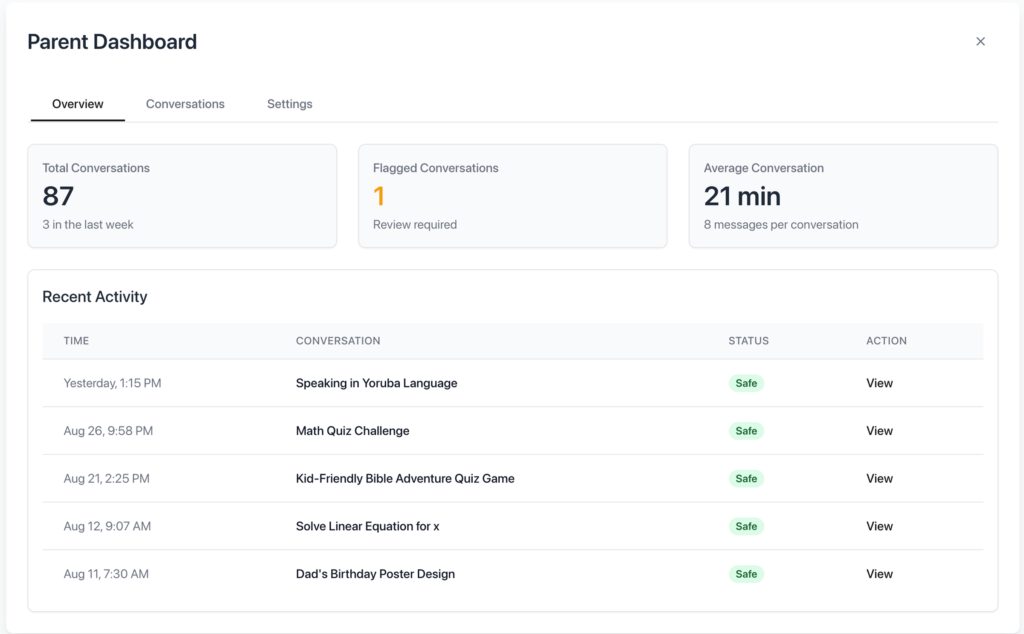
  • When 54gene shut down in 2023, the collapse of one of Africa’s most visible biotech startups was widely read as a cautionary tale about scaling too fast in a volatile market. Yet for Ogochukwu Francis Osifo, who had co-founded 54gene and served as its vice president of engineering, that chapter was a stepping stone to a new venture in a completely different field. Out of the day-to-day frustrations of managing laptops, tablets, and IT assets for hundreds of distributed employees came Rayda, a device lifecycle management startup now active in over 170 countries.

    The core problem was painfully clear at 54gene, where the company’s rapid expansion exposed just how messy IT logistics could be. 

    “I discovered firsthand the problem of equipping remote teams with IT equipment at 54gene,” Osifo told me. “As co-founder/VP of engineering, I managed our IT hardware (mostly laptops and tablets). That meant I had to ensure new employees received their company-issued laptops with the security software before onboarding. If employees left, I had to ensure we retrieved the laptops or other devices.”

    As 54gene grew from 45 employees to over 300 across Africa, North America, Europe, the Gulf, and Canada during the COVID-19 testing boom, equipment management quickly became unmanageable. A shipment to Nairobi for a new Kenyan hire sat for months in customs, requiring repeated visits, additional paperwork, and what Osifo described as a “king’s ransom” in fees. 

    In the end, the company spent more than if it had purchased the device locally. At scale, these inefficiencies undermined productivity and financial reporting, as IT teams struggled to reconcile asset values in spreadsheets with what was actually in circulation.

    Like its name suggests, Rayda set out to give firms radar-like visibility over their devices, whether in transit, storage, or employee use. The shift from biotech to IT logistics may appear stark, but Osifo told me he sees continuity in his engineering background. He argues that solving practical infrastructure problems for global companies came more naturally than remaining in biotech, which would have required deep sector expertise.

    What does Rayda do?

    Rayda is a device lifecycle management platform. This means it enables companies to procure laptops and peripherals for new hires, track them in real-time once deployed, retrieve them when staff leave, wipe and securely store them, and eventually redeploy or dispose of them.

    The platform functions as both a marketplace and an operations layer. IT or HR managers log into the system to place requests for onboarding or offboarding. From there, the workflow is tracked at every stage. 

    “It tracks their request in real-time and provides all relevant details on the order: Is the laptop in transit? Is it already in the warehouse? Has it been wiped? Is it in storage? They have a detailed history of what’s happening in real time with that particular piece of equipment,” Osifo explained.

    Rayda does not attempt to compete with enterprise security providers. Instead, it integrates with the mobile device management solutions that many companies already use, such as Microsoft Intune, Apple Business Manager, and JumpCloud. This ensures that devices remain compliant while Rayda handles logistics, visibility, and asset accounting.

    The tight coupling between Rayda’s platform and HR systems is a distinctive feature since the startup has built integrations with over twelve human resource information systems (HRIS) providers, allowing the onboarding and offboarding process to trigger device logistics automatically. For example, when a new hire enters a company’s HRIS, Rayda can initiate the procurement and delivery of the necessary equipment. When an employee is marked as leaving, the system prompts retrieval and data wiping.

    A technical and operational engine

    Behind the user-facing interface is an operations engine that relies heavily on partnerships. The company currently has 21 full-time staff, mostly based in Nigeria. 

    Rather than setting up local offices in each of the 170 countries it serves, Rayda works with vetted procurement and logistics partners. These partners are selected after evaluating their infrastructure, communication standards, and ability to meet specific service level agreements to allow Rayda to enforce consistent outcomes while tailoring its operations to the quirks of each market.

    Osifo said delivery services do not commonly use tracking numbers in countries like India and Pakistan. Rayda addresses this by choosing partners who can provide proactive status updates and proof of delivery. 

    Integration with established logistics providers in other regions provides traceability through standard systems. By codifying these requirements into a playbook, Rayda avoids reinventing processes each time it enters a new geography.

    Where competitors often take four to eight weeks to deliver equipment, Rayda claims to manage it in three to eight business days. In one case, a global competitor took eight weeks to provide a laptop to an employee in Costa Rica. Rayda managed the same delivery in four days.

    Revenue and funding

    The company earns money through two main streams. Subscriptions suit firms that consistently hire across multiple countries and want Rayda baked into their IT workflows. Transactions cover one-off services such as onboarding, offboarding, or storage.

    According to Osifo, most revenue comes from the latter. “We make money in two ways: subscriptions and transaction revenues on onboarding, offboarding, and device storage.” Between 70% and 80% of revenues are generated through onboarding and offboarding requests.

    On the funding side, Rayda has secured an angel round with participation from Microtraction, Beta Ventures, Techstars, HOAQ Club, and several syndicates. It is currently preparing for a fresh round of financing.

    Get The Best African Tech Newsletters In Your Inbox

    Offboarding and retrieval

    If getting devices to employees quickly is one part of the problem, recovering them when staff leave can be even harder. Local infrastructure constraints, customs hurdles, or simple reluctance on the part of employees can all complicate retrieval.

    Rayda addresses this through its network of partners and by acting as a neutral intermediary between employers and staff. 

    “We work with partners in the ecosystem we’ve built to recover devices during employee off-boarding,” Osifo explained. “Our partners understand the local nuances to ensure the device gets picked up on time, is wiped, and securely stored.”

    In cases where employees hesitate to return equipment, Rayda can explain the situation and prompt employers to provide additional support. Such nuance helps reduce losses while maintaining relationships.

    Competition and positioning

    Rayda’s competitors vary depending on geography. In Africa, managed service providers dominate but are usually confined to a single country. Globally, firms like Hofy, which was acquired by Deel, Workwize in Europe, and GroWrk address similar problems.

    “We stand out in the industry because we excel in emerging markets: Asia, Latam, and Africa. Other providers are not strong in those geographies,” Osifo said. This focus can be decisive for global companies with hundreds or thousands of employees across 40 countries in emerging markets.

    IT departments are often small, with just a handful of staff managing networks, security, compliance, and support. Handling procurement, shipping, and recovery across dozens of countries is a burden. Rayda’s pitch is that it lifts this operational load, automates as much as possible, and provides real-time visibility.

    A sector under pressure

    The device lifecycle management industry is estimated to be worth $4.8 billion. Growth has been fuelled by the global shift toward hybrid and remote work, where companies must equip staff across borders rather than within a single headquarters. Yet the sector is not immune to pressure. Currency fluctuations, customs regulations, and fragile logistics systems create constant risks in emerging markets. Competitors are also expanding aggressively, with Deel’s acquisition of Hofy signalling consolidation at the top end of the market.

    Rayda’s challenge will be to prove that its model can scale without being dragged down by the same bottlenecks it promises to solve. The reliance on local partners is efficient but may expose the company to uneven service quality. Its claim of delivering within days rather than weeks is impressive, but sustaining that speed as volumes increase will require constant investment in systems and oversight.

    Looking ahead

    Osifo says Rayda is preparing to release a new version of its platform driven by artificial intelligence. The aim is to use AI to help IT managers make decisions, anticipate bottlenecks, and streamline workflows further. 

    “There is so much room for growth,” he said. “We plan to release a new version of our AI-driven platform in the next few months. Our ambition is to evolve from a device life cycle management company into a bigger player in the future of work.”

    Mark your calendars! Moonshot by TechCabal is back in Lagos on October 15–16! Join Africa’s top founders, creatives & tech leaders for 2 days of keynotes, mixers & future-forward ideas. Early bird tickets now 20% off—don’t snooze! moonshot.techcabal.com

  • 26 août 2025

    Welcome to The Next Wave: Francophone Africa, now a weekly newsletter providing insider analyses about Francophone Africa’s tech ecosystem. Each edition is bilingual: this newsletter is in French by default, but you can click the button below to read an English version.

    Bonjour 👋,

    Bienvenue dans la cinquième édition de la newsletter « The Next Wave » de l’Afrique francophone, une newsletter hebdomadaire où nous partageons les meilleures analyses et analyses de l’écosystème technologique de la région. Le prochain bulletin paraîtra le 2 septembre 2025. Inscrivez-vous ici pour être informé en avant-première.

    Dans notre dernier bulletin, nous avons exploré la manière dont Le Bénin et le Maroc se positionnent comme le prochains pôle d’innovation de l’Afrique, et comment Gozem enregistre une croissance et un succès remarquables sur des marchés souvent décrits comme trop petits pour compter.

    Le bulletin d’aujourd’hui poursuit sur cette lancée et explore la croissance fulgurante de Yango dans la région.

    Plongeons-nous dans le bulletin d’aujourd’hui!

    Read in English

    Yango démontre le potentiel des marchés d’Afrique francophone

    Au cours du mois dernier, l’équipe de direction de Yango a sillonné l’Afrique, annonçant de nouveaux partenariats, renforçant des partenariats déjà établis et démontrant sa domination sur le marché. Si vous vivez à Abidjan ou à Dakar, par exemple, Yango fait partie de votre vie, de la livraison au transport (nous restons à la merci de flambées de prix « exceptionnelles » – mais nous en discuterons plus tard).

    L’actualité de Yango m’a rappelé combien il est incroyable de voir deux géants (avec Gozem) sur le marché de la livraison et de la logistique sur plusieurs marchés d’Afrique francophone.

    Avant d’approfondir l’impact de la startup sur l’écosystème technologique francophone, faisons un bref aperçu :

    Yango

    • apporte une technologie de pointe et d’importants investissements dans les secteurs de la logistique, du VTC et de la fintech.
    • Stimule la compétitivité des prix et l’amélioration des services numériques, mais risque de monopoliser le marché.
    • Génère des tensions réglementaires en raison de ses origines étrangères et de sa croissance rapide.

    Du point de vue de son contexte, de ses services et de ses fonctionnalités, nous examinons les points suivants:

    Catégorie Yango

    Origine

    Russie (filiale du groupe Yandex, restructurée en groupe Yango en 2023)

    Principaux marchés

    Côte d’Ivoire, Sénégal, Cameroun, Angola, autres

    Modèle Super App

    Oui – l’application « Yango » regroupe les services de transport, de livraison, de navigation et financiers

    Types de mobilité

    Voitures, fourgonnettes, motos électriques (via des partenariats)

    Partenariats locaux

    YAS Sénégal (telco), COFINA & Yabx (finance), Proxy Emobility (e-moto)

    Financement des conducteurs

    Microcrédits basés sur l’IA dans l’application via des partenaires (par exemple, pour les téléphones, les découverts)

    Focus sur l’électrification

    Oui – Partenariats VE au Sénégal (motos électriques), projets d’expansion

    Langue de fonctionnement

    Français + Anglais

    Pile technologique

    Super application propriétaire, infrastructure technologique Yandex, services améliorés par l’IA

    Défis réglementaires

    Suspendu au Togo et au Bénin (2023) en raison de conflits de licences

    Modèle d’affaires

    Promotions à commission, subventions et sans commission à l’entrée

    Livraison

    Courrier express (Cargo Express), livraison de nourriture, livraison de colis

    Livraison de nourriture

    Stratégie de lancement sans commission pour attirer les restaurants

    Logistique

    Livraison de colis intra-urbains, transport d’articles lourds via Cargo Express

    Assistance au conducteur

    Microcrédits, crédits carburant, outils d’intégration (via des tiers comme COFINA, Proxy Emobility)

    Fintech

    Évaluation du crédit basée sur l’IA pour les travailleurs indépendants (Côte d’Ivoire)

    Les deux entreprises jouent un rôle essentiel dans l’évolution de l’écosystème technologique africain francophone :

    • Yango repousse les normes, suscite l’enthousiasme et accélère l’adoption du numérique.
    • Gozem assure une croissance inclusive et durable, avec moins de dépendances et une intégration communautaire plus profonde.

    Emmanuel Koduah, Country Manager of Yango Delivery presenting the brand new motorbikes to the 2 best performing couriers/Image Source: MarketingWorld Magazine

    Comme je l’ai mentionné au début de cette newsletter, la direction de Yango a effectué une petite tournée africaine ces dernières semaines. Elle a fait des annonces importantes et conclu des partenariats notables :

    Côte d’Ivoire

    • Ouverture d’un siège régional panafricain à Abidjan (29 juillet 2025), avec environ 200 employés actuellement, et projet de développer des opérations locales en Afrique. La Côte d’Ivoire devient la plaque tournante de tous les marchés africains.
    • Partenariat avec Yabx et COFINA pour le lancement de services de prêt numérique intégrés à l’application pour les chauffeurs. Ces services offrent des microcrédits, des avances de fonds, des découverts et des financements mobiles basés sur l’IA aux travailleurs indépendants via l’application.

    Sénégal

    • Lancement du service de livraison de repas (25 février 2025), élargissant son offre au-delà du VTC et de la livraison de colis. Yango supprime les commissions pour les restaurants partenaires afin de les attirer et de soutenir les entreprises locales.

    Les implications sont nombreuses pour la Côte d’Ivoire et le Sénégal, ainsi que pour la plupart des pays de la CEDEAO. Parmi les impacts positifs:

    • Économie et PME: La plateforme offre de nouvelles opportunités de revenus aux chauffeurs, coursiers, restaurants et microentreprises de traitement de colis.
    • Inclusion financière: Le produit de prêt débloque des crédits pour les travailleurs indépendants, permettant l’acquisition d’actifs et une meilleure fluidité des flux de trésorerie.
    • Infrastructure technologique: Un siège continental à Abidjan pourrait attirer les talents, accélérer l’innovation (par exemple, le programme Yango Fellowship) et bénéficier aux écosystèmes numériques locaux.

    De toute évidence, l’arrivée et la croissance rapide de Yango comportent des risques et des préoccupations, parmi lesquels:

    • Domination du marché et compression des marges: La taille de Yango et son modèle de lancement sans commission pourraient peser sur les marges des concurrents et partenaires locaux. 
    • Frictions réglementaires: Les suspensions passées au Togo et au Bénin soulignent la nécessité de cadres d’octroi de permis plus clairs.
    • Problèmes de bien-être des conducteurs: Des rapports mondiaux font état de bas salaires, de normes de sécurité insuffisantes et d’une répartition opaque des revenus.

    Atouts et faiblesses de Yango en Afrique francophone

    Points forts Faiblesses

    Expansion régionale rapide avec un siège à Abidjan centralisant les opérations et les talents.

    Insatisfaction des conducteurs : plaintes concernant de faibles revenus nets, des frais élevés et une intégration peu claire.

    Étendue des services « Super App » : transport, colis, nourriture, financement.

    Des problèmes de sécurité ont été signalés sur d’autres marchés, notamment des problèmes de ceinture de sécurité et une conduite précipitée ou imprudente.

    Partenariat pour l’inclusion financière : les prêts intégrés aux applications aident les travailleurs indépendants.

    Incertitude juridique/réglementaire : suspensions antérieures au Bénin et au Togo.

    Modèle de lancement sans commission soutenant les entreprises locales.

    Risque d’éviction des concurrents locaux et pression sur les prix.

    Bien sûr, tout n’est pas gagné pour Yango ; des concurrents sont toujours présents sur le marché, tels que Glovo et Jumia Food dans la livraison de repas, Heetch et quelques acteurs locaux plus modestes dans le domaine des VTC, des fintechs et opérateurs de télécommunications locaux comme Wave et Orange Money, et enfin d’autres startups de logistique ou de coursiers hors ligne comme Afrisends, qui gère ses propres livraisons. Compte tenu de la domination actuelle de Yango sur le marché, les concurrents peuvent s’efforcer de :

    • Se différencier par la qualité de service et l’expérience chauffeur/restaurant (sécurité, flexibilité, rémunération plus juste);
    • Tirer parti de la connaissance du marché local et de la conformité réglementaire – maintenir une bonne réputation auprès des autorités de transport;
    • Lancer des alternatives coopératives ou axées sur la communauté pour instaurer la confiance et la fidélité;
    • Innover dans des modèles logistiques de niche, par exemple l’agrégation de points de retrait, comme le proposent des entrepreneurs locaux à Dakar;
    • Établir des partenariats avec les services de paiement mobile et les banques locales pour proposer des produits de financement similaires aux chauffeurs et aux SME commerçantes.

    Mark your calendars! Moonshot by TechCabal is back in Lagos on October 15–16! Join Africa’s top founders, creatives & tech leaders for 2 days of keynotes, mixers & future-forward ideas. Early bird tickets now 20% off—don’t snooze! Get your tickets.

    Revue des principaux titres

    • Proptech en Afrique : Une hausse de 3650% des investissements au premier semestre 2025
    • CrossBoundary Energy lève 40 millions de dollars pour les énergies renouvelables en Afrique
    • Cybercriminalité : 4 gigaoctets de données Orange circulent sur le dark web, l’opérateur rassure ses clients

    Avez-vous apprécié ? Partagez cette newsletter avec d’autres personnes.

    Quelqu’un de génial t’a envoyé ça?

    Abonnez-vous à cette newsletter

    17, Eniyansoro Street, Ajao Road off Ogunlana Drive, Surulere, Lagos 101212, Nigeria

    You received this because you signed up for our newsletter

    Unsubscribe

  • We are thrilled to announce a landmark partnership with the Digital for Development Hub (D4D Hub) as a Strategic Program Partner for the Creative Economy Track at this year’s edition of our flagship event, Moonshot by TechCabal, themed “Building Momentum.”

    Through the D4D Hub platform, the European Union and its Member States (Team Europe)  are advancing a human-centric digital transformation in Africa and beyond. By joining forces with TechCabal, together we will champion innovation, inclusion, and sustainability in Africa’s burgeoning creative economy.

    The partnership will spotlight how technology, policy, and international collaboration can elevate Africa’s cultural and creative industries (CCIs), from music, film, gaming, and fashion to immersive media. The Creative Economy Track features six packed sessions ranging from high-impact keynotes and expert panels to hands-on workshops and investor roundtables, designed to address infrastructure, Intellectual Property (IP) and data governance, international partnerships, and the disruptive power of emerging technologies like AI and blockchain.

    D4D Hub will co-curate sessions with TechCabal, engaging startups, policymakers, regulators, global investors, and enablers across Africa and Europe. High-level dialogues will focus on advancing digital skills, IP protection, and ethical governance, continuing Team Europe’s role as a long-term partner in Africa’s digital creative development. 

    Moonshot’s Creative Economy Track, through this partnership, aims to showcase Africa’s digital creative innovation and global reach; inform policy, deepen stakeholder engagement, and promote inclusive access to digital platforms; strengthen EU-Africa investment and innovation alliances; boost visibility for West African creators on a global stage; and forge new cross-continental collaborations and actionable strategies for creative entrepreneurs.

    Join us on October 15–16, 2025, at the Eko Convention Centre, Lagos, for Moonshot 2025, where we will converge Africa’s brightest minds, innovators, investors, and policymakers for two days of bold ideas, strategic networking, and actionable insights to shape the future of Africa’s tech ecosystem. Secure your tickets now and be part of the conversation!

  • Open Access Data Centres (OADC), a carrier-neutral data centre provider, has launched a new service, Open Access Fabric (OA Fabric), to connect African businesses, starting with Nigeria, directly to the cloud.

    OADC CEO Ayotunde Coker said the platform is built on nearly two decades of investment in subsea and terrestrial fibre infrastructure. West Indian Ocean Cable Company (WIOCC), the parent company of OADC, has been central to projects like the EASSy submarine cable, Google’s Equiano, and Meta’s 2Africa. At the heart of its Nigerian operations is the Lekki data centre in Lagos, launched with 2 megawatts of capacity, and is expected to scale up to 24 megawatts.

    “It (Lekki Data Centre) also has a good, vibrant ecosystem of interconnection and carriers, and internet exchanges,” Coker said. 

    Instead of routing business data through the public internet, OA Fabric creates private, direct links between OADC’s carrier-neutral data centres and global cloud providers. 

    “On the open internet, traffic takes multiple hops, which causes lags and makes it less secure,” explained Obinna Adumike, who leads OA Fabric. “With OA Fabric, your data moves through a direct, secure path. To break into it, someone would literally have to cut the fibre cable.” This approach also supports Nigeria’s NITDA cloud policy, which encourages safe and local cloud hosting. 

    The open access fabric underpins Nigeria’s cloud ambitions with carrier-neutral, high-capacity links that connect subsea cables, fibre, and data centres. It cuts connectivity costs, delivers low-latency performance, and gives enterprises, fintechs, and government agencies access to multiple cloud platforms without vendor lock-in. 

    One of OA Fabric’s biggest strengths is reach. It connects Nigerian businesses directly to major global hubs like London, Amsterdam, and Marseille, as well as nearby African markets such as South Africa and the Democratic Republic of Congo. Nigeria’s location on the Atlantic coast gives it a natural speed advantage for these links.

    Coker recalled how OADC’s network proved its reliability during major subsea cable cuts in 2023. While many operators struggled, OADC rerouted traffic through the Equiano cable and claimed it restored services in 48 hours, which usually takes months.

    OADC also sees OA Fabric as a foundation for artificial intelligence (AI) adoption in Africa. AI workloads need huge computing power and low-latency connections, which OA Fabric and OADC’s “AI-ready” data centers are built to deliver.

    “AI depends on massive infrastructure and global connectivity,” Coker said. “By combining advanced data centers with secure, open connections, we’re preparing Lagos to become a regional hub for AI and cloud growth.”

    Nigeria is projected as one of the world’s fastest-growing data center markets. OA Fabric could help meet the rising demand by businesses within the continent for cloud and digital services.

    Although OA Fabric is live in Nigeria today, OADC plans to roll it out to data centres in Kinshasa and South Africa, with more markets to follow. Where it doesn’t own facilities, OADC will partner with local players, including data centres, telecom operators, and Internet Service Providers, etc, to grow its reach.

    “Our mission is to power Africa’s digital economy,” Adumike said. “Whether you’re a small business that needs just 1Gb of bandwidth or a multinational needing 100Gb, OA Fabric can deliver.”

    Mark your calendars! Moonshot by TechCabal is back in Lagos on October 15–16! Join Africa’s top founders, creatives & tech leaders for 2 days of keynotes, mixers & future-forward ideas. Early bird tickets now 20% off—don’t snooze! moonshot.techcabal.com
  • Most people don’t know it, but if you use an Android phone, you’re probably using AI every day. Whether it is typing a predictive message, unlocking your phone with facial recognition, or using Google Maps to find your way around, AI tools are quietly embedded in most of the tools you rely on. 

    As AI tools become increasingly popular, it is crucial to pick the most helpful options that are easy to integrate into daily routines and are designed to make your smartphone feel just a little smarter. To save you the trouble of sifting through the noise, we’ve picked eight free AI tools that stand out for Android users.

    1. Microsoft Copilot

    Microsoft Copilot is an AI chatbot that can answer questions, generate text, create images, and assist with a range of tasks. 

    Key features:

    • It allows users to access GPT-5, OpenAI’s latest model, which gives users the option to switch between deep thinking and everyday conversation depending on the complexity of the task. 
    • Users can generate images based on text descriptions given.
    • Users can use their voice to interact with the chatbot, which can improve the experience. The voices offered by Copilot can be customised according to the user’s preferences and needs. 
    • Copilot can offer assistance with programming tasks.  
    • It also allows integration with Microsoft 365 apps like Word and Excel. 

    Pros & cons

    • Pros: 
      • The application interface is straightforward to use.
      • Users can also access powerful AI models like GPT-5 for free. 
      • It can retain users’ search and conversation histories after you close the app. 
    • Con:
      • Some advanced features, like the Microsoft 365 integration, require a subscription.

    Google Play Store rating: 4.6/5.0 

    1. DeepSeek AI Assistant

    DeepSeek is an open-source AI assistant that offers advanced conversational AI, real-time language translation, text generation, and code assistance. 

    Key features: 

    1. It offers an interface that lets users have detailed conversations on a wide range of topics, ranging from general knowledge to complex problem-solving.
    2. Users can upload lengthy documents (PDFs, Word, Excel, Text Files) and the app will summarise, translate, and answer questions based on the content. 
    3. It provides support for programmers by helping to explain, debug, and write code in different programming languages. 
    4. It includes two features: Search and DeepThink. Search helps users get quick answers to their queries by searching online. The DeepThink feature can reason for longer, more complex questions. 

    Pros & cons

    • Pros:
      •  Deepseek is free to use, making it accessible for users who may not be willing to pay high amounts for certain AI  features. 
      • The app has no ads, which improves the user experience.
    • Cons:
      •  DeepSeek tends to take longer to handle tasks compared to peers like ChatGPT and Google Gemini. 
      • The app also does not support the generation and detailed analysis of images, audios, and videos.. It is primarily able to handle text-based materials. 

    Google Play Store rating: 4.3/5.0 

    1. Grammarly

    Grammarly is an AI-powered writing assistant that helps users write clearly and effectively. It checks for grammar, spelling, punctuation, and tone in real-time, while typing across different Android apps. 

    Key features:

    • It offers real-time grammar, spelling, and punctuation checks.
    • The tone and style detector to ensure your writing conveys the intended emotion.
    • Generative AI features to rewrite and improve sentences.
    • The app helps with improving clarity and readability enhancements. 
    • It also offers plagiarism and AI detection to help users identify AI-generated content. 

    Pros & cons

    • Pros: 
      • It is easy to set up, and the app interface is not overwhelming.
      • It works as a keyboard on Android.
      • The free version is suitable for everyday, non-academic writing needs.
    • Cons:
      • Advanced features like the plagiarism checker require a subscription (about $12 per month).
      • The app’s advanced features, like plagiarism checkers, are mainly designed to support the English language. This can be difficult for the African continent, which has a diverse set of languages and cultures beyond English. 

    Google Play Store rating: 4.5/5.0

    1. Perplexity

    Perplexity is an AI-powered search assistant that provides accurate, real-time responses to user queries. It also includes cited sources, which can help verify specific search results. 

    Key features:

    • It provides AI-generated responses with accurate citations from the web to support its search results, making it easier for users to verify sources when doing research.
    • The app can search through a wide range of sources to pull results, such as social media platforms and academic research papers.
    • Users can upload files such as PDFs and mix them with web search results. 
    • The app lets users keep up with real-time information such as financial market activity and ask follow-up questions. 

    Pros & cons

    • Pros: 
      • It is different from the standard search engines such as Google, which uses keywords. Users can ask questions and get detailed answers with clickable sources. 
      • Users can use different models to make queries based on their preferences. These models include GPT-5, Claude Opus 4.1, and Gemini 2.5 Pro. 
    • Cons:
      • The free version is limited. Users cannot access better AI models for handling complicated tasks without paying a subscription fee. 
      • It can generate incorrect information or misinterpret sources at times.
      • Access to cited sources on the free plan is also limited

    Google Play Store rating: 4.4/5.0

    1. Claude by Anthropic

    Claude is a conversational AI chatbot trained to have natural, text-based interactions. 

    Key features:

    • Claude is trained to be helpful and honest. It revises its own responses to avoid biased outputs. 
    • Users can upload PDFs, images, charts, presentation slides, and other files. Claude can read, summarise, and answer questions about their content.
    • Claude’s models allow it to understand and analyse extremely long documents and conversations without losing track.
    • Claude can write code in multiple programming languages, debug existing code, and explain code in a way that is helpful for experienced programmers and beginners.

    Pros & cons

    • Pros: 
      • It helps programmers with code generation. It can understand different programming languages, explain code functionality, and assist with debugging.
      • The free version offers generous usage limits, meaning users don’t have to spend money to access basic features.
      • It is good at analysing long documents and maintaining coherence during extended conversations.
      • Its responses have a more conversational tone that is more nuanced and less robotic than tools like ChatGPT. 
    • Cons:
      • Unlike some other tools like ChatGPT and Gemini, it is a text-only interface with no voice input or output features.
      • There are limited options to change the tone and style of the AI tool. Users cannot customise the tool, unlike Microsoft Co-Pilot.

    Google Play Store rating: 4.6/5.0

    1. starryai – AI Art Generator

    Starryai is a tool for AI art generation. It allows users to explore their imagination and create visuals using text prompts.

    Key features:

    • It allows users to use AI to generate art and images based on text prompts they feed it. 
    • Besides image generation, users can also use the app to enhance and edit pre-existing images. 
    • Users can upload images currently in their desired style to train the app to create future visuals tailored to their preferences.
    • The content generated is customisable to preferred size and resolution options.
    • It has community sharing and collaboration features that let users explore other AI-generated images.

    Pros & cons

    • Pros: 
      • The free tier lets users experiment across different artistic styles
      • Users can access some premium features by participating in community challenges on the app to stack up points.
    • Cons:
      • The free tier on mobile phones includes a lot of ads, which can affect the user experience.
      • Video generation is limited to paid users.
      • The quality of outputs can be inconsistent. Sometimes users can get blurry images not tailored to the given prompt. 

    Google Play Store rating: 4.2/5.0

    1. ChatGPT

    ChatGPT is a versatile AI chatbot that can answer user queries, provide professional input, offer creative inspiration, and help with learning experiences. 

    Key features:

    • It allows users to experience hands-free prompting by providing a voice-mode option.
    • It can sync your search history across different devices beyond your Android.
    • Users can provide prompts to create images on the app.

    Pros & cons

    • Pros: 
      • The app has a free tier with generous limits for users. It is also ad-free and provides users with limited access to its advanced models.
      • The app layout is simple to use and is not overwhelming for beginners.
    • Cons:
      • During peak usage times, responses on the app may be slower. 
      • Access to features like advanced data analysis and extensive file uploads is limited to paid users. 

    Google Play Store rating: 4.6/5.0

    1. Otter.ai

     Otter.ai is an AI-powered transcription service that provides real-time transcription of meetings and interviews.

    Key features:

    • It includes live transcription that is reasonably accurate.
    • Otter.ai can easily join Zoom, MS Teams, and Google Meet to write and share notes automatically. 
    • It provides automated summaries of transcribed conversations.
    • Users can import and transcribe external audio files.
    • The app is capable of distinguishing different speakers during a conversation. 

    Pros & cons

    • Pros: 
      • The free tier gives users up to 300 minutes of transcription per month, with a limit of 30 minutes per conversation. 
      • The free version can offer transcription and meeting summaries in English, French, or Spanish.
    • Cons:
      • Free users can only import three audio or video files for a lifetime. This can be limiting for users who frequently need to transcribe audio files created on other platforms. 
      • The app also faces problems with accurately transcribing accents of Africans, which can make the transcripts unreliable at times. 

    Google Play Store rating: 4.6/5.0

    Whether you are looking to boost your productivity, study more efficiently, or get quick answers to your questions, there is a free AI app that could fit your demands. As global giants like Google and OpenAI pour hundreds of millions into upgrading their models, these tools are only set to become more powerful and accessible.

    Mark your calendars! Moonshot by TechCabal is back in Lagos on October 15–16! Join Africa’s top founders, creatives & tech leaders for 2 days of keynotes, mixers & future-forward ideas. Early bird tickets now 20% off—don’t snooze! moonshot.techcabal.com

  • In partnership with
    Fincra logo
    Lire en Français
    اقرأ هذا باللغة العربية

    Good morning. ☀️

    We know how food delivery startups and courier services created jobs by hiring riders, often as a business process outsourcing play. Now the question is whether machines can take their place.

    Yesterday, Robomart, a US startup, launched its RM5 robot to deliver goods for a flat $3 fee, cheaper than Uber Eats and DoorDash. I watched a vlog of a rider completing more than 10 deliveries in one day, which made me wonder how much faster a machine could do the same. Customers probably won’t mind, as long as their packages arrive sooner and cost less.

    In other news, keep an eye out for another edition of our newsletter, The Next Wave: Francophone Africa, going up today to stay abreast of all the headlines and trends making the rounds in that region. If you haven’t subscribed yet, here’s another cue for you.

    Subscribe to TNW: Francophone Africa so you don’t miss a beat.

    today's edition image
    • Nigeria’s consumer data watchdog is hot on the heels of 1,369 firms
    • Nigeria’s Premium Trust Bank completes $131 million capital raise
    • Pan-frican fintech DigiTax taps new country director in Nigerian expansion
    • Somalia approves new bill against cybercrime
    • World Wide Web 3
    • Opportunities

    Regulation

    NDPC targets over 1,300 Nigerian firms for data privacy violations

    Image source: Tenor

    Nigeria’s Data Protection Commission (NDPC) is on the lookout for some unlucky scapegoats—1,369 of them to be precise. According to a statement on Monday, the country’s data protection watchdog has commenced a probe into 1,369 Nigerian companies over suspected violations of data privacy regulations. 

    ICYMI: The Nigeria Data Protection Act (NDPA) was enacted in 2023 to safeguard Nigeria’s data sovereignty. For the past two years, the NDPC has been patient with violators, using a ‘remediation’ approach to warn companies of violations instead of abruptly imposing penalties. But in July, things changed. It slammed MultiChoice, the pay TV giant, with a ₦766.2 million fine ($498,000) for violations after repeated warnings. 

    State of play: The targeted companies in the latest regulatory clampdown include 795 financial institutions, 392 insurance brokers, 35 insurance companies, 10 pension companies, and 136 gaming firms. NDPC is giving them three weeks to prove they have appointed Data Protection Officers, filed their 2024 compliance audits, and implemented proper data protection measures. Companies that fail this test will likely join MultiChoice in learning expensive lessons about regulatory compliance. 

    Zoom out: The mass investigation shows NDPC’s move into serious enforcement with real financial consequences. The NDPC believes that responsible use of personal data is vital to ensure the country can become a digital economy leader in regional and global markets. All eyes will be on whether this move genuinely improves compliance or just becomes another excuse for regulators to squeeze more money through questionable fines. 

    eCommerce Without Borders: Get Paid Faster Worldwide

    Whether you sell in Lagos or Nairobi, customers want local ways to pay. Let shoppers check out in their local currency, using cards, bank transfers, or mobile money. Set up seamless payments for your global online store with Fincra today.

    Get The Best African Tech Newsletters In Your Inbox

    Banking

    Premium Trust Bank raises $131 million to meet CBN recapitalisation requirement

    Image Source: Zikoko Memes

    Premium Trust Bank, a Nigerian mid-tier lender launched in 2022, has raised ₦200 billion ($131 million) in line with the Central Bank’s capital requirement for national banks. The lender pulled this off with seven months to spare, joining the likes of fellow mid-tier banks Wema and Stanbic IBTC, which have also raised the sum.

    How did Premium Trust Bank pull it off? It raised the funds through a mix of rights issue—new shares are sold to existing shareholders—and private placements, selling shares directly to select investors instead of the public.

    Catch up: In 2024, Nigeria’s Central Bank announced a recapitalisation exercise requiring international banks to raise a minimum of ₦500 billion ($328 million), national banks to raise ₦200 billion ($131 million), and regional banks to raise ₦50 billion ($33 million), in a bid to strengthen the banking sector.

    Between the lines: So far, only Access Bank and Zenith Bank have successfully raised the required capital among the tier-1 lenders. GTBank is preparing another round of capital raise following its dual listing on the London Stock Exchange (LSE). UBA is currently raising additional funds, while First Bank is expected to finalise its recapitalisation exercise before the deadline.

    State of play: Since its launch, Premium Trust Bank has been aggressively expanding, opening 26 branches across 14 Nigerian states. It has plans to move into the Southeast while also doubling down on its small and medium enterprise (SME) banking strategy.

    The bank is also dealing with controversy: it is currently in court after a staff member and external collaborators allegedly conspired to steal $10,000 from a customer account.

    Paga Engine powers the boldest ideas in Africa

    You’ve got customers, but do you have the right infrastructure in place? Don’t let outdated systems hold you back. Paga Engine is the fintech backbone built for businesses like yours. Read the full article.

    Startups

    DigiTax expands into Nigeria with new country director

    Image Source: DigiTax

    Nigeria’s tax system is entering a digital chapter, and DigiTax, a pan-African pan-African e-invoicing and tax compliance service provider, wants to be at the centre of it. 

    Nigeria’s taxman, the Federal Inland Revenue Service (FIRS), has now cleared the platform as an Access Point Provider (APP) and System Integrator (SI) for its e-invoicing system under the newly launched e-invoicing solution, the Merchant Buyer Solution (MBS) platform.

    Translation: DigiTax can now connect companies directly to the new government-backed e-invoicing structure.

    What exactly is DigiTax? With operating licenses in Kenya and Zambia, DigiTax validates invoices in real-time and keeps them in line with FIRS regulations, while protecting sensitive financial data. The platform already supports over 800 businesses across Africa, helping process invoices worth more than $10 billion. The platform has built a reputation as the compliance partner for companies juggling complex financial systems. And now, it’s bringing that playbook to Nigeria, with Olumide Akinsola leading the charge as the country director.

    The resume: With nearly 20 years of experience in growing and scaling tech businesses across Africa, Olumide Akinsola will be steering DigiTax’s Nigerian operations. He is notable for helping build the ticketing platform, QuickBus, up until its acquisition in April 2024.

    Why should you care? Tax compliance is no longer optional. By plugging directly into FIRS’ system, DigiTax could cut out manual errors and delays that cost businesses time and revenue. It’s a win-win for both sides of the tax table if this works out as promised.

    Here’s what happened at Paystack in 2024!

    See what Paystack built last year! From major product upgrades to new ways we supported African businesses. Check out our Year in Review →

    Get The Best African Tech Newsletters In Your Inbox

    Policy

    Somalia joins the cybercrime fight

    Image Source: TechCabal

    Here’s the tea☕: Last week, the country’s council of ministers approved a new cybercrime Bill presented by the Ministry of Communications and Technology.

    What’s inside this bill? This bill targets the unlawful use of computer systems, hacking, fraud, and shady online activities. It also includes penalties for breaking such laws and gives law enforcement a proper legal framework to track and prosecute offenders.

    Why now? With over 5 million internet users as of 2024, Somalia’s internet penetration rate has contributed to the rise in its cyber-related crimes. The first quarter of 2024 saw a 27% jump in piracy from the previous year. In June, a report by the International Criminal Police Organisation (INTERPOL) revealed that cybercrime accounted for over 30% of reported crime in Western and Eastern Africa. Somalia is trying to keep pace with global digital governance while building its own home capacity.

    This bill comes after Somalia signed two agreements with the Malaysian Communications and Multimedia Commission and Cyber Security Malaysia. These deals focus on joint efforts to improve digital regulations and tackle cybercrime. 

    With this bill, Somalia is saying: no more free pass for hackers or fraudsters. It signals the country’s readiness for growth in its digital economy. How well this bill will be enforced is still a test for Somalia— drafting rules is one thing, but implementing them is another.

    Here’s what happened at Paystack in 2024!

    $50K in funding, mentorship opportunities, global visibility & so much more! If you’re building FinTech—or a startup with embedded FinTech rails in Africa —this is your launchpad. Apply now for the MEST Africa Challenge 2025 →

    CRYPTO TRACKER

    The World Wide Web3

    Source:

    CoinMarketCap logo

    Coin Name

    Current Value

    Day

    Month

    Bitcoin $110,167

    – 2.09%

    – 6.87%

    Ether $4,435

    – 6.11%

    + 16.84%

    Spark $0.0676

    – 6.29%

    – 33.95%

    Solana $188.86

    – 7.71%

    + 0.52%

    * Data as of 06.45 PM WAT, August 26, 2025.

    Opportunities

    • Nithio is offering $50,000–$500,000 in flexible financing to clean energy startups in Kenya and Nigeria. Eligible companies include solar home system providers, clean cooking ventures, and businesses selling appliances like solar fridges or mills. Applications open on July 21; learn more.
    • SheScales Africa – Investment Readiness Program for Female Founders: SheScales Africa is a 6-week, high-impact investment readiness program designed to help tech-enabled African female founders become truly fundable in a landscape where women-led startups receive less than 2% of VC funding in Africa. Through expert-led masterclasses, pitch deck and financial model support, targeted coaching, and an exclusive Demo Day with venture capitalists and angel investors actively deploying capital, the program equips founders with the tools, networks, and investor access they need to raise successfully. Apply here.
    • Africa’s venture scene takes the spotlight at the Lagos Venture Finance Summit on September 5th, 2025. Hosted by Vencapital, the Summit gathers top LPs, GPs, policymakers, and ecosystem leaders for high-level conversations, networking, and dealmaking—a must-attend for those shaping Africa’s next wave of venture capital. Register to attend.
    in other news image
    • Ask an Investor: Research and startup support: Here’s how Consonance is differentiating itself in African VC
    • Follow the Money: Bank apps crash, OPay, PalmPay cash in: Inside ₦20.7 trillion mobile money rush
    • How Africa’s e-commerce giant is fighting off Shein and Temu

    Written by: Emmanuel Nwosu, Opeyemi Kareem, and Ifeoluwa Aigbiniode

    Edited by: Ganiu Oloruntade

    Want more of TechCabal?

    Sign up for our insightful newsletters on the business and economy of tech in Africa.

    • The Next Wave: futuristic analysis of the business of tech in Africa.
    • TC Scoops: breaking news from TechCabal
    • TNW: Francophone Africa: insider insights and analysis of Francophone’s tech ecosystem

    P:S If you’re often missing TC Daily in your inbox, check your Promotions folder and move any edition of TC Daily from “Promotions” to your “Main” or “Primary” folder and TC Daily will always come to you.

    Email Us
  • Venture capital (VC) is a fiercely competitive industry, with firms locked in a constant race to back the most promising startups, knowing that portfolio quality ultimately determines whether they can deliver returns. To win deals in this crowded space, funds typically differentiate themselves in two ways: either by offering founders attractive terms or providing deep, hands-on support to help their startups scale faster.

    Besides these two options, Consonance, a pan-African VC firm, also differentiates itself with research on a wide range of topics. Going through the firm’s website, you can find research on how to unlock Nigeria’s prosperity, economic transformation and productivity in Cote d’Ivoire, the success story of Botswana’s economic resurgence, and, more surprisingly, a detailed report on Nigeria’s fashion industry. 

    “Context beats capital,” Jadesola Campbell, Consonance’s principal, told TechCabal. “Our bottom-up research turns noise into systems maps, not hot takes. It helps us underwrite better, source earlier, and avoid unforced errors.”

    Consonance backs startups from pre-seed through Series A, with its first fund writing cheques that averaged around $500,000. The firm operates with a three-pronged strategy: its core venture program for early-stage equity bets, a venture studio that builds companies from scratch, and debt financing that provides secured, non-dilutive loans to venture-backed businesses.

    “Our role is to back operators who turn bottlenecks into platforms-and then help them compound,” Campbell told TechCabal. 

    For this week’s Ask an Investor, I spoke to Jadesola Campbell, the principal at Consonance, to understand how the firm thinks about its research, its support for startups, and how the firm thinks about the future of African venture capital. 

    This interview has been edited for length and clarity.

    What’s your firm’s core thesis?

    We invest where three circles overlap. Foundational prosperity: human capital, social capital, real assets, digital rails, and fintech. Fragmented value chains: chokepoints whose removal unlocks system-wide value. Scalar business models: companies that don’t just scale, but compound cash flows and market power in the real economy.

    Our role is to back operators who turn bottlenecks into platforms-and then help them compound.

    Who drives research, and how does it feed sourcing?

    The investment team owns it. We start from the five prosperity pillars, map chokepoints, and identify scalable fixes. That feeds directly into deal sourcing, venture-building, and policy dialogues.

    Do you see your research as ecosystem-building, LP education, or part of the firm’s competitive edge?

    All three. For the ecosystem aspect, we see it as a shining light on overlooked foundations. We also use our research to educate limited partners by demystifying Africa’s under-analysed markets.

    On the edge part, our research allows us to spot flywheels before they form.

    How many exits has Consonance recorded to date?

    Get The Best African Tech Newsletters In Your Inbox

    We’ve had five exits. Three full, two partial. The partial exits are Medallion (Nigeria’s densest data centre, majority acquired by Digital Realty, a Fortune 500 company), SeamlessHR. Our full exits are Student Accommod8, She Leads Africa, Wealth.ng.

    How are you balancing early liquidity through secondaries versus waiting for strategic acquisitions or IPOs?

    We run two tracks. Programmatic secondaries at qualified rounds, usually exiting ~20% of our position when there’s clean liquidity. Strategic exits and IPOs for step-change value.

    In Fund II, we’ve added self-liquidating structures-like revenue-share notes with capped payback and redeemable prefs with cash sweeps-so LPs see early and mid-term cash returns without capping upside.

    Would you rather double down on a few clear winners or stay diversified across 30+ names?

    Both, sequenced. Fund I’s early-stage tilt meant breadth. Fund II is about depth: larger checks, higher ownership, and meaningful reserves to double down where traction proves out, while still maintaining portfolio resilience.

    Given FX volatility and uneven growth across African markets, how are you building your portfolio today?

    We have three rules. The first is multiple liquidity paths (secondaries, self-liquidating instruments, M&A).

    Our second is chokepoint businesses with natural FX hedges (USD-linked pricing, export or diaspora flows, cost-plus contracts). 

    We also look at the quality of earnings: recurring revenue, strong unit economics, disciplined working-capital cycles. We prefer companies that can pass through FX and inflation, or that naturally earn in hard currency.

    For Consonance, what does success mean beyond financial returns?

    Success means building prosperity. We measure it across market creation (formalisation, productivity), gender inclusion (we apply 2X Challenge criteria), youth employment and skills. Resilience & sustainability, aligned with IFC Performance Standards and IRIS+ KPIs.

    Which portfolio company best embodies your impact?

    VerifyMe. They built the trust infrastructure that powers credit inclusion and safer employment. They also formalise the informal, create jobs, and are led by resilient founders we respect.

    What are your thoughts on local capital for African VC? 

    Get The Best African Tech Newsletters In Your Inbox

    Local capital is the anchor tenant. It provides context and signals. But pensions alone can’t carry the load. The unlock is tax-incentivised corporate allocations into pooled structures, with matched pools and guarantee sleeves to crowd-in institutional foreign capital-without moral hazard.

    There’s a growing debate over the imbalance of foreign vs. local capital in African tech. How do you think about this tension? 

    Local = context. Foreign = scale. Problems start when scale comes without context. We see local capital as the SPF—it protects and guides foreign capital so it compounds, not burns.

    Your firm’s thesis is broad. Which themes are you doubling down on for the next cycle?

    The first is digital and capital markets infrastructure (ID, payments, clearing, data centres, registries). We also double down on food and agricultural systems (storage, logistics, inputs, processing, trade finance, industrials). We also look at cultural and consumer economies (payments-adjacent, apparel, media monetisation). Climate is cross-cutting, not a silo.

    If you could design the ideal investment for Consonance tomorrow, what would it look like?

    A post-revenue, high-margin food-systems platform in Nigeria with Africa-wide glidepath; $1M+ ARR, over 60% gross margin, hard-currency exposure, disciplined founders, clean governance, and a clear unit-economic engine that scales.

    What’s the most contrarian bet you’ve made—or wanted to make?

    Medallion. At first, it looked like a converted supermarket, not a shiny greenfield box. But it had unmatched network density and location economics. We underwrote the interconnection gravity, not cosmetics. That’s what made it one of Nigeria’s crown digital assets and drove the Digital Realty acquisition.

    What does post-investment support look like at Consonance? 

    We provide hands-on operator support. That’s CEO counsel & governance (boards that work), regulatory navigation, talent pipelines, enterprise sales, and capital networks.

    We also offer value-chain mapping to expand market creation.

    We have institutionalised this into the Akọda Build Program-structured pre- and post-investment support. We track impact with hard KPIs: gross margin lift, unit cost reduction, working-capital turns, net revenue retention, jobs created, gender metrics, and time-to-next-milestone.

    In 10 years, how do you want Consonance remembered?

    We want founders to remember us as the steady hands who never bail. We want limited partners to remember us as the disciplined stewards who delivered top-quartile DPI with real impact.

    By the ecosystem, we want to be known as builders of prosperity-more production, fairer distribution, better jobs.

    What blind spots do you think African VC still has today, and how is Consonance trying to close them?

    For one, there’s no systems thinking (Gall’s Law ignored). There’s also copying models without building the enabling infrastructure and compliance spine. We focus on getting simple systems to work locally before layering complexity.

    Mark your calendars! Moonshot by TechCabal is back in Lagos on October 15–16! Join Africa’s top founders, creatives & tech leaders for 2 days of keynotes, mixers & future-forward ideas. Early bird tickets now 20% off—don’t snooze! moonshot.techcabal.com
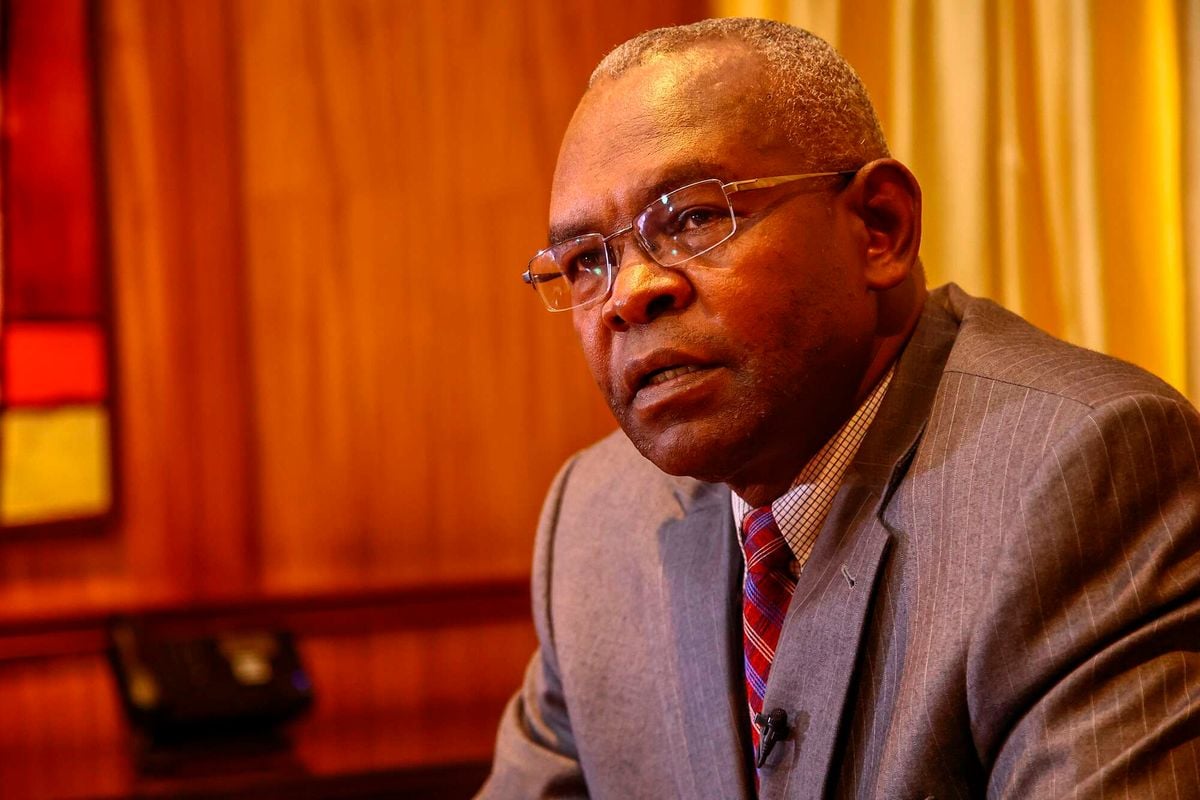
  • This is Follow the Money, our weekly series that unpacks the earnings, business, and scaling strategies of African fintechs and financial institutions. A new edition drops every Monday. 

    The first time Adepeju Adenuga, an English PhD student, heard about Opay was during Nigeria’s cash crunch in 2023.

    “I was trying to make a transfer with my banking app, but it wasn’t even opening because of the cashless chaos at the time. It was the vendor I was trying to buy something from that told me to download Opay,” she said. Since then, Opay has become her go-to banking app for micro-transactions.

    For Bolu Omotayo, a journalist, it was a bank glitch in 2024 that made her switch to OPay. “I couldn’t access my salary for about a week, but someone told me about a feature on the app,” she recalled. “You can link another bank’s card to your OPay account and transfer money between third-party banks using the OPay app. That is what saved me.”

    Adenuga and Omotayo are not isolated cases. Each banking failure has pushed more Nigerians toward OPay or PalmPay. That steady shift helped drive mobile money (MMO) transactions to ₦20.71 trillion ($13.49 billion) in the first quarter of 2025, according to data from the Nigeria Inter-Bank Settlement System (NIBSS).

    This is a 1,518.64% increase from the ₦1.28 trillion ($833.43 million) recorded in Q1, 2021. Given that Q1 had 90 days, this works out to ₦230.09 billion ($149.89 million) daily, ₦9.59 billion ($6.25 million) per hour, ₦159.78 million ($104,091) every minute, and ₦2.66 million ($1,734) per second in Q1 2025.

    Despite this growth, MMO transactions still pale in comparison to the ₦284.99 trillion ($185.66 billion) conducted through instant transfers via traditional banking channels in the same period.

    17 companies are licensed by the Central Bank of Nigeria (CBN) to operate as mobile money operators, but OPay and PalmPay dominate. “OPay and PalmPay are the most prominent non-MNO-led mobile money providers and have gained significant market share in Nigeria since receiving their MMO licence,” stated GSMA, the global telecom industry body.

    Made with Flourish

    How they won

    OPay and Palmpay rode a mix of timing, strategy, and luck. They tapped into Nigeria’s mobile boom, offering free and fast transfers in their early years, then heavily discounted rates as they matured. They gained credibility during moments when banks broke down, like the CBN’s failed naira redesign and withdrawal policy in 2022, and repeated bank glitches in 2024.

    Their growth also mirrors a global trend. In 2024, mobile money transaction values rose by 15% to $227 billion, with Sub-Saharan Africa still the epicentre of growth.

    More than a third of new active accounts in 2023 came from West Africa, driven by Nigeria, Ghana, and Senegal. Unlike East Africa, where telcos like Safaricom’s M-Pesa led growth, West Africa’s fintech boom has largely been driven by non-MNO players like OPay and PalmPay.

    The beginning

    OPay began operations in 2010 as PayCom Nigeria Limited, a mobile money platform incubated by Telnet (Nigeria) Limited.  But it wasn’t until 2018, after Opera — owned by Chinese billionaire Yahui Zhou—acquired it, that it became a household name.

    Opera currently owns 9.4% of the company, with its stake valued at $258.3 million in 2024, placing OPay’s valuation at $2.75 billion.

    PalmPay launched in 2019 with a $40 million seed round led by Chinese mobile phone maker Transsion. This partnership gave the company a powerful distribution advantage, with its app preinstalled on Tecno, Infinix, and Itel smartphones, the dominant brands in Nigeria.

    OPay won the hearts of many Nigerians with its super app approach, offering numerous services. Its bike-hailing arm was particularly popular. However, a 2020 ban on bike rides in Lagos forced the company to focus exclusively on fintech, leveraging its vast agent network.

    PalmPay’s Transsion partnership gave it a ready-made user base, helping it grow to over 35 million. By 2023, Transsion and Xiaomi accounted for 85% of smartphone shipments into Nigeria, according to Canalys.

    Agents, trust, and scale

    Both companies grew aggressively by investing in agents. By 2023, OPay had over 500,000 agents, and PalmPay claims to have over one million.

    Mobile money agents serve as retail outlets and trust bridges. In areas with low smartphone penetration, they process deposits, withdrawals, airtime purchases, bill payments, and help with transfers. They are also the face of these companies in places where they do not have physical locations.

    These agents were able to help OPay and PalmPay expand aggressively by onboarding unbanked users with lower know-your-customer (KYC) requirements, in line with the CBN’s goal of increasing financial inclusion.

    Free transfers work

    OPay offered free transfers until June 2023, after which it charged ₦10 after the third transfer daily. PalmPay still continues to offer free transfers.

    Having deep-pocketed investors made this sustainable. Opay has raised $570 million so far, while PalmPay has raised $140 million.

    CBN’s fumble, fintechs gain

    The CBN’s naira redesign in 2022 was meant to push Nigerians toward cashless payments. Instead, it exposed the fragility of banks’ systems as transaction failures spiked, ATMs ran dry, and banking apps crashed.

    OPay and PalmPay benefited heavily from these glitches. By March 2023, they were Nigeria’s most downloaded finance apps. By October 2023, OPay was the country’s most-downloaded app. Having agile IT infrastructures due to their fintech-first approach enabled them to rapidly scale capacity.

    This also translated to revenue boosts. PalmPay’s revenue rose to $63.90 million in 2023, a 31,850% increase from $0.20 million in 2020. OPay’s revenue numbers remain undisclosed, but it reported 10 million daily active users and 100 million daily transaction volumes in 2024.

    In 2025, Chika Nwosu, the managing director at Palmpay, recently disclosed that the firm now processes 15 million daily transactions with a 99.5% success rate.

    “Mobile money wasn’t always perceived as viable, but we identified a core problem: system reliability, especially for simple things like free and seamless transfers,” he said in May. “So we invested in technology that’s efficient and reliable.”

    Betting on cards

    OPay and Palmpay are betting on cards to reach the semi-digital and offline majority. Their push is less about competing with banks and more about providing options to their user base.  

    “Not every user is a young, digital-first Lagosian. Some live in towns with limited phone access or want the flexibility to shop online,” Sofia Zab, Palmpay’s chief marketing officer, noted. “If we want to serve every Nigerian, we need to build for every Nigerian, and that includes access points such as our app and also our agents, USSD, and now cards.”

    Palmpay aims to issue 5 million cards before the end of 2025. In 2024, OPay and Moniepoint (another fintech) were responsible for distributing 17 million cards.

    Financial inclusion, the ultimate goal

    MMO providers have impacted financial inclusion, which stood at 64% in 2023, according to Enhancing Financial Innovation and Access (EFInA), while boosting the use of digital payments.

    “There is still a gap in the number of the adult population that is unbanked, and this responsibility falls on fintechs,” Nwosu said during a recent TV interview.  

    However, their success has led to regulatory scrutiny. In 2024, regulators froze onboarding for six weeks over compliance gaps in anti-money laundering (AML) and fraud prevention standards, and fined some fintechs, including OPay, ₦1 billion after an audit revealed compliance issues. 

    They have since tightened know-your-customer (KYC) and compliance frameworks to regain trust. The growth of MMOs has been a net positive to the financial ecosystem, but many still treat them as conduits for cash rather than long-term stores of value. Changing that perception and convincing Nigerians to save, invest, and borrow with them remains their toughest challenge yet.

    Editor’s note: An earlier version of this article stated that PalmPay had introduced transfer fees. This has been corrected.

    Mark your calendars! Moonshot by TechCabal is back in Lagos on October 15–16! Join Africa’s top founders, creatives & tech leaders for 2 days of keynotes, mixers & future-forward ideas. Early bird tickets now 20% off—don’t snooze! moonshot.techcabal.com
  • On July 23, 2025, Visa opened its first African data centre in Johannesburg, South Africa. For the global payments giant, this is more than an infrastructure play—it’s part of a $1 billion bet on financial inclusion, digital innovation, and Africa’s fast-growing cashless economy.

    “Africa makes a very important part of our strategy globally,” Michael Berner, Visa’s Group Country Head for Southern and East Africa, told TechCabal. “Over the next few years, Africa will be playing an even bigger role in the scheme of things in digital payments.”

    The move comes at a pivotal moment. Unlike other regions that shifted gradually from cash to cards and digital payments, many African markets have leapfrogged into mobile money and cashless transactions. This rapid adoption highlights why Visa—describing itself as a “60-year-old fintech”—chose now to embed its global backbone in Africa.

    A foundation for inclusion and SMEs

    The Johannesburg centre is part of a broader commitment to expand access, with financial inclusion and support for small and medium enterprises (SMEs) at the heart of Visa’s strategy. Around 350 million adults in Africa remain outside the formal banking system, and digital payments are seen as one of the fastest ways to close that gap.

    “By promoting digital technology in payments, we help significantly with financial inclusion,” Berner said. SMEs are a particular focus. According to a World Bank Enterprise Survey, only 35% of payments received by SMEs in the region are digital, meaning a substantial 65% of transactions still rely on cash. 

    “Helping SMEs and merchants to accept payments is very important,” he added. ” They need a secure and fast way to collect payments, make transfers to suppliers, and pay employees. That’s what we can bring to the table.”

    African governments are reducing reliance on cash to drive transparency, boost tax revenues, and curb informal economic activity. Nigeria has introduced cashless policies by limiting withdrawals and expanding digital payments through providers like OPay and Moniepoint, while Kenya’s M-Pesa continues to anchor mobile money adoption. In South Africa, welfare and transport payments are being digitised to cut cash handling and fraud. Visa’s new data centre aligns with these efforts, providing the infrastructure to support digital transactions that benefit individuals, businesses, and policymakers alike.

    Built for AI and the future of commerce

    Globally, Visa processes about 65,000 transactions per second—more than 150 million daily—across 200 countries and territories. Meeting that demand securely requires vast computing power. The Johannesburg data centre is part of a $3.5 billion overhaul of Visa’s global platform, optimised for new technologies like artificial intelligence (AI) and tokenisation.

    More than 100 Visa products already use AI to enhance fraud detection, customer experience, and product innovation. “AI is the future of many things,” Berner said. “Our platform is fully optimised for AI, and this data centre ensures we have the capacity to deploy those tools across Africa.”

    Until now, Visa supported Africa’s payments ecosystem from data centres in the United States, the United Kingdom, and Singapore. The new Johannesburg facility—its fifth worldwide—brings processing power closer to the continent. The other four centres are in Virginia and Colorado in the U.S., London, and Singapore.

    A $1 billion commitment to Africa

    The investment in South Africa amounts to 1 billion rand (about $54 million) over the next three years, but it sits within Visa’s larger $1 billion pledge to Africa. Beyond infrastructure, the company is backing fintechs, women entrepreneurs, and SME-focused platforms. In January, it invested in Nigerian fintech unicorn Moniepoint, and continues to support startups through its Visa Accelerator Africa program.

    The launch also comes at a symbolic time, with South Africa holding the G20 presidency in 2025. For Visa, it is a chance to underscore Africa’s growing weight in the global financial system. “We want to bring best-in-class infrastructure and demonstrate how Africa plays a very important role in the G20 context,” Berner said.

    Building for the long term

    While the Johannesburg centre will serve only Visa’s operational needs, it also lays the groundwork for wider innovation. Beyond payments, Visa envisions a future of data-driven tools, AI-enabled services, and value-added solutions tailored to Africa’s unique digital economy.

    Talent development is a key focus, as Africa grapples with a widening digital skills gap. Today, just 11% of tertiary graduates receive formal digital training, and by 2030, an estimated 650 million workers will need new competencies. The shortage is acute in areas like cybersecurity, where 68,000 professionals are missing, and South Africa, which faces a deficit of 20,000–70,000 IT specialists in AI, data, and software development. Visa views this challenge as an opportunity, positioning Africa as a source of future technology leaders.

    “We can coach and nurture talent here and see it taking bigger roles in our ecosystem,” Berner said.

    Ultimately, Visa’s new data centre is a response to today’s digital payment needs and a long-term bet on Africa’s role in shaping the global financial future. “This is not just about today,” Berner added. “It’s a long-term vision. Africa’s role in digital payments is only going to grow—and we want to be ready to support it.”

    Editor’s note: A previous version of this headline stated that the data centre cost $54 million. Visa has since clarified that the figure covers the data centre as well as other projects, and the headline has been updated accordingly.

    Mark your calendars! Moonshot by TechCabal is back in Lagos on October 15–16! Join Africa’s top founders, creatives & tech leaders for 2 days of keynotes, mixers & future-forward ideas. Early bird tickets now 20% off—don’t snooze! moonshot.techcabal.com
  • Lebara Nigeria, a subsidiary of the London-based global telecom operator Lebara Group, has launched its Number Reservation Portal, enabling customers to secure their preferred mobile numbers ahead of its official launch in Q3 2025. The system, built around the carrier’s 0724 prefix, allows users to lock in combinations with personal significance such as birthdays, lucky numbers, or simple patterns.

    Users must be at least 13 years old and provide basic details to receive a one-time password via email. After verification, they are required to input their National Identification Number (NIN), which the system uses to confirm personal data, including date of birth. Customers are then shown a list of available numbers to choose from, with a confirmation email completing the reservation.

    Lebara says this move is about personalisation and customer empowerment. “Our objective is to synergise personalization with cutting-edge technology, thereby empowering customers to reserve numbers that align with their digital identity,” said Mary O. Akin-Adesokan, Lebara Nigeria’s Chief Operating Officer. 

    The number-reservation scheme is part of Lebara’s push to carve out space in Nigeria’s crowded telecom market. By allowing users to select their own numbers before the service goes live, the company is betting that early personalisation will help build loyalty and signal its customer-first approach.

    Lebara, with an established presence across Europe and other regions as a mobile virtual network operator (MVNO), is positioning its entry into Nigeria as a credible alternative for customers seeking affordable, high-quality mobile services. 

    Leveraging its global MVNO expertise, the company will operate a lean, technology-driven model on the existing network infrastructure to keep costs low and pricing competitive. At launch, Lebara will offer nationwide coverage with full interconnectivity, a dedicated 0724 number series, and both SIM and eSIM options. Beyond connectivity, it is partnering with local government and the Ministry of Arts, Culture, Tourism, and Creative Economy to roll out public WiFi hubs and promote digital inclusion for creators and underserved communities. Its core proposition centers on affordability, transparent real-time billing, and a customer-first service model to capture market share and challenge incumbents.

    However, Lebara’s entry will not go uncontested. 9mobile and Vitel Wireless already present strong competition in Nigeria’s emerging MVNO space, each leveraging unique advantages. 9mobile, an established mobile network operator with wholesale capacity, holds a competitive edge by enabling MVNO partnerships and defending its subscriber base through attractive retail offerings. 

    Vitel Wireless focuses on affordable, community-driven connectivity and digital services, appealing to price-sensitive users and underserved groups. Together, they narrow Lebara’s differentiation space, requiring it to go beyond its traditional strength in low-cost international calling to win local relevance.

    Lebara has confirmed plans to launch full services before the end of Q3 2025, adding to the expanding range of mobile options available to Nigerian consumers.

  • In partnership with
    Fincra logo
    Lire en Français
    اقرأ هذا باللغة العربية

    Happy new week. ☀️

    We know it’s Monday and motivational quotes are everywhere you turn, but if you’re looking to chill after today’s grind and are uncertain of what to watch, Netflix has introduced a new AI chatbot that can make recommendations for you. Just type in what you’re in the mood to watch and the AI chatbot will sort you out.

    In other news, after two years and four months of bringing you your daily dose of African tech news, today’s my final sign-off. It’s been a joy digging up stories for you alongside the incredible newsletter team. Now, I’m joining the ranks of loyal readers—just like you—eagerly waiting to see what Emmanuel, Yemi, Ife, and the rest of the newsroom cook up next.

    Ciao for now!

    – Faith

    today's edition image
    • Japan’s Degas Limited makes a $100 million investment in Ghana
    • MTN reports over 5,400 fibre cuts in seven months
    • Truecaller claps back at POPIA allegations
    • NIGCOMSAT targets $5.2 million revenue
    • World Wide Web 3
    • Job Openings

    Funding

    Japan’s Degas Limited makes a $100 million investment in Ghana

    Image source: World Bank

    It looks like Japan opened the floodgates last week and went gung ho about Africa. 

    After launching a VC fund and agreeing a $169 million electric vehicle (EV) financing deal in Kenya, Japan also opened its purse in Ghana.

    Degas Limited, a Tokyo-based agri-fintech company, pledged to invest $100 million over the next four years to build an AI-powered agricultural hub in Ghana. The hub will span 122,000 acres of space where maize, rice, and soy will be grown alongside facilities for storage and processing.

    The AI-powered hub will connect farmers with credit, seeds, fertilizer, and transport, and track crops from planting to market. It will cut waste and raise yields in a country where farming employs over a third of the people but is often held back by poor storage, bad roads, and reliance on rain. Smallholder farmers in particular struggle to get loans or move produce quickly enough to avoid spoilage.

    Why this is a big deal: Ghana’s President John Mahama is backing the project, calling it part of his push to make farming less vulnerable and more profitable. Ghana has long wanted to bring more private capital into agriculture, but weak supply chains and lack of trust between banks and farmers have slowed that down.

    The big picture: Degas has worked with cocoa farmers, improved regenerative agricultural practices, and financed small-scale farmers in Ghana before, yet it hasn’t made similar bets elsewhere in Africa or Asia. This $100 million plan is its first big swing, and it may show whether Ghana can be a launchpad for Japanese agri-investment across the continent.

    eCommerce Without Borders: Get Paid Faster Worldwide

    Whether you sell in Lagos or Nairobi, customers want local ways to pay. Let shoppers check out in their local currency, using cards, bank transfers, or mobile money. Set up seamless payments for your global online store with Fincra today.

    Telecoms

    How roadworks are knocking off MTN Nigeria’s network

    Image Source: Google

    If you’ve noticed that your internet suddenly disappears or your network service randomly becomes unavailable, here’s why. 

    Between January and July 2025, MTN Nigeria reported that it has suffered over 5,400 fibre optic cable cuts, with 760 cuts occurring in July alone. Things went berserk in June with over 1000 incidents.

    The culprits? Road construction and vandalism. Over 60% of the cuts happen when states roll out new roads. Niger state alone is building over 500km of new roads and aims for 2,000km in four years; a plan that is good for transport systems, but bad for buried cables. I guess that is what happens when digital highways show up before actual highways.

    The other headache is your usual suspects: vandals, who are either stealing or deliberately destroying the cables. Why? Your guess is as good as mine.

    It’s not just an MTN problem. Airtel, Glo and 9Mobile have also reported severe disruptions in their network due to fibre cuts. The latest disruption happened in June, which affected nine Nigerian states. The Nigerian Communications Commission (NCC) says Nigeria now sees an average of 1,100 fibre cuts every week.

    Zoom out: Nigeria still needs thousands of kilometres of new roads, but the fibre lines are already in the ground. The country needs both: better roads and stronger connectivity. If new roads and buried cables keep clashing, network outages will take a permanent place on TechCabal’s daily headlines. And until there’s a permanent fix, one will keep undoing the other.

    Paga Engine powers the boldest ideas in Africa

    You’ve got customers, but do you have the right infrastructure in place? Don’t let outdated systems hold you back. Paga Engine is the fintech backbone built for businesses like yours. Read the full article.

    Companies

    Truecaller claps back at POPIA allegations

    Image Source: Paul Sawers/VentureBeat

    Do you remember when Truecaller was accused of breaking South Africa’s data privacy law for false phone number blacklisting? You don’t?

    Here’s a recap: Truecaller came under fire in South Africa after businesses complained that their numbers were unfairly flagged as spam. Some even accused the app of charging a steep fee of $590 a month just to whitelist them so that they can call their clients again. South Africa’s Information Regulator confirmed it was looking into whether this practice might breach the country’s data privacy law.

    There’s more: Beyond blacklisting, privacy experts argue that the popular calling screening app may be violating South Africa’s Protection of Personal Information Act (POPIA). The regulator is concerned that the app feeds numbers from its users’ contact lists into its database.

    Well, Truecaller has come out to say that’s not what’s happening at all.

    Their defence: Truecaller insists that while the app does take permission to access your contacts, it doesn’t mean your entire address book is being uploaded to their servers. The company says it only checks whether an incoming call matches a number already saved in the users’ phonebook.

    Why does this matter? If the regulator rules against Truecaller, it could be forced to overhaul how it operates in South Africa, including a change in its data practices or restricting certain features. This would affect people who rely on the app to stream spam callers. On the flip side, stricter enforcement could set standards for data protection in South Africa.

    Even with Truecaller’s denial, the information regulator is still digging in, and the debate over privacy and consent is only just heating up.

    Here’s what happened at Paystack in 2024!

    See what Paystack built last year! From major product upgrades to new ways we supported African businesses. Check out our Year in Review →

    Economy

    NIGCOMSAT wants to earn $5.2 million from broadband in three years

    Image Source: Tenor

    Nigeria’s state-owned satellite company, NIGCOMSAT, wants a piece of the country’s broadband pie. On August 22, it announced plans to boost revenue by 8 billion Naira ($5.2 million) over the next three years by expanding its broadband services across the country.

    The company is on a grand mission to leave behind its bad reputation as a ‘cost-incurring’ government-owned entity.

    Why now? Broadband is currently the company’s most profitable service but only 7% of its capacity is currently put to use, with the remaining 93% still remaining idle. 

    NIGCOMSAT doesn’t want to sell directly to consumers. Instead, they are focused on becoming a service backbone that can work with internet service providers (ISPs) and enterprises to bring satellite broadband to schools, fintechs, health institutions, and government agencies in Nigeria and West Africa.

    So what? Focusing on broadband services could support the Nigerian government’s ambitious plans to reach 70% broadband penetration by December 2025. Increasing broadband access is critical for supporting a digital economy that can contribute to Nigeria’s broader economic growth targets. 

    Zoom out: Just this year, operators like MTN and Globacom have invested $1 billion on broadband infrastructure but penetration still lags at about 49%. The on-ground broadband ecosystem also faces significant threats from theft and vandalism. NIGCOMSAT hopes its satellite infrastructure can ease the current burden, but other satellite players like Starlink are increasingly gaining ground in Nigeria.

    CRYPTO TRACKER

    The World Wide Web3

    Source:

    CoinMarketCap logo

    Coin Name

    Current Value

    Day

    Month

    Bitcoin $112,700

    – 2.07%

    – 4.06%

    Ether $4,718

    – 1.44%

    + 25.77%

    XRP $3.01

    – 1.20%

    – 4.62%

    Solana $207.51

    – 0.57%

    + 11.53%

    * Data as of 06.00 AM WAT, August 25, 2025.

    Job Openings

    • Palmpay — Lead, User Growth — Lagos, Nigeria
    • Squads Game — Product Manager — Hybrid (Lagos, Nigeria)
    • Tuteria — Performance Marketing Specialist — Lagos, Nigeria
    • Flourish Health — Crypto Marketing — Lagos, Nigeria
    • Fairmoney — Growth Marketing Manager — Hybrid (Lagos, Nigeria)
    • Busha — Senior Technical Product Manager — Hybrid (Lagos, Nigeria)
    • Promasidor — Digital Marketing Specialist — Lagos, Nigeria
    • Parcelhero — Senior Performance Marketing Manager — Remote (Lagos, Nigeria)
    • Moniepoint — CRM Manager — Lagos, Nigeria
    • Reliance Health — Product Manager (Clinical Services) — Remote (Lagos, Nigeria)
    • Pharmarun — Growth Associate (B2B Sales – HMO Focus) — Lagos, Nigeria
    • There are more jobs on TechCabal’s job board. If you have job opportunities to share, please submit them at bit.ly/tcxjobs. 

    in other news image
    • “I started out of circumstance not ambition”: Day 1-1000 of Microware Solutions
    • Digital Nomads: How a $10 million contract kicked off Samuel Ajiboyede’s digital supply chain startup
    • AI giants race to scoop up elusive real-world data

    Written by: Emmanuel Nwosu, Opeyemi Kareem, and Ifeoluwa Aigbiniode

    Edited by: Faith Omoniyi

    Want more of TechCabal?

    Sign up for our insightful newsletters on the business and economy of tech in Africa.

    • The Next Wave: futuristic analysis of the business of tech in Africa.
    • TC Scoops: breaking news from TechCabal
    • TNW: Francophone Africa: insider insights and analysis of Francophone’s tech ecosystem

    P:S If you’re often missing TC Daily in your inbox, check your Promotions folder and move any edition of TC Daily from “Promotions” to your “Main” or “Primary” folder and TC Daily will always come to you.

    Email Us
  • In Nigeria, the vibrant holiday season often comes with an unusual problem: wasted gift cards. A cousin in London might buy an Apple Store voucher and send it to a loved one in Lagos, but with no official Apple store, that card becomes little more than a shiny piece of plastic that sits unused until it expires.

    This gap has quietly spawned a parallel economy. As of 2024, Nigeria’s gifting industry is worth $2.1 billion and is projected to grow to $3 billion in the next three years. Across the country, gift cards have taken on another function entirely as a form of currency. 

    A growing number of people prefer to sell gift cards for cash, and middlemen—gift card brokers—have stepped in to bridge the divide between foreign retailers and local realities.

    Cardtonic, a Nigerian fintech startup, built its business on that simple proposition: turning unused or inaccessible gift cards into liquid money. 

    “The major issue was, people would get Nike or Adidas gift cards from their siblings abroad, and by the time it got to them in Nigeria, they didn’t know what to use it for. It just went to waste,” said Oluwatomisin Oduyemi, Cardtonic’s growth lead. “Our founders realised this was a problem that needed a solution.”

    Get The Best African Tech Newsletters In Your Inbox

    Building a business out of waste

    Founded in 2019 by Balogun Usman and Kayode Faturoti, Cardtonic—operating under its legal setup, The Tonic Technologies—started as a cryptocurrency trading app before pivoting to gift card trading. Seeing the lack of utility around gift cards in Nigeria, the startup set out to provide a solution to curb wastage. 

    Cardtonic positioned itself as a reliable broker, where users could send in their gift cards, the startup validates them, and then offloads them to vetted partners who pay cash in return to take the cards. 

    That efficiency is central to its appeal. Some cards, known internally as “fast cards,” can be validated and cashed out within 10 minutes. Others, such as store-specific vouchers that require manual checks, take longer.

    In January 2025, Cardtonic appointed Emmanuel Sohe as CEO, claiming it now serves more than one million users. Yet only around 500,000 to 600,000 of those users are considered “active”—customers who trade gift cards or use its other payment features at least once a month. The startup also claims it processes 400,000 gift cards monthly, emphasising that quick turnaround is its moat. 

    “Over time, we’ve been able to optimise the transaction time from when you submit your cards to when you get paid, to about 10 minutes for the fast cards,” Oduyemi said.

    The business comes with plenty of risks. Some cards simply don’t work. Customers send in codes that turn out to have been used already, others submit numbers that don’t exist, and with physical cards, the digits sometimes get damaged when the surface is scratched off. These problems are so common that Cardtonic keeps a team focused only on quality checks before any payment is released.

    Fraud is another part of daily life in this market. Scammers pose as company staff, try to hack into user accounts, or trick people into handing over their codes. And once a gift card code is stolen or redeemed elsewhere, the value is gone for good. 

    “Whenever you’re dealing with digital assets, there will always be an issue of authenticity,” said Oduyemi.

    To reduce the risks, Cardtonic requires two-factor authentication on accounts and regularly warns customers to keep their cards secure. The startup has also been pushing product education, telling users not to share their cards among friends to prevent theft.

    The economics of arbitrage

    Cardtonic’s business runs on thin margins and constant balancing. At its core, the company buys gift cards at a discount and resells them to partners at a mark-up. Profit depends on volume and the spread between buy and sell rates. But those spreads are tied to exchange rates and demand cycles, which makes them unpredictable. A sharp swing in the naira-dollar rate can turn what looked like a profitable trade into a loss.

    “Some specific gift card trades might not be the most profitable for us,” Oduyemi admitted. “If the rate fluctuates between when a user sends in a card and when it is approved, sometimes we still have to make up the difference.”

    That fragility explains why the company relies heavily on human oversight—the company employs about 120 employees. Cardtonic needs staff to vet cards, assign trades to the right partners, and handle disputes in cases when gift cards fail the validity check. This makes the business labour-intensive than typical payment fintech platforms, which depend on automation.

    “There are many things that cannot just run on autopilot,” Oduyemi said, contrasting the model with crypto platforms where blockchain finality locks transactions instantly.

    Yet Cardtonic claims the numbers add up. The company has been self-funded from the start and says it has been profitable for years, though it declined to disclose revenue. It also has no immediate plans to raise external capital. 

    “We’re not looking to raise because we have not seen a very strong reason to,” Oduyemi said. “We’re profitable, sustainable and conservative to a good extent. [Raising external funding] is not top of mind.”

    That stance reflects the nature of the business: cash comes in with every trade, and growth remains a function of expanding transaction volume rather than burning money on scale. But it also suggests limits; without fresh capital, Cardtonic’s expansion into new markets and new verticals will likely remain measured rather than aggressive.

    Gift card trading falls on no man’s land

    What complicates the picture is regulation. While crypto and mobile money are closely monitored by Nigeria’s Central Bank, gift card trading falls into a less defined space. 

    Cardtonic says it complies with anti-money laundering (AML) measures and is pursuing licences where required, but the business still exists in a grey area; one foot in fintech, another in an informal global trade.

    This lack of clarity could be both a blessing and a vulnerability. On one hand, it allows the company to scale without the burden of heavy compliance costs. On the other, it leaves Cardtonic exposed to sudden regulatory shifts, much like the clampdowns that forced it to spin off its early crypto product into a separate app.

    Get The Best African Tech Newsletters In Your Inbox

    From gift cards to “super app”

    As competition in gift card trading intensified, Cardtonic sought to broaden its offerings. Today, the app also sells gift cards directly, processes bill payments, issues virtual dollar cards, and runs an e-commerce gadget marketplace. The startup calls itself an “all-in-one payments app,” with gift card trading and dollar card streams providing the bulk of its revenue.

    The most significant of its newer products is the virtual dollar card, which it launched in 2024 to enable Nigerians to pay for international subscriptions and e-commerce purchases. 

    Cardtonic charges a card creation fee of $1.5—cheaper than some other dollar cards in the market—and cross-border charges on non-USD transactions as usage increases. Oduyemi said the pricing move was deliberate.

    “What’s the point of releasing a card that is pricey and only a few people can access? Then what solution are you solving?” she asked rhetorically, referring to Cardtonic’s virtual dollar card product.

    Yet, with legacy banks now enabling international payments on local naira cards, it throws the sustainability of virtual dollar cards into question.

    Cardtonic’s other services remain secondary. Bill payments, for example, rely on licenced partners rather than in-house infrastructure. Just Gadgets, Cardtonic’s asset-light gadget marketplace, functions more as an add-on to the core business. The platform sources inventory from third-party vendors while Cardtonic handles delivery through logistics partners. With this move, the fintech startup plays the connector role, rather than a full-scale e-commerce business, in hopes of keeping users in its ecosystem.

    The startup did not share specific revenue figures for Just Gadgets, but acknowledged it is the smallest contributor to its earnings.

    Marketing to the streets

    Cardtonic’s customer base skews toward young people. Many of them are students and gamers in their 20s, drawn to the speed and flexibility of earning from flipping gift cards. To reach them, the company leans heavily on influencer marketing and music culture. It has partnered with artists and skit makers, and even sponsors concerts.

    “Our users are typically young people. They are street smart. They listen to certain types of artists, and that’s why we focus more on long-term partnerships in music and entertainment,” Oduyemi explained.

    The company has also tried to root itself in the community in other ways. It runs an Upskill programme to train young people in tech skills, and says it is working on a scholarship scheme to support students who might otherwise be unable to continue their education. In May, it also launched Tonic Football Club, a grassroots project that taps into Nigerians’ deep love of football while offering a pipeline for finding local talent.

    Together, these projects double as brand building and community outreach. They help Cardtonic remain visible in a crowded fintech space where trust and recognition are everything, but they also highlight the tension in its identity: part formal financial services provider, part youth culture operator.

    Cardtonic’s outlook

    Cardtonic is launching international bill payments and eSIMs by next quarter, while also eyeing expansion into East Africa. It also wants to introduce contactless cards as part of its push into everyday payments. On the business-serving side, Cardtonic plans to monetise its application programming interfaces (APIs), making it possible for other businesses to offer gift card trading directly into their own services out of the box. 

    Cardtonic is built on arbitrage; converting the value of global gift cards into local cash in a market where it competes with other startups such as Glover, Dtunes, and Cardpadi.

    As long as gift cards remain popular abroad and inaccessible at home, that model has room to grow. Yet, the poser on whether Cardtonic can anchor a super app, in a market crowded with better-capitalised fintech competitors, is another question entirely.

    For now, it thrives in the same space it began: taking wasted tokens of goodwill and turning them into usable money. What comes next will test whether that foundation can support something bigger.

    Mark your calendars! Moonshot by TechCabal is back in Lagos on October 15–16! Join Africa’s top founders, creatives & tech leaders for 2 days of keynotes, mixers & future-forward ideas. Early bird tickets now 20% off—don’t snooze! moonshot.techcabal.com

TechCabal is a future-focused publication that speaks to African innovation and technology in depth

Follow us

  • X
  • LinkedIn
  • TikTok
  • WhatsApp
  • Facebook
  • Instagram
  • YouTube

Copyright ©2025. All rights reserved. Privacy & Terms.