

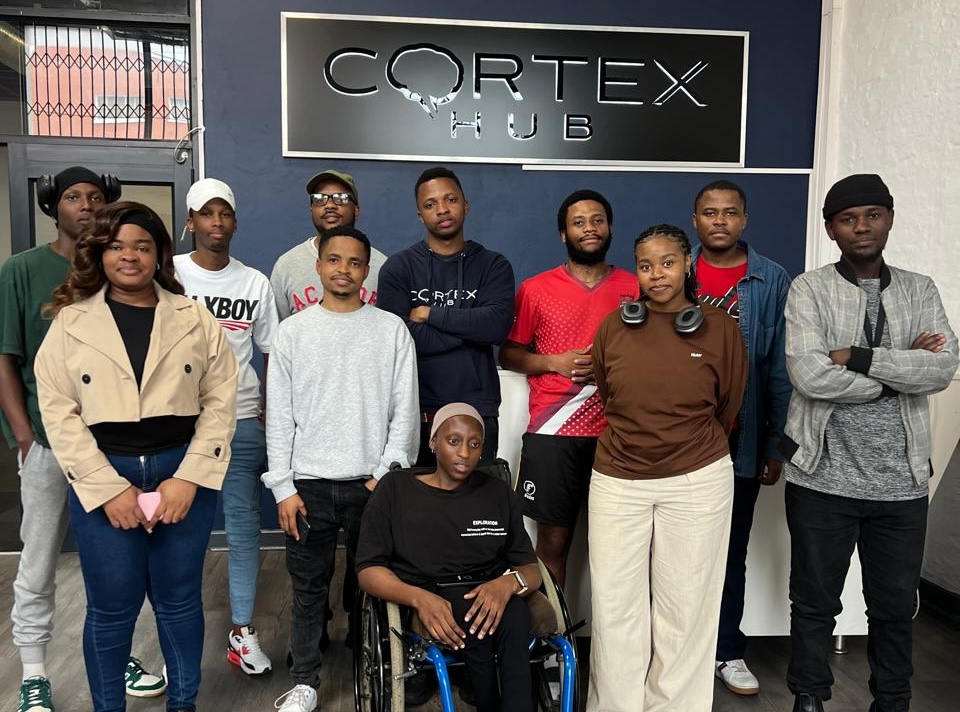
Cortex Hub, the South African accelerator turning 15 next year, is launching its most ambitious program yet: a continent-wide hackathon inviting 40 African cities to build homegrown AI agents—systems capable of acting autonomously with minimal human input.
The initiative is designed to counter scepticism over Africa’s ability to build such technology amid high costs, skills gaps, regulatory hurdles, and risks of bias or unreliable systems. Winners will receive a $10,000 non-equity grant, but founder and patron Andile Ngcaba says the real prize is ensuring AI reflects Africa’s values, languages, and traditions rather than foreign defaults.
Founded in 2015 as a nonprofit space for young Africans to experiment in robotics, engineering, and storytelling, Cortex Hub has grown into one of the continent’s longest-running accelerators. Over the years, more than 80 graduates have passed through its labs, hackathons, and green rooms at a time.
Why AI agents?
Artificial intelligence is vast, covering everything from GPUs and data centers to large language models (LLMs). Yet, Ngcaba believes the true future of how people will experience AI lies not in massive infrastructure, but in agents—the software “assistants” that fetch, process, and deliver information in real time.
“Agents are everything in AI,” he told TechCabal in an interview. “They will be how most people interact with AI, whether at work, at home, or when dealing with the government.”
Unlike LLMs trained on historical data, agents specialise in retrieving live information. For instance, if someone in Lagos wants to know the real-time weather in Kano, a prompt to ChatGPT or Claude won’t work unless an agent fetches that data from a weather service. That agent relies on what’s called a Model Context Protocol (MCP) to connect with servers, gather information, and deliver it back to the user.
This invisible dance between LLMs, agents, and protocols will define the next phase of digital life. Ngcaba predicts that in just a few years, more than 10 billion AI agents will be roaming the internet on behalf of users—booking travel, processing payments, or even renewing passports.
The agentic economy
Cortex Hub describes this vision as the ‘agentic economy,’ a future where AI agents interact not only with humans but also with each other. Picture a citizen’s AI agent engaging with a government agent to renew a passport, or a business agent negotiating directly with a supplier’s agent in real time.
Building such AI systems within city governments is no small task. The barriers are steep: most municipalities lack the specialized talent, advanced infrastructure, and steady funding required to develop and sustain robust AI agents. On top of that, challenges around data privacy, cybersecurity, and outdated IT systems raise the risk of breaches, system failures, and declining service quality.
Cortex Hub rolled out a three-phase hackathon series that will run from late 2024 through 2026. The first phase, scheduled between October and November 2024, focuses on building model context protocols (MCPs), the backbone for how AI agents fetch and process real-time information.
The second phase, planned for February to May 2025, will move participants into developing agent communication protocols (ACPs). These protocols are essential for enabling agents to communicate directly with one another, creating the foundation for a more interconnected agentic ecosystem.
Finally, the third phase, set for August to October 2026, will guide participants in building their own “super agents.” This stage will allow innovators to create fully functional AI agents tailored to their local contexts and needs, marking a major step toward Africa’s broader agentic economy. Winning startups will receive a $10,000 non-equity prize.
Localisation and cultural context
One of Ngcaba’s biggest concerns is that AI today is largely trained outside the continent. “If AI does not understand my culture or my language, I can’t apply it,” he argues.
For him, African AI must be grounded in the continent’s languages, traditions, and environments. That means building MCPs and agents that can interpret Igbo, Yoruba, Swahili, or Wolof—and respond with an understanding of the local setting. “We must build those platforms ourselves,” he insists, warning against relying solely on global AI systems that overlook African realities.
This push is also why Cortex Hub wants 40 African cities to start experimenting with building their own MCPs. From Lagos to Dakar, Cairo to Maputo, each city can anchor its own agentic ecosystem, ensuring AI tools reflect local needs.
At the heart of this strategy is AI sovereignty for Africa, the continent’s ability to develop, control, and govern its own artificial intelligence systems, data, and infrastructure rather than depending on foreign technologies and platforms. Ngcaba introduces the idea of “sovereignty as a service.” In practice, it means governments partnering with local IT firms to build domestic data centers equipped with GPUs. Instead of storing sensitive state data abroad, this infrastructure would sit within African countries, powering AI systems that citizens can trust.
With this model, governments could offer services through AI-driven platforms. Instead of browsing static websites, citizens would engage interactive agents capable of answering questions, processing applications, and delivering services in real time.
Private sector partnerships would play a crucial role. Banks and businesses could finance infrastructure, while governments contribute data and regulatory support. The result: national AI systems rooted in African soil, not dependent on foreign platforms.
Training the next generation
Cortex Hub’s mission is not only technological but also educational. Its hackathons are paired with bootcamps to teach young developers how to build MCPs and agents using open-source tools. Many of these resources, like GitHub repositories for MCP, are already freely available, but African developers need guidance on applying them in local contexts.
“Context is everything,” Ngcaba said. By grounding AI in Africa’s languages and cultures, the continent can avoid being a passive consumer of foreign technologies and instead become a producer of agentic systems tailored to its realities.
“Africa must build agents that understand who we are, where we come from, and how we live,” he says. “That is how we ensure AI works for us, not the other way around.”
Mark your calendars! Moonshot by TechCabal is back in Lagos on October 15–16! Meet and learn from Africa’s top founders, creatives & tech leaders for 2 days of keynotes, mixers & future-forward ideas. Get your tickets now: moonshot.techcabal.com