

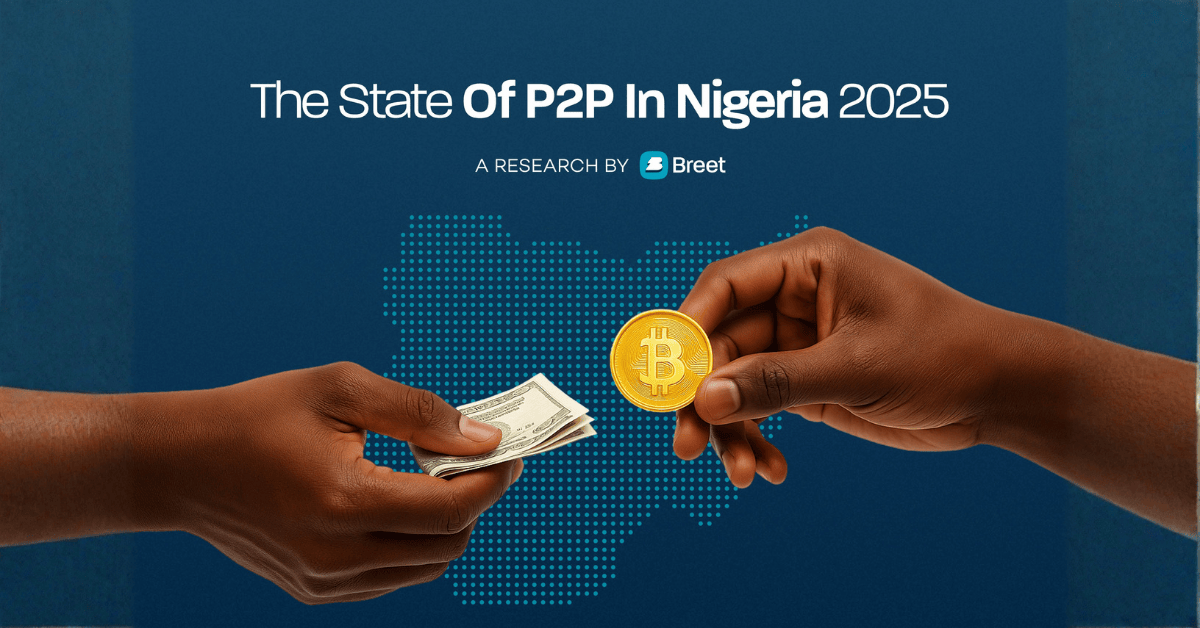
Nigeria relies heavily on peer-to-peer (P2P) networks for crypto liquidity. In 2023, the country ranked first for P2P exchange trade volume ranking on Chainalysis’ 2023 Global Crypto Adoption Index Top 20. As the crypto ecosystem grows, so does the complexity and frustration associated with trading with strangers. A new comprehensive research report by Breet, an automated over-the-counter (OTC) platform, has pulled back the curtain on the experience of everyday Nigerians in the P2P arena.
From analysing over 20,000 P2P-related tweets from the past three years (2022-2025), Breet discovered how Nigerians really feel about P2P crypto trading. The study was conducted over 314 hours, with a financial investment of $3,000 expended on trades and scraping infrastructure—hardware and software used to automatically extract large amounts of data from the web. Breet also deployed 30 team members as undercover traders who conducted 100 transactions across five major platforms: Bybit, Bitget, Gate.io, BingX, and Noones. Each tester followed a strict protocol, recording everything from exact timestamps and exchange rates to Know-Your-Customer (KYC) verification details and screenshots of every conversation with vendors.
The data from a social media analyses revealed a clear trend: negative sentiment dominates the public conversation on P2P crypto trading. When Nigerians talk about P2P on X (formerly Twitter), their dominant emotions vary between anger, fear, and exhaustion.
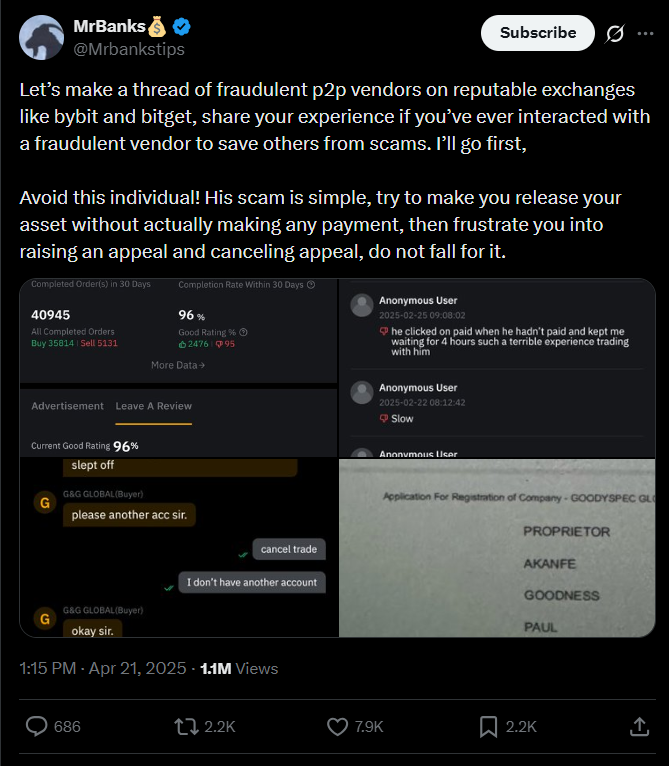
The research identified several recurring pain points across 20,000 tweets that fuel the negative sentiments:
- Fake payment alerts: This tactic appeared in 221 posts that Breet analysed.
- Unresponsive support: This entailed 239 mentions
- Suspicious vendors: 3,150 mentions warned about specific fraudulent vendors.
- Delayed payments: 552 mentions publicly complained of delayed crypto payments.
The report describes it this way: P2P trading in Nigeria is currently like Lagos traffic—sometimes it is smooth, but at other times it is a matter of “God abeg.” One of the most consistent findings from the live trades was that the rate displayed is rarely the rate received. Approximately 31% of transactions had payout discrepancies. This typically involves what the report termed “kobo chopping,” where merchants ignore decimals or round down to the nearest naira.
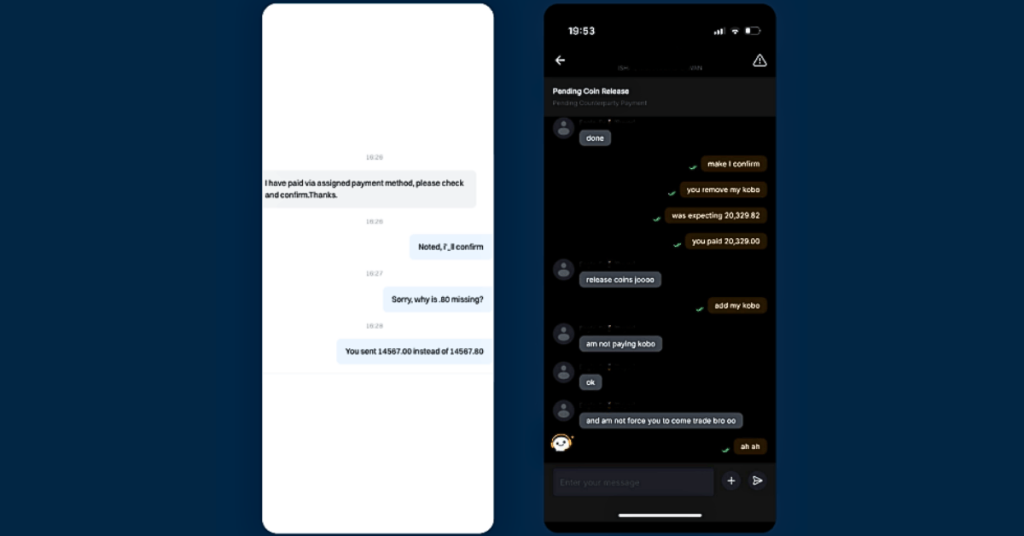
One merchant might argue that 12 kobo is insignificant, but the research notes that for a high-volume vendor doing 500 trades a day, these “forgotten” kobo can add up to over 2 million naira per year.
Beyond simple rounding, some “negotiator” merchants actively pressure users to accept deductions of 500 to 1,000 naira as their personal “profit” before they release funds. In one instance (page 22 of the report), one of Breet’s testers initiated a transaction and was to receive ₦21,782. However, the merchant sent ₦20,782, which was ₦1,000 short of the required amount without disclosing. Only after the tester recognised the discrepancy, sounded out and threatened to escalate the issue, did the trader release the ₦1,000.
Why the trader matters more than the platform
The fundamental issue highlighted by Breet is that P2P is not a single product, but a marketplace of strangers. Your experience depends entirely on the individual you are matched with, not the app you are using. While 100 per cent rated traders usually delivered smooth experiences, lower rated traders often brought “unpredictable chaos”.
Scam patterns are simple and repetitive, yet they continue to work because platforms can typically only react after the damage is done. Common tactics include marking a transaction as “paid” without sending money or attempting to harvest phone numbers to move the conversation off the platform, where escrow protections do not apply.
A shift to automated reliability
For beginners or busy professionals who want to avoid the frustrations of P2P trading, automated OTC platforms like Breet are becoming the preferred alternative. Unlike P2P, where the gamble is on a stranger’s mood, an OTC model allows you to trade directly with the platform.
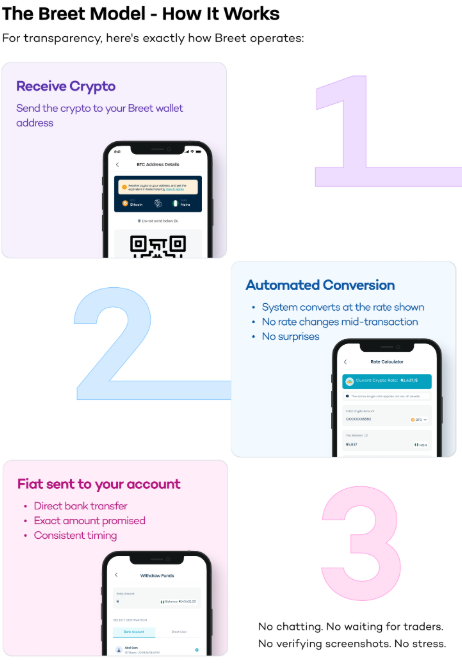
The benefits of this system, according to Breet’s comparison, include:
- Guaranteed accuracy: The Breet system calculates and sends the exact amount, including kobo.
- Zero fraud risk: There are no strangers to send fake receipts or negotiate rates.
- Consistent speed: Transactions are instant once the crypto is received, with no waiting for a merchant to come online.
While P2P may occasionally offer slightly higher rates due to market competition, many Nigerians are deciding that peace of mind and guaranteed payouts are worth more than a few extra naira. To read the full findings and see the data for yourself, you can access the full report here.
_______
The tools used to conduct this report include
- Apify (scraping)
- Python (Pandas, NumPy) for cleaning
- Cardiffnlp/twitter-roberta-base-sentiment model from Hugging Face’s Transformers library for sentiment classification
- Matplotlib and Seaborn for visualisations
- Manual review for context (where Nigerian sarcasm may be lost AI model)s used