



It’s midweek again! ☀️️
Yesterday’s newsletter had an embarrassing error with the Starlink blurb: somebody forgot to make final checks while the satellites were still buffering.
Shout-out to eagle-eyed readers who spotted the error and immediately wrote back to us: Olakunle, Sooter, Oluwatobi, Chidalu, Mileke, IbukunOluwa, Evans, Gracious, Donaustin, Awobeku, Achiever, Akinola, Godswill, and Favour; you’re the real superstars. We fixed that error on the website, which you can read here.
We’ve also kicked off the Francophone Weekly newsletter. We published the first edition of 2026, revealing the hidden growth curves in the ecosystem from 2025’s performance, and where the market is headed next. Read it here.
There are also several open roles this week: Big Cabal Media is looking for an Associate Videographer/Video Editor, a Senior Financial Analyst, and a Zikoko Citizen Reporter. If any of these roles catch your eye, don’t hesitate to send in that application. 🫵
Let’s dive into today’s dispatch.

Ridehailing
Kenyan passengers can no longer use Visa cards on Uber

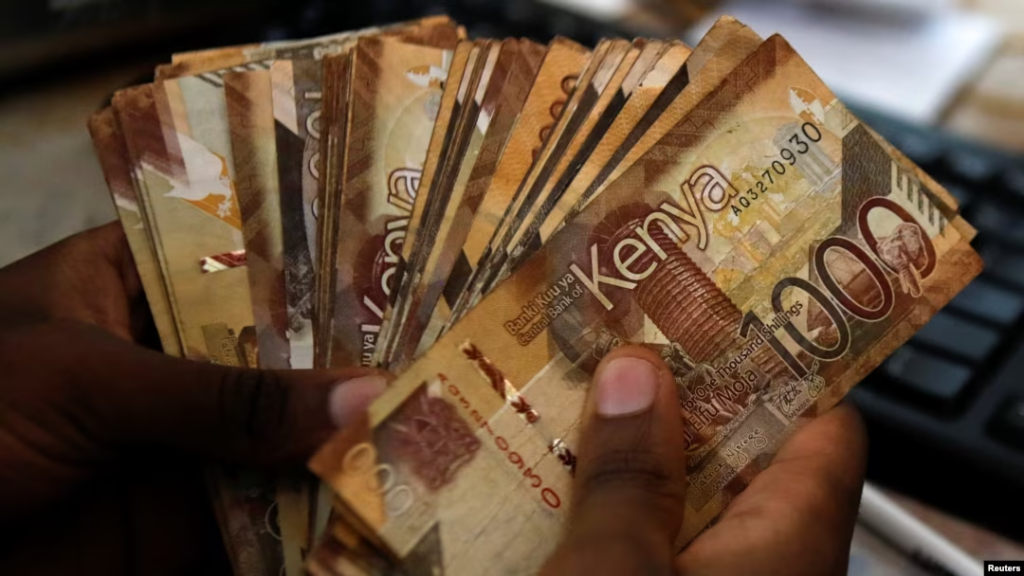
If you like to carry your Visa debit cards around for payments—or as paperweights in your purse that eventually lead to unplanned purchases—don’t try using them for Uber in Kenya. Uber Kenya, the subsidiary of the ride-hailing platform, no longer allows Visa cards on its app.
Behind the change is cost. Uber processes Visa payments in Kenya through its global merchant-of-record (MoR) setup, which routes transactions offshore. Each ride attracts FX spreads, interchange fees, and cross-border processing charges before the driver ever gets paid. As global payment costs climbed, those layers stopped making economic sense for everyday, low-value trips.
Why Visa and not Mastercard? Uber has not said. Mastercard remains available, alongside local options such as M-PESA and cash.
Why this matters is bigger than Uber. Global platforms are quietly rewiring payments to favour local rails that are cheaper, faster, and easier to reconcile. In Kenya, mobile money fits how people earn, spend, and settle far better than international card schemes built for credit-heavy markets.
What happens next? Corporate travellers lose a familiar expense tool. Local banks like KCB and Equity lose a channel they once used to push card adoption. Visa, meanwhile, finds itself edged out of one of Africa’s most advanced digital payments markets, not by regulation, but by economics.


Your 2026 demands disciplined financial operations

Fincra powers the payments infrastructure businesses rely on to collect, pay, and settle across local and major African currencies with confidence. Get started.
Economy
US Reps vote to extend AGOA to Africa

On Tuesday, the US House of Representatives voted overwhelmingly to extend the African Growth and Opportunity Act (AGOA), sending a lifeline to sub-Saharan African exporters who had been bracing for a prolonged trade vacuum. The bill, H.R. 6500, passed 340–54 and now heads to the Senate.
Catch up: Since 2000, AGOA has given eligible African countries duty-free access to the US market, helping anchor industries such as apparel, agribusiness, and light manufacturing. More importantly, it has provided predictability on tariffs and long-term access to US buyers. Investors built factories, hired workers, and structured supply chains around the assumption that access to the US market would not suddenly disappear.
Recently, that assumption has been under pressure. The Trump administration’s renewed focus on tariffs and bilateral trade deals has weakened confidence in long-term preferential trade programmes. AGOA briefly expired in September 2025, but the lapse, even though temporary, exposed the fragility of such trade arrangements and how quickly exporters can be left scrambling for alternatives.
Competitors like China moved quickly and targeted Kenya, proposing a sweeping zero-tariff deal that would cover all Kenyan-made goods. For Nairobi, the appeal is obvious: China already absorbs millions of dollars in trade flows from Kenya (and several other African countries), and offers scale without the political conditionality that shadows US trade policy.
The risk, however, is substitution rather than diversification. AGOA plugs Kenya into high-value US supply chains; China offers volume, not necessarily margin.
House approval restores momentum, but only partially. Senate action will determine whether AGOA regains its role as a credible trade anchor for Sub-Saharan Africa or continues to drift into a cycle of short-term extensions in the global trade order.
Internet
Uganda has restricted internet until “further notice”

After banning the importation of kits in December and switching off Starlink weeks later, Uganda has extended the “grace” to virtually every provider that makes internet connectivity possible ahead of Thursday’s general election. The government says it is restricting internet access to “mitigate the spread of online misinformation, disinformation, electoral fraud and related risks, as well as preventing the incitement of violence.”
The Ugandan government is borrowing a leaf from Tanzania’s book as it heads to the polls. In October, Tanzania, under an incumbent and contentiously re-elected leader, shut down the internet for five days for similar reasons. Both events point to a growing pattern in which African governments are using telecom kill-switches as a blunt instrument of political control rather than a narrowly tailored security response.
Between Blurring the lines: Thanks to the ubiquity of AI tools, it is now easier than ever to generate and spread (the potential virality of ‘juicy’ misinformation and fabricated videos). We’ve previously covered how available digital technology tools can manipulate the electorate’s response, based on the illusion they see. Yet, a total internet shutdown is impractical and borderline totalitarian. The internet underpins finance, healthcare, logistics, and consumer technology. Switching it off pauses daily life, pushing entire economies into stasis.
Like Tanzania, Uganda has form. In 2021, it shut down the internet during elections, citing security concerns. Today’s justification, too, is to curb misinformation, yet it might just be a convenient ruse. President Yoweri Museveni, in power since 1986, has twice changed the constitution—first removing presidential term limits in 2005, then scrapping the age limit in 2017—to extend his rule. Against that backdrop, Uganda’s “until further notice” sounds less like moderation and more like permanence.
Fintech
NALA and Noah have partnered to launch stablecoin payments
Pan-African payments startup, NALA, has partnered with UK-based payments infrastructure provider Noah to build a cross-border settlement network linking Africa and Asia. This network will allow businesses to receive dollars, settle operators in stablecoins, and give cash out in local currency within minutes.
After launching Rafiki, its B2B payments platform, last year, NALA is now wiring in stablecoins as the settlement layer, using Noah’s global dollar collection rails and its local licences across 18 countries.
Why stablecoins? Stablecoins behave like a digital currency that moves 24/7, sidestepping traditional banking delays to settle payments instantly. This partnership would mean that global companies can collect USD anywhere, convert it to stablecoins under regulated rails, and send local currency into African and Asian mobile wallets.
Why this matters: In 2024, stablecoins accounted for a large share of financial activity across Africa and Asia. Over $54 billion in stablecoin transactions were recorded in sub-Saharan Africa, while Asia recorded $519 billion. By using stablecoins as the settlement layer, NALA and Noah can instantly move these funds and give SMEs and global businesses predictable access to dollars.
CRYPTO TRACKER
The World Wide Web3
Source:

|
Coin Name |
Current Value |
Day |
Month |
|---|---|---|---|
 Bitcoin Bitcoin |
$94,986 |
+ 3.24% |
+ 2.17% |
| Ether |
$3,327 |
+ 6.01% |
+ 6.54% |
| XRP |
$2.15 |
+ 4.05% |
+ 7.68% |
| Solana |
$144.65 |
+ 3.41% |
+ 9.59% |
* Data as of 06.35 AM WAT, January 14, 2026.
Opportunities
- Detty December is getting more expensive, but young Africans are not backing down from the vibes. A 2025 Accrue report surveyed 631 people across Ghana, Nigeria, and Kenya—86% of them Gen Zs and late millennials aged 18–34—most living in moderately sized households with at least one income source, yet only 4% earn above $5,000 in total monthly household income. Yet, 60% say they planned to spend more in 2025, with outdoor events, concerts, house parties, travel, dining out, and leisure activities taking the biggest share of their budgets as Detty December cements itself as both culture and economic force. Many rely on money from abroad, receiving funds via mobile money, bank transfers, and virtual USD accounts, while navigating fees and delays. They plan ahead, stretch budgets, borrow, or sell assets just to keep the Detty December tradition alive. Download the report.
- Over 50 companies in Africa have transformed their team members into business growth operators with alGROWithm’s Growth Talent Accelerator Programme. Nominate your team members for the February cohort today.
- TechCabal is conducting a short survey to help audit Africa’s tech ecosystem performance, capital conditions, choices, and trade-offs we made in 2025. You can also share this poll with anyone that works in African tech. We would appreciate your participation; fill the form here.
- In 2025, African tech recorded some notable feats, including clean energy temporarily overtaking fintech in funding, and a record 67% surge in M&A activity. TechCabal Insights has now published five predictions for what’s coming in 2026—from super-conglomerates to possibly Nigeria’s first AI data centres. Read the full predictions here.

Written by: Emmanuel Nwosu and Opeyemi Kareem
Edited by: Emmanuel Nwosu & Ganiu Oloruntade
Want more of TechCabal?
Sign up for our insightful newsletters on the business and economy of tech in Africa.
- The Next Wave: futuristic analysis of the business of tech in Africa.
- Francophone Weekly by TechCabal: insider insights and analysis of Francophone’s tech ecosystem
P:S If you’re often missing TC Daily in your inbox, check your Promotions folder and move any edition of TC Daily from “Promotions” to your “Main” or “Primary” folder and TC Daily will always come to you.