

Good morning. ☀️️
Kenya’s Central Bank is not in a Valentine’s mood. Cash bouquets are officially no-go, and defaulters could land in legal trouble, with the regulator warning that stapling, pinning, using adhesives or defacing banknotes in any way breaks the law and ruins money. Gifting cash isn’t the problem; turning it into décor is.
Let’s dive in!

mobility
Uber exits Tanzania, again

Uber has once again chosen the exit door. The ride-hailing giant has left Tanzania, telling riders it would stop operating from 30 January 2026 after years of regulatory standoff over fares, commissions, and regulatory control.
Why did Uber leave? Tanzania’s transport regulator, the Land Transport Regulatory Authority (LATRA), does not allow flexibility for ride-hailing platforms. It sets guide fares per kilometre and minute, imposes minimum trip prices, and caps thecommission platforms can take from drivers.
So, in 2022, when the regulator capped commissions at 15% and booking fees were removed, Uber (which charged its drivers a 25% commission at the time) pulled out. In 2023, when the regulator allowed commissions to rise to about 25% and booking fees returned, Uber came back. This latest exit suggests that the compromise didn’t hold.
Does this mean other ride-hailing apps will follow Uber out? Uber’s exit leaves Tanzanian passengers with other platforms like Little and Bolt. However, these platforms already operate within the same rules and have adjusted their models accordingly, so they are unlikely to leave.
Will Uber be back again? History says it’s possible. If the numbers work again, Uber could return. But Tanzania’s position is clear that ride-hailing platforms can stay, but only on the state’s terms.


FINCRA X ATS Nairobi 2026

As Headline Sponsor of ATS 2026, Fincra is building the financial rails that connect Africa to the global financial ecosystem through resilient infrastructure that delivers. Get started with Fincra.
companies
Canal+ is cutting costs at MultiChoice, but who’s really paying?

Canal+, the French media conglomerate and new owner of pay-TV giant Multichoice, has committed to saving more than €400 million ($478 million) annually by 2030 to stabilise the combined business. And to reach that figure, Canal+ is gradually trimming spending across content, technology, procurement, and operations.
What triggered the cuts? Over the last two years, MultiChoice lost 2.8 million linear subscribers as households cut spending and global streamers crowded the market. Pay-TV revenues shrank, but the costs didn’t. When Canal+ acquired MultiChoice, it inherited a business with strong reach, but a bigger cost base.
Who’s paying the price? Canal+ says it doesn’t want to raise DStv prices, which is fair considering the cost-of-living, and merger rules make mass layoffs difficult in the short term. So, instead of firing staff or charging subscribers more, it’s cutting around the company.
In October 2025, weeks after the acquisition closed, Canal+ reportedly asked MultiChoice suppliers, including production houses, contractors, and service vendors, for a blanket 20% reduction on invoices. This was a top-down instruction designed to deliver immediate savings without breaching merger rules.
A direct impact on local content: A 20% cut shrinks budgets, lowers production quality, shortens crews, and limits risk-taking. Over time, fewer projects get commissioned, and local content becomes more conservative. Which is ironic because MultiChoice’s strongest asset, local storytelling, is also absorbing the heaviest pressure. This savings technique may balance things up in the longrun. But the cost of this balance is being paid by the ecosystem that made the platform valuable in the first place.
Discover providers and manage logistics in one secure platform.

Logistics Marketplace connects logistics buyers with logistics providers across Africa. Build your profile, respond to tenders, and grow your business. Free, backed by Global Fund & Gates Foundation. Use Access Code: WELCOME2026!
telecom
Airtel Africa hits 81,500km fibre network
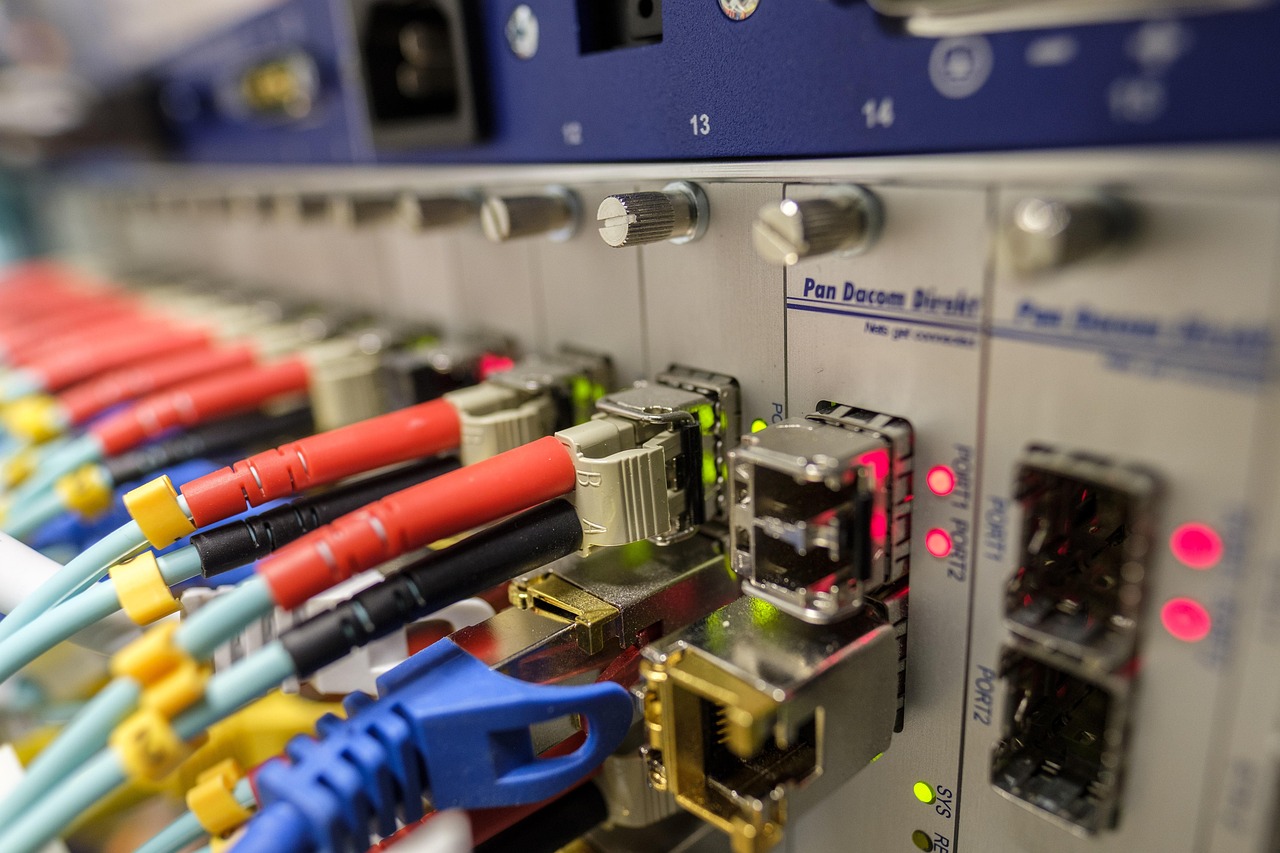
By December 2025, Airtel Africa, one of the largest telecommunication companies on the continent, had expanded its fibre network to over 81,500 kilometres, after adding roughly 4,000 km in nine months. That expansion came with real money behind itas the telco operator pumped in $603 million in capital expenditure, a 32% jump year-on-year.
Why did Airtel put so much into fibre expansion? Because demand has caught up. Smartphone penetration in Africa is already approaching 50%, and data usage keeps climbing. Plus, services like mobile money, streaming, and cloud-based services, which people have come to rely on, all need a strong backbone to work. That’s where fibre comes in. It carries far more data at a lower long-term cost, which reduces how expensive it is to serve each customer.
The payoff is already visible: Airtel Africa’s financial statements reveal that in 2025, its mobile services revenue rose to 26.6%, data revenue surged to 36.5%, while mobile money revenue climbed to 34.9%. What this means is that with deeper fibre, Airtel can roll out faster broadband and push more advanced services without watching margins collapse.
Get free monthly deposits and low conversion fees at Raenest

As cross-border payments grow in Nigeria, cost efficiency is becoming critical. Raenest combines free monthly deposits, flat $1 deposit fees, low conversion fees capped at $2.70, and competitive exchange rates, making their pricing the best in the continent.
Learn more at www.raenest.com.
Artificial intelligence
Google launches speech database to localise AI for African languages

For a long time, voice-based AI has struggled in Africa because the necessary data to train such models simply wasn’t enough. Now, Google has helped build the raw material that African voice technology has been missing all along.
The project is called WAXAL, an open-source speech database created with African universities and research institutes, including Makerere University and the University of Ghana. Over three years, researchers collected more than 11,000 hours of real speech across 21 African languages.
Why does this matter? Voice-based AI features, including speech recognition, text-to-speech, and voice assistants, sometimes fail in Africa due to a lack of training data. Fewer than 5% of sub-Saharan Africa’s 2,000 languages have usable data for AI systems. WAXAL plugs that gap. The data is open for anyone to use, but ownership stays with the institutions that collected it.
The implications are massive: WAXAL lowers the barrier for startups, students, and public institutions who want to build voice tools for education, healthcare, agriculture, and government services. With this, they do not need to gather proprietary data to train AI models on African linguistic realities. WAXAL won’t magically fix language bias in AI, but it gives it power. Instead of African languages being an afterthought, they now have infrastructure.
Attend Africa Tech Summit, Nairobi

Africa Tech Summit Nairobi, powered by Fincra takes place on Feb 11 & 12, 2026. Connect with Binance, Moniepoint, VALRdotcom, Andela, Cardano, Wada, ConduitPay & more. Rates increase on 6 February
CRYPTO TRACKER
The World Wide Web3
Source:

|
Coin Name |
Current Value |
Day |
Month |
|---|---|---|---|
 Bitcoin Bitcoin |
$78,321 |
+ 4.20% |
– 14.26% |
| Ether |
$2,321 |
+ 5.47% |
– 29.17% |
| BNB |
$775 |
+ 5.15% |
– 12.61% |
| Solana |
$103.96 |
+ 6.11% |
– 22.63% |
* Data as of 06.41 AM WAT, February 3, 2026.
JOB OPENINGS
- Big Cabal Media — Associate Videographer/Video Editor (full-time); Senior Financial Analyst (full-time); Zikoko Citizen Reporter (full-time); Content Creator (contract); Journalist (contract); Project Associate (contract); Senior Editor (contract); Senior Writer (contract) — Lagos, Nigeria
- Piggyvest — Senior Accounting Associate, Customer Success Intern — Lagos, Nigeria
- Buffer — Senior Engineer, Growth Marketing — Remote
- Moniepoint — Several roles — Remote (Nigeria)
- FirstBank — Business Development Lead, eCommerce & Retail — Lagos, Nigeria
- Wave — Machine Learning Scientist — Nairobi, Kenya
- Pavago — Customer Success Manager — Remote (Kenya)
There are more jobs on TechCabal’s job board. If you have job opportunities to share, please submit them at bit.ly/tcxjobs.

Written by: Opeyemi Kareem
Edited by: Ganiu Oloruntade
Want more of TechCabal?
Sign up for our insightful newsletters on the business and economy of tech in Africa.
- The Next Wave: futuristic analysis of the business of tech in Africa.
- Francophone Weekly by TechCabal: insider insights and analysis of Francophone’s tech ecosystem
P:S If you’re often missing TC Daily in your inbox, check your Promotions folder and move any edition of TC Daily from “Promotions” to your “Main” or “Primary” folder and TC Daily will always come to you.