
In emerging markets, agriculture remains one of the least digitised sectors despite its economic importance. While millions of producers participate in agricultural value chains, the systems that connect production, compliance, and trade remain fragmented and inefficient.
For Joshua Idiong, founder of Palmshops, this represents a structural technology problem rather than just a development challenge.
Palmshops is a proprietary digital platform designed to introduce traceability, structured data systems, and transaction infrastructure into agricultural supply chains. By integrating multiple layers of functionality into a unified system, the platform aims to transform how producers, aggregators, and buyers interact within increasingly compliance-driven global markets.

From agribusiness operations to building digital infrastructure
Before founding Palmshops, Idiong worked within agricultural processing and supply chains, where he observed recurring inefficiencies: lack of structured data, absence of traceability, and limited integration between production and market access systems.
These insights led to the creation of Palmshops in 2024 as a technology-first platform, rather than a traditional agribusiness venture.
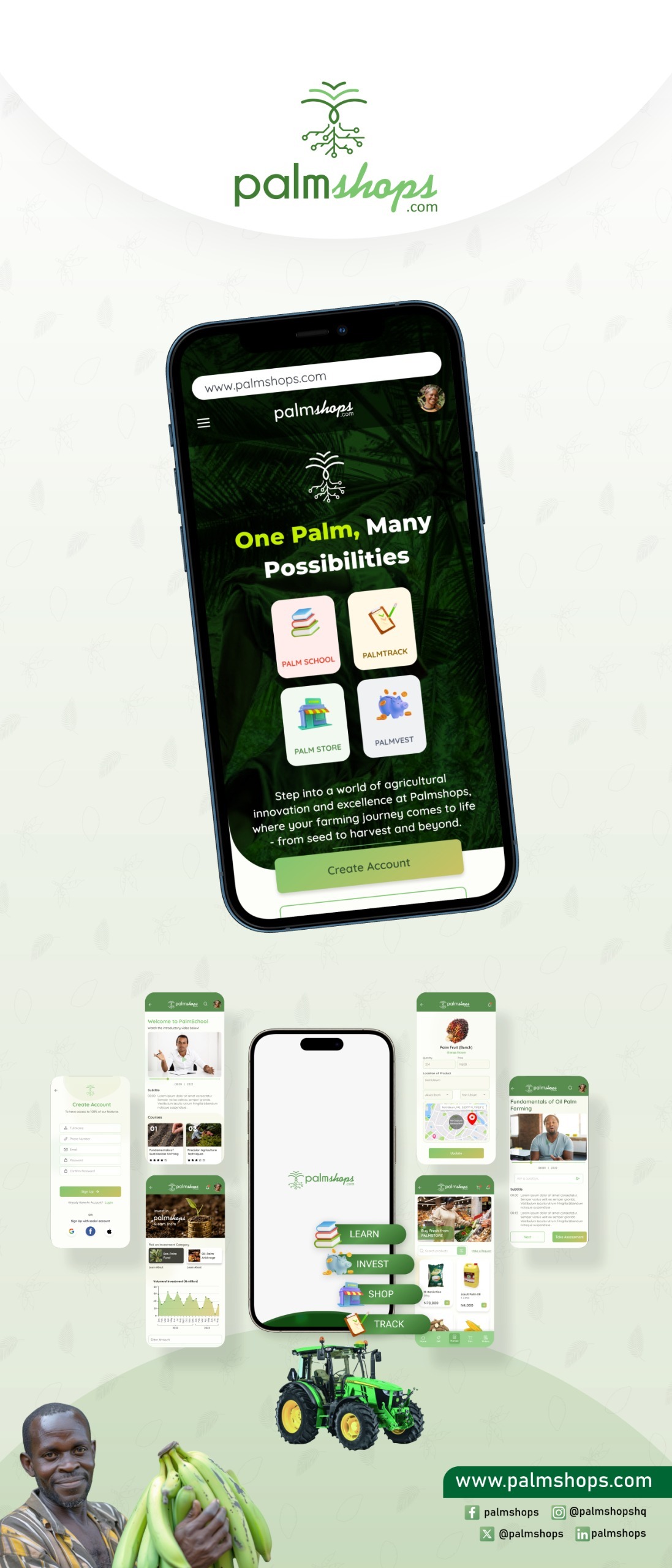
Palmshops integrates three core digital modules:
• Palmschool: A structured digital onboarding and training system
• Palmtrack: A traceability and farm data management engine
• Palmstore: A B2B marketplace connecting verified producers and buyers
Together, these modules function as a supply chain operating system, enabling producers to generate structured production data, track outputs, and transact within a digitally verifiable environment.
Engineering traceability and compliance into agricultural trade
A key innovation within Palmshops is its traceability-first architecture.
Through Palmtrack, the platform captures production data at multiple points across the farming cycle. This data can be linked to QR-based verification systems, allowing buyers to trace product origin, production practices, and supply chain movement.
This capability aligns with increasing global demand for:
• ESG-compliant sourcing
• Transparent supply chains
• Digitally verifiable agricultural data
Rather than treating traceability as an add-on feature, Palmshops embeds it directly into transaction workflows, enabling compliance-ready documentation as part of normal platform usage.
Early traction signals demand for structured platforms

Since its launch, Palmshops has demonstrated early commercial validation:
• Over ₦30 million in revenue generated
• 1,200 active users onboarded
• Growing demand from producers and buyers seeking structured trade systems
The platform operates a hybrid revenue model combining subscription-based access with transaction fees, positioning it as both a SaaS platform and a trade enablement layer.
These early indicators suggest emerging product-market fit within digitally underserved agricultural supply chains.
Building infrastructure, not just access
Unlike conventional agritech platforms that focus solely on connecting farmers to buyers, Palmshops is designed as infrastructure.
Its architecture supports:
• Standardized producer onboarding (digital KYC and profiling)
• Data-driven production monitoring
• Integrated trade workflows
• Built-in compliance and reporting capabilities
This positions Palmshops closer to infrastructure-layer platforms seen in fintech, where the focus is on enabling entire ecosystems rather than solving isolated problems.
Positioning for global expansion and ESG-driven markets
As global supply chains increasingly demand transparency and sustainability, Palmshops is positioning for expansion into markets with advanced compliance requirements.
The company is currently developing a UK market entry strategy focused on:
• ESG reporting integration
• Traceability compliance aligned with regulatory frameworks
• Partnerships with specialty producers and ethical sourcing networks
This expansion reflects a broader shift where agricultural trade is becoming data-driven, regulated, and digitally coordinated.
A founder building at the intersection of technology and supply chain systems
Idiong’s approach reflects a systems-level perspective on agriculture, viewing it not just as production, but as a network of data, transactions, and compliance requirements.
Palmshops represents his transition from traditional agribusiness into technology-led infrastructure development, where the focus is on building scalable digital systems rather than standalone operations.
He holds a Master’s degree in Sustainable Development from Linköping University, Sweden and has participated in global leadership initiatives such as the Mandela Washington Fellowship. His work has also received several ecosystem recognition.
The future of agricultural infrastructure
Agriculture has historically lagged behind other sectors in adopting digital infrastructure. However, increasing regulatory pressure, global trade requirements, and demand for transparency are accelerating the shift toward data-driven supply chains.
Palmshops represents a growing category of startups building foundational systems for industries that have traditionally operated without structured digital infrastructure.
By integrating traceability, transaction systems, and compliance tools into a unified platform, the company is positioning itself as a scalable solution for modern agricultural supply chains.
As digital adoption accelerates, platforms like Palmshops may play a critical role in shaping how agricultural markets operate, making them more transparent, efficient, and globally connected.