By Hannah Oyekunle
There is no denying it anymore, artificial intelligence is no longer knocking on the door of public relations. It has kicked it open.
This reality took center stage at the PRCAN Knowledge Hub Series 1.0, held on March 24, 2026, at the Lagos Marriott Hotel, where industry professionals gathered, both physically and virtually, to confront one pressing question: What does the future of public relations look like in an AI-driven world?
From the very start, the tone was clear. In her welcome address, PRCAN Chairman, Dr. Nkechi Ali-Balogun, emphasized a shift that many professionals have felt but not fully articulated, the move from passive learning to active disruption. PR, she noted, is no longer evolving quietly. It is being reshaped in real time.
The keynote speaker, Karl Haechler, CEO of Burson Africa, described this shift as “beautiful chaos.” Drawing from over two decades of experience, he painted a vivid picture of an industry transformed, where traditional media structures have dissolved, and information moves at a speed that leaves little room for hesitation.
“Everyone is media,” he said, a statement that lingered long after his session.
In what he described as a “post-factual era,” Haechler warned that truth is increasingly difficult to verify, while misinformation can be created and spread within seconds. The implication for PR professionals is stark, reputation is no longer just managed, it is constantly under threat.
Yet, amid the uncertainty, he offered clarity. His “3C Formula”, consistent narrative, compounding authority, and chorus of content, served as a strategic anchor for navigating this volatile landscape. More importantly, he emphasized that while AI can enhance efficiency, it cannot replace critical thinking, ethical judgment, or human creativity.
If Haechler’s session diagnosed the problem, Tomiwa Aladekomo, CEO of TechCabal, offered a glimpse into the solution.
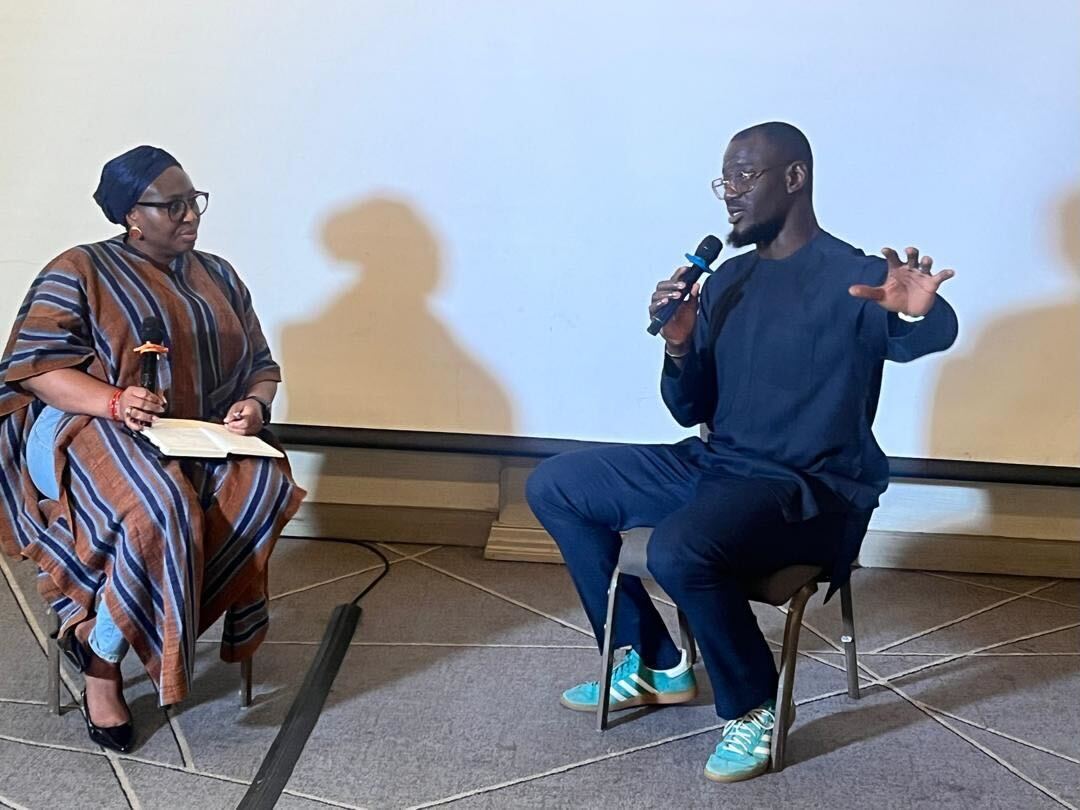
Focusing on AI-driven storytelling and media intelligence, Aladekomo reframed storytelling as something far more dynamic than before, adaptive, data-informed, and deeply audience-centric. In today’s ecosystem, he explained, PR professionals are no longer just communicators, they are strategists operating at the intersection of technology, analytics, and narrative.
He also highlighted a crucial shift, media intelligence is no longer reactive. It is predictive. It enables professionals to anticipate risks, identify opportunities, and act before situations escalate.
Perhaps most striking was his assertion that PR is no longer just about communication skills. The modern practitioner must now master storytelling, data analysis, digital literacy, ethics, and strategy, all at once.
The conversation, guided by moderator Mojisola Saka, extended beyond tools and techniques into deeper questions about trust. In an era of deepfakes and algorithmic manipulation, how do you prove truth? The answer, it seemed, lies not in convincing everyone, but in earning credibility with those who matter most.
“Focus on your focus,” she advised, a simple yet powerful reminder in a world saturated with noise.
By the end of the session, one thing was clear, AI is not the future of PR. It is the present. And those who fail to adapt risk being left behind.
The PRCAN Knowledge Hub Series 1.0 did more than inform, it challenged, provoked, and prepared participants for what lies ahead. As the industry continues to navigate this era of disruption, one message stands out above all:
The tools may change, but the responsibility remains the same, to tell the truth, build trust, and shape narratives that matter.