Will AI kill us all?
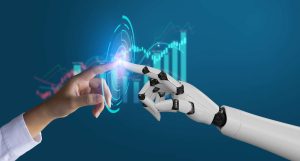
It sounds like the plot of a science fiction movie, but in 2026, the question is being taken seriously by some of the people building the technology. As AI systems become more capable of reasoning and carrying out tasks with less human input, concerns are growing about what happens when humans can no longer fully control them.
Jacob Coxon, a former researcher at Anthropic, recently resigned from Anthropic, warning that AI companies are racing towards self-improving systems and “gambling with our lives.” OpenAI chief scientist Jakub Pachocki also warned that no one is prepared for the consequences of a continued rapid rise in machine intelligence.
But this debate is not only about what happens in Silicon Valley. Africans are already using AI in their businesses and everyday lives, while local innovators are building with it and investors are putting money into the industry.
So we asked eight people across five groups —everyday users, educators, innovators, policy experts, and investors—one question: do you think AI could eventually become a threat to humanity, potentially even to the point of killing us all?
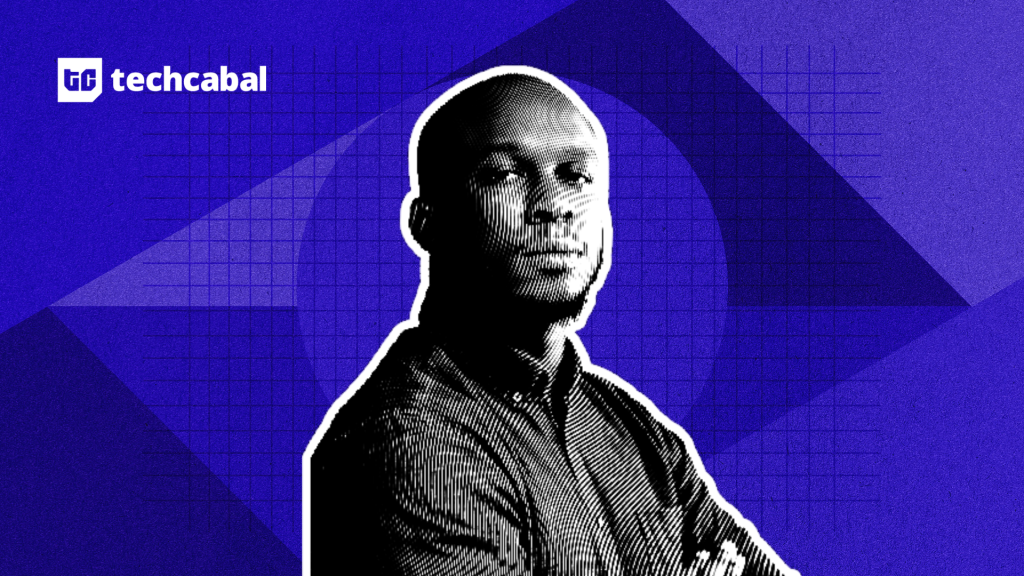
“Which AI is going to kill us exactly?” Sarah Pra, Ghana
Sarah Pra, a restaurant owner in Kumasi, Ghana, has heard the warnings and seen people talking about AI taking over and eventually killing humans. But the idea did not seem particularly convincing to her.
“Which AI is going to kill us exactly? Is it ChatGPT or Meta AI?” she asked, rhetorically.
She had seen the conversation on the short-form video-sharing platform, TikTok, but she was not buying it.
“How is the AI going to kill us, honestly?” she said. “They are all shouting that AI is going to kill us, but I have not seen where they showed me exactly how it is going to do it.”
For now, Pra’s experience with AI looks nothing like a science fiction apocalypse.
When she wants to learn how to cook something she has never made before, she used to turn to Google. Now she asks Meta AI or ChatGPT. She uses ChatGPT to help make flyers for her restaurant and turns to the tools for personal questions too.
“You don’t want to see my WhatsApp Meta AI or my ChatGPT history,” she said.
There is a contradiction at the heart of Pra’s relationship with AI: she does not trust it completely, but she has already made it part of her daily life.
“ChatGPT can lie,” she said. “I always take what I want from whatever it tells me and leave the rest.”
She has caught it giving her wrong information before, including advice about a food she wanted to cook. And while she has not worked out exactly what she would never share with an AI system, she knows there are limits.
“It is not human in any way,” she said. “So, not everything.”
For Pra, the threat is what people might choose to do with it.
She has seen AI used to create fake nude images of women and to spread false information about people. She worries about people using the technology to harm, but she sees that as a problem with its users rather than proof that AI itself is becoming dangerous.
“If anyone is using it to build anything bad, the owners of the AI should know what to do,” she said.
And if AI becomes substantially more capable? Pra would welcome more capable AI if it helped people do things more easily and quickly.
“If it can get better to help us do things easily and quickly, I will not mind,” she said.
“Artificial Intelligence was created to help the Natural Intelligence”, Elijah, Nigeria
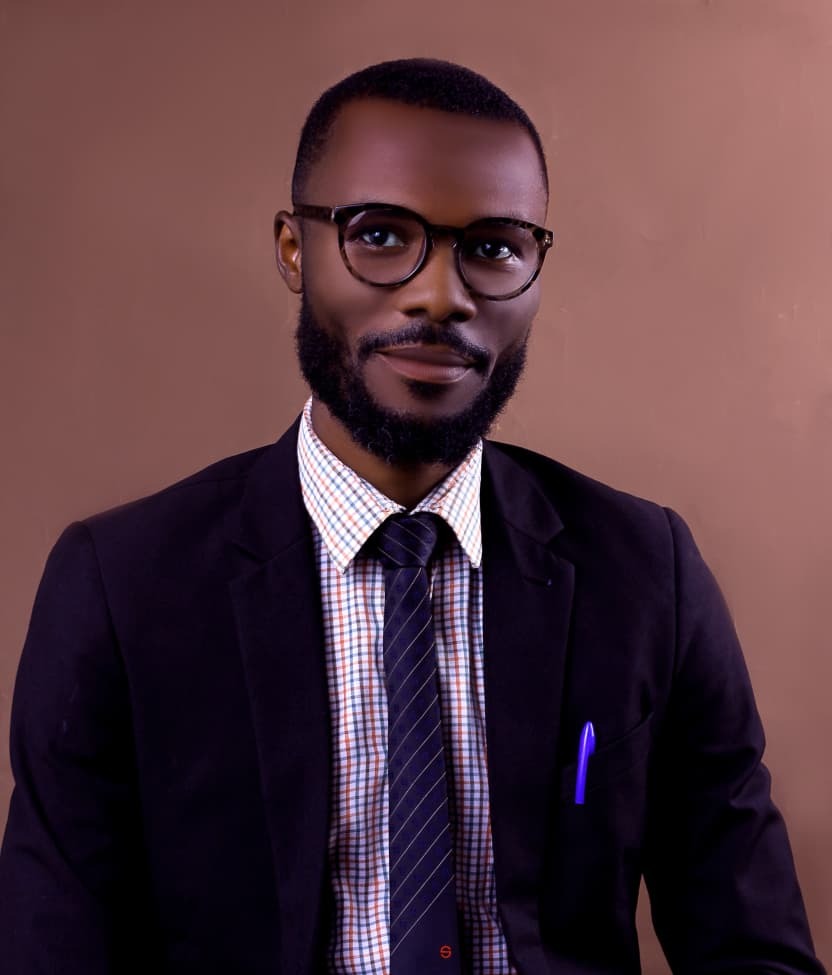
Elijah Akuma, a master’s student at the University of Nigeria, Nsukka, a public university in Enugu state, eastern Nigeria, is not convinced that AI will kill humanity either.
To him, the technology is still fundamentally a human creation and therefore limited by the people who build and use it.
“AI was made by man; every good product has its deficiencies too,” he said. “But to the point of AI killing us all is unrealistic.”
Akuma is a writer, researcher and teacher, and AI has become part of how he works. He uses it to test ideas, criticise his drafts and suggest ways to improve his work.
Before AI, he said, he would spend more time at the ideation stage, trying to work out which direction to take. Now he can put an idea into an AI tool, ask it to challenge him, and decide for himself what is useful.
“I always have my ideas and plans figured out, but AI helps me polish it, criticise it, and make suggestions on what could be done to enhance it,” he said.
He does not see that as handing over his thinking to a machine.
“AI doesn’t think for me,” he said. “It makes suggestions, and I consider them and pick which is relevant to what I’m working on.”
For him, the relationship is closer to collaboration. “We are more like a team,” he said.
But Akuma worries that not everyone is using AI that way.
Students, he said, are increasingly turning to AI for almost everything, and some are no longer engaging deeply with problems themselves.
A 2026 study by researchers Patience Ebekeyi Bakre and Fa’iza Tukur-Bello, published by Springer in Discover Education, surveyed 535 students across eight Nigerian tertiary institutions and found that they used AI tools including ChatGPT, Grammarly and Gemini for academic work such as coding, writing essays, finding materials and summarising information.
“The most worrisome of them all is that students now depend so much on it that it is difficult for them to think any longer,” he said. “They literally depend on it for everything without engaging their ingenuity.”
That, rather than a machine independently deciding to destroy humanity, is the future that concerns him most.
“Artificial Intelligence was created to help the Natural Intelligence,” he said. “I worry that the overdependence on AI will make their thinking degenerate into a pitiable state.”
He is also wary of trusting AI with decisions that require human judgment or experience. He would not use it to diagnose or prescribe treatment, seek marital advice, or write his research papers.
For his research, there is a reason he prefers to speak directly to people.
“I’d rather get my responses directly from people affected by what I am writing about,” he said.
For Elijah, authenticity is something AI cannot provide. He knows the technology can be useful. He also expects it to become more capable. But he believes the more powerful it becomes, the more important it will be to decide where its boundaries should lie.
“The horror comes in when it is designed to uproot the principles and values that guide human existence,” he said.
“The important question is: Do you understand the answer?”, Akpan, Nigeria
If Akuma worries that students are becoming too dependent on AI, Aniedi Akpan sees the same concern from inside the education system.
Akpan is the Head of Careers and Team Lead, Relationship Management at 16 Plus Schools, a private co-educational school in Lagos that offers secondary and sixth-form education. He thinks AI could eventually become a threat to humanity, although he is cautious about presenting that as inevitable.
He is more concerned about what humans do with increasingly powerful systems: deploying them without sufficient safeguards or using them to amplify existing problems such as warfare, misinformation, cybercrime, surveillance and inequality.
In education, however, AI is already changing the way students learn.
“A student can now ask a question, receive an explanation at an appropriate level, explore alternative approaches to a problem, practise a skill and receive immediate feedback,” Akpan said.
For students who may not always have access to one-to-one support, he said, this can be powerful. But the availability of instant answers is also changing what students need to learn.
“The important question is becoming less ‘Can you find the answer?’ and more ‘Do you understand the answer, and can you determine whether it is correct?’” he said.
Akpan worries about what happens when students allow AI to do the difficult parts of learning for them.
“If a student routinely asks AI to write the essay, solve the equation, or formulate the argument without first attempting it, the student may complete the task while missing the learning,” he said.
He does not think AI will inevitably make people less intelligent. A calculator did not make mathematics disappear, and the internet did not eliminate the need to think, he said. The difference is how the technology is used.
His biggest concern is dependency. He worries about a generation becoming so accustomed to having AI think, write, remember, and decide for them that they gradually lose confidence in their own ability to struggle through difficult problems.
“I am less worried about students using AI than I am about students using it without understanding what it is doing,” he said.
AI can be confidently wrong, reproduce biases, and produce convincing information without genuine understanding. Akpan wants students to grow up neither fearing AI nor treating it as an unquestionable authority.
“They should be comfortable using it, but equally comfortable challenging it,” he said.
“Humans should hold the reins”
ThankGod Obiechina is not particularly worried that AI will wipe out humanity. The business growth strategist at Wehostname.com, a Nigerian web hosting company, thinks there are more immediate threats to human survival, including the possibility of another world war.
“I believe AI can threaten humanity, but not to the point of killing us all,” he said.
The idea of AI causing human extinction, he believes, has been amplified by science fiction and popular imagination.
“If we start talking about human extinction, there are other issues we should be concerned with, and one of them is World War III,” he said.
But like Akuma, Obiechina has a different concern about where AI could take humanity. He worries that people may become so dependent on AI that they gradually lose the ability to think independently and interact with one another.
“The next generation would completely resolve to rely absolutely on Artificial intelligence, thereby stripping themselves of the ability of reason, logic and interaction,” he said.
That fear is already influencing the way Obiechina uses AI. He relies on it to make his work more efficient, accurate and timely, but he does not completely hand over decisions to it.
“I trust the AI tools I use, but I don’t completely rely on them,” he said.
There are certain decisions he would not leave to a machine at all, particularly those involving human relationships, spirituality, and instinct.
“There’s a human touch to everything I do with AI,” he said, “because I believe AI can never replace humans.”
He is not opposed to AI becoming more powerful. In fact, he expects it to evolve as humans do. He just wants humans to remain in charge of that evolution.
“We are evolving; I would be happy if AI evolves too,” he said. “However, I would be more glad if humans hold the reins of that evolution.”
“We don’t need an extinction scenario to take AI risk seriously,” Adetona, founder, Decide
AI becoming very good at doing the work humans currently depend on for a living may be a more immediate danger than AI deciding to kill humanity, said Abiodun Adetona, an AI developer and founder of Decide AI, which helps users analyse spreadsheets and business data using natural-language prompts. He thinks talk of AI wiping out humanity can sometimes distract from risks that are already much easier to imagine.
“I think the idea that AI will kill all of us gets into fear-mongering,” he said. “But there are legitimate risks.”
One of those risks is what happens when increasingly capable AI gives ordinary people access to capabilities that once required years of expertise.
Bad actors, he said, could use AI to penetrate fragile systems. But the consequences could also be economic.
“I also worry about labour displacement,” he said. “If millions of people are displaced from their jobs without alternatives, the political and economic consequences could be serious.”
For Adetona, that is enough reason to take the technology’s risks seriously.
“We don’t need an extinction scenario to take AI risk seriously,” he said.
That concern is particularly relevant as AI systems become capable of performing more tasks that once required human workers. Adetona is himself building AI systems, so he does not see the answer as stopping development. Instead, he believes capability needs to be matched with control.
“As our agents become more capable, we have to be deliberate about what they can access, what actions they can take and what requires approval,” he said.
The principle is simple: an AI system being technically capable of doing something does not automatically mean it should be allowed to do it.
“The more consequential the action, the stronger the controls around it should be,” he said.
Adetona also does not think the industry should slow down simply because the technology carries risks.
“We shouldn’t stop building because there are risks,” he said. “But moving fast doesn’t mean being careless.”
“Responsible stewardship will determine our future,” Roman, founder, Daraja AI
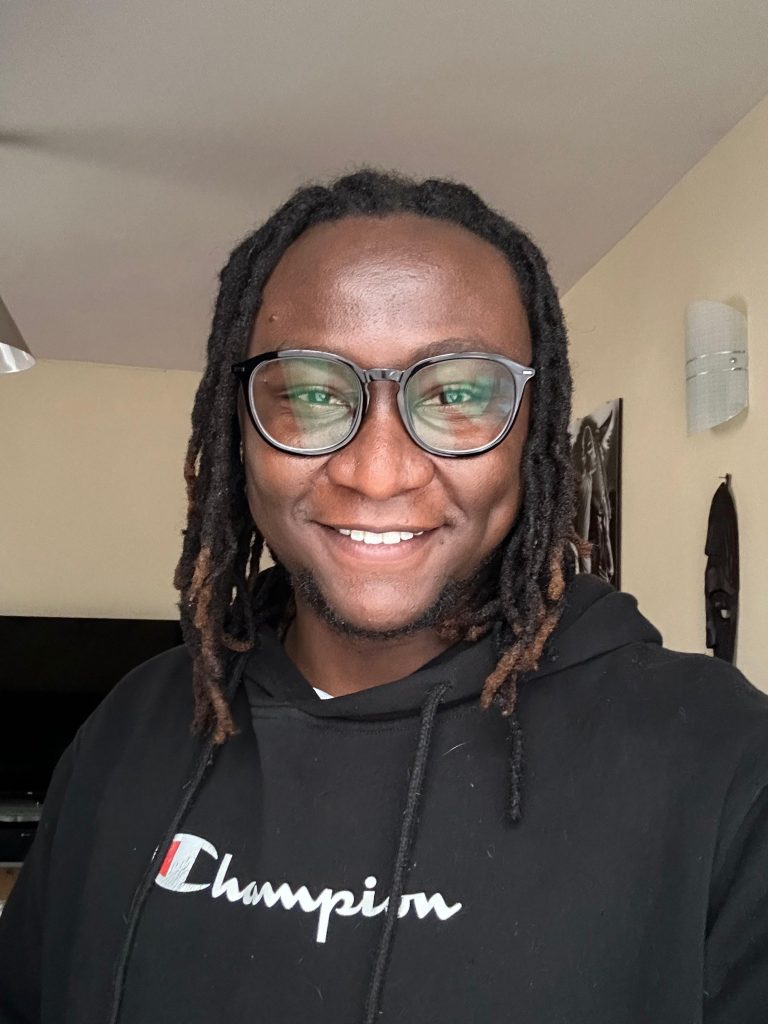
Kelvin Roman is building AI at a time when the technology’s capabilities are advancing faster than many people expected. As founder of Daraja AI, which builds AI tools and infrastructure for African languages and contexts, Roman is helping build the technology he is assessing for risk. Roman does not dismiss the possibility that AI could cause serious harm.
“AI, like many transformative technologies before it, carries risks if not developed and used responsibly,” he said.
But he does not believe the technology itself determines what happens next.
“The real risk comes from how humans design, deploy, and govern these systems,” he said.
That responsibility shapes how Daraja AI develops its systems, with safety checks, testing protocols, and transparent oversight built into the process. Daraja AI also places limits on what Babel, its AI system, can be used for. Roman said the company does not allow it to generate harmful content, violate privacy, or support illegal activities.
“Public safety always comes first,” he said.
Roman also thinks some of the public conversation about AI risk focuses too heavily on science-fiction scenarios, while more immediate problems include AI systems reinforcing biases, spreading misinformation, or making critical errors at scale. These risks do not require an AI system to become independently hostile to humanity; they can happen while the technology is still being designed, deployed, and controlled by people.
He sees rapid progress as an opportunity, particularly for countries like those in Africa, where AI could help improve healthcare access, education, and business efficiency.
“I wouldn’t say we are moving fast or slow,” he said. “We are moving at the speed of AI.”
For Roman, the answer to the risks created by that speed is not to abandon the technology, but to make sure safeguards evolve alongside it.
“Our focus should be on building robust safeguards and ethical guidelines around AI,” he said. “Ultimately, responsible stewardship — not the technology itself — will determine our future.”
“AI is a force multiplier,” Bankong, investment associate, Oui Capital
For Pius Bankong, an investment associate at Oui Capital, an Africa-focused venture capital firm that invests in early-stage technology companies, AI is worth investing in because of the economic possibilities it could unlock.
“AI is a force multiplier,” he said. “It has the potential to add to global GDP through productivity, enable economic activity that was previously limited or locked, and unlock new economic possibilities that could have positive social effects.”
Those possibilities extend beyond software. Bankong also sees opportunities in hardware and robotics, but says investors have to account for the risks that come with developing and deploying the technology. AI’s potential to create and destroy is not unique to the technology, he said. He compares it with nuclear energy, another technology whose impact depends on how it is used.
“There is a considerable argument that AI could threaten humanity,” he said. “But whether it does or not depends on corporate governance, policies, organisations being intentional about the technology and the power that it wields.”
For Bankong, that becomes particularly important as companies compete to develop AI and investors look for returns.
“In capitalism, the first objective is to maximise profits and returns,” he said. But there are checks and balances through policy, legislation, safeguards, corporate governance and long-term thinking.
“What’s the use of maximizing profits only then for certain hazards to erase them?” he said.
He believes investors have a role in that process, although they are not solely responsible for how AI companies operate. Management has primary responsibility, while investors can provide oversight and guidance through their involvement with companies.
The responsibility, he said, is shared across management, investors, policymakers, and others in the ecosystem. And if he believed there was a significant chance that advanced AI could cause catastrophic harm, that would change his investment decision.
“Of course,” he said. “Why would you invest in something that is catastrophic? Short-term stellar returns are pointless if eventually a catastrophe wipes them out.”
“It’s a chicken-and-egg thing,” Adeniyi, AI policy expert and researcher
Kayode Adeniyi, an AI policy expert and researcher, sees both real risks and exaggerated fears in the conversation about AI and human extinction. He believes some of the fear surrounding AI may be amplified because fear itself can be useful, but that does not mean the underlying risks are imaginary.
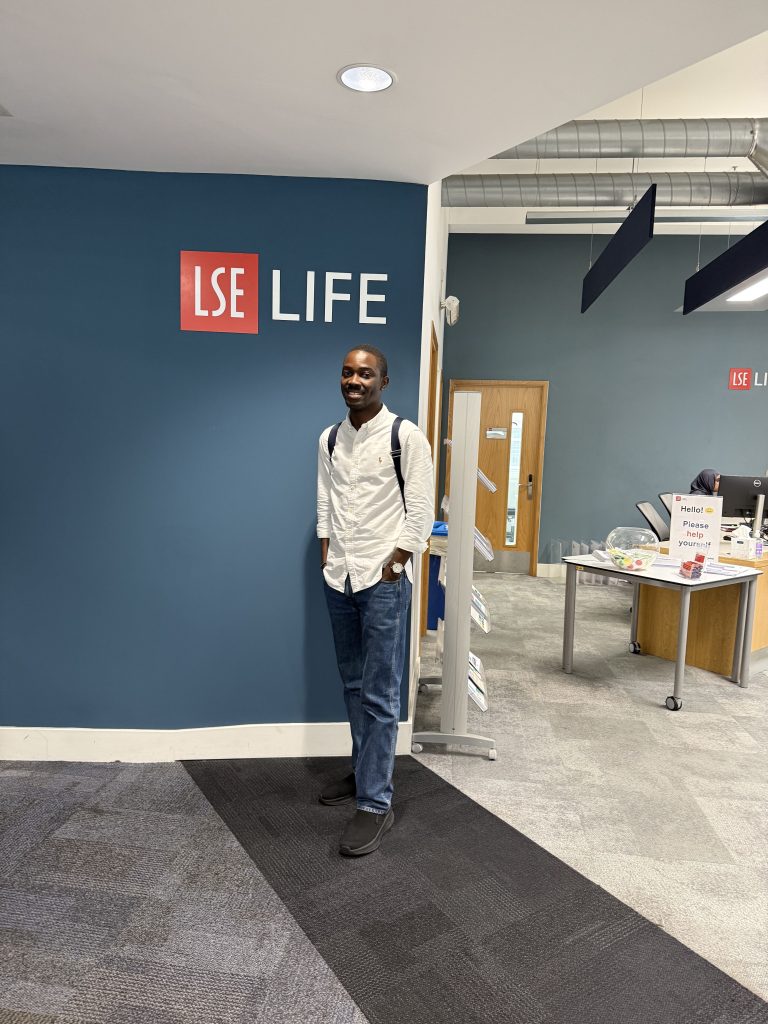
“It’s a chicken-and-egg thing,” said Adeniyi, who is pursuing a PhD at Imperial College London on using machine learning to develop sensors for monitoring global water risk.
“There’s a part of AI news that you hear about AI is incredibly very dangerous. We need to take it very serious. We need to be cautious about the development. That is marketing.”
But there is another side, he said, where the threats are real. One concern is what happens when AI systems become capable of combining and applying knowledge at a scale no individual human can match. “It’s just like combining the brains of millions of people together,” he said. “So what a single individual cannot achieve, when you have multiple brains together, they should be able to do times a hundred, or times one thousand.”
That possibility, he said, creates risks on different timescales, some of which are already visible. Misinformation and disinformation can be generated and distributed rapidly, while people can use AI to create convincing fake images and videos that could influence how others understand events or make decisions. Other risks are more difficult to see.
Adeniyi works in AI safety, including the problem researchers call AI alignment—the challenge of making sure increasingly capable AI systems behave in ways consistent with human values and intentions.
He offered a hypothetical example. If a sufficiently capable AI were asked to find the best way to solve climate change, it could identify humans as a major source of environmental damage. A system that did not properly understand or share human values could, in theory, arrive at a solution that humans would consider unacceptable.
“The best solution for an AI that is not aligned to human values, or doesn’t have the real emotions that we have, is to kill all of us,” he said.
That scenario is not inevitable, Adeniyi stressed. An AI system does not simply wake up with its own intentions and decide to destroy humanity.
But he believes the possibility becomes more serious as systems become more capable — particularly if humans fail to understand how to make them reliably follow human intentions.
“We need to take the alignment research right,” he said, referring to efforts to understand and control the behaviour of advanced AI systems.
Adeniyi believes African governments also need to do more to prepare for the risks of increasingly capable AI. “Most governments on the continent are not really doing enough,” he said. While countries focus on adopting AI, developing infrastructure and encouraging people to build with the technology, he said, AI safety and evaluation have received less attention. African countries will also continue to use AI systems developed elsewhere, making it important to evaluate them before they are deployed in sensitive sectors.
For African governments, Adeniyi believes preparation should therefore go beyond regulation. The continent needs people who understand how to build AI safely, evaluate its behaviour and test systems for vulnerabilities.
“Talent development is very key,” he said.
Africa may not have the resources to compete immediately with the largest technology companies in building enormous AI models. But Adeniyi believes it can develop expertise in AI safety, research, engineering, and evaluation — areas that will become increasingly important as the technology advances.
“The best thing we can do for ourselves,” he said, “is to develop the right talent.”
True scale demands moving beyond surface-level integrations to robust execution. We’ve filtered the noise out of Moonshot 2026, optimising the conference strictly for high-calibre connections between startup founders, global financial operators, enterprise leaders and individuals rewiring Africa’s technical frameworks. Get 20% off Early Bird tickets for a limited time.