




Happy mid-week. ☀️
You might just be getting an album from us. Yes! Yesterday, Eleven Labs, the AI-audio generation unicorn launched a new model that allows users to generate music. So, feel free to make a track request today, you’re definitely getting that album from us!
Let’s get into today’s dispatch.

Companies
Shoprite exits Ghana and Malawi

Shoprite, South Africa’s largest supermarket chain, is leaving Ghana and Malawi as part of its ongoing retreat from underperforming African markets.
In Ghana, the company received a binding offer in June for its seven stores and warehouse. In Malawi, it signed a sale agreement for five stores in early June, pending regulatory approval. Should the Competition and Fair Trading Commission approve the sale, Karson Investment Trust, a financial portfolio management firm, will run the five stores as part of “Shopwise Trading Limited,” selling groceries and other merchandise at retail prices.
Catch up: Shoprite entered Malawi in 2001 and Ghana in 2003, expanding during years of regional optimism. But the outlook changed. In Ghana, despite steady foot traffic, sales in modern malls—including Shoprite-anchored ones—have fallen below expectations.
Currency depreciation, high inflation, and an energy crisis eroded consumer spending and pushed up costs. In Malawi, Shoprite has faced multi-year losses. It sold one store in 2022 and struggled to meet sales targets. Trading conditions were tough, and its operation never recovered.
State of play: Shoprite has now exited seven African countries—the last being DR Congo in 2022—and now focusing squarely on its home base, South Africa. It is expanding store count, scaling delivery with Sixty60, and growing in pet, health, and outdoor retail.
Cross-border ambition has given way to risk-managed growth. For Ghanaian and Malawian grocery chains, Shoprite’s exit means less competition, but one less retail option for consumers.


Paying 2% or more on every transaction adds up fast.

For businesses in e-commerce, logistics, travel, fintech, and more, every naira counts. Fincra helps you save more with 1% NGN fees capped at ₦300. Ideal for high-value or high-volume transactions. Get started for free with just your email address!
Capital Markets
South Africa considers making its stock exchange 24/7 open for trading
South African bourse, Johannesburg Stock Exchange (JSE), is considering making its market always open for trading, according to CEO Leila Fourie.
The move would bring it in line with global shifts toward non-stop access, as the boundaries between traditional and digital finance continue to blur.
Catch up: In the last few weeks, the world has shifted to always-open access to the equities market, thanks to tokenised stocks. Robinhood, a US wealthtech app, first launched tokenised US and private company stocks in June, allowing retail investors to buy digital representations of these assets.
Kraken, a global crypto company, followed suit. In South Africa, Luno partnered with xKraken to launch tokenised US stocks in early August, allowing investors access to the bourse 24/7, with greater liquidity. With the JSE now weighing a move to always stay open, it is borrowing a playbook from tokenised stocks to attract investors who prefer round-the-clock trading.
Between the lines: No major stock exchange currently runs 24/7. India’s International Exchange (INX) comes closest, trading 22 hours daily, six days a week. NASDAQ and CBOE are planning 24-hour weekday trading, but haven’t committed beyond that. If the JSE proceeds, it would be the first traditional exchange to go fully sleepless.
Why it matters: Round-the-clock access gives investors more flexibility, but comes with trade-offs: thin liquidity during off-hours, higher volatility, and wider spreads. Market-makers would likely need to automate their processes. Institutional traders and bankers who invest in the stock market might need to plan how they maintain their investments during off-peak trading hours. Clearing and surveillance systems would also need to scale.
If the JSE pulls this off, it could set the precedent for how other bourses approach 24/7 trading amid the momentum that stock tokenisation is gaining globally.
Paga Engine powers the boldest ideas in Africa

You’ve got customers, but do you have the right infrastructure in place? Don’t let outdated systems hold you back. Paga Engine is the fintech backbone built for businesses like yours. Read the full article.
E-payments
Tanzania’s digital payments hit $11.6 billion

Tanzania’s real-time digital payments network is growing in leaps and bounds.
State of play: In 2024, the Tanzania Instant Payment System (TIPS)—the country’s national payment switch—processed double of what it did in 2023. TIPS processed TSh29.9 trillion ($11.6 billion) in transactions by December 2024, up from TSh12.5 trillion ($4.9 billion) in 2023, according to the Bank of Tanzania’s latest financial stability report.
Catch up quick: TIPS, launched in 2020, enables instant money transfers between banks, mobile wallets, and other financial institutions. The number of transactions nearly doubled to 454 million in 2024, driven by an increase in participating institutions from 36 to 46. The Bank of Tanzania describes the system as “a key pillar” in expanding financial inclusion, especially for underserved populations. To complement this, Tanzania upgraded its Financial Services Registry (FSR) with geospatial mapping tools to identify access gaps.
Why it matters: Tanzania is building digital rails that prioritise interoperability and central oversight. Unlike Kenya’s market-driven model, where M-Pesa dominates, Tanzania’s central bank-led approach is actively shaping payment flows. This could encourage more equal participation across the financial ecosystem and reduce the kind of monopolistic influence seen elsewhere.
The big picture: The real story here is state-led innovation in a mobile-first market. By building a national switch and mandating interoperability, Tanzania is betting on digital public infrastructure as a catalyst for inclusive growth.
Accept in-person payments with Paystack Virtual Terminal!
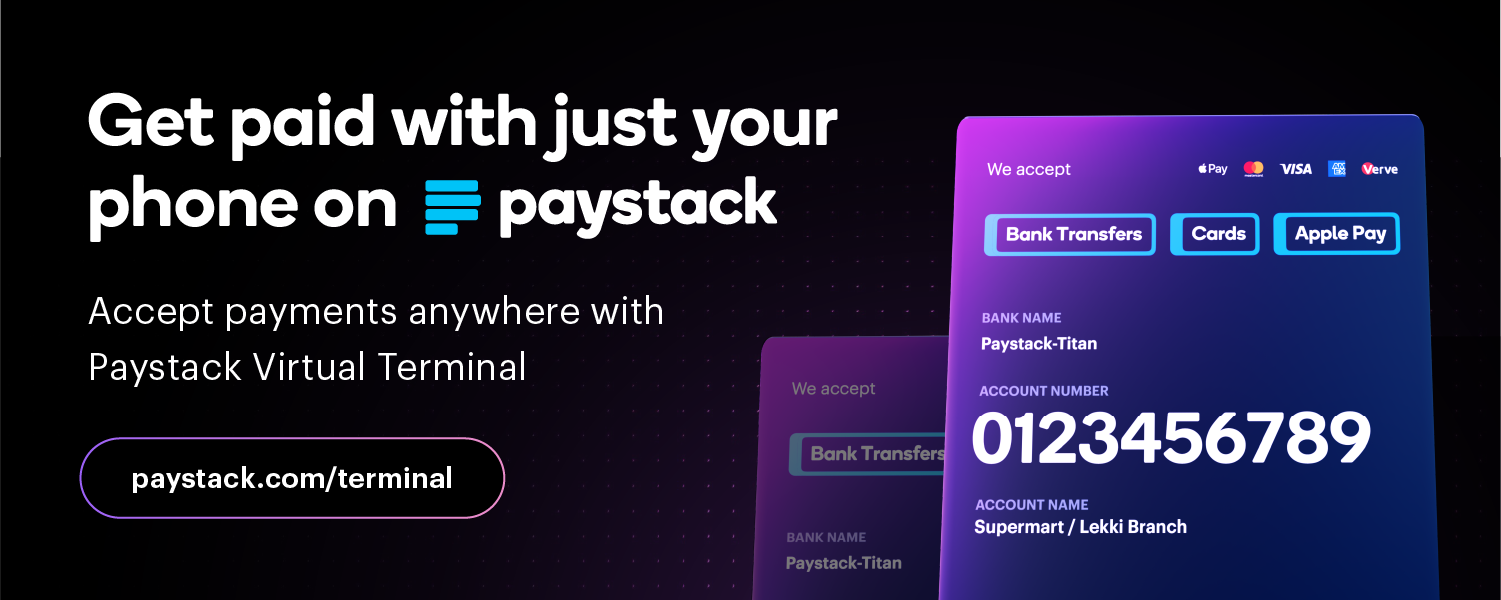
Anyone can sell in-person. With Paystack Virtual Terminal, you can accept secure payments anywhere using just a QR code. No hardware needed. Learn more here →
Obituary
Former Flutterwave exec Leon Kiptum dies at 44

When Leon Kiptum stepped down from his role at Flutterwave in June, his farewell message felt more like a pause than a goodbye. He spoke of slowing down, focusing on his health, and reflecting on two transformative years leading Flutterwave’s East Africa business. A month later, on August 3, he passed away after a long battle with cancer. He was 44.
Kiptum’s passing has deeply moved Kenya’s fintech community. Tributes have poured in from founders, former colleagues, mentees, and friends—remembering a man known for his quiet strength, generosity, and deep commitment to others. “He was a wonderful mentor,” wrote Rosemary Muriungi of Equity Bank. “Always cheering me on.”
Before Flutterwave, Kiptum spent over a decade in Kenyan banking—at Barclays (Absa), KCB, Family Bank, and Sidian—before stepping into fintech with Chipper Cash and later Betway. At Flutterwave, he led through a particularly complex period, helping the company steady its footing amid regulatory headwinds.
He believed in people-first leadership. “Your team is your greatest asset,” he once wrote. As a board member at the Association of Fintechs in Kenya, he pushed for better dialogue between startups and regulators, and for a more unified industry voice.
Kiptum had recently begun a new journey at Rigour Africa, focused on guiding startups to grow with purpose. He was passionate about reshaping venture capital and making space for more thoughtful, founder-centered growth.
Above all, he was a father of three—a role he often said was his most important.
Train your managers and leadership team to get better results
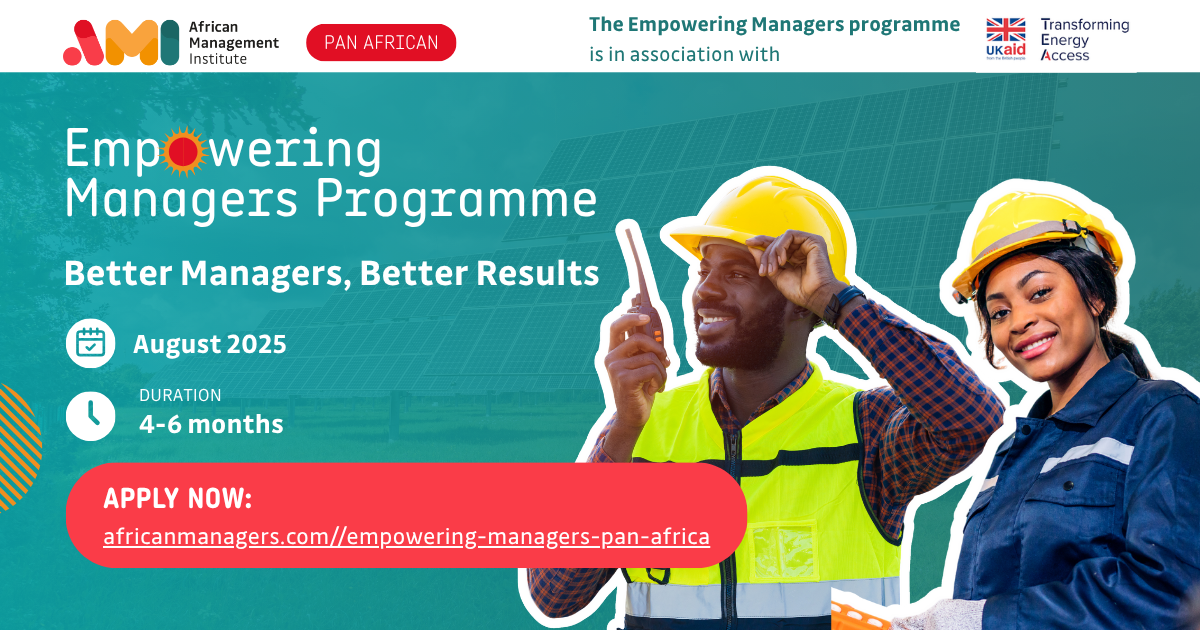
Beyond technical skills, energy companies need great leadership to thrive. 100s of firms like AFSIA, PowerGen & Solar Panda have lowered costs & grown revenue through AMI’s Empowering Managers Programme, supported by UK Aid. Join now from just $250.
CRYPTO TRACKER
The World Wide Web3
Source:

|
Coin Name |
Current Value |
Day |
Month |
|---|---|---|---|
 Bitcoin Bitcoin |
$113,926 |
– 0.41% |
+ 4.37% |
| Ether |
$3,635 |
– 0.60% |
+ 41.17% |
| Succint |
$1.48 |
+ 63.19% |
+ 63.19% |
| Solana |
$163.69 |
– 2.42% |
+ 7.82% |
* Data as of 06.40 AM WAT, August 6, 2025.
Opportunities
- MEST Africa has opened applications for its 2026 AI Startup Programme. The 12-month training and incubation programme will equip West African software developers aged 21–30 with the skills to build scalable AI startups. Selected participants will undergo seven months of hands-on training in Ghana starting January 2026, followed by a four-month incubation for the most promising teams. Applications close August 22, 2025. Apply here.
- Nithio is offering $50,000–$500,000 in flexible financing to clean energy startups in Kenya and Nigeria. Eligible companies include solar home system providers, clean cooking ventures, and businesses selling appliances like solar fridges or mills. Applications open on July 21; learn more.

Written by: Emmanuel Nwosu and Ifeoluwa Igbiniode
Edited by: Faith Omoniyi
Want more of TechCabal?
Sign up for our insightful newsletters on the business and economy of tech in Africa.
- The Next Wave: futuristic analysis of the business of tech in Africa.
- TC Scoops: breaking news from TechCabal
- TNW: Francophone Africa: insider insights and analysis of Francophone’s tech ecosystem
P:S If you’re often missing TC Daily in your inbox, check your Promotions folder and move any edition of TC Daily from “Promotions” to your “Main” or “Primary” folder and TC Daily will always come to you.