The Central Bank of Nigeria (CBN) has reaffirmed its commitment to advancing financial innovation, strengthening regulatory collaboration, and deepening financial inclusion through sustained engagement with the fintech industry.
This position was underscored during the Executive Fintech Roundtable convened by CBN Governor Olayemi Cardoso in Washington D.C to align Nigeria’s fintech transformation with the global policy and investment conversations taking place on the sidelines of the IMF–World Bank Annual Meetings. Themed “Shaping the Future of Fintech in Nigeria, Innovation, Inclusion, and Integrity.”
The closed-door session brought together senior CBN officials and leading Nigerian fintech executives for two hours of dialogue focused on building a resilient and globally competitive digital finance ecosystem.
In her opening remarks, the Director of Payment System Management highlighted that Nigeria’s fintech growth is a direct outcome of a supportive policy environment. She noted that transaction volumes have risen from $2.6 billion in 2019 to $46.6 billion in 2024, reflecting the Bank’s consistent effort to balance innovation with financial stability. “This was not a policy declaration but a listening session,” She said. “The Governor’s intent is to hear from the innovators shaping the industry and to co-create the next phase of Nigeria’s fintech success story.”
Discussions during the session explored five thematic areas: Innovation and Responsible Growth, Infrastructure and Interoperability, Cross-Border Licensing and Passporting, Compliance and Financial Integrity, and Market Confidence and Sustainable Capital Flows.
CBN leadership emphasized that the Bank’s regulatory philosophy continues to evolve toward partnership-driven oversight, designed to stimulate innovation without compromising stability or integrity.
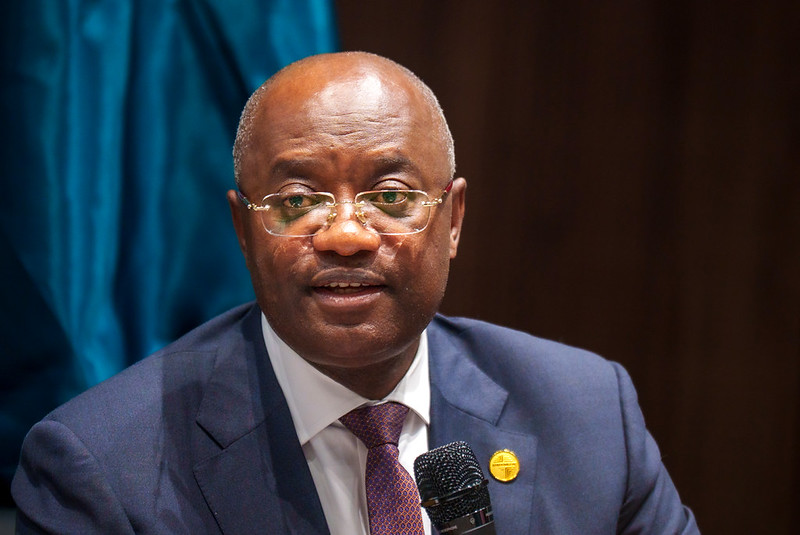
Governor Cardoso, in his closing address, commended participants for their insights and reaffirmed that fintechs are vital partners in achieving Nigeria’s financial inclusion and digital transformation goals.
“Our approach is pro-innovation but risk-aware,” he said. “We will continue to build an environment that allows innovation to flourish responsibly, while safeguarding the integrity of our financial system.”
He also disclosed that the Bank is reviewing existing frameworks on digital assets and stablecoins through a high-level inter-governmental committee to ensure Nigeria remains aligned with global standards while maintaining monetary sovereignty.
Cardoso acknowledged that while perceptions of the regulatory environment remain mixed, the CBN’s goal is to enhance clarity, transparency, and predictability in its engagements with the fintech sector.
“Half of the industry already views regulation as enabling, our goal is to make that one hundred percent,” he said.
The Governor also reiterated the Bank’s ongoing effort to consolidate its regulatory structures. He highlighted the creation of a Compliance Department that integrates anti-money-laundering (AML/CFT), cybersecurity, and market conduct supervision under one unified structure.
Ms. Shola Phillips, Special Adviser to the Governor on compliance and risk, explained that the Bank’s approach to supervision is evolving to strengthen trust and competitiveness across the financial system.
“We are repositioning compliance as a competitiveness advantage for Nigerian fintechs,” she said. “By embedding integrity into innovation, we strengthen confidence among investors, partners, and consumers while ensuring that growth remains sustainable and secure.”
Supporting the Governor’s remarks, the Deputy Governor for Economic Policy emphasized that the Bank’s economic reform journey has stabilized the macroeconomic environment, creating the right platform for digital innovation to accelerate growth.
“The next phase of Nigeria’s growth will be powered by technology, data, and collaboration,” he stated. “That is why these conversations are critical, they allow us to co-design solutions that sustain innovation while reinforcing financial resilience.”
The roundtable concluded with a shared commitment between the CBN and fintech stakeholders to continue structured engagements that will translate into actionable policies and collaborative frameworks.