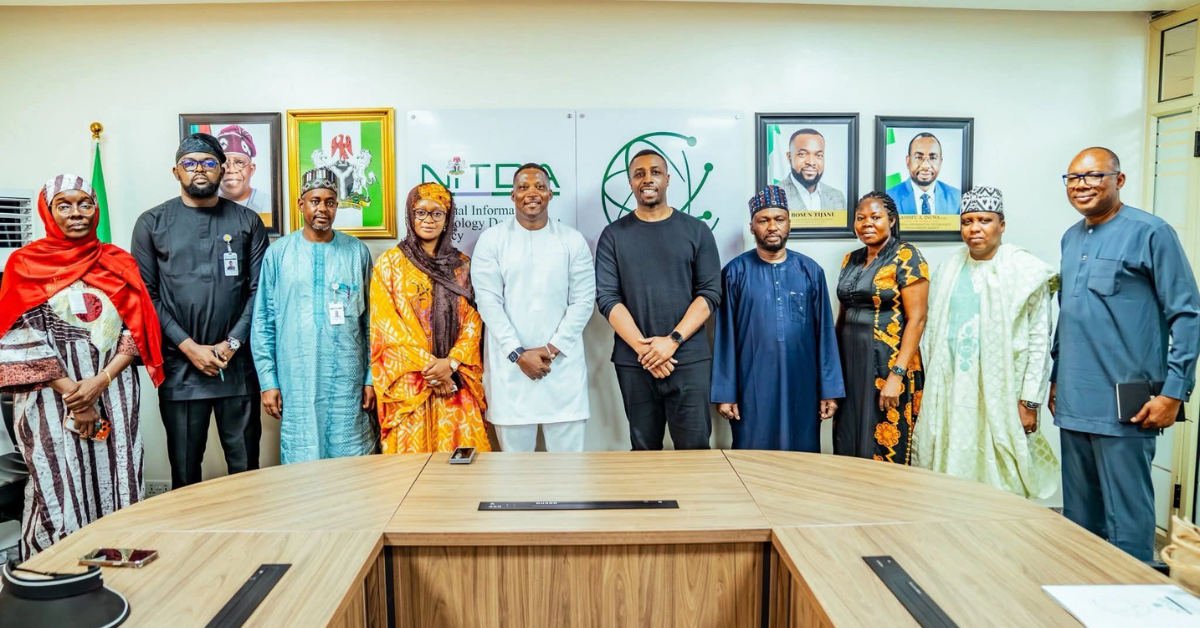
Earlier this month, TechCabal reported on the partnership between Nigeria’s National Information Technology Development Agency (NITDA) and NKENNEAi, an initiative aimed at building language AI infrastructure for public services. The announcement pointed to a broader shift in how artificial intelligence is being positioned across the continent.
Language AI is no longer being framed as a niche innovation. It is increasingly seen as part of the infrastructure required to support Africa’s digital economy. But partnerships, on their own, do not translate into deployment. The more difficult question is what happens next: how language AI systems are integrated into public services, healthcare delivery, and financial platforms, and how the actors responsible for these systems coordinate their efforts.
This is the gap NKENNEAi Talks is designed to address.
Emerging from the NITDA–NKENNEAi collaboration, NKENNEAi Talks is a monthly webinar series that brings together stakeholders across government, technology, and infrastructure to focus on how language AI can be implemented in real-world contexts. Rather than centering conversations on the broad potential of artificial intelligence, the sessions are structured around the practical realities of deployment, including what it takes to move from policy alignment to working systems.
The initiative reflects a growing recognition that Africa’s AI development will depend not only on advances in model-building, but also on coordination between institutions responsible for adopting and scaling those systems. As more governments and organizations begin to explore AI integration, the challenge is becoming less about whether the technology works and more about whether it can be embedded into existing systems in a way that is usable and sustainable.
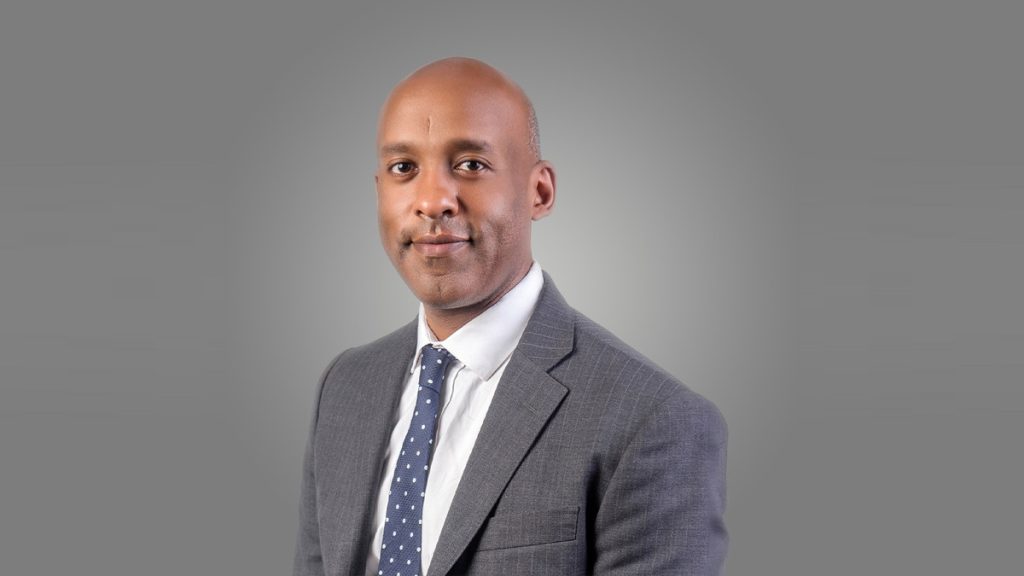
The upcoming session will feature Patrick Okigbo III, Founding Partner of Nextier Power, whose work spans infrastructure strategy and national development. His inclusion signals a broader framing of language AI, not only as a software challenge, but as part of the systems that underpin economic activity. If language is treated as infrastructure, its integration must extend beyond technology platforms into sectors such as energy, governance, and finance, where large-scale service delivery is determined.
NKENNEAi’s work itself focuses on building AI systems for African languages, where factors such as tone, dialect, and cultural context are central to usability. This introduces a different set of challenges compared to more widely supported global languages, particularly in ensuring that systems can function effectively across diverse user populations. In this context, language is not simply an interface layer, but a determinant of whether digital systems can be meaningfully accessed at all.
“Language is the missing layer in Africa’s digital infrastructure,” says Michael Odokara-Okigbo, Founder of NKENNEAi. “If systems cannot understand people, they cannot serve them.”
Initiatives like NKENNEAi Talks attempt to respond to this by creating ongoing dialogue between those building AI systems and those responsible for deploying them. The goal is less about introducing new ideas and more about aligning existing efforts across sectors that do not always operate in sync.
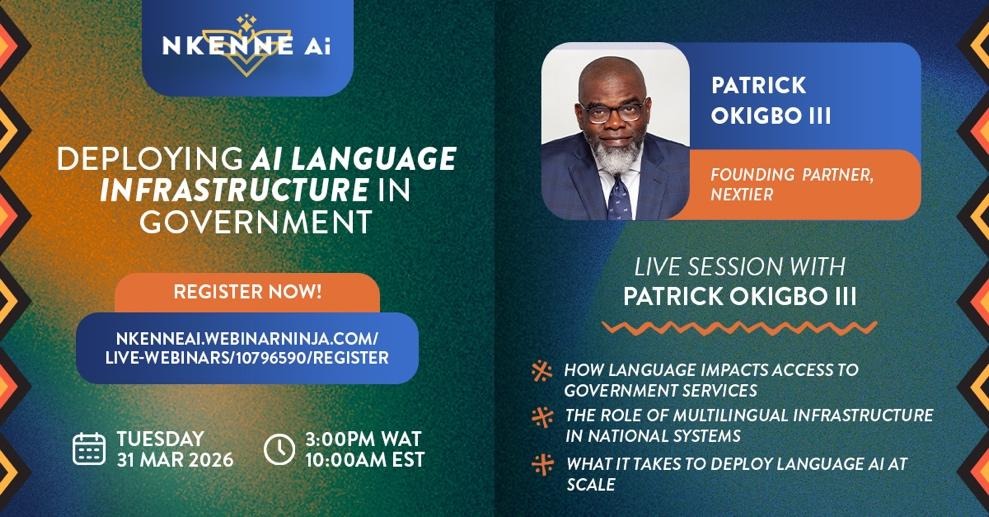
The next NKENNEAi Talks session is scheduled for March 31, 2026, at 10:00 AM EST / 3:00 PM WAT, and will take place as a live virtual discussion with audience participation. Further details and registration are available here
More broadly, the emergence of initiatives like this points to a shift in Africa’s AI trajectory. The early phase of development was defined by demonstrating capability, followed by a period focused on building platforms and tools. What is now emerging is a more complex phase, one centered on integration into real-world systems and institutions.
Language sits at the center of that transition, not only as a technical challenge, but as a structural one. The effectiveness of digital infrastructure is ultimately determined not by what is built, but by what is used. For many users, that interaction begins with whether systems can understand the languages they speak.