
Good morning. ☀️
My first question is: why do we need robots that can outrun humans?
Let’s rewind a bit. Last year in China, humans raced robots and won by almost three hours. In the same race on Sunday, the winning robot beat humans by over 10 minutes. If you look closely, this is an extended metaphor for how fast technology is closing gaps that once felt impossible.
Now imagine what this could unlock in our part of the world—reaching flooded areas faster, moving supplies across rough terrain, responding to emergencies, and okay, maybe finally getting your package delivered on time.
I’m low-key curious: what would you use a super-fast robot for?
—Opeyemi

Startups
Hello Ghana, Nigerian defence-tech Terra Industries is coming with a drone factory

A good old jollof rice banter might divide two countries only separated by a one-hour flight, but a Nigerian drone manufacturer is willing to share its toys.
Terra Industries, the Nigerian defence-tech startup that has raised $34 million this year, is heading to Ghana with a 34,000-square-foot drone factory in Accra, with plans to launch in June.
Terra is scaling: The company has had a remarkable year so far, and this is only the latest icing. Announced on Monday, the Accra plant, named Pax-2, will expand its current 15,000 km factory in Abuja, Nigeria, as it scales its drone production capacity.
Terra, which currently produces unmanned aerial vehicles (UAVs), ground vehicles, and sensory towers, plans to produce 50,000 drones by 2028. At that scale, it could become the largest hardware manufacturer in the defence-tech sector.
State of play: Terra has slowly embedded itself into Nigeria’s military operations. In February, it signed a memorandum of understanding (MoU) with the defence corporation run by the Nigerian Armed Forces to create a unit that assembles arms and trains local talent.
While the same partnership scale with Ghana might not be on the cards yet, the company’s posture is leaning toward training and expanding talent. Its new facility will employ about 120 engineers and deepen Ghana’s defence-tech talent layer.
Operating both the Nigerian and Ghanaian markets, Terra could end up sitting at the centre of West Africa’s emerging defence manufacturing capacity, moving talent, skills, and production know-how across borders while both governments lean on it to reduce reliance on imported systems.


20+ Markets. One API.

Fincra connects your business to Africa’s payment rails without building market by market. For collection, payout, FX, and settlement through a single integration. See what this means for your business.
Policy
Kenya wants to prevent data breaches; its new policy draft targets transport sector
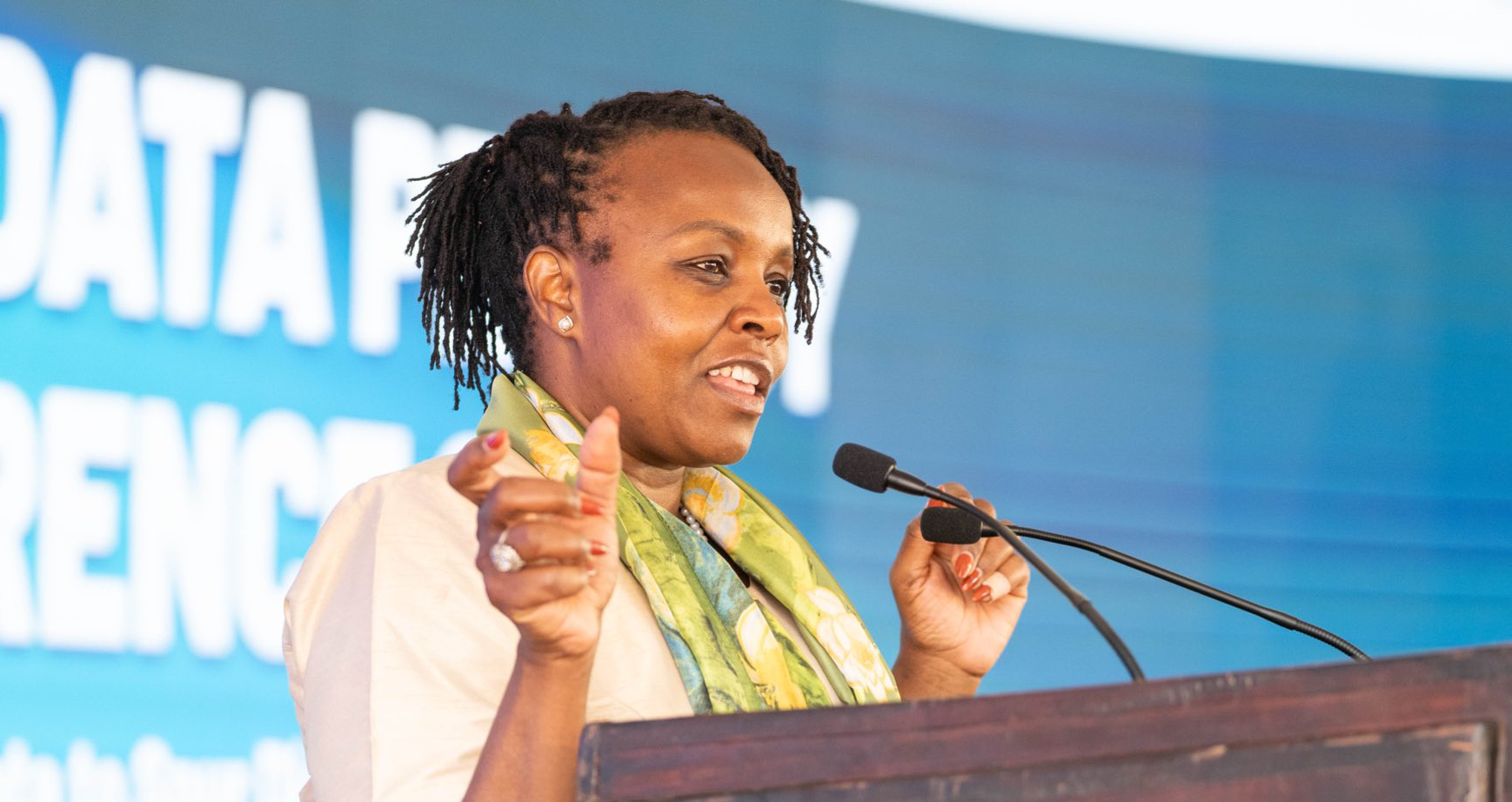
After watching data breaches unfold across various sectors in Africa—and facing a few (okay, maybe billions) threats itself—Kenya is trying to prevent the situation from going from bad to ugly.
The country wants to tighten customer data storage guidelines for operators in its transport sector, including public buses (matatus), railway companies, airlines, and ride-hailing apps like Uber and Bolt.
New rules: The Office of the Data Protection Commissioner (ODPC), the country’s data protection watchdog, is now requiring all transport companies that collect and process customer data to store those assets locally or ensure they keep a copy that can be accessed within the country.
What companies are being asked to do: They now have to fully account for how data moves through their systems from the moment it is collected to when it is stored, used, shared, or deleted. They must clearly define why they are collecting personal data and ensure it is only used for that purpose.
The regulator is also mandating affected companies to formally register their status as either data controllers or processors, in an attempt to hold operators responsible when they suffer breaches.
Companies must also appoint a data protection officer to oversee compliance and track cross-border data transfers to ensure appropriate safeguards are in place. Failure to comply with these new rules could result in a fine of up to KES 5 million ($38,700) or 1% of annual turnover, or two years in jail.
Why this matters: Transport companies process passenger identities. Every trip generates data about where you went, when, how often, and how you paid. Over time, that builds a detailed picture of people’s movements and behaviour. In the hands of the wrong hacker, that is a powerful surveillance tool that encroaches on people’s lives, risking their safety.
Kenya is getting ahead of that risk by forcing structure and accountability into how this data is handled.
Make all your energy sources work as one
PowerLabs built Pai Enterprise, an intelligent energy platform that helps 24/7 & multisite businesses unify all energy sources [like the grid, gensets, and solar] to deliver maximum uptime at the lowest possible costs. Learn more about Pai Enterprise.
Tech
Egypt is bullish on smart cities
We may be nothing close to a fully automated, futuristic city in real life (IRL), but the enthusiasm of African regulators and companies to build “smart cities” is a joy to observe. We might be closer to a real-life Wakanda, but here we are, being indifferent.
After Kenya (Konza), Nigeria (Eko Atlantic), and Rwanda (Kigali Innovation City), Egypt is the latest to announce plans for a smart city project.
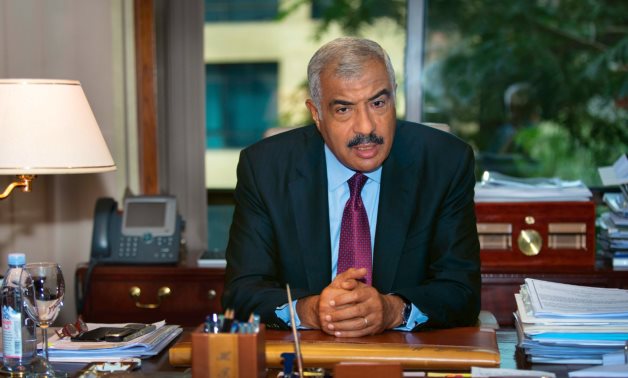
Talaat Moustafa Group (TMG), an Egyptian multinational real estate development company that works closely with the government, plans to build “The Spine,” a new smart city east of Cairo valued at EGP 1.4 trillion ($27 billion).
State of play: The project will span 2.4 square kilometres and include more than 160 towers, alongside homes, offices, hotels, and retail spaces. Over 70% of the land is set aside for green areas, a deliberate attempt to design order into a region where rapid urban growth has often outpaced planning.
The development is backed by the National Bank of Egypt (NBE), the country’s largest commercial bank by assets, and is expected to receive special investment zone status, offering tax and regulatory incentives to attract capital.
Between the lines: Egypt is building investment magnets. TMG estimates the project could generate EGP 818 billion ($15.7 billion) in tax revenue and create over 55,000 direct jobs, with another 100,000 indirectly.
It is part of a broader state-backed push to rethink how cities are built and financed in the Middle East. From the UAE-backed Ras El Hekma project to Qatar’s planned tourism hub in Alam Al-Roum, Egypt is leaning heavily on large-scale developments to attract foreign capital, ease pressure on Cairo, and create new economic centres.
Zoom out: The country is aiming to build modern cities that can compete globally, and capital will follow. The harder question is who gets to live in them, and whether these developments evolve into functioning urban centres or simply remain nice-to-have high-end enclaves.
20+ Markets. One API.
Breet is offering a $10,000 equity-free grant to growth-stage fintech, crypto and payments startups in Africa. Integrate the API, submit your product, and pitch live at ATE Lagos. Two winners get $5,000 each. Deadline by May 31. Learn more.
Policy
South Africa wants telcos to share spectrum or step aside

With the raft of policies coming from different countries in quick succession, it seems regulators are tired of markets running on autopilot. South Africa is the latest to step in.
The country is coming for unused spectrum, and this time, it is not asking nicely. A new telecoms bill is proposing to force operators to use their spectrum and network resources, or share their toys with others.
The Electronic Communications Amendment Bill, 2026, is South Africa’s latest attempt to shake up a sector long criticised for high costs and limited competition. The “use it or share it” rule will allow regulators to force operators to hand over idle spectrum if it has been sitting unused for two years. Smaller players, including community networks, are first in line to benefit.
Between the lines: This is about fairness, but there’s more than meets the eye. Spectrum is the backbone of mobile connectivity, and in South Africa, a handful of large operators control most of it. By forcing sharing, regulators are trying to lower barriers for new entrants and chip away at the dominance of Vodacom, MTN, and Telkom.
What is really happening? The government is redesigning how telecoms infrastructure works. Big operators will now be required to support mobile virtual network operators (MVNOs), lease critical infrastructure like towers and cables, and comply with standardised municipal rules to speed up network rollout. The era of building and guarding your own turf is being replaced by one of shared access.
Zoom out: If it passes, the bill could significantly change competition and, ideally, pricing. But forcing cooperation in a fiercely competitive industry is easier said than enforced. South Africa is pushing for a model where shared infrastructure delivers cheaper, wider connectivity, without slowing down the very players it depends on to build it.
TECHCABAL 4.0

In March 2013, TechCabal published its first article. Thousands of stories later, the work continues, and today, it goes deeper.
TechCabal has always been free. That’s not changing.
We’ve opened a new layer. Reporting that goes further, built on sources you won’t find anywhere else, and told in ways we haven’t tried before. You’re among the first to see it.
Getting in takes less than 15 seconds.
You’re one step away from the other side.
Click the button below to see what TechCabal 4.0 looks like and what it means for you.
CRYPTO TRACKER
The World Wide Web3
Source:

|
Coin Name |
Current Value |
Day |
Month |
|---|---|---|---|
 Bitcoin Bitcoin |
$74,215 |
– 1.92% |
+ 4.86% |
| Ether |
$2,268 |
– 2.92% |
+ 5.67% |
| Aave Ethereum WETH |
$2,244 |
– 2.98% |
+ 2.94% |
| Solana |
$83.91 |
– 2.01% |
– 7.01% |
* Data as of 06.50 AM WAT, April 21, 2026.
JOB OPENINGS
- Big Cabal Media — Senior Motion Designer, YouTube Growth Strategist, Quality Assurance Engineer, Editor-in-Chief (TechCabal) — Lagos, Nigeria
- Babban Gona — Machine Learning Engineer — Lagos, Nigeria
- Moniepoint — Data Analyst — Lagos, Nigeria
- Sun King — Product Operations Associate — Lagos, Nigeria
- M-KOPA — Business Intelligence Manager — Nairobi, Kenya
There are more jobs on TechCabal’s job board. If you have job opportunities to share, please submit them at bit.ly/tcxjobs.

Written by: Emmanuel Nwosu and Opeyemi Kareem
Edited by: Emmanuel Nwosu and Ganiu Oloruntade
Want more of TechCabal?
Sign up for our insightful newsletters on the business and economy of tech in Africa.
- The Next Wave: futuristic analysis of the business of tech in Africa.
- Francophone Weekly by TechCabal: insider insights and analysis of Francophone’s tech ecosystem
P:S If you’re often missing TC Daily in your inbox, check your Promotions folder and move any edition of TC Daily from “Promotions” to your “Main” or “Primary” folder and TC Daily will always come to you.