
Good morning.☀️
Anthropic, the AI company best known for its chatbot Claude, has warned investors against buying its shares through unauthorised secondary platforms. While blockbuster IPOs, such as SpaceX and Anthropic, are expected this year, some platforms are already aggressively marketing indirect access to pre-IPO shares and exposure products.
To be honest, I still do not fully know what some of these platforms (read: Bitget, OKX, Hiive) are selling. Many of the products are packaged through special purpose vehicles (SPVs), tokenised contracts, or secondary market exposure. While investors are tempted to own shares early, Anthropic is saying that not every pre-IPO share comes from the company itself.
—Emmanuel
Get smarter about Francophone Africa with our newsletter, Francophone Weekly—the startups, tech policies, and institutions building the pipelines for ecosystem growth.

M&A
E-commerce company Jiji acquires Bangladeshi competitor

Jiji, a Lagos-headquartered online marketplace, has acquired Bikroy, Bangladesh’s largest online marketplace platform, 13 months after entering the country as Bikroy’s direct competitor. The deal value was not disclosed.
Jiji’s notorious strategy: The company’s market entry has a pattern where it enters a new market, competes with the dominant local platform, tries to understand the terrain, and then acquires the competitor to scale.
In 2022, Jiji acquired Tonaton, formerly owned by Saltside Technologies, in Ghana after years of competing directly against it. Before then, it had acquired OLX Africa’s operations in Nigeria, Kenya, Ghana, Uganda, and Tanzania after years of intense competition.
Jiji is not shy about it: CEO Anton Volianskyi said the Bangladesh move was a deliberate, phased plan to first test the market, before launching a full-scale expansion.
High-scale e-commerce plays thrive in markets where the Internet, smartphones, and a little bit of customer willingness to trust online listings exist. Jiji, after testing the Bangladeshi market 13 months ago, thinks it has all three.
What happens now? The acquired Bikroy will continue to operate independently of Jiji, but a few changes will happen. The parent company will fold Bikroy under its tech stack.
Jiji, after acquiring another asset from former competitor Saltside Technologies, has said that it did not target its businesses. It was simply business as usual, with both sides likely finding incentives to consolidate.
Saltside now exits Bangladesh, but continues to run another e-commerce startup, Ikran, in Sri Lanka. After acquiring Bikroy, Jiji has become a major player in Bangladesh’s $6 billion e-commerce market, where major players, like Alibaba-owned Daraz, also exist.


We Have Secured the Bank of Ghana EPSP Licence.
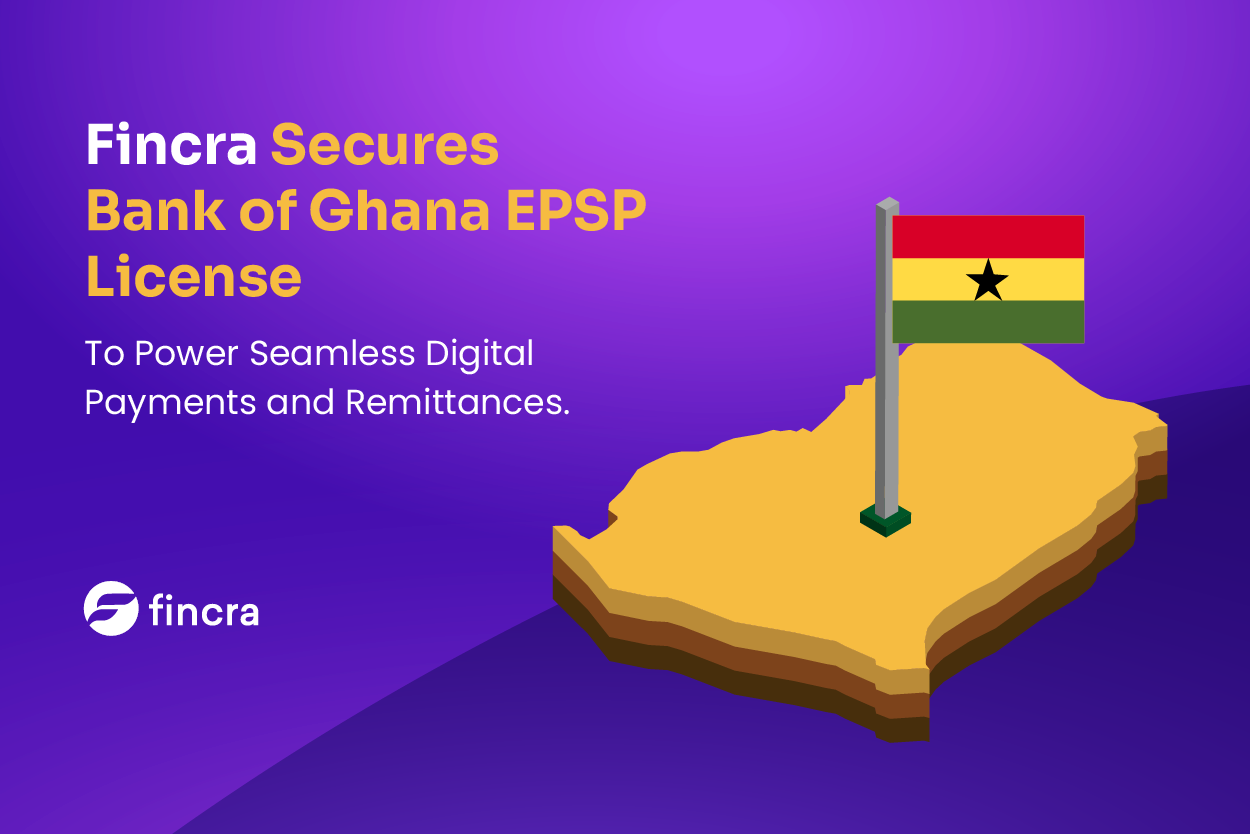
With our new Enhanced Payment Service Provider licence, we can help businesses collect, process and settle in cedis directly. Start here.
Policy
South Africa appoints independent panel to revive AI policy after April fiasco
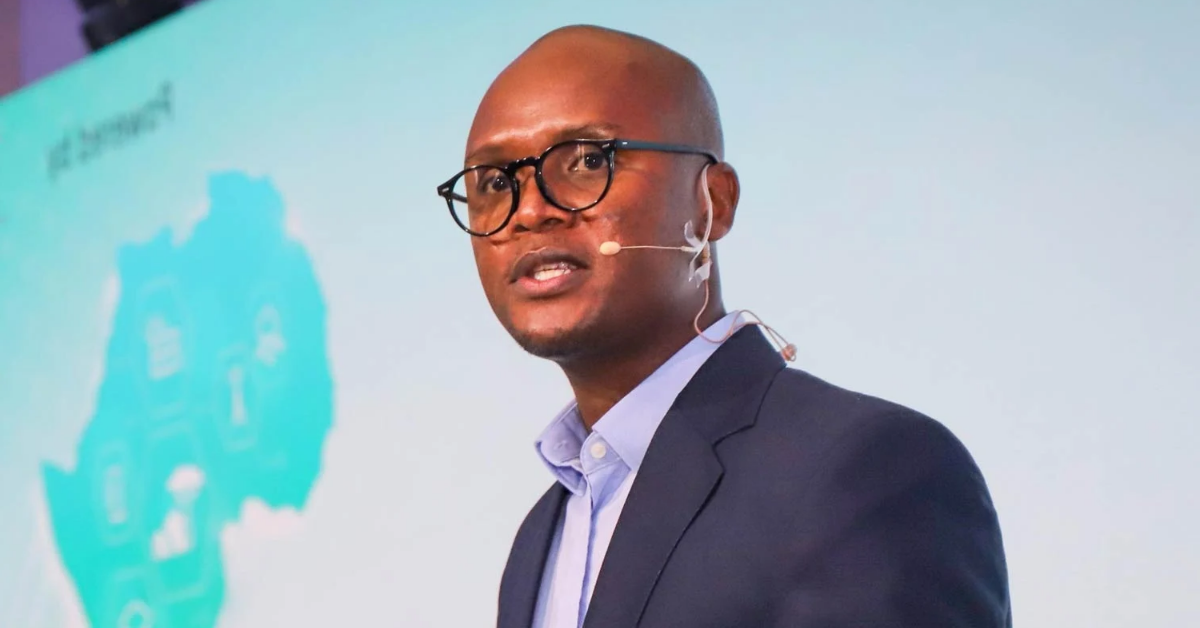
In the latest episode of South Africa’s AI policy brouhaha, the country has new faces in policy.
On Tuesday, Solly Malatsi, the country’s Minister of Communications and Digital Technologies, appointed an independent panel of AI researchers, lawyers, and governance experts to completely redraft the country’s draft national AI policy.
This follows the country’s last misguided attempt to draft an AI policy, on April 2, which was found to contain fake citations and consequently withdrawn three weeks later.
Who are the new AI policy fixers in the block? South Africa’s new independent panel of researchers includes Benjamin Rosman, a Wits University AI researcher who was named to Time’s 100 most influential thinkers in AI in 2025. Rosman will chair the committee, while seven other prominent African researchers, including Vukosi Marivate, will join in collaborative roles.
Between the lines: The obvious revelation is glaring. By appointing Rosman, Malatsi is signalling a lack of trust in the Department of Communications and Digital Technologies (DCDT), a parastatal whose primary responsibility is to oversee tech policies.
It could also point to Malatsi’s way of holding the department to account, after the very public debacle that resulted in another government agency, the Department of Home Affairs, auditing its own policies and suspending two officials.
Zoom out: Malatsi is under pressure to clean up after the failed AI policy, and leaving it to experts could salvage the minister’s reputation, while he further investigates the DCDT. Rosman and his crew will ensure the revised policy is based on verifiable research—and hopefully, doesn’t contain hallucinations again—and aligns with South Africa’s goal for AI regulation.
PalmPay – Built for Ambition. Built for You.

PalmPay is Built for Ambition. Built for Nigeria. Built for You. With over 35 million users and a 99.9% transaction success rate, PalmPay is making digital banking safer, simpler, and more reliable for everyday Nigerians. Download the app to learn more.
Ride-hailing
Bolt, the ride-hailing app, has raised fares by 6% in Kenya

When two elephants fight, the grass suffers. For Kenyan commuters, they’re the grass in a battle between Inflation and transport services.
In April 2026, Kenya’s Energy and Petroleum Regulatory Authority (EPRA) adjusted petrol prices in Nairobi to KES 197.60 ($1.53) per litre after an earlier increase to KES 206.97 ($1.60). The change triggered fuel shortages, which were immediately felt by Bolt drivers.
For drivers already managing platform commissions, vehicle maintenance, and Nairobi traffic, fuel remains a heavy operating cost. Bolt’s response, announced on Tuesday, is a 6% fare increase across all categories, making it one of the first major ride-hailing platforms in Kenya to formally pass rising operating costs to passengers.
State of play: This isn’t the first time Kenyan ride-hailing drivers have pushed for higher fares. When EPRA raised prices in April initially, driver associations unilaterally declared a KES 450 ($3.48) minimum fare for trips under 3km, a move the platforms refused to ratify.
Bolt’s 6% is the official version of what drivers were already demanding informally. Whether it’s enough depends entirely on what EPRA announces on Thursday.
The timing is awkward. Kenya’s Inflation accelerated to 5.6% in April, from 4.4% in the previous month, driven largely by fuel and food costs. The passengers absorbing Bolt’s fare increase are already absorbing higher prices everywhere else.
Zoom out: The relief may be temporary; EPRA’s next fuel price review lands on May 14, one day away, with the Middle East supply disruptions keeping global oil prices elevated.
Nigeria’s Sports Marketing Intelligence Report 2025

A football conversation no longer ends at the final whistle. It continues online, in culture, and in consumer behaviour. The Brila Sports Marketing Intelligence Report 2025 explores how brands can truly connect with today’s sports audience. Download the report here.
TECHCABAL 4.0
TC Insiders are reading something you’re not. Gated exclusives and deeper analysis—available only to Insiders. Free to join.
Cryptocurrency
Kenya wants to put names and transaction details to crypto wallets
One of the things that makes cryptocurrency attractive is its pseudonymity. While transactions can be traced on the blockchain, they are not directly tied to full names or personal data without enhanced tracking and forensic tools.
This is why KYC-heavy startups, which can provide much-needed user data, have become important to regulators.
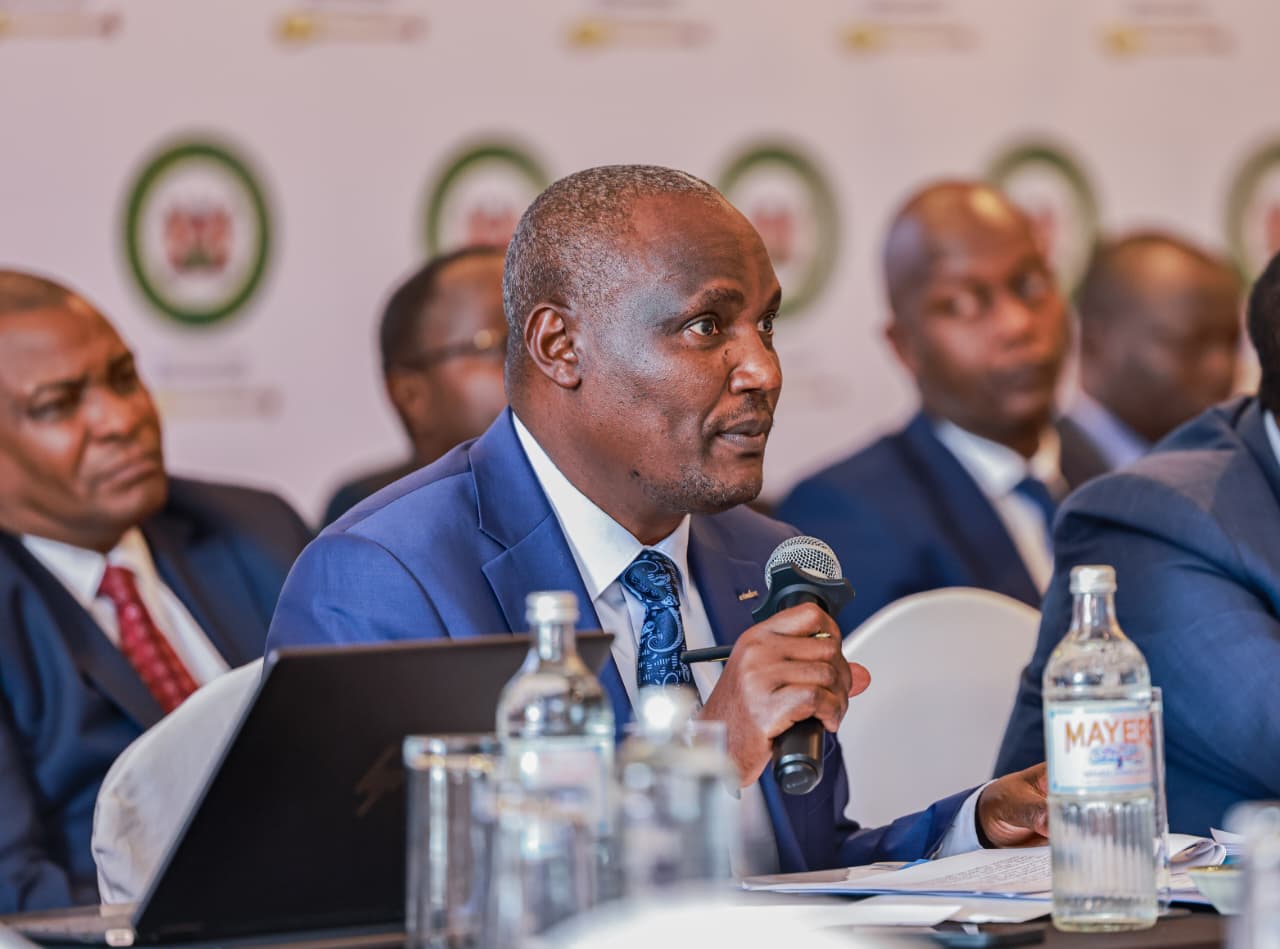
The veil is about to be removed: Under Kenya’s proposed Finance Bill 2026, now before parliament, crypto exchanges and digital asset platforms would be forced to file annual returns with the Kenya Revenue Authority (KRA), the country’s taxman, revealing the names, wallet activity, and full transaction histories of all Kenyan users.
Providing false information carries a KES 100,000 ($775) fine per entry, up to three years in prison, or both. And failing to file any information at all, or returning ‘nil’ would cost startups KES 1 million ($774,000) in fines for each failure.
The KRA’s interest in crypto is not new. Between 2021 and 2022, Kenya’s crypto market processed KES 2.4 trillion ($18.5 billion), roughly 20% of the country’s gross domestic product (GDP), almost entirely outside the formal tax net.
By 2024, the authority had collected KES 10 billion ($77.4 million) from crypto traders for the first time, a milestone, but still a fraction of what the market was actually generating.
Between the lines: Kenya is aiming to exit the Financial Action Task Force (FATF) Grey list, which it entered in 2024. Through the proposed move, the country is also aligning with global reporting standards under the Cryptoasset Reporting Framework (CARF) framework, with the added benefit of taxing maximally.
50 Finalists, 30 Winnesrs at the South East Pitch Competition this May
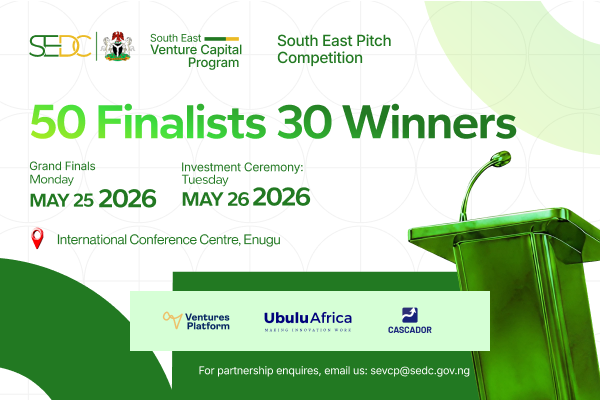
The South East’s first institutional venture capital program is here. Startups competing for SAFE investments. Grand Finals: 25 May | Investment Day: 26 May 2026. Register to attend.
CRYPTO TRACKER
The World Wide Web3
Source:

|
Coin Name |
Current Value |
Day |
Month |
|---|---|---|---|
 Bitcoin Bitcoin |
$81,029 |
– 0.24% |
+ 14.37% |
| Ether |
$2,298 |
– 0.57% |
+ 4.98% |
| NEAR Protocol |
$1.64 |
+ 6.79% |
+ 20.78% |
| Solana |
$95.20 |
– 1.41% |
+ 16.44% |
* Data as of 06.50 AM WAT, May 12, 2026.
Opportuinities
- Clarus and Norrsken East Africa have launched Scale Velocity Lab, a four-week go-to-market execution sprint selecting 12 traction-stage startups across East Africa to refine their positioning, build faster operating systems, and launch measurable distribution experiments. Backed by partners including Visolab, Dochase, and TechCabal Insights, the program combines practical workshops, expert mentoring, and an Activation Showcase in front of investors and ecosystem leaders. Apply by May 14.
- The Stellar Development Foundation has launched its first EMEA accelerator with venture firm CV Labs to support ten early-stage startups building payments, tokenised asset, and DeFi infrastructure. The 12-week programme starts in August 2026, includes a Cape Town residency and demo day at Meridian in Lisbon, with selected startups eligible for up to $150,000 in XLM funding. Apply by July.
- Future Investment Initiative Institute, in partnership with MIT Solve, has opened applications for the 2026 FII Innovators Pitch, targeting AI and frontier-tech startups in sustainability, healthcare, robotics, and education. Selected founders will pitch at the 10th Future Investment Initiative in Riyadh this October, with travel covered, and gain access to investors, policymakers, and partners through the FII Ventures Programme. Apply here.


Written by: Zia Yusuf and Opeyemi Kareem
Edited by: Emmanuel Nwosu and Ganiu Oloruntade
Want more of TechCabal?
Sign up for our insightful newsletters on the business and economy of tech in Africa.
- The Next Wave: futuristic analysis of the business of tech in Africa.
- Francophone Weekly by TechCabal: insider insights and analysis of Francophone’s tech ecosystem
P:S If you’re often missing TC Daily in your inbox, check your Promotions folder and move any edition of TC Daily from “Promotions” to your “Main” or “Primary” folder and TC Daily will always come to you.